
Selecting the right thickness for a wide yoga mat is a balancing act between physical comfort and spatial stability. While standard mats measure around 61 cm in width, wide mats typically expand to 70 cm, 80 cm, or even more, providing generous room for expansive movements and wide-stance poses. However, this increased surface area means that thickness has a much more pronounced effect on the mat’s weight, portability, and overall performance. Whether you are flowing through dynamic transitions or holding restorative postures, choosing between 4mm, 6mm, and 8mm options will directly shape your practice.
The Core Trade-Off: Cushioning vs. Stability on a Wider Surface
When you step onto a wide yoga mat, the physical dynamics of your practice change. The extra width allows for wider stances in poses like Warrior II or wide-legged forward folds, which distributes your body weight over a larger surface area. However, the thickness of the mat determines how much your hands and feet sink into the material. A thinner mat keeps your center of gravity closer to the subfloor, offering a highly stable foundation for balancing postures. Conversely, a thicker mat provides a deeper cushion that absorbs impact, protecting sensitive joints from the hard floor beneath.
The trade-off becomes even more significant when you factor in the physical dimensions of a wide mat. Because a wide mat contains more material than a standard-sized equivalent, any increase in thickness results in a substantial addition to the mat’s total weight and rolled volume. An 8mm wide mat, for instance, can become exceptionally bulky and heavy, making it challenging to carry on public transport or store in compact home spaces. Therefore, deciding on the right thickness requires you to weigh your need for joint protection against your requirements for grounded stability and daily portability.
Products mentioned in this guide
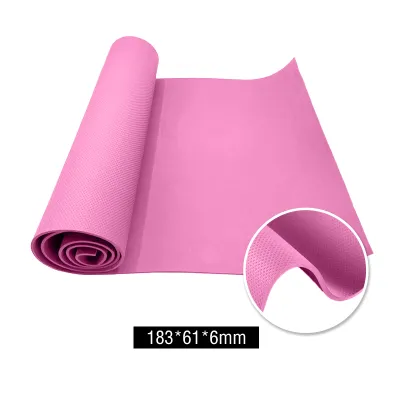
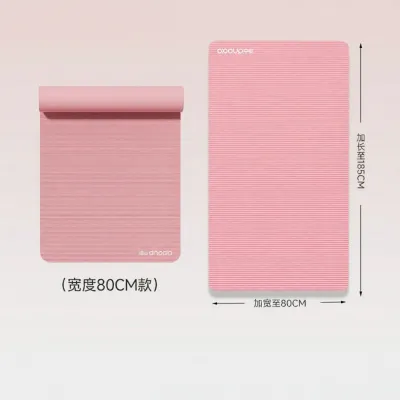
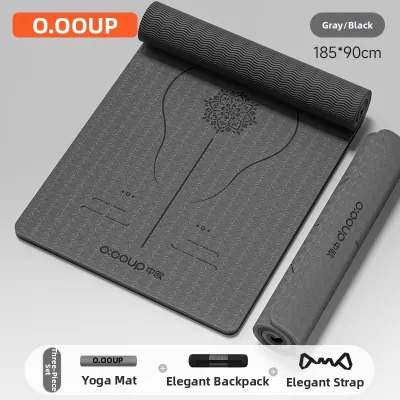
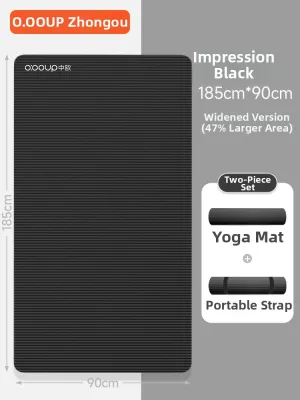
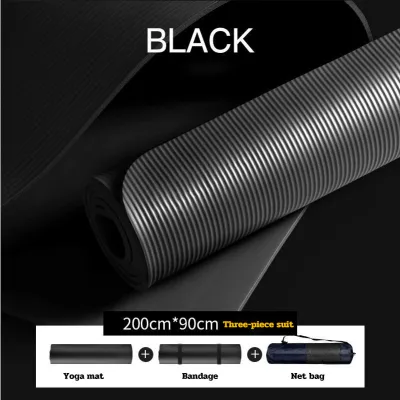
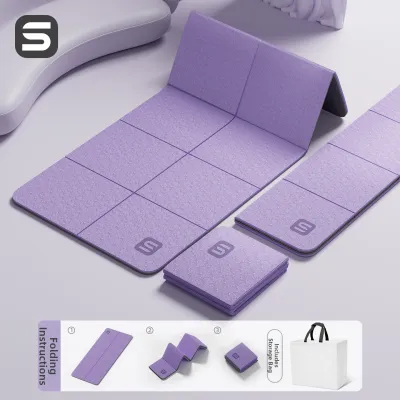
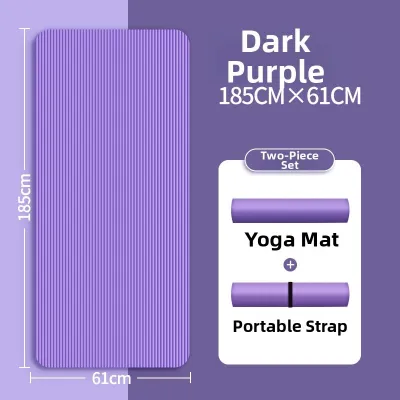
Prices are valid at publication and may change. Please refer to the product page for the latest price.
4mm Wide Yoga Mats: Grounding and Balance
A 4mm wide yoga mat is often considered the standard for active, flow-based practices such as Vinyasa, Ashtanga, and power yoga. At this thickness, the mat provides just enough separation from the floor to prevent minor discomfort while maintaining an incredibly stable, firm foundation. When performing complex balancing poses or rapid transitions, a 4mm mat ensures that your ankles and wrists do not wobble or sink into a soft, squishy surface. This direct connection to the ground allows for precise alignment adjustments and a more responsive tactile feedback during your practice.

However, the minimalist cushioning of a 4mm mat may not suit everyone. If you frequently practice on hard surfaces like ceramic tile, concrete, or polished hardwood, a 4mm mat offers minimal impact absorption. Practitioners with sensitive knees, wrists, or ankles may find that kneeling postures or weight-bearing poses cause discomfort. If you have prominent joints or are recovering from minor joint strain, you will need to verify whether a 4mm mat provides sufficient comfort, or consider using a secondary prop, such as a folded blanket or a small knee pad, during floor work.
6mm Wide Yoga Mats: The Versatile Middle Ground
For many practitioners, a 6mm wide yoga mat represents the ideal compromise between comfort and performance. This thickness is highly versatile, making it suitable for a wide range of styles, including Hatha, slow flows, general fitness routines, and beginner-friendly classes. The 6mm depth offers a noticeable cushion that protects your knees during low lunges and cushions your spine during rolling movements, yet it remains firm enough to support standing balances without causing excessive instability.
When combined with a wider footprint, a 6mm mat provides an inviting, spacious sanctuary for your practice. However, you must consider the physical practicalities of storing and transporting this option. A 6mm wide mat is significantly bulkier to roll up than its 4mm counterpart. If you plan to commute to a local studio or gym, you should verify that your carrying strap or mat bag can accommodate the increased rolled diameter. For home-based practices where the mat remains unrolled or stored in a dedicated closet, the 6mm thickness offers an excellent, all-purpose foundation that adapts to almost any routine.
8mm Wide Yoga Mats: Joint Protection and Restorative Practice
An 8mm wide yoga mat is designed primarily for floor-heavy, low-impact, and therapeutic practices. If your routine consists of Yin yoga, restorative poses, Pilates, prenatal exercises, or extended meditation sessions, the deep cushioning of an 8mm mat provides unparalleled comfort. This thickness acts as an effective barrier against cold, hard floors, allowing you to hold passive postures for several minutes without experiencing pressure-point pain in your hips, knees, or shoulders.
Despite the luxurious comfort, an 8mm wide mat comes with distinct trade-offs that you must evaluate. The thick, compressible material can make standing balance poses, such as Tree Pose or Warrior III, significantly more challenging, as your feet must constantly micro-adjust to the shifting surface. Additionally, the sheer volume of an 8mm wide mat makes it highly cumbersome. It is heavy to carry over long distances and occupies a substantial amount of storage space when rolled. If you choose this thickness, it is best suited for a permanent home setup or practices where portability is not a primary concern.
Decision Framework: Matching Thickness to Your Practice
To finalize your choice, consider how your physical needs, preferred yoga styles, and daily logistics align with each thickness option.
Choose a 4mm wide mat if:
- Your primary practice involves dynamic, fast-paced flows, hot yoga, or standing balance sequences.
- You prioritize a lightweight, highly portable mat that is easy to roll up and carry on your daily commute.
- You prefer a strong, tactile connection to the floor and have no history of joint sensitivity.
Choose a 6mm wide mat if:
- You practice a mix of different styles, from active flows to gentle stretching, and need a single mat that can handle both.
- You require moderate cushioning for your knees and spine but still want to maintain reliable stability during standing poses.
- You primarily practice at home or have a spacious mat bag suitable for a slightly bulkier rolled mat.
Choose an 8mm wide mat if:
- Your routine is dominated by floor work, restorative postures, Pilates, or long meditation sessions.
- You experience joint discomfort on standard mats and require maximum impact absorption to protect your knees, hips, and wrists.
- You intend to keep the mat in a dedicated home workout space and do not need to transport it frequently.
Before making a final decision, verify the specific flooring in your practice space. If you practice on carpet, a thinner 4mm mat may feel more stable, as the carpet already provides natural cushioning. Conversely, if you practice on hard concrete or tile, a 6mm or 8mm mat will help prevent the cold and hard surface from disrupting your focus.
Beyond Thickness: What Else to Check on a Wide Mat
While thickness is a critical factor, it does not work in isolation. The material density of your wide yoga mat plays an equally vital role in how the mat performs. For example, a high-density rubber mat at 4mm can feel heavier and more supportive than a low-density TPE (Thermoplastic Elastomer) mat at 6mm. High-density materials resist bottoming out under your weight, ensuring that your joints do not press straight through to the floor during high-pressure poses.
You should also calculate the total weight of the mat before purchasing. A wide mat made of natural rubber can easily exceed three kilograms at a 6mm thickness, which can strain your shoulders if carried over long distances. Check the manufacturer’s specifications for the exact weight and rolled dimensions to ensure it fits your lifestyle. Finally, pay attention to the mat’s edge durability and rolling memory. Thicker, less dense mats sometimes retain a curled shape at the edges when unrolled, which can create a tripping hazard during wide-stance transitions. Look for mats designed to lay flat immediately upon unrolling to ensure a safe and seamless practice surface.
Frequently Asked Questions (FAQ)
Can I use an 8mm wide yoga mat for hot yoga? (FAQ)
Using an 8mm wide yoga mat for hot yoga is generally not recommended. In high-sweat, high-temperature environments, thick mats tend to absorb a significant amount of moisture, which can make them heavy, difficult to clean, and prone to retaining odors. Furthermore, the combination of a wet, slippery surface and a thick, squishy foundation greatly compromises your stability, increasing the risk of ankle or wrist strain during dynamic transitions. If you prefer a thicker mat for hot yoga, it is essential to verify that the material is closed-cell to prevent sweat absorption, and to use a high-grip yoga towel over the surface to maintain traction.
Does a wider mat feel thinner than a standard mat of the same thickness? (FAQ)
Physically, the thickness of the mat remains identical regardless of its width. However, your perception of support and stability can change on a wider surface. Because a wide mat allows you to spread your limbs further apart, your body weight is distributed over a larger area, which can make the mat feel slightly firmer and more supportive under your hands and feet. Additionally, the extra space reduces the likelihood of your limbs slipping off the edges, providing a more secure and consistent tactile experience across the entire surface.

Community discussion
Share your experience or ask a question. Comments are reviewed before publication.