
A 12kg kettlebell is widely regarded as the ideal starting weight for many fitness enthusiasts in Singapore. It is heavy enough to provide a meaningful cardiovascular and strength challenge during ballistic movements like swings, yet manageable enough for beginners to learn complex overhead movements like the snatch or clean and press. However, setting up a home gym in a typical Singaporean apartment—whether a compact HDB flat or a high-rise condominium—presents unique challenges. Space is often limited, high humidity levels pose a constant threat of rust, and hard tiled or parquet floors are highly susceptible to impact damage. Selecting the right 12kg kettlebell requires looking beyond the price tag to evaluate materials, handle ergonomics, and manufacturing quality. This guide provides a comprehensive framework to help you identify, inspect, and maintain the ideal 12kg kettlebell for your home workouts.
Key Evaluation Criteria for a 12kg Kettlebell
When shopping for a 12kg kettlebell, the first major decision is choosing between cast iron and competition steel constructions. Cast iron kettlebells are cast from a single piece of molten metal. Their physical size scales with their weight, meaning a 12kg cast iron bell is noticeably smaller than a 16kg or 24kg version. This smaller profile makes them highly portable and easy to store in tight spaces. In contrast, competition kettlebells are made of steel and maintain standardized dimensions regardless of their weight. A 12kg competition kettlebell has the exact same outer dimensions, height, and handle diameter as a 32kg competition kettlebell. The uniform size is achieved by using hollow cores or internal weight distributions. For lifters who plan to progress to heavier weights over time, competition kettlebells offer the advantage of consistent technique, as the bell will always rest on your forearm in the exact same position.
Handle geometry is another critical factor that directly impacts your training safety and comfort. The handle consists of the horizontal gripping area, the vertical horns, and the window clearance. The horn width determines whether you can comfortably fit both hands on the handle. For beginners, two-handed swings are the foundation of kettlebell training, making a wider horn width highly desirable. Competition kettlebells, designed primarily for single-handed sport lifts, have narrower, more rectangular handles that make two-handed grips difficult for those with larger hands. Handle clearance—the vertical distance between the underside of the handle and the top of the bell—must be sufficient to prevent the bell from pressing painfully against your wrist bones during overhead movements. A clearance that is too shallow forces the wrist into hyperextension, while a clearance that is too deep shifts the center of mass too far from your arm, destabilizing your shoulder joint.
Products mentioned in this guide
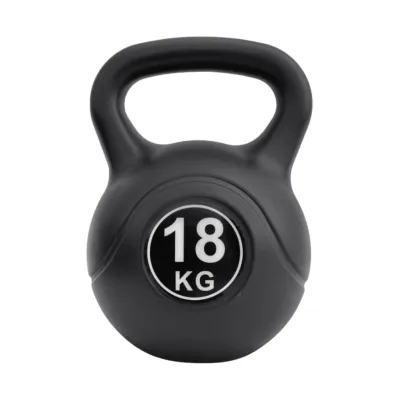
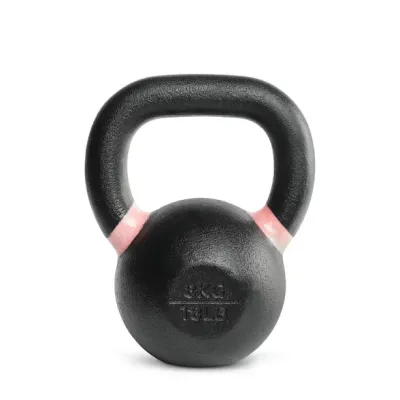
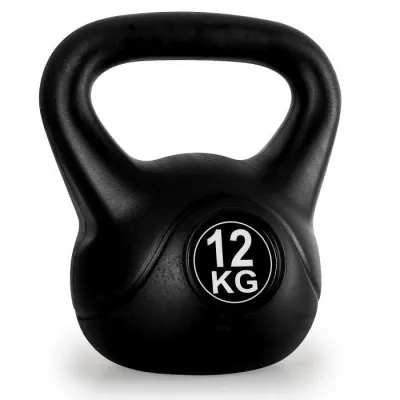
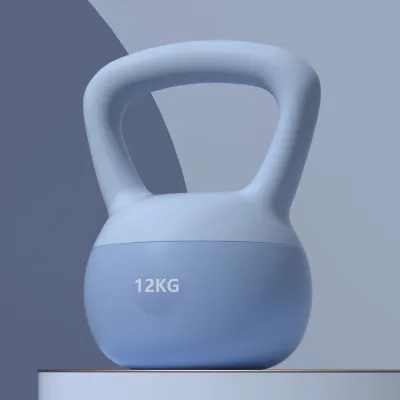
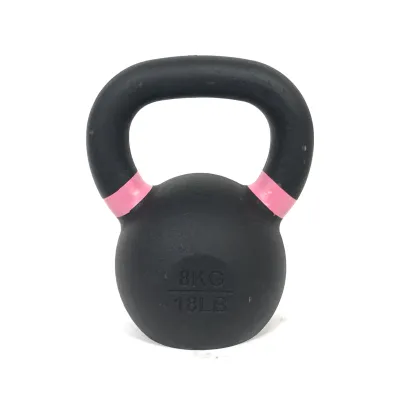
Prices are valid at publication and may change. Please refer to the product page for the latest price.
The surface finish of the handle determines your grip security and skin health. Common finishes include powder coating, bare steel, chrome, and painted iron. Powder coating is widely considered the gold standard for home use; it provides a matte, textured surface that holds gym chalk exceptionally well and offers a secure grip even when your hands are sweaty. Bare steel and brushed steel handles offer excellent tactile feedback but require diligent maintenance to prevent rust in Singapore’s humid climate. Chrome finishes look sleek but can become incredibly slippery when wet, increasing the risk of the kettlebell slipping from your grip mid-swing.
Finally, the base design of the kettlebell must be carefully evaluated. A high-quality kettlebell must have a perfectly flat, machined base. Some budget-friendly cast iron bells suffer from uneven bases due to poor mold alignment or excess paint pooling at the bottom during manufacturing. An unstable base makes floor-based exercises like renegade rows, push-ups, or plank transfers highly dangerous, as the bell can suddenly tip over and cause severe wrist sprains. Some manufacturers add rubber or vinyl boots to the base of cast iron kettlebells to protect floors. While these boots offer some cushioning, they can sometimes trap moisture underneath, leading to hidden corrosion over time.
Matching Kettlebell Types to Your Training Goals
Your choice of a 12kg kettlebell should align closely with the specific exercises you plan to perform. Ballistic movements, such as swings, cleans, and snatches, involve high-velocity rotations where the kettlebell moves dynamically around your hand. For these exercises, the smoothness of the handle is paramount. Any rough casting seams or metal burrs on the underside of the handle will act like sandpaper against your palms, leading to painful blisters and torn calluses. If your primary goal is cardiovascular conditioning through high-repetition swings, a powder-coated cast iron kettlebell with a wide handle is highly effective, as it allows for a secure, two-handed grip and smooth rotation.

Grind movements, such as overhead presses, front squats, and Turkish get-ups, focus on slow, controlled strength. During these movements, the kettlebell rests in the “rack position,” nestled in the V-shape formed by your forearm and bicep. The comfort of this position depends heavily on how the weight is distributed against your arm. Because a 12kg competition steel kettlebell has a larger surface area than a 12kg cast iron bell, it distributes the weight over a wider portion of your forearm, significantly reducing localized pressure and bruising. If you have sensitive wrists or plan to perform high volumes of overhead pressing, the ergonomic design of a competition kettlebell is highly advantageous.
Another key consideration is whether to invest in a fixed 12kg kettlebell or an adjustable model. An adjustable kettlebell allows you to vary the weight—often from 4kg up to 16kg or more—using a system of internal plates or a dial mechanism. For space-constrained apartments in Singapore, an adjustable kettlebell is an attractive, space-saving solution. However, adjustable models have distinct trade-offs. They often feature complex locking mechanisms that can wear out or rattle during high-velocity ballistic movements. Furthermore, the weight distribution of an adjustable kettlebell can feel awkward compared to a solid, single-cast fixed bell. A fixed 12kg kettlebell is structurally indestructible, has no moving parts to break, and offers a consistent, predictable center of gravity, making it the safer and more reliable choice for dynamic training.
Navigating the Local Market: Where and How to Buy
Sourcing a heavy 12kg item in Singapore requires a strategic approach to balance cost, quality, and logistics. Local specialty fitness equipment stores often have physical showrooms located in industrial estates such as Ubi, Tai Seng, or Jurong. Visiting these showrooms is highly recommended, as it allows you to physically inspect the kettlebells before purchasing. You can test the handle thickness, evaluate the texture of the powder coating, and place the bell on a flat floor to ensure it does not wobble. This hands-on evaluation is the most reliable way to avoid the quality control issues common in budget fitness equipment.
In contrast, general online marketplaces and e-commerce platforms offer unmatched convenience and often lower prices. However, buying online means you cannot inspect the specific unit you will receive. When purchasing through online platforms, it is crucial to verify the seller’s authenticity and reputation. Look for established local distributors who specialize in strength equipment rather than generic cross-border sellers. Read customer reviews specifically looking for mentions of casting defects, chipped paint, or inaccurate weights.
Pay close attention to the seller’s return policies and warranty terms. Returning a 12kg block of iron or steel via courier can be prohibitively expensive if you are required to cover the return shipping costs. Prioritize sellers who offer a local warehouse exchange policy, allowing you to drive down or take public transport to swap a defective unit yourself. Additionally, check if the seller offers a warranty against structural defects, such as the handle separating from the bell, which is a rare but catastrophic failure point in poorly welded multi-piece kettlebells.
Shipping costs and delivery logistics can significantly impact the final price of your kettlebell. Because a 12kg kettlebell is classified as heavy cargo, some delivery services charge premium rates or have strict delivery conditions. Ensure that the shipping terms include doorstep delivery, especially if you live in a high-rise HDB block or a condominium with restricted lift access. Some budget delivery options may only drop heavy items at the ground floor or guardhouse, leaving you to carry a 12kg weight up to your apartment yourself.
Inspection and Maintenance Checklist Upon Delivery
Once your 12kg kettlebell arrives, do not immediately discard the packaging or sign off on the delivery without performing a thorough quality check. The first step is a tactile inspection of the handle. Run your bare fingers slowly along the entire gripping surface, paying close attention to the underside of the handle where your fingers wrap. Feel for any sharp ridges, metal burrs, or rough seams left behind by the casting mold. If you detect any sharp imperfections, they must be filed down with fine-grit sandpaper before use to prevent skin tears, or the kettlebell should be returned for a replacement.
Next, verify the actual weight of the kettlebell using a standard digital home scale. Cheaply manufactured kettlebells can deviate from their nominal weight by 10% or more, meaning your “12kg” bell could actually weigh 10.5kg or 13.5kg. To get an accurate reading on a standard bathroom scale, weigh yourself first, then weigh yourself again while holding the kettlebell, and calculate the difference. A high-quality kettlebell should have a weight tolerance of within 1% to 2% of its stated weight.
Singapore’s tropical climate, characterized by high relative humidity (often exceeding 80% year-round) and warm temperatures, creates an environment where iron and steel oxidize rapidly. Sweat from your hands contains salt, which further accelerates the rusting process. To protect your investment, establish a strict maintenance routine. After every workout, wipe down the entire kettlebell with a dry microfiber cloth to remove all traces of sweat and moisture. Never store your kettlebell on an open balcony or in a damp utility room.
For kettlebells with bare metal or powder-coated handles, apply a very thin layer of mineral oil, 3-in-1 oil, or specialized metal protectant once every few months. Apply the oil to a cloth, rub it onto the metal surfaces, and then buff it dry with a clean cloth. This creates a microscopic barrier that prevents moisture from contacting the iron. Ensure the handle is completely dry and free of oily residue before your next workout to maintain a safe, non-slip grip.
Frequently Asked Questions (FAQ)
Is a 12kg kettlebell heavy enough for building muscle?
Yes, a 12kg kettlebell is highly effective for building muscle, particularly for the shoulders, upper back, core, and lower body. While heavy compound lifts are traditional for hypertrophy, you can stimulate muscle growth with a 12kg weight by applying the principles of progressive overload through variables other than raw weight. For example, you can increase the time under tension by slowing down the eccentric (lowering) phase of your presses and squats, or perform unilateral movements like single-leg deadlifts and single-arm rows, which double the relative load on each side of your body. Additionally, increasing your training volume—performing more repetitions and sets with shorter rest intervals—creates metabolic stress, which is a key driver of muscle hypertrophy. Once you can comfortably perform 20 clean overhead presses with the 12kg bell, you can then consider upgrading to a 16kg weight.
How do I protect my floors when using a kettlebell at home?
Protecting your flooring is a major concern when training in a Singaporean apartment, where ceramic tiles, vinyl, and parquet are standard. Dropping a 12kg metal object from even a short height can easily crack tiles, dent wood, or shatter vinyl planks. To prevent damage, always perform your workouts on a high-density rubber gym mat that is at least 15mm to 20mm thick. Standard yoga mats are far too thin to absorb the impact of heavy weights. For maximum protection, you can use specialized foam drop pads or stack multiple layers of interlocking rubber tiles. More importantly, safety and floor protection rely on proper technique. You should always practice controlled lowering of the kettlebell rather than dropping it. If you feel your grip failing or lose control of a movement, guide the bell down to your padded mat safely rather than letting it fall freely.

Community discussion
Share your experience or ask a question. Comments are reviewed before publication.