
Selecting the right recovery tool for your running routine depends entirely on your specific muscle fatigue, recovery goals, and budget. There is no single “best” option; rather, each tool serves a distinct physiological purpose. Acupressure mats excel at passive nervous system relaxation and surface circulation, foam rollers are optimal for active myofascial release and mobility, and massage guns provide targeted, time-efficient percussive therapy for localized knots. By evaluating your primary post-run complaints, your willingness to exert physical effort during recovery, and your budget in S$, you can select the tool that aligns with your needs, or combine them strategically for a comprehensive routine.
Identifying Your Post-Run Recovery Goals
Before investing in any recovery equipment, it is essential to diagnose the specific nature of your post-run discomfort. Runners frequently experience a mix of general muscle soreness, deep fascial tightness, and highly localized trigger points or knots. General soreness often responds well to light movement and increased blood flow, whereas fascial tightness requires physical manipulation to restore tissue sliding. Localized trigger points typically demand direct, concentrated pressure to release.
Understanding whether you prefer active or passive recovery is equally critical. Active recovery, such as rolling, requires physical effort and core engagement after an already exhausting run. Passive recovery, such as lying on a textured mat, allows you to wind down mentally while addressing physical tension.
Products mentioned in this guide
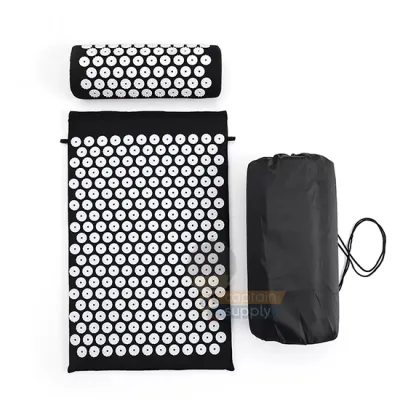
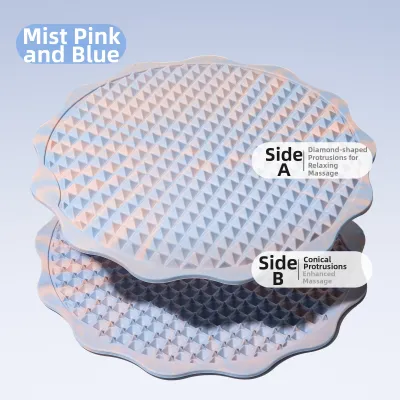
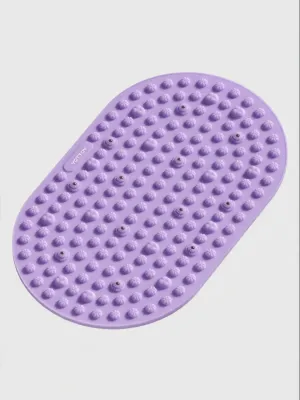
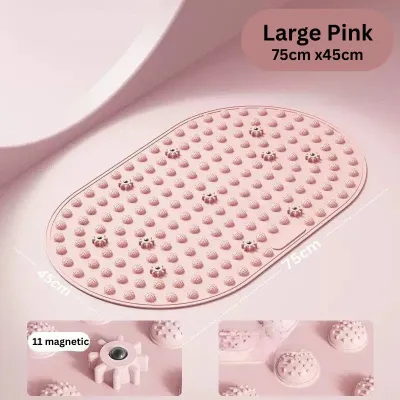
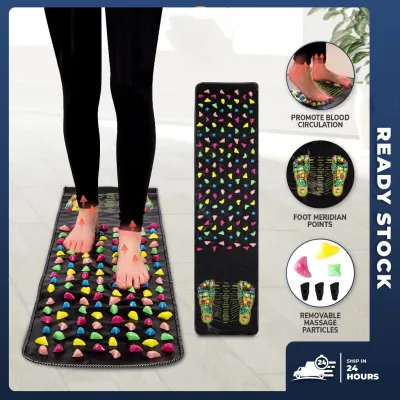
Prices are valid at publication and may change. Please refer to the product page for the latest price.
Crucially, you must recognize the limits of self-treatment. At-home recovery tools are designed for minor muscle fatigue and tightness, not acute injuries. If you experience sharp pain, swelling, joint instability, or numbness, these are clear stop conditions. Such symptoms require professional assessment by a qualified physiotherapist rather than self-administered therapy.
Acupressure Mats: Passive Relaxation and Circulation
An acupressure mat features thousands of small, sharp plastic points arranged on a foam base. When you lie on the mat, these points distribute your body weight across multiple contact areas, stimulating surface-level blood circulation. This localized pressure triggers a mild warming sensation as blood rushes to the skin’s surface, which can help soothe tight back muscles and promote overall nervous system down-regulation. It is an excellent option for runners looking to transition from a high-energy workout to a restful state.

The primary benefit of this tool lies in its passive nature. You can place the mat on a flat surface, lie down, and let gravity do the work. This makes it highly effective for post-long-run relaxation, lower back tension, and relieving the mental stress that often accompanies physical fatigue. Many runners find it particularly beneficial to use in the evening to prepare the body for sleep.
However, acupressure mats have distinct physical limitations. They do not offer deep tissue manipulation or targeted myofascial release. Because the pressure is distributed evenly across a wide surface area, you cannot use them to isolate deep muscle knots or address specific structural issues like tight calves or deep gluteal tension. Additionally, they are entirely unsuitable for application over acute muscle tears, open wounds, or inflamed joints.
When selecting an acupressure mat, verify the following specifications:
- Spike Density: Mats with a higher number of spikes distribute weight more evenly, making the experience less intense, while fewer spikes offer more concentrated pressure.
- Base Material: Look for high-density foam or natural coconut fiber cores that maintain their shape over time without sagging.
- Portability: Consider whether the mat comes with a carrying bag, especially if you plan to use it at training camps or outdoor tracks.
Foam Rollers: Active Myofascial Release and Mobility
Foam rollers are the classic choice for self-myofascial release, a technique aimed at addressing fascial restrictions and improving joint range of motion. By using your own body weight to roll over a dense foam cylinder, you apply pressure to the muscle and surrounding fascia. This action helps restore tissue elasticity and promotes hydration within the muscle fibers, which is vital for maintaining a smooth, efficient running stride.
For runners, foam rollers are highly versatile. They are particularly effective for targeting large muscle groups prone to tightness, such as the calves, quadriceps, and the lateral thigh area near the iliotibial band. Incorporating a brief rolling session before a run can help wake up the muscles and improve mobility, while post-run rolling helps alleviate stiffness and maintain flexibility.
The main drawback of foam rolling is the physical effort required. You must support your body weight using your arms and core, which can feel exhausting after a demanding workout. Proper technique is also essential; rolling directly over bones, joints, or major nerves can cause irritation or injury. Furthermore, the broad shape of a standard roller makes it difficult to target deep, hard-to-reach angles like the piriformis or the arches of the feet.
When shopping for a foam roller, evaluate these key features:
- Density: Beginners should start with soft or medium-density foam to avoid excessive pain, while experienced runners may prefer high-density molded foam for deeper pressure.
- Surface Texture: Smooth rollers provide even pressure, whereas textured or ridged rollers simulate a massage therapist's fingers for more targeted work.
- Length: A standard 90 cm roller is ideal for back alignment and full-body use, while a compact 30 cm roller is much easier to pack in a gym bag.
Massage Guns: Targeted Percussive Therapy
Massage guns utilize rapid, repetitive vertical strokes to deliver percussive therapy deep into muscle tissue. This rapid movement desensitizes the surrounding area, allowing you to target deep muscle knots and localized trigger points without the discomfort associated with manual pressure. Because the device is motorized, it delivers high-intensity therapy with virtually no physical exertion from the user.
This tool is exceptionally efficient for runners who need quick, targeted relief. It allows you to isolate specific tight spots, such as the glutes, hamstrings, or the soles of the feet, in a matter of minutes. It is highly convenient for busy runners who want to squeeze in a recovery session while sitting on the sofa or immediately after stepping off the track.
Despite their convenience, massage guns carry specific risks and limitations. They are generally the most expensive option and rely on rechargeable batteries, which can degrade over time. Incorrect use—such as applying too much force, using the device on a high setting for too long, or running it directly over bony areas, joints, or the neck—can lead to severe bruising, tissue damage, or nerve irritation.
To choose a suitable massage gun, check the manufacturer’s specifications for:
- Stall Force: This indicates how much pressure you can apply before the motor stops; a higher stall force is necessary for deep tissue work.
- Amplitude: The distance the head travels back and forth; a higher amplitude (typically 12mm to 16mm) provides a deeper, more percussive sensation.
- Noise Level: Look for brushless motors that operate quietly, especially if you plan to use the device in shared living spaces.
- Attachment Heads: Ensure the device includes various attachments, such as a dampener for sensitive areas or a bullet head for deep trigger points.
Comparing Cost, Portability, and Daily Usability
When deciding on a recovery tool, practical factors like budget, storage space, and lifestyle compatibility are just as important as physiological benefits. In Singapore, where living spaces can be compact, the physical footprint of your recovery gear is a real consideration.
Price points vary significantly across these three categories. Entry-level acupressure mats and foam rollers are highly accessible, typically starting around S$20 to S$40. Premium models made from eco-friendly materials or high-density foam can range from S$50 to S$100. In contrast, massage guns represent a larger financial investment. While budget-friendly percussive devices can be found for around S$50 to S$100, high-quality, durable models with reliable motors and long battery lives often range from S$150 to over S$400.
Portability is another key factor for runners who travel for races or train away from home. A compact foam roller or a travel-sized massage gun fits easily into a duffel bag, whereas a full-sized acupressure mat or a long foam roller can be cumbersome to transport.
The learning curve and physical effort required also influence how consistently you will use the tool. Foam rolling requires active physical coordination and can feel uncomfortable, which might discourage daily use. Acupressure mats require no effort but demand a high tolerance for the initial prickling sensation. Massage guns are effortless to use but require careful attention to safety guidelines to avoid injury.
| Tool | Primary Benefit | Effort Level | Portability | Typical Price Tier |
|---|---|---|---|---|
| Acupressure Mat | Passive relaxation, surface circulation, stress relief | Very Low (Passive) | Moderate (Rolls up, but bulky) | S$20 – S$80 |
| Foam Roller | Myofascial release, improved mobility, muscle elasticity | Moderate to High (Active) | Low to High (Size dependent) | S$15 – S$60 |
| Massage Gun | Targeted percussive therapy, deep knot relief, speed | Low (Active hand-held) | High (Often includes travel case) | S$50 – S$400+ |
Decision Framework: Which Tool Fits Your Routine?
To make your final decision, align the tool’s characteristics with your daily habits, physical needs, and budget.
- Choose an acupressure mat if your primary goal is to wind down after a stressful day, improve your sleep quality, and enjoy a passive, budget-friendly recovery method that requires zero physical exertion.
- Choose a foam roller if you want to actively work on your flexibility, address broad areas of fascial tightness like the IT band or calves, and prefer a durable, battery-free tool that enhances your overall mobility.
- Choose a massage gun if you have a higher budget, need to target specific, deep muscle knots quickly, and want a highly portable device that delivers deep tissue relief with minimal physical effort.
If you are dealing with sharp, localized pain, joint swelling, or numbness, none of these tools are appropriate. These symptoms indicate a potential structural injury rather than simple muscle fatigue. In such cases, stop using all recovery equipment immediately, prioritize rest, and consult a qualified healthcare professional or physiotherapist for a proper diagnosis and treatment plan.
Frequently Asked Questions (FAQ)
Can I combine an acupressure mat and a foam roller in one session?
Yes, combining these tools can create a highly effective recovery routine. The most logical sequence is to start with the foam roller to actively address fascial tightness, roll out stiff muscles, and improve joint mobility. Once you have completed this active phase, you can lie on the acupressure mat for 15 to 20 minutes to promote deep, passive relaxation and calm your nervous system. Always listen to your body’s feedback; if your muscles feel excessively tender or overstimulated, reduce the duration or intensity of the session.
Is it safe to use a massage gun directly on the IT band?
It is generally not recommended to apply a massage gun directly to the IT band. The IT band is a thick, fibrous band of connective tissue, not a muscle, and running a high-intensity percussive tool directly over it or the underlying bone can cause severe irritation, inflammation, and bruising. Instead, target the surrounding muscles that pull on the IT band, such as the gluteus maximus, the tensor fasciae latae at the hip, and the quadriceps. Always refer to the manufacturer’s safety instructions and start on the lowest speed setting to verify your tolerance.

Community discussion
Share your experience or ask a question. Comments are reviewed before publication.