
The thickness of your yoga mat directly shapes your balance, joint comfort, and overall practice. Adidas offers a range of yoga mats with varying thickness options, typically ranging from thin travel-friendly profiles of around 2 mm to highly cushioned training mats of 8 mm or more. Finding the right thickness requires balancing your specific style of yoga, your physical needs, and where you plan to practice.
Understanding Adidas Yoga Mat Thickness Specifications
To find the exact thickness of an Adidas yoga mat, you should look directly at the product specifications listed on the official brand website, the product packaging, or authorized retailer listings. These measurements are almost always provided in millimeters (mm). Relying on these precise millimeter measurements is far more reliable than relying on generic marketing terms like ‘extra thick,’ ‘cushioned,’ or ‘travel thin,’ which can vary significantly between different brands and product lines.
Adidas organizes its mats across several collections, meaning the available thickness options often depend on the intended use of the line. For instance, specialized yoga lines frequently feature thinner, denser profiles designed to enhance stability and connection to the floor. In contrast, general wellness or training series often lean toward thicker dimensions to accommodate a broader range of floor exercises and stretching routines. Checking the specific collection details helps clarify what a particular mat is designed to do.
Products mentioned in this guide
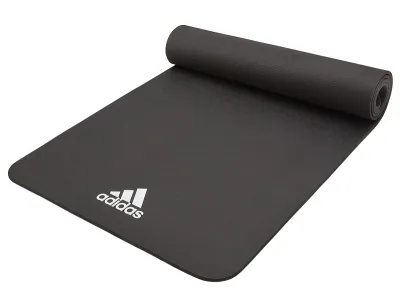
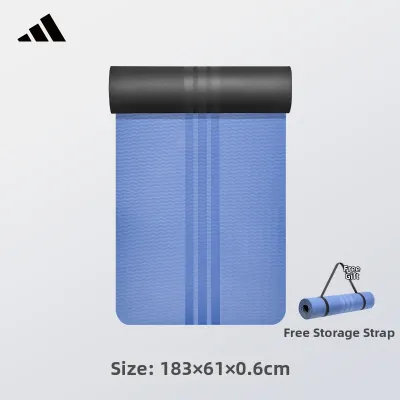

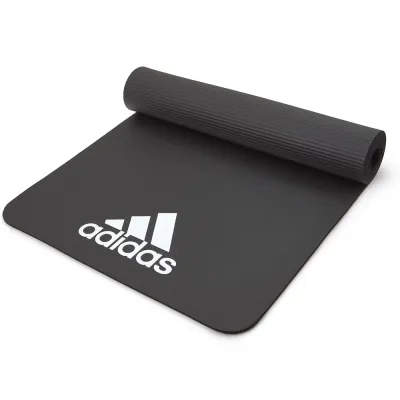
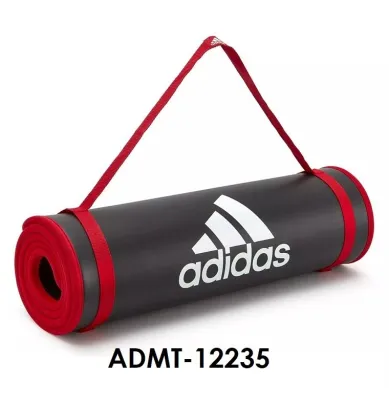
Prices are valid at publication and may change. Please refer to the product page for the latest price.
How Thickness Impacts Stability and Joint Comfort
The thickness of a yoga mat involves a direct trade-off between stability and joint protection. Thinner mats, such as those in the 2 mm to 4 mm range, offer a firmer connection to the ground. This close contact is highly beneficial for standing and balancing poses, as it minimizes the wobbling and sinking that can occur on softer surfaces. For practitioners who prioritize stability and precise alignment, a thinner profile is often the preferred choice.

Conversely, thicker mats, typically measuring 6 mm to 8 mm or more, provide essential cushioning for sensitive joints. If your practice involves a lot of kneeling, seated postures, or floor-based exercises, a thicker mat can significantly reduce pressure on your knees, elbows, and wrists. This extra padding acts as a protective barrier against hard studio or home floors, making restorative poses much more comfortable.
However, thickness alone does not determine how a mat feels; density and material composition play a critical role. A thick mat made from low-density foam may compress completely under your weight, offering very little actual support. On the other hand, a high-density material can provide excellent joint protection even at a moderate thickness. When evaluating options, it is important to consider how the material behaves under pressure rather than assuming a higher millimeter count automatically means better support.
Matching Thickness to Your Yoga Practice and Body Needs
Selecting the right thickness requires matching the mat to your primary style of practice. Dynamic, fast-paced, or balance-heavy disciplines like Vinyasa or Ashtanga benefit from a firmer, thinner surface. These practices require quick transitions and solid footing, where any excess squishiness can compromise your balance or strain your ankles. A mat that keeps you close to the floor helps maintain stability during rapid movements.
For restorative, Yin, or beginner practices, prioritizing comfort and joint padding is often more beneficial. These styles involve holding poses for extended periods or spending significant time on the floor, where a thicker mat helps you relax into the postures without discomfort. Beginners may also appreciate the extra cushioning as their bodies adapt to the physical demands of regular practice.
Your individual physical condition should also guide your decision. If you experience joint sensitivity, past injuries, or discomfort in your knees, wrists, or lower back, a thicker or denser mat can make your practice much safer and more enjoyable. Conversely, if you have no joint issues and prioritize portability and balance, a standard thin mat will likely serve you well.
What to Verify Before Buying Your Adidas Yoga Mat
Before finalizing your purchase, always verify the exact millimeter specifications in the product description rather than relying on photos alone. Reading user reviews can also provide valuable real-world feedback on how the mat actually feels under pressure, helping you gauge its true firmness and cushioning. This step is crucial for avoiding surprises when the mat arrives.
Additionally, consider the practical aspects of carrying and storing the mat. Thicker mats are naturally heavier and bulkier, which can make them cumbersome to transport if you regularly commute to a local studio or travel. If portability is a priority, verify the rolled dimensions and weight to ensure the mat fits your carrying strap, bag, or daily routine.
Finally, review the retailer’s return or exchange policy before buying. Since comfort is highly subjective, you may find that a thickness that looks perfect on paper does not suit your body or practice style in reality. Knowing you can exchange the mat ensures you can find the right fit without financial risk.
Frequently Asked Questions (FAQ)
Can I use a thick Adidas yoga mat for high-intensity interval training (HIIT)?
Using a thick, highly cushioned yoga mat for dynamic, high-intensity interval training is generally not recommended due to safety risks. Soft, thick surfaces can cause your feet to sink, increasing the risk of ankle rolling or loss of balance during lateral jumps, quick direction changes, or heavy lifts. For high-impact workouts, it is safer to use a firmer, dedicated training mat and to check the manufacturer’s guidelines to confirm if the model is rated for cross-training.
Does a thicker Adidas mat automatically mean it is more durable?
No, a thicker mat does not automatically guarantee greater durability. A mat’s longevity, wear resistance, and tear strength are determined by its material composition and structural density rather than its thickness. When looking for a durable option, check the product specifications for high-density materials and reinforced textures, which are designed to withstand regular use and resist degradation over time.

Community discussion
Share your experience or ask a question. Comments are reviewed before publication.