
Selecting the right dumbbells for a home gym involves balancing your available floor space, budget, and training style. If you are working with a compact living area or want a cost-effective way to access a wide range of weight increments, adjustable dumbbells are generally the most practical choice. Conversely, if your workouts demand rapid weight transitions, high-impact drops, or the absolute durability of solid steel, a set of fixed dumbbells remains the gold standard. Making the correct choice requires evaluating how these two equipment types perform across daily use, storage limitations, and long-term physical progression.
Design, Handling, and the Quick Verdict
Adjustable and fixed dumbbells differ fundamentally in their mechanical construction, which directly influences how they feel in your hands during a workout. Adjustable systems consolidate multiple weight increments into a single pair using various selection mechanisms. Dial-style systems allow you to turn a selector to engage specific plates, while spin-lock and plate-loaded models require manually threading collars or sliding pins to secure loose plates. While highly convenient, these moving parts introduce mechanical complexity, meaning you must handle them with care to avoid damaging the internal locking components.
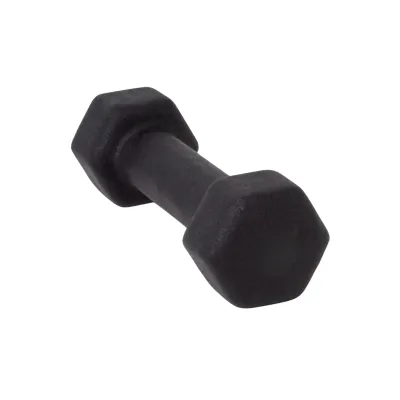
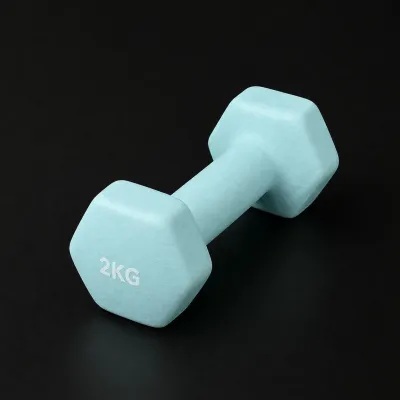
Fixed dumbbells feature a solid, single-piece construction where the weight heads are welded, bolted, or cast directly to the handle. The most common designs include rubber-encased hex heads, which prevent rolling, and round urethane or steel designs. Because there are no moving parts, fixed dumbbells offer unmatched structural integrity, allowing you to focus entirely on your lifting form without worrying about plate rattle or mechanism failure.
Products mentioned in this guide
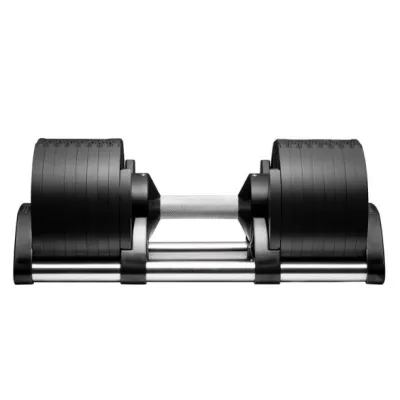
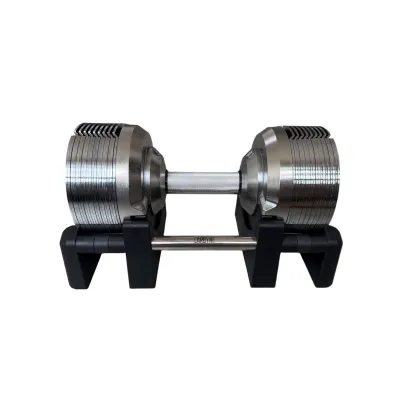
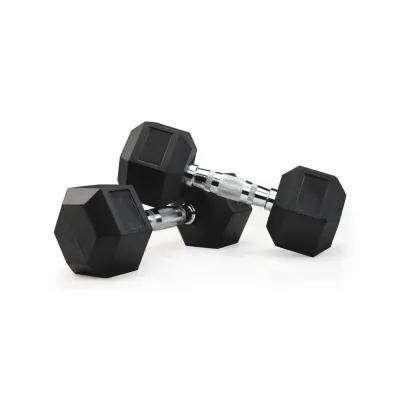
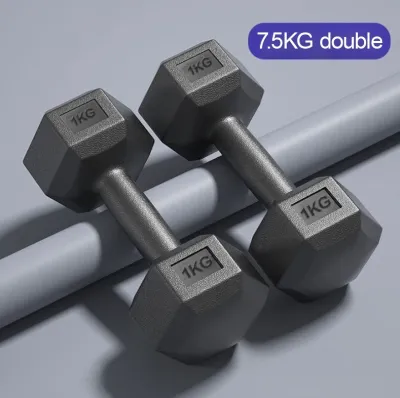

Prices are valid at publication and may change. Please refer to the product page for the latest price.
Grip ergonomics also vary significantly between the two styles. Fixed dumbbells typically feature contoured, knurled chrome handles that scale in thickness as the weight increases, providing a natural grip feel tailored to the load. Adjustable dumbbells often utilize a uniform handle diameter across all weight settings, and the handle assembly may incorporate plastic sleeves or wider cages to accommodate the selection mechanism. Before purchasing, it is wise to check the manufacturer specifications for handle length and grip diameter, as bulkier adjustable frames can occasionally interfere with your wrist positioning during tight movements like bicep curls or overhead presses.
Evaluating Space and Storage Constraints
For many home fitness enthusiasts, the deciding factor between these two dumbbell types is the physical footprint they occupy. A single pair of adjustable dumbbells typically requires only a small corner of a room or a dedicated storage tray, occupying less than half a square meter of floor space. This compact nature makes them highly suitable for apartment living, where dedicated workout rooms are rarely available and equipment must be tucked away after use.

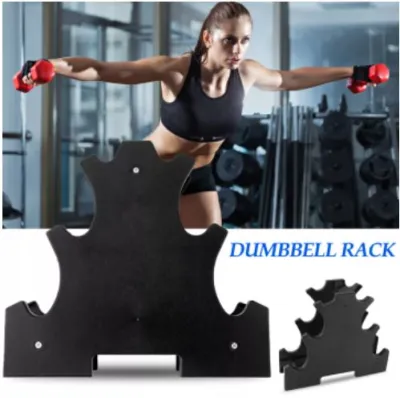
In contrast, a comprehensive set of fixed dumbbells requires a dedicated multi-tier storage rack to keep the weights organized and off the floor. A standard run of fixed weights ranging from 2kg to 25kg in small increments can easily require a rack spanning over a meter in length. This setup demands a permanent footprint in your home, which can quickly crowd out other essential training equipment like utility benches or cardio machines.
Storage safety is another critical consideration when managing heavy weights at home. Leaving fixed dumbbells scattered on the floor creates immediate tripping hazards and can cause localized damage to tiles, laminate, or hardwood flooring. If you opt for a heavy rack of fixed weights, you must verify the floor load limits of your dwelling, particularly in high-rise residential buildings. Utilizing high-density rubber gym flooring tiles of at least 15mm thickness is highly recommended to distribute the concentrated weight of a rack and protect your subfloor from accidental impacts.
Comparing Upfront Costs and Long-Term Value
When planning your home gym budget, comparing the financial commitment of adjustable versus fixed dumbbells requires looking at both the immediate cost and the long-term cost-per-kilogram. Adjustable dumbbells require a higher upfront investment for a single purchase, often reaching several hundred S$ for a premium set. However, because one pair replaces up to fifteen individual sets of weights, the overall cost-per-kilogram is exceptionally low when compared to buying those fifteen pairs individually.
Fixed dumbbells are highly accessible if you only need one or two specific weights to start your training journey. Buying a single pair of 10kg fixed dumbbells is relatively inexpensive, making it easy to start training immediately. However, as your strength progresses and you require heavier loads, the cumulative cost of purchasing successive pairs of fixed weights, along with a sturdy rack to store them, will quickly surpass the cost of a single premium adjustable set.
Physical progression limits also play a major role in determining long-term value. Most adjustable dumbbell sets have a fixed maximum weight cap, often topping out around 24kg or 40kg per dumbbell. Once you outgrow this maximum limit, you cannot easily expand the set and must purchase separate, heavier weights. Fixed dumbbells offer unlimited progression potential, as you can purchase heavier individual pairs as needed, though you must always account for the additional storage space and financial outlay required for each upgrade.
Matching Dumbbell Types to Your Training Style
Your preferred workout methodology should heavily influence which dumbbell style you choose. Fast-paced training styles, such as metabolic conditioning, supersets, and drop sets, rely on rapid transitions between different weight increments. Fixed dumbbells excel in these scenarios because you can instantly drop one pair and pick up another without pausing your workout. The seamless flow of grabbing a lighter pair from a rack keeps your heart rate elevated and maintains muscle tension without interruption.
If your training focuses on traditional strength progression, hypertrophy, or general fitness, adjustable dumbbells offer excellent versatility. These routines typically involve structured rest periods between sets, providing ample time to turn a dial or adjust a pin to change the weight. The ability to make small, incremental adjustments allows you to apply progressive overload systematically, which is the cornerstone of building strength and muscle over time.
Safety and equipment handling during high-intensity training must also be evaluated. If your workouts push you to absolute muscular failure, you may occasionally need to drop the weights at the end of a challenging set. Fixed dumbbells, particularly those with rubber or urethane coatings, are designed to withstand these impacts when dropped onto proper gym flooring. Adjustable dumbbells, with their intricate internal gears and selector pins, should never be dropped, as the impact can misalign the locking mechanism, rendering the dumbbells unsafe or unusable.
Final Decision Guide: Which Dumbbell Type Suits You?
To finalize your decision, assess your training environment and goals against these clear criteria:
Choose adjustable dumbbells if:
- You have limited floor space and need to store your equipment in a closet or corner.
- Your training focuses on steady, progressive strength gains with structured rest periods.
- You want a highly cost-effective way to access a wide range of weight increments without buying multiple pairs.
Choose fixed dumbbells if:
- You have a dedicated home gym space with room for a multi-tier weight rack.
- Your workouts feature fast-paced supersets, drop sets, or high-intensity functional fitness.
- You prefer the solid, traditional feel of cast iron or rubber hex weights and want the freedom to drop weights safely when training to failure.
Before making any purchase, verify the manufacturer’s warranty terms regarding mechanical parts, check the grip dimensions to ensure they fit your hands comfortably, and assess your home’s flooring to ensure it can safely support your chosen setup.
Frequently Asked Questions (FAQ)
Can I drop adjustable dumbbells on the floor?
No, you should avoid dropping adjustable dumbbells on the floor under any circumstances. The internal components, selector pins, and dial gears are typically made of plastic or precision-machined metal that can crack, bend, or misalign upon impact. Dropping these dumbbells can permanently damage the selection mechanism, making it impossible to change weights or, worse, causing plates to slip off during an exercise. Always lower adjustable dumbbells to the floor in a controlled manner, and utilize high-density rubber gym mats to cushion any accidental contact.
Do I need a weight rack for fixed dumbbells?
While not strictly mandatory for a single pair, a weight rack is highly recommended once you own three or more pairs of fixed dumbbells. Storing multiple dumbbells on the floor creates a significant tripping hazard and makes it difficult to maintain an organized workout space. A dedicated A-frame or horizontal rack keeps your weights organized, protects your flooring from scratches, and distributes the heavy load more evenly across your floor joists. Always ensure the rack you choose is rated to support the total combined weight of your dumbbell collection.

Community discussion
Share your experience or ask a question. Comments are reviewed before publication.