
Selecting the right barbell plates requires matching their inner hole diameter to your barbell’s sleeve diameter. Standard plates feature a 1-inch (25mm) hole, while Olympic plates feature a 2-inch (50mm) hole. Mismatching these dimensions makes it impossible to load your bar safely, leading to unstable weights or plates that simply will not fit.
Understanding these specifications is the first step toward building a functional strength training setup. Whether you are assembling a compact home gym or upgrading your current lifting gear, verifying these measurements prevents costly purchasing mistakes and ensures your training remains safe and effective.
Understanding Barbell Hole Diameters: Standard vs. Olympic
Barbell plates are divided into two primary categories based on the diameter of their center hole: standard and Olympic. Standard plates are designed with a 1-inch (approximately 25mm to 28mm) center hole. These are typically found in entry-level home gym sets, utilizing lighter, thinner barbells that often feature threaded sleeves and spinlock collars to keep the weights in place.
Products mentioned in this guide
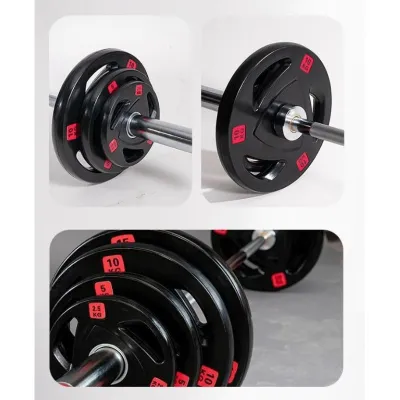
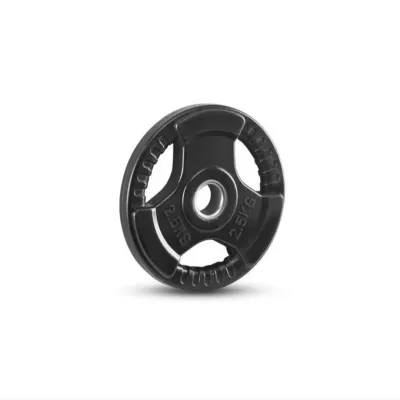
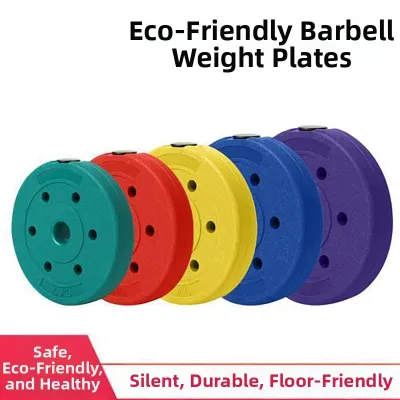
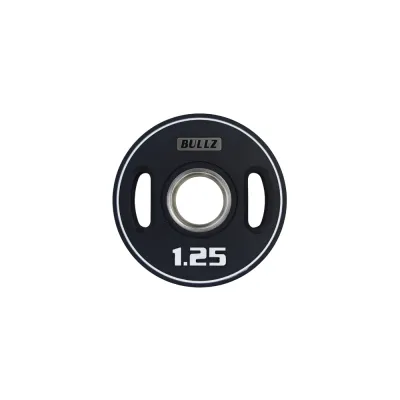
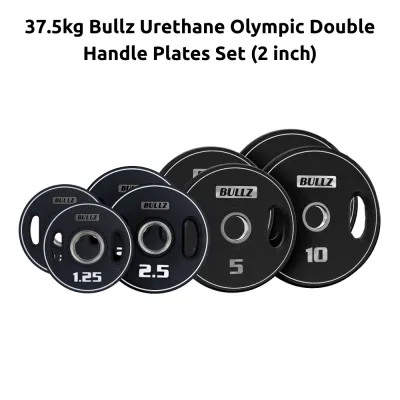
Prices are valid at publication and may change. Please refer to the product page for the latest price.
Olympic plates feature a 2-inch (approximately 50mm to 51mm) center hole. This is the universal standard for commercial fitness centers, competitive powerlifting, and weightlifting. Olympic barbells are built to handle much heavier loads and feature rotating sleeves at each end. These rotating sleeves allow the plates to spin independently of the shaft, reducing the rotational inertia transmitted to your wrists and elbows during dynamic lifts.
To determine which plates you need, you must measure your barbell’s sleeve diameter accurately. The sleeve is the outer part of the bar where the plates are loaded. Using a digital caliper provides the most precise measurement. If you do not have a caliper, wrap a flexible measuring tape around the sleeve to find its circumference, then divide that number by 3.14 to calculate the diameter.
Mismatching your plate and bar sizes introduces severe operational and safety risks. Attempting to load a 2-inch Olympic plate onto a 1-inch standard bar results in extreme plate wobble. The loose fit causes the plates to slide, tilt, and shift the center of gravity unexpectedly during a lift, which can damage your floors or cause joint strain. Conversely, a standard plate with a 1-inch hole physically cannot slide onto an Olympic barbell sleeve.
Decoding Weight Increments and Plate Thickness
Once you establish the correct hole diameter, you must select weight increments that align with your training progression. Standard weight plates typically range from 1.25 kg to 20 kg or 25 kg. For consistent strength gains, incorporating smaller fractional plates (such as 0.25 kg or 0.5 kg) is highly beneficial, as they allow you to make micro-adjustments and avoid hitting performance plateaus.

Plate material directly dictates physical thickness, which in turn determines how much total weight you can load onto your barbell. Cast iron and steel plates are exceptionally thin, allowing you to pack numerous plates onto the sleeve for heavy powerlifting movements. However, they offer no shock absorption and can damage flooring if dropped.
Bumper plates, made of dense vulcanized rubber or urethane, are designed to be dropped from overhead or shoulder height. Because rubber is less dense than iron, bumper plates are significantly thicker. This added thickness means they occupy more space on the barbell sleeve, which limits the maximum loadable capacity of your bar. For home gym setups in Singapore, such as in high-density HDB flats or condominiums, bumper plates are highly favored for noise reduction and floor protection, though they require a trade-off in maximum loading capacity.
To calculate the total sleeve space required for your target weight, multiply the thickness of your chosen plates by the number of plates you plan to load on one side. For example, if your 20 kg bumper plates are 6 cm thick and you want to load two on each side, you will need 12 cm of usable sleeve length. Always leave additional space at the end of the sleeve to accommodate your barbell collars.
How to Verify Compatibility Before You Buy
Before finalizing any plate purchase, cross-reference the manufacturer specifications of both your barbell and the plates. Check the barbell’s product manual or retail listing for the “loadable sleeve length” rather than the overall bar length. Compare this usable length against the combined thickness of the plates you intend to load to ensure they will fit comfortably.
If you are purchasing bumper plates for Olympic lifting or functional fitness, verify their outer diameter. High-quality bumper plates generally adhere to the International Weightlifting Federation (IWF) standard outer diameter of 450mm across all weight increments. This uniform size ensures that when the barbell is loaded, it sits at a consistent height off the floor, allowing you to maintain proper starting posture for deadlifts and cleans.
Finally, perform a safety check for collar clearance. Barbell collars or spring clips are essential safety tools that prevent plates from sliding off during a set. A secure collar typically requires 3 cm to 5 cm of empty sleeve space at the outer edge of the bar. If your plates occupy the entire sleeve, you will not be able to lock them down safely, increasing the risk of a spill during your workout.
Frequently Asked Questions (FAQ)
Can I use standard plates on an Olympic barbell?
No, standard plates cannot be used on an Olympic barbell. Standard plates feature a 1-inch (25mm) center hole, which is physically too small to slide over the 2-inch (50mm) sleeves of an Olympic bar. You should never attempt to modify or drill out standard plates to fit an Olympic bar, as this compromises the structural integrity of the weight and poses a serious safety hazard. Always match 2-inch plates with 2-inch bars.
Do all Olympic plates have the same outer diameter?
No, Olympic plates do not all share the same outer diameter. Standard cast-iron Olympic plates vary in size, with lighter weights having a much smaller outer diameter than heavier plates. In contrast, Olympic bumper plates are manufactured to a uniform outer diameter of 450mm regardless of their weight. This uniform size ensures that even lighter bumper plates hold the barbell at the correct height off the floor and distribute the impact evenly when dropped.
Community discussion
Share your experience or ask a question. Comments are reviewed before publication.