
To ride safely and legally on Singapore’s Park Connector Network (PCN) at night, you need a comprehensive setup of passive reflectors—specifically rear, wheel, and pedal reflectors—to complement your active front and rear lights. While active lights illuminate your path and signal your presence from the front and back, reflectors provide critical side-angle visibility and serve as a fail-safe backup if your batteries fail. Ensuring your bicycle is equipped with the correct types of reflectors is not just a matter of personal safety when sharing narrow paths with pedestrians and other cyclists; it is also a key compliance requirement under local mobility regulations.
Assess Your Current Visibility and Reflector Setup
Before purchasing new gear, take a close look at your bicycle’s current setup to identify any visibility gaps. Over time, plastic reflectors can accumulate road grime, develop fine cracks from UV exposure, or become misaligned due to minor bumps. Start by inspecting each reflector closely in daylight. Wipe away any dirt or mud, and check if the reflective surface has faded or cracked, which significantly reduces its ability to bounce light back to its source.
Next, conduct a simple visibility check in a darkened room. Stand several meters away and shine a flashlight at your bicycle from various angles—directly from the front, the rear, and both sides. Note which areas reflect light brightly and which remain dark. This exercise helps you spot blind spots that other path users might encounter when approaching you from a side junction or an angle.
Products mentioned in this guide
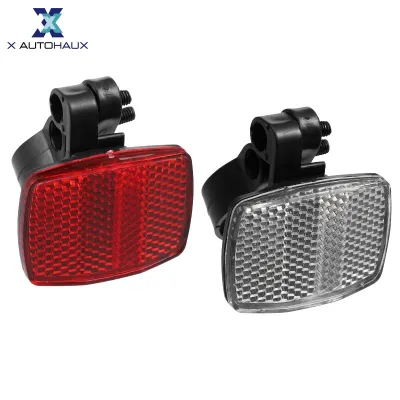
Prices are valid at publication and may change. Please refer to the product page for the latest price.
Finally, consider your typical riding posture and how you carry gear on the PCN. If you wear a long jacket, carry a bulky backpack, or use rear pannier bags, these items can easily block a standard seatpost-mounted rear reflector. Sit on your bike or load it with your usual commuting gear, and have someone verify if your reflectors remain completely visible from behind and the sides. If your gear obstructs them, you will need to plan for alternative mounting locations.
Core Reflector Types and Their Roles on the PCN
Passive reflectors do not produce their own light; instead, they rely on retroreflection to bounce light back toward its original source, such as a pedestrian’s headlamp or another cyclist’s front light. This optical design ensures that even a small amount of ambient light from PCN streetlamps or nearby road traffic makes your bicycle stand out in the dark. Because light sources can approach from any direction on shared paths, relying on a single reflector is insufficient.

To build a complete visibility profile, you must address three primary mounting zones: the rear, the wheels, and the moving parts like pedals. Each zone targets a different angle of approach, ensuring that you are visible whether someone is catching up to you from behind, crossing your path at a T-junction, or approaching from an angle on a winding connector.
Rear and Frame-Mounted Reflectors
Rear-facing reflectors are your primary defense against rear-end collisions on the PCN, where faster cyclists or personal mobility device users may approach from behind. Under standard safety guidelines, a rear reflector must be red. It should be mounted at a height that aligns with the headlights of oncoming bicycles or the eye level of trailing riders, typically on the seatpost or the rear stay of the frame.
If your bicycle is equipped with a rear cargo rack, a child seat, or large pannier bags, a standard seatpost reflector will likely be obscured. In these cases, look for frame-mounted alternatives. Many rear racks feature dedicated mounting plates designed to hold wide, flat reflectors. Alternatively, you can install reflectors on the rear mudguard or use specialized bracket extensions that position the reflector clear of any luggage or accessories.
Wheel and Pedal Reflectors
Side visibility is critical when crossing intersections or joining the PCN from side paths. Wheel reflectors provide this lateral visibility and create a distinct, moving light pattern that immediately identifies you as a cyclist. Traditional spoke reflectors clip directly onto the wheel spokes, but you can also opt for tires with built-in reflective sidewalls or compact hub-mounted reflectors. These options ensure that your wheels catch light from side angles without affecting wheel balance.
Pedal reflectors leverage the constant up-and-down motion of your feet to catch the attention of other path users. Most standard flat pedals come with amber reflectors integrated into the front and rear faces. If you use clipless pedals or performance pedals that lack built-in reflectors, you must verify if they can accept aftermarket bolt-on reflectors. If your pedals cannot accommodate them, wearing reflective ankle bands is an effective way to maintain that recognizable pedaling motion signature in low-light conditions.
Match Reflector Upgrades to Your Specific Riding Conditions
Your choice of reflector upgrades should match the specific routes and times you ride on the PCN. The network features diverse environments, ranging from highly illuminated urban stretches along the Marina Bay loop to dimly lit, tree-covered paths near nature reserves. If your regular route includes unlit or canopy-covered sections, you cannot rely on ambient light to activate your reflectors; you must ensure your setup is highly sensitive and paired with strong active lighting.
Consider your average riding speed and the density of the paths you frequent. If you ride a fast commuter bike or share narrow, winding paths with joggers, dog walkers, and children, reaction times are greatly reduced. Highly visible wheel and pedal reflectors give others more time to notice your approach from side paths or around tight bends, preventing sudden braking or swerving.
Remember that reflectors are passive safety devices and must always be used in tandem with active front and rear lights. While active lights project a beam to show you the path ahead and signal your position, reflectors provide a crucial layer of redundancy. If your electronic lights run out of battery mid-ride or fail due to a sudden tropical downpour, high-quality reflectors ensure you do not become completely invisible on the dark stretches of the PCN. Fortunately, these passive upgrades are highly cost-effective, with quality reflector sets often costing between S$5 and S$20, making them a low-cost, high-impact safety investment.
Verify Compliance with Singapore's Cycling Regulations
When upgrading your bicycle, you must ensure your setup complies with local laws. In Singapore, the Land Transport Authority (LTA) regulates active mobility devices under the Active Mobility Act. These regulations specify that bicycles must be equipped with a front light showing a white light and a rear light showing a red light, or a red reflector, when riding during hours of darkness. To ensure maximum safety and avoid any compliance issues, it is highly recommended to use both active lights and passive reflectors.
Before purchasing new reflectors from an online marketplace or local bike shop, check the product specifications to confirm they meet recognized international safety standards, such as BS, ISO, or JIS standards. These certifications ensure the plastic and reflective prisms are engineered to return a sufficient amount of light at wide angles, rather than being purely decorative.
If you ride a custom setup, a cargo bike, or a power-assisted bicycle (PAB), the mounting requirements and space limitations may differ. If you are unsure whether your custom reflector placement meets current legal definitions, stop and consult the official LTA guidelines or reach out to their customer service channels for clarification. Ensuring your bike is fully compliant before you hit the PCN keeps you safe and prevents potential fines.
Frequently Asked Questions (FAQ)
Do I still need reflectors if my bike has bright LED lights?
Yes. While bright LED lights are excellent for active illumination, they have directional beams that may not be visible from side angles. Furthermore, electronic lights rely on batteries that can drain unexpectedly or fail in wet weather. Reflectors require no power source and provide reliable, 360-degree passive visibility whenever external light hits them, serving as an indispensable safety backup.
How often should I clean or replace my bicycle reflectors?
You should clean your reflectors whenever you wash your bike, or at least once a month, using a soft cloth and mild soapy water to remove road grime, dust, and mud. Inspect them annually for signs of UV degradation, such as cloudiness, fading, or cracking. If the plastic becomes brittle or loses its clear, sharp reflective quality, replace the reflector immediately to maintain optimal visibility.
Are reflective stickers a legal substitute for standard reflectors?
Reflective stickers and adhesive tape are excellent additions to your frame and helmet for extra visibility, but they may not fully replace standard, hard-mounted reflectors under strict regulatory interpretations. Adhesive tape can peel, degrade quickly in Singapore’s humid and rainy climate, and often lacks the prismatic depth of molded plastic reflectors. Use reflective stickers as a supplement rather than a complete replacement for your primary front, rear, and wheel reflectors.

Community discussion
Share your experience or ask a question. Comments are reviewed before publication.