
Fitting an office walker treadmill into a Singapore HDB flat requires balancing a compact footprint with smart storage features. The ideal machine must slide under existing furniture or stand vertically against a wall without blocking essential walkways. By focusing on low-profile designs, foldable frames, and built-in transport wheels, you can maintain an active lifestyle at home without sacrificing precious floor space in your study or bedroom.
Measure Your HDB Workspace Before Buying
HDB bedrooms and study rooms often have tight layouts where every centimeter counts. Before browsing online marketplaces, map out the exact floor area where you plan to walk. A dedicated zone must be cleared of all obstacles to ensure the machine sits completely flat on the floor.
Measure the length and width of this dedicated zone, keeping in mind that a typical office walker treadmill requires a flat, unobstructed surface. You should compare these measurements directly against the product specifications provided by manufacturers. It is common to underestimate the physical space a treadmill occupies when it is fully extended.
Products mentioned in this guide
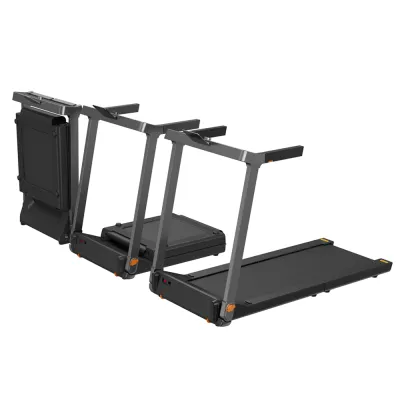
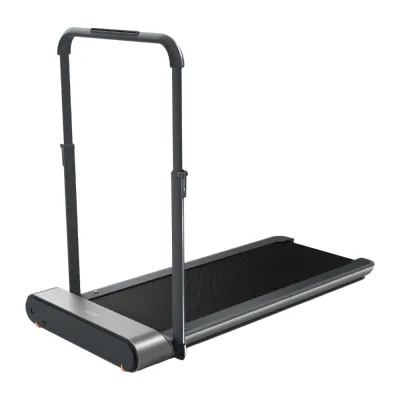
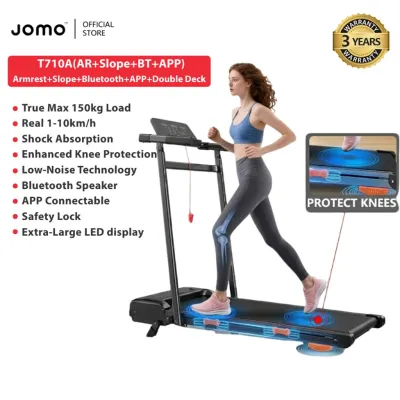
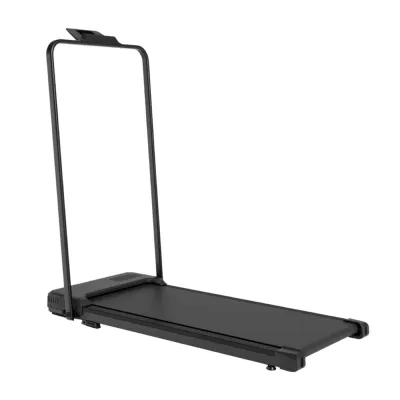
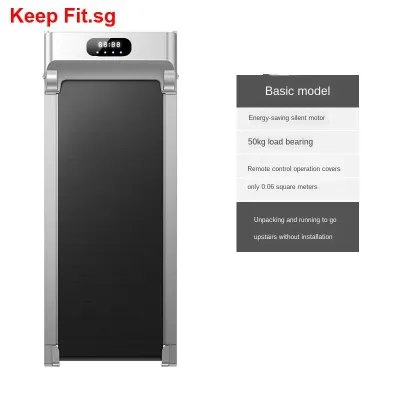
Prices are valid at publication and may change. Please refer to the product page for the latest price.
Account for door swings, wardrobe doors, and chair clearance. You need enough room to push your office chair aside when transitioning from sitting to walking. If your chair has to be moved to another part of the room, ensure it does not block entryways or create a secondary tripping hazard.
Consider your natural walking stride length. A stride that is too cramped can lead to awkward steps, so ensure the floor space allows for the full length of the machine plus a safe buffer behind it. Taller users generally require a longer walking deck to accommodate their natural stride without stepping off the back of the belt.
Check your ceiling height and standing desk clearance. When you stand on a treadmill, your height increases by the thickness of the deck, which is usually around 10 to 15 centimeters. Ensure your head will not clear ceiling fans or low-hanging light fixtures when you are elevated on the machine.
Key Dimensions and Foldability Features to Check
The physical footprint of an office walker treadmill is determined by its frame, but the running belt itself must be wide enough for comfortable movement. A belt that is too narrow can make you feel restricted, forcing you to constantly watch your feet instead of focusing on your work.

Look for a belt width that accommodates your natural stance while keeping the overall machine width narrow enough to fit between desk legs. Most compact models feature a belt width of around 40 to 45 centimeters, which balances comfort with a space-saving frame.
Evaluate the folding mechanism of the machine. Some models feature foldable handrails that fold completely flat, while others are entirely handle-free, designed to slide directly under a bed or sofa. If you choose a model with a handrail, verify how easily it folds down and whether it requires tools to lock into place.
Verify the folded thickness of the unit. If you plan to slide the treadmill under a couch, measure the clearance beneath the furniture frame to ensure the machine can slide in smoothly. Many modern walking pads have a profile of under 15 centimeters, making them highly suitable for low-clearance furniture.
Check the total weight of the unit. A lighter frame is easier to maneuver, but it must still feel stable underfoot during use. Look for a balance between structural integrity and manageable weight, ensuring the machine does not slide or shake when you are walking at your target speed.
Desk Compatibility and Ergonomic Setup
Integrating an office walker treadmill into your workspace requires careful alignment with your desk. Measure the distance between the inner sides of your desk legs to ensure the treadmill frame fits comfortably inside. Standard desks often have crossbars or drawers that can restrict the width available for a treadmill.
A height-adjustable standing desk is highly recommended for this setup. Walking while typing or reading requires your elbows to remain at a 90-degree angle and your eyes to align with the top of your monitor. A fixed-height desk will almost certainly cause ergonomic strain when paired with a treadmill.
If your desk is fixed, using a treadmill can force you to hunch over, leading to neck and back strain. Verify if you can raise your monitor or keyboard using risers if a standing desk is not an option. However, a dedicated standing desk remains the most reliable way to achieve a safe and comfortable posture.
Cable management is critical in a compact HDB room. Route the power cord along the edge of the room or use cable covers to prevent tripping hazards when stepping on and off the machine. Avoid running cables directly under the treadmill deck where they could be pinched or damaged.
Ensure the power outlet is close enough to the desk so you do not have to stretch cables across active walking paths. Using a high-quality extension cord with surge protection can help you position the treadmill safely without creating a cluttered floor layout.
Weight, Portability, and Daily Storage
An office walker treadmill is only useful if it is easy to set up and put away every day. Look for models equipped with built-in transport wheels on the front base. These wheels allow you to tilt the machine and roll it across the floor, minimizing the physical effort required to move it.
Identify where you will store the machine when it is not in use. If storing it vertically against a wall, ensure the unit has a secure locking mechanism or stand to prevent it from tipping over. This is especially important in households with children or pets where an unsecured upright treadmill poses a safety risk.
Protecting your HDB flooring is essential, especially if you have vinyl, laminate, or parquet floors. Placing a thin, high-density rubber mat under the treadmill can prevent scratches and scuffs caused by the machine’s weight and vibration.
A mat also helps absorb vibrations and dampens the sound of your footsteps, which is particularly important for maintaining good relations with neighbors living below you. In high-density HDB blocks, structural noise can travel easily through concrete floors, making a dampening mat a highly recommended accessory.
Safety and Operational Limits in Compact Rooms
Operating a treadmill in a confined space requires strict adherence to safety guidelines. Always check the manufacturer’s specified maximum weight capacity before purchasing. Exceeding this limit can strain the motor, leading to premature wear or sudden stops during use.
Pay attention to the motor’s duty cycle and recommended continuous run times. Compact motors can overheat if run continuously for several hours without a break. Allowing the machine to cool down between walking sessions helps preserve the lifespan of the internal components.
Maintain a clear buffer zone of at least one meter behind the treadmill. If you lose your balance or slip, you need open space behind you to avoid falling against walls, sharp desk corners, or glass panels. Never position the rear of the treadmill directly against a wall.
Keep the area around the belt free of loose items, power cords, and clutter that could get sucked into the roller mechanism. Regularly inspect the belt alignment to ensure it remains centered, as a drifting belt can rub against the frame and cause damage.
Monitor the noise levels during operation. Walking at slower speeds generally produces less noise, but regular maintenance, such as lubricating the belt according to the manual, keeps the motor running quietly. A well-lubricated belt also reduces friction, protecting the motor from overheating.
Frequently Asked Questions (FAQ)
Can I use a walking pad without a standing desk?
Using a walking pad with a standard, fixed-height desk is generally not recommended for extended periods due to ergonomic risks. Hunching over to reach a low keyboard while walking can cause significant back and neck strain. If you do not have a standing desk, you can use the treadmill for short walking breaks while watching a screen or taking phone calls, then slide it away when you need to sit and type. Alternatively, you can place a laptop riser on your fixed desk, though this may not provide enough space for comfortable typing.
Do compact treadmills require assembly?
Most compact office walker treadmills require minimal assembly, often arriving almost fully put together in the box. You may only need to attach the safety handrails, insert a few screws, or apply the initial belt lubricant. Because HDB corridors and entryways can be narrow, it is best to unbox the unit in a larger living area before rolling it into your designated workspace. Always review the manufacturer’s instruction manual to ensure all bolts are tightened and the belt is properly tensioned before your first walk.

Community discussion
Share your experience or ask a question. Comments are reviewed before publication.