
Setting up a home gym in a Singapore Housing & Development Board (HDB) flat requires a thoughtful approach to space, noise, and safety. A 20kg kettlebell is an exceptionally versatile tool for building strength, endurance, and cardiovascular fitness, but its density and weight present unique challenges in high-density residential environments. Unlike commercial gyms with reinforced flooring and dedicated lifting zones, a home workout space in an HDB flat must coexist with daily living areas, shared walls, and sensitive flooring materials.
To make an informed decision, you must look beyond the weight itself and evaluate the physical design, material composition, and spatial footprint of the kettlebell. Choosing the wrong type can lead to damaged vinyl or ceramic tiles, noise complaints from neighbors living directly below, or an awkward training experience in a confined room. By understanding how different kettlebell designs interact with your living environment, you can establish a safe, effective, and compact strength-training setup that respects both your home and your neighbors.
Key Features to Look for in an HDB-Friendly 20kg Kettlebell
When space is at a premium, every centimeter of your fitness equipment matters. The physical design of a 20kg kettlebell dictates not only how easily it can be stored under a bed or in a utility closet, but also how safely it can be used within a restricted floor plan.
Products mentioned in this guide
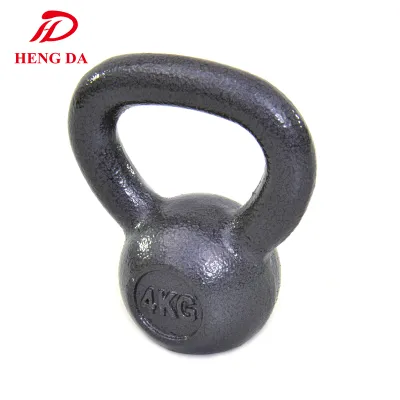
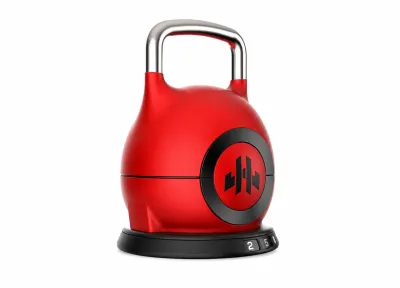
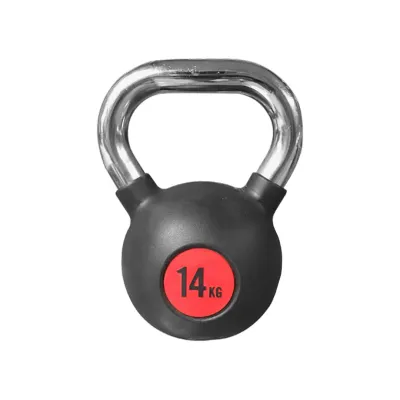
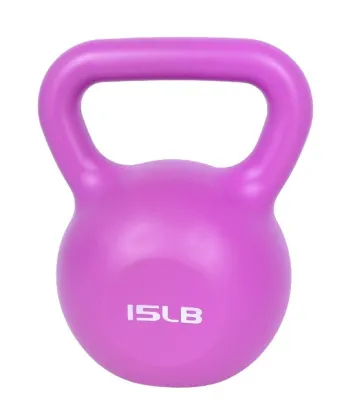
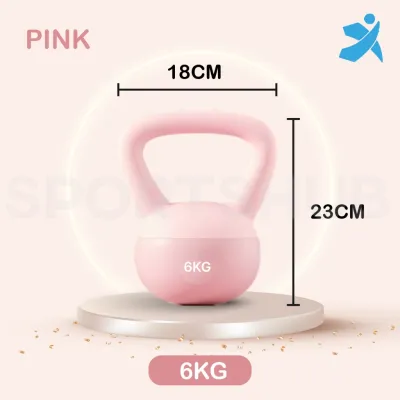
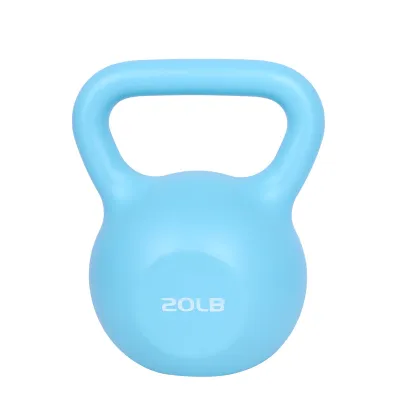
Prices are valid at publication and may change. Please refer to the product page for the latest price.
The first design element to evaluate is the base of the kettlebell. A perfectly flat, machined base is essential for apartment training. Kettlebells with rounded or uneven bottoms pose a rolling hazard when placed on the floor, which can lead to accidental damage to nearby furniture or walls. Furthermore, a stable, flat base is a safety requirement for floor-based exercises such as renegade rows or push-ups on the bell, where any wobbling could cause wrist strain or a sudden loss of balance.
The exterior coating of the kettlebell is another critical factor, particularly regarding floor protection, noise dampening, and indoor air quality. In Singapore’s tropical climate, home workouts often take place in enclosed, air-conditioned rooms where ventilation may be limited. This makes the choice of coating material highly consequential.
Bare cast iron or powder-coated iron kettlebells offer an excellent, slip-resistant grip, but they can easily scratch or chip delicate flooring if set down too quickly. To mitigate this, many lifters look toward rubber-coated or urethane-encased options. Urethane is highly durable, impact-resistant, and completely odorless, making it an outstanding choice for indoor environments.
In contrast, lower-grade rubber coatings can release strong, unpleasant chemical odors (off-gassing) that linger in small, air-conditioned spaces. If you choose a rubber-coated bell, verifying the quality of the rubber is essential to avoid turning your living room into a smelling hazard.
Finally, you must consider the handle clearance and horn width of the kettlebell. The handle clearance—the distance between the underside of the handle and the top of the bell body—determines how comfortably you can insert your hands during various movements. If the clearance is too shallow, your wrists may press uncomfortably against the bell, leading to bruising or compromised form.
The horn width, which is the distance between the vertical portions of the handle, affects your ability to perform two-handed exercises like standard kettlebell swings. In a small workout area, a handle that is too narrow can force your shoulders into an unnatural, rounded position, increasing the risk of injury. Conversely, an excessively wide handle might increase the overall lateral footprint of the bell, making close-body movements like clean-and-presses more difficult to execute without colliding with your own torso or nearby walls.
Cast Iron vs. Competition Kettlebells for Small Spaces
Understanding the structural differences between cast iron and competition kettlebells is vital when planning a compact home gym. These two styles represent fundamentally different design philosophies, each with distinct implications for storage, handling, and training style.

Cast iron kettlebells are cast from a single piece of metal, meaning their physical size scales proportionally with their weight. A 20kg cast iron kettlebell is significantly smaller and denser than its lighter counterparts, but it remains relatively compact compared to other fitness tools. This scaling property makes cast iron bells highly space-efficient; they can easily be tucked away in small corners, placed on low shelves, or stored in shallow cabinets when not in use.
In contrast, competition kettlebells adhere to a standardized international dimension regardless of their weight. Whether the bell weighs 8kg or 32kg, its height, base diameter, and ball size remain identical. This standardization is achieved by using a hollow steel shell and adjusting the internal filling to reach the target weight of 20kg.
While this consistency is highly beneficial for competitive lifters who want their technique to remain identical across different weights, it presents a storage challenge in small HDB flats. A 20kg competition kettlebell has a much larger physical volume than a 20kg cast iron kettlebell. If you plan to build a collection of weights over time, competition bells will occupy a uniform, relatively large amount of floor or shelf space, whereas a single cast iron bell offers a much smaller physical footprint.
The handle design also differs significantly between the two styles, impacting how you maneuver the weight in tight spaces. Competition kettlebells feature a standardized, straight handle with a uniform diameter (typically around 33mm to 35mm) and a rectangular window. This design is optimized for single-handed, high-repetition ballistic movements like snatches and clean-and-jerks, as the smooth steel handle allows the bell to rotate easily within your palm.
However, the narrower handle width of a competition bell makes two-handed exercises, such as the classic two-handed swing, difficult for individuals with broader hands. Cast iron kettlebells, on the other hand, typically feature wider, slightly curved handles that easily accommodate two hands. This makes them highly versatile for general fitness enthusiasts who rely on two-handed swings, goblet squats, and halos to get a full-body workout within a restricted floor plan.
Protecting Your Floors and Managing Noise in Shared Buildings
High-rise living in Singapore requires a high level of consideration for your neighbors, particularly when training with a heavy 20kg free weight. The impact of a kettlebell contacting the floor can send low-frequency vibrations through the concrete slab of an HDB building, easily traveling into the apartment below. To maintain neighborly harmony and protect your property, you must implement a robust floor protection and noise management strategy.
The foundation of this strategy is selecting the right shock-absorbing mats. Thin yoga mats or lightweight EVA foam tiles are entirely inadequate for a 20kg weight; they compress completely under load, offering virtually no protection against impact forces. Instead, you should invest in high-density rubber gym tiles with a minimum thickness of 15mm to 20mm. These dense tiles are engineered to disperse point-load forces across a wider surface area, significantly reducing the transmission of sound and vibration.
In addition to physical barriers, your lifting technique plays a crucial role in minimizing noise and preventing floor damage. When working with a 20kg kettlebell, you must prioritize eccentric control—the phase of the exercise where you lower the weight back to the ground. Dropping a heavy kettlebell, even from a height of a few centimeters, can easily crack ceramic tiles or permanently dent vinyl flooring.
During high-repetition ballistic sets, muscle fatigue can compromise your form, making it tempting to let the weight drop heavily at the end of a set. To prevent this, always plan your sets with a safety margin, stopping two to three repetitions before absolute failure so you retain the physical strength to lower the kettlebell to the mat under complete control. Utilizing a slow, deliberate lowering technique not only protects your home but also increases time under tension, enhancing your strength gains.
Different residential flooring materials exhibit varying levels of vulnerability to heavy free weights, and understanding your specific floor type is essential. Ceramic and porcelain tiles are highly rigid and brittle; a direct impact from a 20kg metal base can easily cause spiderweb cracks that are costly and disruptive to repair.
Vinyl overlay flooring, while softer and more forgiving of minor impacts, is highly susceptible to deep, permanent indentations under concentrated point loads. If a heavy kettlebell is left sitting in one spot on a vinyl floor for an extended period, the material may deform permanently. Laminate flooring is prone to scratching from the textured surface of a powder-coated base and can suffer joint separation if subjected to repeated heavy impacts. Regardless of your flooring type, always place a dedicated, high-density protective barrier between your kettlebell and the floor, both during workouts and during storage.
How to Build Your Shortlist: A Step-by-Step Evaluation Checklist
Finding the right 20kg kettlebell on online marketplaces or local fitness stores requires a systematic approach. Product listings can often be misleading, using generic terms or low-quality stock photos that do not accurately represent the item’s physical characteristics.
To build a reliable shortlist, your first step should be verifying the exact physical dimensions of the kettlebell. Look for manufacturer specification sheets or detailed product descriptions that list the precise height, base diameter, and handle clearance. If this information is missing, contact the seller directly to request these measurements. Knowing the exact footprint of the bell allows you to measure your intended storage space and ensure the handle dimensions are compatible with your hand size and training style before making a purchase.
The second step is to analyze user feedback and customer reviews with a critical eye, specifically filtering for performance indicators relevant to home use. When browsing reviews on ecommerce platforms, search for keywords such as “smell,” “odor,” “coating,” “flat,” and “wobble.”
Pay close attention to complaints about strong, persistent rubber odors, as this indicates low-grade materials that will off-gas in your home. Look for mentions of peeling paint or chipping powder coat, which can create sharp edges and leave messy debris on your workout mat. Additionally, check if users report that the base of the kettlebell is uneven; a wobbling bell is a safety hazard for floor exercises and should be avoided. Consistent positive feedback regarding a smooth handle finish and a stable base is a strong indicator of manufacturing quality.
Finally, you must confirm the logistics, delivery terms, and return policies associated with purchasing heavy fitness equipment. A 20kg kettlebell is a heavy, dense object, and shipping fees can vary significantly depending on the seller’s location and delivery method.
Verify whether there are any weight-based shipping surcharges or additional fees for delivery to HDB flats without direct lift access. It is also crucial to review the seller’s return policy; if the kettlebell arrives with a manufacturing defect, such as a rough, unpolished handle seam that could tear your hands, or a severely uneven base, you need to ensure you can return or exchange the heavy item without incurring prohibitive return shipping costs. Checking for warranty coverage on structural integrity and coating defects provides additional peace of mind for your investment.
Frequently Asked Questions (FAQ)
Can I use a 20kg kettlebell on HDB vinyl or tile flooring without a mat? (FAQ)
No, you should never use a 20kg kettlebell directly on HDB vinyl or tile flooring without a protective mat. A 20kg kettlebell concentrates its entire weight onto a relatively small surface area at its base, creating an intense point load. On ceramic or porcelain tiles, this concentrated force can easily cause immediate cracking or chipping upon contact, even during a gentle placement. On vinyl flooring, the heavy weight can cause deep, permanent indentations and structural deformation of the underlying material over time. To prevent costly property damage, always use a high-density rubber gym mat or a dedicated lifting platform to safely absorb and distribute the impact force.
Are adjustable kettlebells a better space-saving alternative to a fixed 20kg weight? (FAQ)
Adjustable kettlebells are highly space-efficient because they combine multiple weight increments into a single unit, but they come with distinct trade-offs compared to a fixed 20kg kettlebell. The primary advantage of an adjustable model is its ability to replace an entire rack of weights, making it ideal for very small HDB flats.
However, adjustable mechanisms involve moving parts, locking pins, or internal plates that can wear out or rattle over time. During dynamic, high-force movements like swings or snatches, any shifting of the internal weight can alter the center of gravity, affecting your balance and form. A fixed 20kg kettlebell offers unmatched structural integrity, a completely stable center of mass, and a solid, reliable handle, making it the safer and more durable choice for high-intensity ballistic training.
Community discussion
Share your experience or ask a question. Comments are reviewed before publication.