
The best water rowers for compact HDB flats are those designed with vertical storage capabilities, foldable frames, or compact dual-tank systems that minimize both active and static footprints. Because space is at a premium in modern Singaporean apartments, a successful purchase depends on matching the machine’s physical dimensions to your available floor area, verifying the ceiling height for upright storage, and selecting materials that balance stability with acoustic dampening for high-density living.
While water rowers deliver a smooth, full-body workout that closely mimics the feel of on-water rowing, their traditional footprint demands careful selection. Unlike compact spin bikes or under-desk treadmills, a rower requires a long, horizontal clearance to accommodate the slide rail and the user’s full leg extension. Fortunately, innovative engineering has made it highly feasible to enjoy the benefits of water resistance without permanently sacrificing your living room or study floor space.
By focusing on key design features such as upright storage, folding hinges, and transport wheels, you can easily integrate a high-quality cardio machine into your home. The key is to understand the physical realities of your flat and how different rower designs interact with your living environment. This guide will walk you through the essential spatial, structural, and acoustic considerations to help you make an informed decision.
Products mentioned in this guide
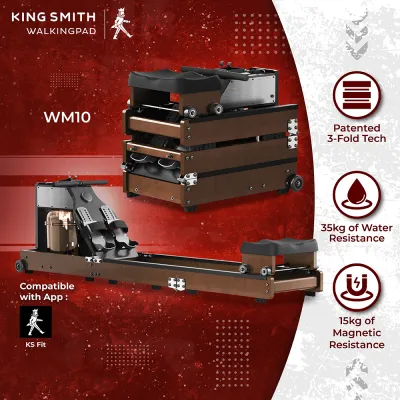
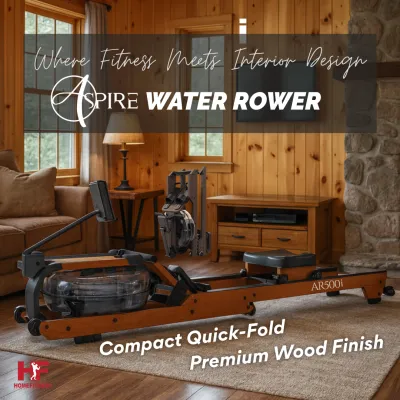
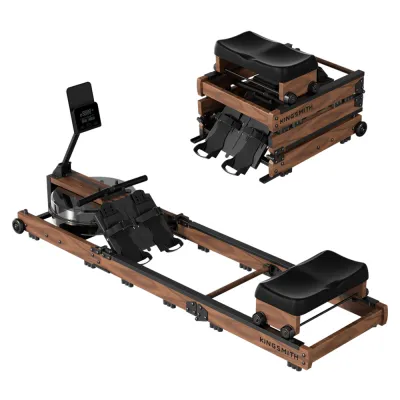
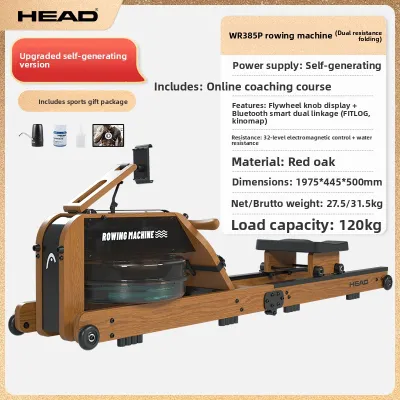
Prices are valid at publication and may change. Please refer to the product page for the latest price.
Measuring Your Space: Key Dimensions for Compact Water Rowers
Before purchasing a water rower, you must measure both your active workout zone and your intended storage area. The active footprint of a standard water rower typically ranges from 200 to 220 centimeters in length and 50 to 60 centimeters in width. In a typical HDB living room or spare bedroom, this length can easily dominate the layout, meaning you must plan for a clear path that allows you to mount and dismount the machine safely.
Beyond the physical length of the machine, you must account for the user’s body movement during the rowing stroke. At the finish phase of the stroke, your body leans back slightly, and your elbows extend outward and backward. This means you need to add at least 30 to 50 centimeters of clearance behind the rower and about 20 centimeters on either side to prevent your elbows or shoulders from brushing against walls, furniture, or television consoles.
Rail length is another critical dimension that directly impacts user height compatibility. Shorter, compact rowers often feature a condensed slide rail to save space, but this can limit the stroke range for taller users. If a user cannot fully extend their legs at the catch or finish, the workout efficiency drops significantly. Always check the manufacturer’s specified maximum user height or inseam limit to ensure the compact rail accommodates your physical proportions.
Finally, consider the dimensions of the water tank itself, which is invariably the widest and heaviest part of the machine. Standard water tanks have a diameter of roughly 50 to 56 centimeters. Some compact models utilize dual-tank systems or angled tanks that sit lower or narrower, reducing the overall width of the machine. Measuring the exact width of your storage nook or the gap beside your wardrobe is essential to ensure the tank portion of the rower fits snugly when not in use.
Reclaiming Floor Space: Storage and Footprint Management
For most HDB dwellers, keeping a two-meter-long fitness machine permanently on the floor is not a viable option. This makes storage efficiency the most critical factor in your purchasing decision. The most common and effective storage solution for water rowers is vertical storage, where the machine is stood upright on its end, reducing the footprint to roughly the size of a standard dining chair.

When stored vertically, the heavy water tank sits at the bottom of the machine, lowering the center of gravity and providing excellent stability. However, you must verify that the rower is designed with a stable, flat base or dedicated stand-up brackets to prevent it from tipping over. In homes with young children or pets, it is highly recommended to look for models that include wall-anchor safety straps to secure the upright machine to a solid wall.
Foldable frames offer an alternative storage method, utilizing a heavy-duty hinge in the middle of the slide rail. This allows the rower to fold in half, significantly reducing its length while increasing its height or width. While folding models are highly convenient, you must inspect the quality of the hinge mechanism and locking pins. Frequent folding and unfolding put structural stress on these joints, so choosing a model with robust steel reinforcement at the pivot point is essential for long-term durability.
Regardless of whether you choose a vertical-storing or foldable model, built-in transport wheels are non-negotiable. A water rower filled with 15 to 20 liters of water can easily weigh upwards of 40 to 50 kilograms. High-quality, non-marking polyurethane wheels located at the front of the frame allow you to tilt the machine and roll it effortlessly from your living room to a storage closet, bomb shelter, or bedroom corner without scratching your vinyl, laminate, or parquet flooring.
Balancing Stability and Noise in High-Density Living
Living in a high-density HDB block means your workout choices can directly affect your neighbors. Water rowers are generally praised for their pleasant, low-frequency acoustic profile, which produces a soothing rushing water sound rather than the high-pitched mechanical whine of air-resistance rowers. However, the physical vibrations generated by the seat sliding along the rail and the water churning in the tank can still travel through concrete floor slabs.
To minimize noise transmission to the flat below, the choice of frame material plays a significant role. Solid wood frames, such as those made from sustainably sourced ash, oak, or walnut, possess natural sound- and vibration-dampening properties. Wood absorbs the micro-vibrations of the rowing stroke much better than metal frames, resulting in a quieter workout. If you opt for a steel or aluminum frame, investing in a high-density rubber equipment mat is essential to isolate the machine from the floor.
Frame material also dictates the weight-to-stability ratio of the rower. While lightweight aluminum rowers are easier to move and store, they may flex or slide slightly during high-intensity interval training (HIIT) sessions. A heavier wood or steel frame provides a more planted, secure feel, but it requires more effort to maneuver into storage. You must balance your physical ability to move the machine with your desire for a rock-solid workout platform.
Additionally, be aware that highly compact or lightweight folding rowers may have lower maximum weight capacities than their full-sized, solid-frame counterparts. A split-rail design or a thinner metal frame can compromise structural integrity under heavy loads. Always verify that the machine’s maximum weight capacity comfortably exceeds your body weight, ensuring a safe workout and preventing premature wear on the slide rail rollers and bearings.
Your Pre-Purchase Checklist for Compact Flats
To ensure your chosen water rower fits seamlessly into your Singapore home, use this practical verification checklist before making a purchase. Taking precise measurements and checking manufacturer specifications beforehand will save you the hassle of dealing with bulky returns or finding yourself unable to store the machine safely.
- Measure the Active Workout Zone: Confirm you have a clear floor area of at least 250 cm in length and 100 cm in width. This provides the necessary clearance for the machine, your body movement, and safe mounting.
- Verify Ceiling Height for Vertical Storage: Measure the height of your ceiling in the intended storage area. Standard HDB ceilings are typically around 2.6 meters high, which easily accommodates most vertical rowers (usually 2.1 to 2.2 meters tall), but false ceilings or low-hanging light fixtures can restrict clearance.
- Check Doorway and Hallway Widths: Ensure the path from your workout zone to your storage area is wide enough to maneuver the rower. Measure narrow doorways, hallway turns, and bomb shelter entrances, comparing them to the widest part of the rower (usually the tank, around 55 cm).
- Assess Floor Load and Protection: A fully filled water rower concentrated on a small vertical footprint can exert significant pressure on your flooring. Plan to place a protective, non-slip mat under the rower's contact points to prevent permanent indentations on vinyl or soft wood floors.
- Review Manufacturer Warranty Terms: Confirm that the warranty covers home use in high-humidity environments like Singapore. If you plan to store the machine near a window, ensure the warranty does not exclude damage caused by indirect sunlight or ambient moisture.
By systematically working through this checklist, you can confidently select a water rower that delivers an exceptional cardiovascular workout while respecting the spatial boundaries of your HDB flat.
Frequently Asked Questions (FAQ)
Can I keep a water rower outdoors on a balcony?
No, keeping a water rower on an outdoor or semi-outdoor balcony in Singapore is highly discouraged. Singapore’s tropical climate, characterized by high humidity, intense UV exposure, and sudden rainstorms, will rapidly degrade the machine’s components. UV rays cause the polycarbonate water tank to become brittle, cloudy, and prone to cracking, while also promoting rapid algae growth inside the water.
Furthermore, if you choose a wooden water rower, the high ambient humidity can cause the wood to warp, swell, or develop mold, compromising the alignment of the slide rail. Metal components on steel or aluminum rowers are also at a higher risk of rust and corrosion when exposed to outdoor air. Most manufacturers explicitly state that outdoor or balcony storage voids the product warranty, so it is best to store your rower strictly indoors.
How often should I change the water in a compact tank?
You do not need to change the water in your rower’s tank frequently if you maintain it properly. Under normal indoor conditions, the water only needs to be completely drained and replaced every one to two years. Instead of frequent water changes, you should use water purification or chlorine tablets, which are typically supplied by the manufacturer or available at fitness equipment retailers.
Adding a single purification tablet to the tank every six months is generally sufficient to keep the water clear and prevent the growth of algae and bacteria. You should perform a quick visual inspection of the tank every few weeks; if you notice any cloudiness, discoloration, or residue, it is time to add a tablet or perform a full water change. Always follow the specific maintenance intervals and chemical guidelines provided in your product manual to avoid damaging the tank seals.
Community discussion
Share your experience or ask a question. Comments are reviewed before publication.