
Navigating the bustling commuter pathways and park connectors of Singapore during peak hours requires a reliable, stable, and efficient mode of transport, especially when carrying personal belongings or groceries in a hot, tropical climate. Finding the best electric trike scooter for your daily commute depends on choosing a model that balances physical stability and cargo capacity with strict local regulatory compliance, matching the motor power to your route’s inclines, and selecting a frame design that fits your storage and transit constraints. While two-wheel models offer agility, a three-wheel configuration provides unmatched low-speed balance and cargo management, making it an increasingly popular choice for diverse riders across the island.
Why choose a three-wheel electric scooter over a two-wheel model for commuting?
Three-wheel electric scooters, or trikes, offer a fundamentally different riding dynamic than their two-wheel counterparts, primarily defined by superior static and low-speed stability. This design allows you to come to a complete stop or crawl at walking pace without needing to put your feet on the ground, making it highly suitable for carrying heavy loads or accommodating riders with balance concerns. When navigating crowded pedestrian-adjacent paths or waiting at traffic junctions, you can remain comfortably seated without the constant physical effort of balancing a heavy machine.
However, this enhanced stability comes with distinct trade-offs in weight and maneuverability. Trikes are inherently heavier due to the additional wheel, wider axle, and reinforced frame components, making them more challenging to lift over curbs or transport up stairs. Furthermore, the wider rear track increases the turning radius, requiring wider sweeps when navigating tight corners or narrow park connector barriers. Commuters must evaluate whether their daily routes feature wide, continuous paths or tight, winding walkways that might restrict a wider vehicle.
Products mentioned in this guide
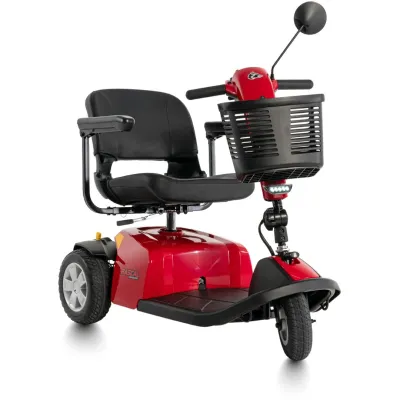
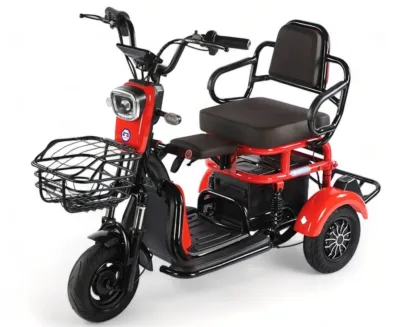
2 Lazada user ratings
Getting the red instead, pre order 2weeks arrived coz it not instock when order.
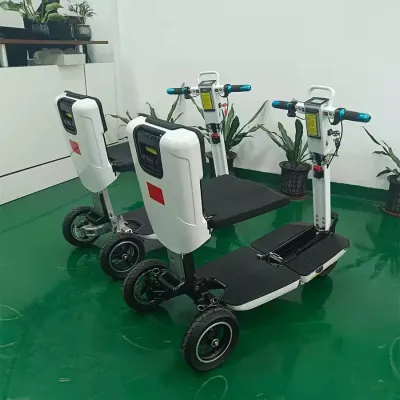
Prices are valid at publication and may change. Please refer to the product page for the latest price.
Another critical factor is how the vehicle handles cargo weight distribution. On a two-wheel scooter, carrying a heavy backpack or hanging bags from the handlebars significantly alters the center of gravity, affecting steering and braking safety. A three-wheel scooter distributes cargo weight more safely across its wider footprint. Placing cargo over the rear axle, either in a dedicated basket or on a low-slung rack, keeps the weight centered and low, preventing the front wheel from lifting during acceleration and maintaining consistent tire contact with the ground.
Which frame design and folding mechanism suit your daily transit routine?
Selecting the right frame design and folding mechanism depends on how you plan to store, lift, and mount your trike during your daily journey. A step-through frame paired with a compact folding stem offers the most versatile configuration for urban commuters who need to transition between riding, storing, and boarding public transport. Your choice should align directly with your daily attire, physical mobility, and storage constraints.

Step-through frames for easy mounting
Step-through frames eliminate the need to swing a leg high over a central top tube, allowing you to mount and dismount gracefully. This is especially practical if your daily commute involves wearing formal office attire, skirts, or structured trousers, or if you have limited hip mobility. This design keeps the step-over height minimal, reducing the risk of tripping or losing balance when getting on or off the vehicle in busy areas.
Folding mechanisms for mixed-mode transit
If your commute involves mixed-mode transit or tight storage spaces, the folding mechanism is a critical specification to verify. Some trikes feature a single-point folding stem, while others allow the entire rear axle assembly to fold inward or the frame to split. You must measure the folded dimensions against your intended storage locations, such as under an office desk, inside a residential bomb shelter, or within a car boot. If you plan to bring the device onto public transport, check the latest Land Transport Authority (LTA) size limits for personal mobility devices on buses and trains, as many full-sized trikes exceed these dimensions even when folded.
Cargo integration and weight distribution
Consider how cargo accessories affect the trike’s overall balance and usability. Front baskets are best for light, quick-access items like a small handbag or water bottle, but overloading them can make steering heavy and unpredictable. Rear cargo racks are ideal for heavier items, laptop bags, or groceries because the load sits directly over the dual rear wheels, minimizing the impact on steering dynamics. Some step-through models also feature enclosed compartments beneath the seat, which protect your belongings from sudden rain showers and keep the center of gravity exceptionally low.
What motor and battery specifications match Singapore's terrain and your distance?
Matching your motor and battery specifications to your commute requires calculating your total daily round-trip distance and identifying the steepest inclines along your route. To ensure reliable performance without premature battery drain, you should select a battery capacity that offers a thirty percent buffer over your daily mileage and a motor with sufficient torque to handle local ramps. Understanding these technical specifications prevents you from underestimating your power needs or overpaying for unnecessary capacity.
To avoid range anxiety, calculate your required battery capacity using real-world variables rather than relying solely on manufacturer-advertised ranges. Battery capacity is measured in Watt-hours (Wh), calculated by multiplying the voltage (V) by the amp-hour (Ah) rating (for example, a 48V 10Ah battery provides 480Wh). As a general rule for tropical urban riding with frequent stop-start cycles, expect to consume approximately 15 to 20 Wh per kilometer. To account for rider weight, payload, wind resistance, and natural battery degradation over several years, select a battery capacity that provides a generous buffer beyond your actual round-trip commuting distance.
Singapore’s terrain may appear flat, but daily routes often involve navigating multi-storey car park ramps, overhead bridge connectors, or steep inclines leading to housing estates. A motor with insufficient torque will struggle on these slopes, leading to overheating and rapid battery drain. Look for a motor with a continuous power rating that matches local legal limits, but pay close attention to the peak torque output. Dual-motor setups, where each rear wheel is driven by an independent motor, offer superior traction and climbing capability on inclines compared to a single front-wheel drive motor, which can slip on wet or steep slopes.
Deciding between an integrated and a removable battery depends entirely on your charging environment. If you live in a high-rise apartment or work in an office where bringing the entire trike indoors is impractical or prohibited, a removable battery is essential. This allows you to carry only the battery pack to a standard wall outlet for charging. Conversely, integrated batteries often allow for a sleeker, more weather-sealed frame design, but they require you to park the entire trike close to an electrical outlet, which may limit your charging options.
How do you verify road legality and safety compliance before buying?
Verifying road legality and safety compliance in Singapore requires confirming whether the trike is classified as a Power-Assisted Bicycle (PAB) or a Personal Mobility Device (PMD) and ensuring it carries the mandatory UL2272 safety certification. Riding an uncertified or unregistered device on public paths is illegal and carries severe penalties under the Active Mobility Act. You must carefully match the device’s specifications to the specific rules governing where and how it can be ridden.
Electric trikes generally fall into two categories under local regulations. A PAB, often referred to as an e-bike, must have functional pedals, a maximum motor-assist speed of 25 km/h, and must be approved and registered with the LTA, bearing a permanent orange registration plate. PMDs, such as motorized e-scooters, do not require pedals but are subject to strict weight limits (maximum 20 kg) and width limits (maximum 70 cm), and must bear a yellow registration plate. Ensure you clarify which category your chosen trike falls under, as this dictates your registration requirements.
Safety certifications are non-negotiable for any electric mobility device used on public paths. The device must carry the UL2272 safety certification, which ensures the battery and electrical systems have undergone rigorous testing to prevent fire hazards. Do not purchase any trike from online marketplaces or parallel importers that lacks this specific certification mark, as it cannot be legally registered or ridden. Additionally, ensure the retailer provides the necessary transfer of registration documents upon purchase, as riding an unregistered device on public paths is a serious offense.
Your choice of trike dictates where you can legally ride. PAB-compliant trikes (e-bikes) are allowed on public roads (except expressways) and shared cycling paths or park connectors, but they are strictly prohibited on pedestrian footpaths. PMD-compliant trikes (e-scooters) are allowed only on shared cycling paths and park connectors, and are strictly prohibited on public roads and pedestrian footpaths. Verify your daily route beforehand; if your commute relies heavily on roadside riding, a PAB-compliant trike is your only legal option, whereas a path-only commute makes a PMD-compliant trike suitable.
Which comfort and weather-ready features improve tropical commuting?
Improving your comfort during a tropical commute requires prioritizing pneumatic tires with deep water-channeling treads, full-coverage mudguards, and highly breathable seating materials. These features work together to maintain traction on wet paths, protect your attire from road spray, and minimize heat retention during humid rides. Investing in these weather-ready specifications ensures that sudden weather changes do not disrupt your daily journey.
Singapore’s tropical climate brings sudden, heavy downpours that can make asphalt and tiled park connectors incredibly slick. To maintain traction, look for pneumatic (air-filled) tires with deep, water-channeling tread patterns rather than solid rubber tires, which tend to slip on wet surfaces. Additionally, a robust suspension system—such as front fork suspension or dual rear shock absorbers—is vital for absorbing vibrations from uneven pavement, tactile paving, and drainage grates, reducing rider fatigue over longer distances.
Never underestimate the importance of full-coverage fenders. A sudden tropical shower can turn a dry path into a muddy stream in minutes. Ensure the trike is equipped with wide, wrap-around mudguards on all three wheels. Short or aesthetic-only fenders will fail to block dirty road water from spraying onto your back, legs, and work attire, defeating the purpose of a clean daily commute.
Riding in high humidity requires careful consideration of touchpoints. Opt for a wide, ergonomically contoured seat made from breathable, UV-resistant materials that do not trap heat when parked in the sun. An upright riding position, supported by adjustable handlebars, keeps your spine in a neutral alignment and reduces strain on your lower back. This posture also improves visibility, allowing you to keep your eyes on the path ahead and anticipate potential hazards more effectively.
How should you evaluate local warranty and after-sales support?
Evaluating local warranty and after-sales support requires confirming that the retailer operates a physical service center in Singapore equipped to handle specialized trike components like dual rear motors or differentials. You should also verify the availability of replacement batteries and common consumable parts before making your purchase. Securing reliable long-term support is essential for protecting your investment and keeping your commuter vehicle in safe working order.
An electric trike is a mechanical and electrical investment that requires regular maintenance. Before finalizing your purchase, confirm that the retailer operates a physical, local service center staffed by technicians trained specifically in three-wheel systems. Trikes feature unique mechanical components, such as rear differentials, dual brake lines, and complex steering linkages, which standard two-wheel scooter shops may not be equipped or willing to service.
The battery is the single most expensive component of your electric trike. Carefully review the warranty terms provided by the seller. A reliable warranty should cover the battery pack for at least six to twelve months against manufacturing defects and premature capacity loss. Ask the retailer about the expected lifespan of the battery under daily commuting conditions and obtain a clear estimate for the cost of a replacement battery pack, as this will be a primary long-term maintenance expense.
Finally, ensure the retailer maintains a consistent, local stock of consumable spare parts. Items such as brake pads, inner tubes, tires, and throttle cables will wear out over time and require replacement. If a retailer relies on importing these basic parts on a per-order basis, a simple flat tire or worn brake pad could leave your primary commuting vehicle out of service for weeks. Always choose a reputable local distributor who guarantees immediate availability of essential maintenance components.
Community discussion
Share your experience or ask a question. Comments are reviewed before publication.