
Setting up a home gym in a Housing & Development Board (HDB) flat requires balancing your fitness goals with the comfort of your immediate neighbours. Because HDB blocks feature shared concrete structures, the impact of lifting weights can easily travel through floors and walls, potentially causing unwanted disturbances. To minimize both airborne noise and structure-borne vibrations, rubber bumper plates—specifically those made of crumb rubber—and high-quality urethane-coated plates are the quietest options available. Selecting the right material depends on your specific training style, space constraints, and how you manage your lifting technique.
Understanding Noise and Impact in Apartment Living
To address noise in a multi-story residential building, you must first understand how sound travels. Lifting weights produces two distinct types of noise: airborne noise and structure-borne vibration. Airborne noise is the high-frequency sound of metal clanking against metal, such as when loading plates onto a barbell or when plates rattle during a lift. While annoying, this type of sound is relatively easy to block with closed doors, windows, or basic acoustic panels.
Structure-borne vibration is a much more challenging issue in HDB flats. When a heavy weight is set down or dropped, the kinetic energy transfers directly into the concrete floor slab. This energy travels through the building’s structural skeleton as a low-frequency vibration, which can be heard and felt by neighbours several floors away. Because concrete is highly efficient at transmitting these low-frequency waves, managing the point of impact is critical.
Products mentioned in this guide
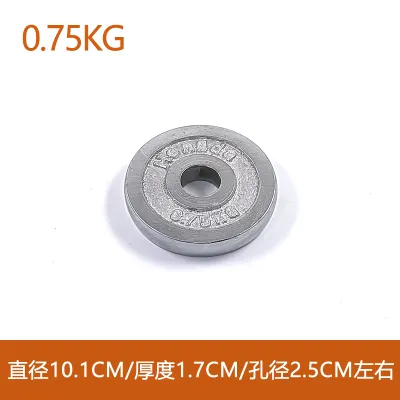
Prices are valid at publication and may change. Please refer to the product page for the latest price.
The baseline impact transfer is heavily influenced by your subfloor conditions and the building’s design. Standard residential flooring like vinyl, laminate, or ceramic tile offers almost no shock absorption. Without a dedicated dampening layer and the right plate materials, even a controlled deadlift can send noticeable vibrations through the floor, making material selection your first line of defense.
Comparing Weight Plate Materials for Noise Reduction
Different weight plate materials possess unique physical properties that dictate how they absorb shock and muffle sound. When evaluating plates, you must consider their density, elasticity, and overall physical profile. Denser materials take up less space on the barbell but transfer impact energy instantly, whereas softer materials deform slightly under load to disperse kinetic energy.

Before purchasing any equipment, it is highly recommended to check the manufacturer’s technical specifications. Look for details such as the Shore durometer rating, which measures the hardness of the material. A lower durometer rating indicates a softer, more pliable rubber that will absorb more impact and produce less noise, while a higher rating indicates a harder surface that offers less dampening but greater durability.
Bumper Plates (Crumb and Virgin Rubber)
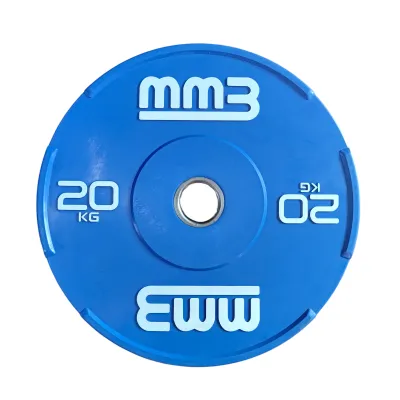
Bumper plates are constructed almost entirely of dense rubber surrounding a central steel collar, making them the standard choice for high-impact lifting. The thick rubber profile is designed to deform slightly upon contact with the ground, absorbing a significant portion of the kinetic energy and reducing the peak force transmitted to your floor. This makes them highly effective at dampening the low-frequency vibrations that disturb downstairs neighbours.
Within the category of bumper plates, you will generally choose between crumb rubber and virgin rubber. Crumb rubber plates are made from recycled rubber granules molded together, resulting in a softer, bouncier plate that offers excellent shock absorption and noise reduction. Virgin rubber plates are made from raw rubber, creating a denser, harder plate with a more controlled bounce. Virgin rubber also has the advantage of emitting far less chemical odor, making it more suitable for small, enclosed spare rooms.
The primary trade-off with bumper plates is their physical width. Because rubber is less dense than iron, bumper plates are significantly thicker, which limits the total amount of weight you can fit on your barbell’s sleeves. If you plan to lift heavy loads, you must verify that your barbell has sufficient sleeve length to accommodate these wider plates.
Urethane and Rubber-Coated Plates
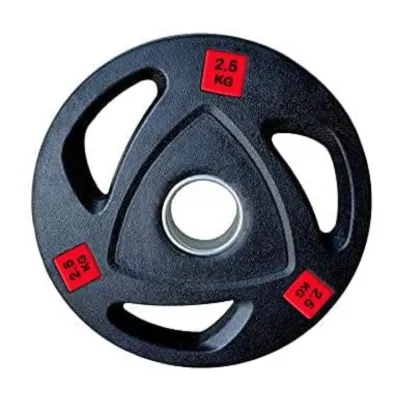
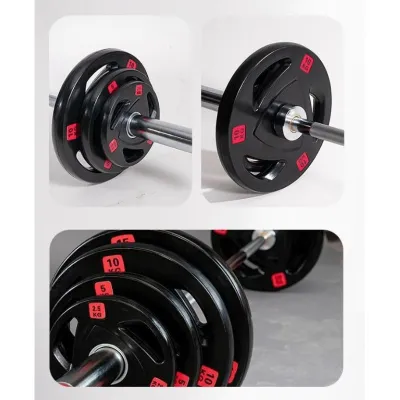
Urethane and rubber-coated plates offer a middle ground by encasing a solid metal core in a protective outer layer. This design is highly effective at eliminating the high-frequency clanking of metal-on-metal contact during your workouts. However, because the protective coating is relatively thin, these plates offer very limited drop protection and minimal shock absorption compared to full rubber bumper plates.
When choosing coated plates, the quality of the outer material is highly important. Cheaper rubber-coated plates often use low-grade rubber that can release a strong, persistent chemical odor, which can quickly fill a small HDB room. Premium polyurethane (urethane) coatings are virtually odorless, highly resistant to tearing, and do not degrade or become sticky over time, making them a much more pleasant option for indoor home gyms.
The major advantage of coated plates is their slim profile. Because the core is made of dense metal, these plates are thin, allowing you to load a substantial amount of weight onto a standard barbell. This makes them an excellent choice for lifters who focus on heavy powerlifting or bodybuilding movements where the weights are always lowered under strict control.
Cast Iron and Steel Plates
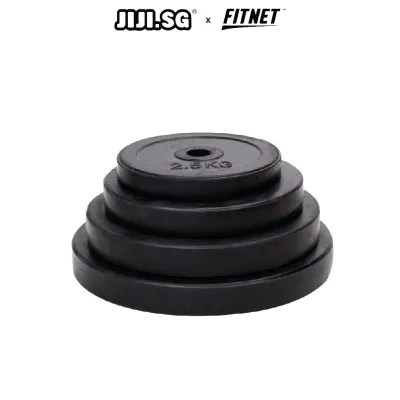
Bare cast iron and machined steel plates are the traditional choice for strength training, but they are highly problematic for HDB home gyms. When these plates touch, they produce a loud, metallic clanking noise that easily penetrates walls and doors. Additionally, setting them down too quickly or dropping them can cause severe structural vibrations and potentially crack your floor tiles.
If you decide to use bare metal plates, your training must be strictly limited to controlled movements where the weights are never dropped. You must perform slow, deliberate eccentric phases on every repetition, ensuring the plates make contact with the floor as gently as possible. Furthermore, using bare metal plates makes secondary floor protection, such as heavy-duty rubber mats, an absolute necessity to prevent damage and manage noise.
Decision Framework: Which Material Fits Your Routine?
Selecting the right weight plate material requires matching your training style and space constraints to the physical properties of the plates. There is no single option that suits every lifter, so you must weigh the trade-offs of thickness, noise dampening, and durability against your personal fitness routine.
Choose bumper plates if your routine includes Olympic weightlifting, functional fitness, or dynamic movements like cleans, snatches, and overhead presses. If you frequently drop the barbell from shoulder height or overhead, full rubber bumper plates are essential. Their energy-absorbing design is the only option capable of safely dispersing high-impact forces in a residential setting, provided they are paired with thick flooring.
Choose urethane or high-quality rubber-coated plates if your training focuses on powerlifting, bodybuilding, or general strength training where lifts are performed in a controlled manner. If you need to load heavy weights for squats, deadlifts, or bench presses and always lower the bar under muscular control, these coated plates offer the perfect balance of space efficiency and noise reduction.
Avoid cast iron plates if you live on an upper floor of an HDB block, have close neighbours, or cannot guarantee a controlled descent on every single repetition. The risk of accidental drops due to muscle fatigue is simply too high, and the resulting structural vibration and airborne noise are highly likely to cause friction with your neighbours.
Verify your barbell sleeve compatibility before making a purchase. Measure the usable sleeve length of your barbell and compare it against the thickness specifications of the bumper plates you plan to buy. If you require a working weight of 140 kg but your chosen crumb rubber plates are 80 mm thick, you may run out of sleeve space before reaching your target weight, necessitating a mix of bumper and thinner coated plates.
Essential Setup Checks to Further Minimize Noise
No weight plate material can completely eliminate noise on its own; your flooring setup plays an equally critical role. You must check the thickness and density of your rubber flooring mats. Standard yoga mats or thin utility mats are insufficient; a home gym in an HDB flat should utilize high-density rubber tiles with a minimum thickness of 15 mm to 25 mm to properly absorb residual structural vibrations.
The most effective noise reduction tool in any home gym is your lifting technique. Practicing controlled eccentrics—lowering the weight slowly and under tension rather than letting it drop—not only builds more muscle but also drastically reduces the impact force when the plates touch the floor. Treat the descent of the barbell as an active part of the exercise, aiming to place the weights down silently.
Secondary airborne noise often comes from loose or poorly maintained equipment rather than the plates themselves. Regularly inspect your barbell to ensure the sleeves rotate smoothly without grinding, and check that your spring collars or lock-jaw collars are tight enough to prevent the plates from sliding and clanking against each other during a set. Tightening loose bolts on your power rack and adding felt or rubber strip dampeners to the J-cups can also eliminate the loud metal-on-metal contact when racking the bar.
Frequently Asked Questions (FAQ)
Can I use standard iron plates if I put them down gently?
While it is technically possible to use standard iron plates quietly by lowering them with extreme care, it remains highly risky for an HDB home gym. The unavoidable clanking noise when loading, unloading, or adjusting plates on the barbell will still create sharp, high-frequency sounds that travel easily through thin walls. Furthermore, as you reach muscle failure at the end of a challenging set, your ability to control the descent diminishes, greatly increasing the risk of an accidental hard drop that could damage your floor and disturb your neighbours.
Do bumper plates smell, and will it affect my small room?
Yes, some bumper plates can emit a strong rubber odor, particularly those made from recycled crumb rubber. In a small, enclosed HDB spare room or bomb shelter, this off-gassing can quickly become overwhelming and unpleasant. To minimize this issue, consider investing in high-quality virgin rubber or urethane-coated plates, which have negligible odor. If you do purchase crumb rubber plates, it is highly recommended to air them out in a well-ventilated area, such as a service yard or balcony, for several days before bringing them into your main living space.
Community discussion
Share your experience or ask a question. Comments are reviewed before publication.