
Post-run tightness in the lower legs is a common challenge for runners, often manifesting as a stubborn pull in the calf muscles or a stiff sensation along the Achilles tendon. When you log miles on hard pavement or uneven trails, your lower limbs absorb repetitive impact, causing the gastrocnemius and soleus muscles to contract and tighten. Over time, this persistent tension can restrict your ankle mobility, alter your running gait, and increase the strain placed on your connective tissues. While stretching is a fundamental part of recovery, relying solely on basic curb stretches or wall leans may not always provide the targeted, consistent tension required to restore optimal flexibility.
Finding the right ankle stretcher is not about identifying a single “best” product that works for everyone. Instead, the ideal tool depends heavily on your individual biomechanics, the severity of your tightness, and how you prefer to structure your recovery routine. Some runners require deep, passive loading to release chronic stiffness, while others benefit more from active, controlled tension that can be adjusted dynamically. By evaluating the different types of stretching tools, understanding their mechanical advantages, and learning how to use them safely, you can select a recovery aid that integrates seamlessly into your training regimen and helps maintain your lower-body mobility.
Understanding Ankle Stretcher Types for Runners
To make an informed decision, it is essential to understand the distinct categories of ankle stretchers available on the market. These tools generally fall into three main designs: slant boards, stretching straps, and calf wedges. Each mechanism loads the muscles and tendons of the lower leg differently, making them suitable for different recovery goals.
Products mentioned in this guide
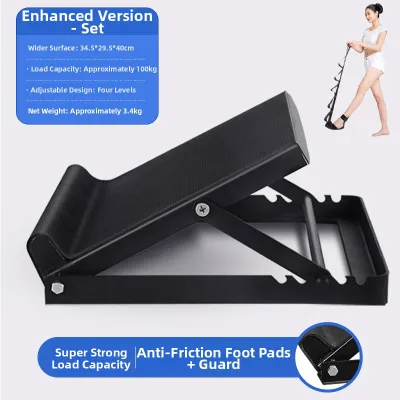
Prices are valid at publication and may change. Please refer to the product page for the latest price.
Slant Boards (Inclined Planes)
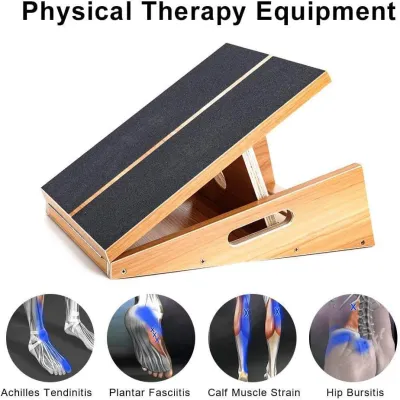
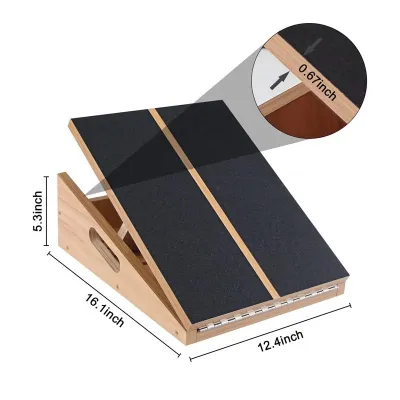
Slant boards are flat platforms set at an angle, designed to support your entire foot while you stand. By placing your foot on an inclined plane, you force the ankle into dorsiflexion, which stretches the calf muscles and the Achilles tendon under the influence of your body weight. This design is highly effective for deep, passive stretching because the gravity-assisted load allows for a sustained hold.
Many slant boards feature adjustable slots or steps, allowing you to alter the angle of inclination. This adjustability is crucial for managing tension; starting at a shallow angle prevents overstretching, while steeper angles allow you to progress as your flexibility improves. Because they require a stable, flat surface and are relatively bulky, slant boards are typically best suited for dedicated home recovery stations.
Stretching Straps (With Foot Loops)
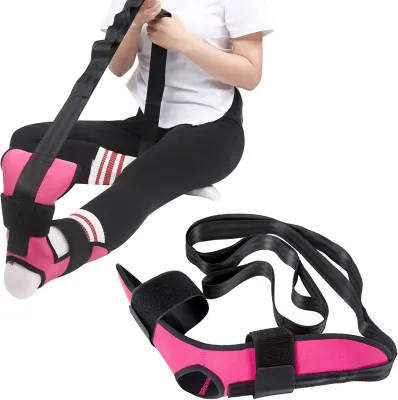
Stretching straps are flexible, non-elastic bands equipped with multiple loops or a dedicated foot cradle. Unlike slant boards, which rely on body weight and gravity, straps facilitate active, controlled tension. You typically use a stretching strap while seated or lying down, placing your foot in the loop and pulling the strap toward your body to gently guide the ankle into dorsiflexion.
This mechanism is highly customizable, as you control the exact amount of force applied with your hands. Because you are not bearing weight during the stretch, straps are exceptionally gentle on sensitive joints and are ideal for runners who experience discomfort when standing on an incline. Their lightweight, compact nature also makes them highly portable, fitting easily into a gym bag for post-run recovery at the track or trail.
Calf Wedges or Blocks
Calf wedges, often made of high-density foam or firm rubber, are portable, angled blocks that function similarly to slant boards but on a smaller, more localized scale. They are frequently used in pairs, allowing you to position each foot independently. Wedges are highly versatile and are commonly utilized for targeted heel drop exercises, calf raises, or static standing stretches.
Because they are lightweight and modular, you can easily adjust their spacing to match your natural stance width or rotate them to target different angles of the lower leg. While they lack the mechanical adjustment systems of premium slant boards, their simplicity, affordability, and ease of storage make them a popular choice for runners seeking a straightforward, space-saving solution.
Biomechanical Differences in Muscle Loading
Understanding how these tools load your lower leg requires a brief look at anatomy. The calf complex consists of two primary muscles: the gastrocnemius, which crosses both the knee and ankle joints, and the soleus, which lies beneath the gastrocnemius and only crosses the ankle joint. Both muscles merge to form the Achilles tendon.
To target the gastrocnemius, the knee must remain fully extended during the stretch. Slant boards and calf wedges excel at this, as the standing position naturally encourages a straight leg. Conversely, to isolate the soleus and place a more direct stretch on the lower portion of the Achilles tendon, the knee must be slightly bent. Stretching straps are highly effective for this variation, as they allow you to easily bend your knee while manually pulling your foot into dorsiflexion, giving you precise control over which tissue receives the primary load.
Key Features to Evaluate Before Buying
When browsing online marketplaces or local sports retail stores, you will encounter a wide variety of ankle stretchers. To ensure you select a durable and effective tool, you should evaluate several physical and functional attributes against your specific training environment and physical needs.

Adjustability and Angle Range
A high-quality ankle stretcher should accommodate your current flexibility level while allowing room for progression. Fixed-angle boards or wedges can be highly limiting; if the angle is too steep, you risk straining your Achilles tendon, whereas if it is too shallow, you will quickly outgrow its usefulness. Look for slant boards that offer multiple angle settings, typically ranging from 10 degrees to 40 degrees.
This wide range allows you to start with a gentle incline for warm-ups or acute tightness and gradually increase the angle as your range of motion improves. For straps, ensure the loops are spaced closely enough to allow comfortable hand placement without overextending your arms.
Surface Traction and Foot Placement
Safety during a stretch depends heavily on stability. When standing on an inclined surface, your foot naturally wants to slide downward. Therefore, you must verify that the stretcher features robust surface traction. Look for slant boards and wedges with textured, non-slip surfaces, such as grip tape, ribbed rubber, or molded ridges.
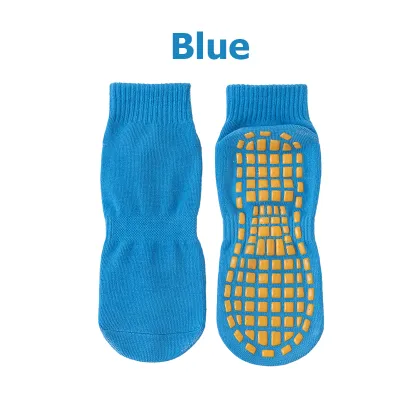
If you prefer to stretch barefoot or in socks, a softer rubberized texture is generally more comfortable than coarse grip tape. Additionally, some models include a raised heel lip or cup at the bottom of the incline. This physical barrier prevents your heel from sliding backward, ensuring your foot remains securely positioned throughout the duration of the stretch.
Weight Capacity and Material Durability
Because standing stretchers support your full body weight—and potentially additional load if you perform weighted calf stretches—structural integrity is paramount. Wooden and heavy-duty metal slant boards offer high weight capacities and durability, making them excellent long-term investments for home gyms. If you opt for plastic or foam models, check the manufacturer’s specified weight limits to ensure they can safely support you.
Foam wedges should be made of high-density, closed-cell foam that resists compression; low-quality foam will flatten under weight, reducing the effective angle of the stretch and compromising stability. For stretching straps, inspect the stitching around the loops and the quality of the nylon webbing to ensure it will not fray or snap under high tension.
Portability and Storage
Your recovery tools are only useful if you actually use them, so consider where and when you plan to stretch. If you have a dedicated home workout space, a sturdy, non-folding wooden slant board is a fantastic option that can remain set up permanently. However, if you live in a compact apartment or prefer to stretch immediately after your runs at a local park or stadium, portability becomes a priority.
Foldable metal or plastic slant boards can collapse flat, making them easy to slide under a bed or sofa. Alternatively, foam wedges and stretching straps are incredibly lightweight and take up minimal space, making them the ideal choice for runners who travel frequently or need to pack their recovery gear in a gym bag.
Matching the Stretcher to Your Recovery Needs
Selecting the right ankle stretcher is a highly individualized process. Rather than looking for a universal winner, you should match the tool’s design to your specific physical symptoms, recovery habits, and lifestyle constraints.
Addressing Severe Morning Stiffness or Chronic Tightness
If you wake up with intense stiffness in your heels or experience chronic, long-term tightness in your calves, your tissues require gradual, low-intensity loading to safely adapt. In this scenario, a highly adjustable slant board is often the most suitable choice.
The ability to set a very shallow angle (such as 10 or 15 degrees) allows you to perform gentle, passive standing stretches first thing in the morning without overloading your sensitive Achilles tendon. This gradual approach helps increase blood flow and restore baseline mobility before you begin your daily activities.
Integrating into Post-Run Cool-Down Routines
For runners who want a tool that seamlessly integrates into a dynamic post-run routine, speed and ease of use are key. After a demanding run, your muscles are warm, making it an excellent time for active stretching.
A stretching strap is highly effective here, as it allows you to transition smoothly between different stretching angles while seated on a yoga mat. You can easily shift from a straight-leg calf stretch to a bent-knee soleus stretch, and even transition into hamstring or IT band stretches without needing to stand up or adjust heavy equipment.
Managing Space and Travel Constraints
If you live in a cozy apartment where storage space is at a premium, or if you frequently travel for races and business, bulky equipment is impractical. In these situations, foam calf wedges or a high-quality stretching strap are the most logical choices.
Foam wedges can be stacked and tucked away in a closet, and their lightweight nature means they won’t add unnecessary weight to your luggage. A stretching strap is even more compact, rolling up into a bundle no larger than a pair of socks, ensuring you never have to skip your recovery routine while away from home.
Conditional Selection Matrix
To help guide your decision, consider the following scenarios:
- Choose a Slant Board if: You have a dedicated home recovery space, require precise angle adjustments, prefer passive standing stretches, and want a highly durable tool that supports full body weight.
- Choose a Stretching Strap if: You prioritize portability, prefer stretching while seated or lying down, want to target both the gastrocnemius and soleus with knee-bend variations, or need a multi-use tool for overall lower-body flexibility.
- Choose Calf Wedges if: You want a lightweight, budget-friendly, and space-saving alternative to a slant board, or if you want to perform independent foot positioning and dynamic heel drop exercises.
Safe Stretching Practices and Warning Signs
While ankle stretchers are excellent tools for improving flexibility, they must be used with caution. The Achilles tendon is one of the strongest tendons in the body, but it is also highly susceptible to strain when subjected to sudden, excessive loads. To protect your lower legs, you must establish clear safety boundaries and prioritize correct technique over maximum tension.
Essential Warm-Up Requirements
Never use an ankle stretcher on cold muscles and tendons. Cold connective tissues are less elastic and more prone to micro-tears when stretched aggressively. Before stepping onto a slant board or pulling on a stretching strap, spend at least five to ten minutes warming up your lower legs.
You can achieve this through low-impact movements such as walking, gentle ankle circles, slow bodyweight calf raises on flat ground, or using a foam roller to increase local blood circulation. Stretching should always be a cool-down or dedicated recovery activity, never the very first movement of your day or workout.
Duration and Intensity Guidelines
When using a stretcher, the sensation should be a mild, comfortable pull—never sharp pain. Avoid the temptation to force your ankle into extreme angles of dorsiflexion. Instead, start at a conservative angle and hold the stretch statically for 20 to 30 seconds, breathing deeply to encourage muscle relaxation.
Repeat the stretch two to three times per session. Do not bounce or perform ballistic movements while on a stretcher, as sudden bouncing can trigger the stretch reflex, causing the muscle to contract violently and potentially injuring the tendon.
Red Flags and Stop Conditions
You must immediately stop stretching and step off the tool if you experience any of the following warning signs:
- Sharp, stabbing, or burning pain in the calf or Achilles tendon.
- A clicking, popping, or snapping sensation within the tendon.
- Numbness, tingling, or a "pins and needles" sensation in your foot or toes, which may indicate nerve compression.
- Swelling, localized heat, or visible redness around the Achilles tendon.
If you have a history of chronic lower-leg issues, such as Achilles tendinopathy, plantar fasciitis, or severe ankle sprains, do not begin using an ankle stretcher without professional guidance. Always check the product manual for specific usage instructions, and consult a physiotherapist or qualified healthcare professional to design a safe, customized recovery protocol tailored to your specific condition.
Frequently Asked Questions (FAQ)
Can an ankle stretcher fix Achilles tendinitis?
An ankle stretcher is a recovery tool designed to manage muscle tightness and improve range of motion; it is not a cure for clinical conditions like Achilles tendinitis or tendinopathy. Tendinitis involves inflammation or micro-tears in the tendon fibers, which often require a comprehensive rehabilitation program focusing on eccentric loading, strength training, and load management. While gentle stretching can help alleviate secondary muscle tightness in the calves, stretching an acutely inflamed tendon can actually worsen symptoms by placing excessive compressive force on the insertion point. If you suspect you have tendinitis, consult a healthcare professional for a proper diagnosis and treatment plan before using any stretching equipment.
How often should runners use a calf stretcher?
The frequency of using a calf stretcher should be guided by your body’s response rather than a rigid daily schedule. For general maintenance and post-run recovery, using a stretcher two to three times a week after your workouts is often sufficient to maintain flexibility. If you are dealing with persistent tightness, you may benefit from short, gentle daily sessions, provided you keep the intensity low and do not experience any pain. Always monitor how your muscles and tendons feel the following day; if you experience increased soreness or stiffness, reduce the frequency and intensity of your stretches to allow your tissues adequate time to adapt and recover.
Are slant boards better than stretching straps for calves?
Neither tool is universally superior; the best option depends on your specific stretching goals and physical comfort. Slant boards excel at providing deep, passive, weight-bearing stretches that target the gastrocnemius muscle when the knee is locked straight. They are ideal for runners who want a highly stable, structured stretch at home. Stretching straps, on the other hand, offer active, non-weight-bearing tension, making them much gentler on the joints and highly customizable. Straps also allow you to easily bend your knee to isolate the soleus muscle and Achilles tendon, and their compact size makes them far more portable than a slant board.
Community discussion
Share your experience or ask a question. Comments are reviewed before publication.