
For a standard HDB home gym, most lifters require a barbell plate weight range starting from a basic 50 kg to 70 kg set for beginners, scaling up to 100 kg to 140 kg for intermediate strength training. The ideal combination balances your personal lifting capacity with the physical space constraints of a typical Singapore flat. By selecting a modular set of plates, you can progress safely without overloading your floor or cluttering your living area.
Setting up a strength training space in a high-rise apartment requires a thoughtful approach to equipment selection. Unlike commercial gyms with reinforced concrete floors and unlimited square footage, a home setup demands efficiency. Every kilogram of iron or rubber you bring into your home must serve a clear purpose, fitting seamlessly into your layout while respecting your neighbors downstairs.
Assessing Your Strength Level and Training Goals
Determining the maximum total weight capacity you need begins with an honest evaluation of your current physical capabilities. If you are new to barbell training, your initial requirements will be modest. However, strength can develop rapidly during the first year of consistent training, meaning a set that only accommodates your current limits will quickly become obsolete.
Products mentioned in this guide
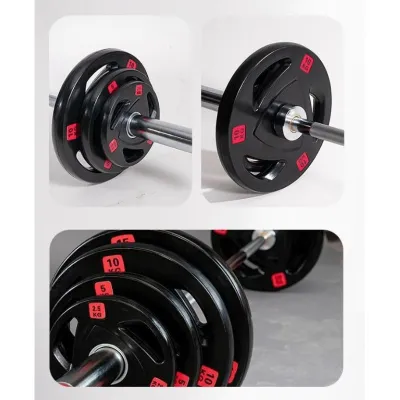
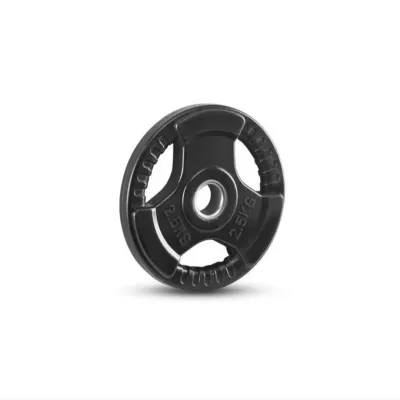
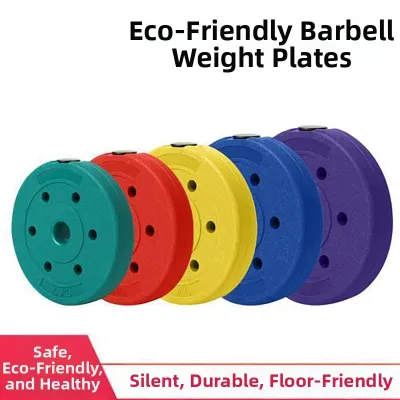
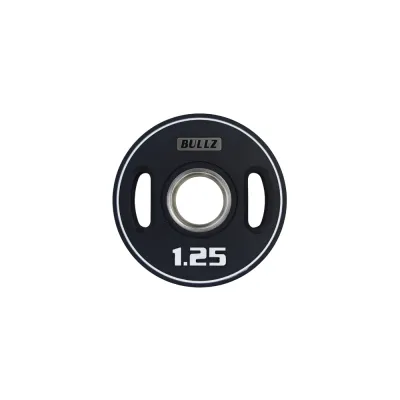
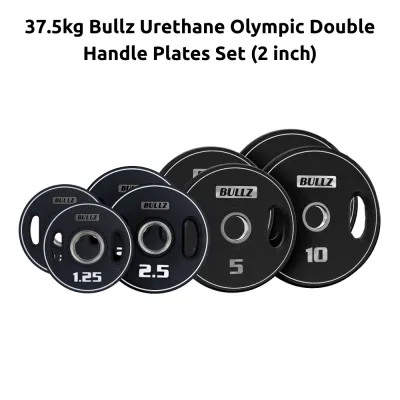
Prices are valid at publication and may change. Please refer to the product page for the latest price.
To establish a baseline, evaluate your current working weights for core compound movements such as the squat, deadlift, overhead press, and bench press. The deadlift typically demands the heaviest load, making it the primary benchmark for your maximum weight plate requirements. If your current working deadlift is 60 kg, aiming for a plate collection that allows you to load up to 100 kg is a sensible starting point.
Projecting your realistic strength gains over the next 12 to 24 months prevents the need for frequent, costly additions to your set. For most recreational lifters, aiming for a target capacity of 100 kg to 120 kg for women, and 140 kg to 180 kg for men, provides ample room for long-term progression. Planning for these milestones early allows you to purchase a versatile foundation that scales with your achievements.
Always account for the weight of the barbell itself when calculating your total loaded weight. Standard Olympic barbells weigh 20 kg for men’s models and 15 kg for women’s models, while some home-use training bars may weigh 10 kg or less. Subtract the weight of your chosen bar from your target lifting capacity to find the exact weight of the plates you need to purchase. For example, if you want to squat 100 kg using a standard 20 kg barbell, you only need to purchase 80 kg of plates.
Balancing Weight Increments and Storage Space
Optimizing the physical footprint of your plate collection is essential when working within the compact dimensions of a Singapore flat. You must balance the desire for precise weight adjustments against the reality of limited floor space. A pile of loose plates scattered across a bedroom or living room floor quickly becomes a safety hazard and an eyesore.

Compare the spatial footprint of multiple smaller plates against fewer large denominator plates. While having four 5 kg plates offers loading flexibility, they occupy far more horizontal space on a barbell sleeve and storage rack than a single 20 kg plate. To keep your training area organized, prioritize larger plates for your heavy base loads and use smaller plates strictly for incremental adjustments.
Vertical storage solutions are highly recommended for compact flats. A rated vertical plate tree or an A-frame weight rack utilizes vertical height rather than valuable floor space. Before purchasing any storage rack, verify its maximum weight rating and physical dimensions to ensure it can safely support your entire collection without tipping or bending.
Prioritize essential increment sizes that allow standard progression without creating excessive clutter. A streamlined, highly efficient plate set does not require every single weight denomination available on the market. By selecting a strategic mix of heavy, medium, and light plates, you can achieve almost any target weight while keeping the total physical volume of your equipment to a minimum.
Building a Versatile Plate Combination
A logical plate mix must cover both heavy compound lifts and precise micro-loading for smaller muscle groups. Building this collection using a modular approach allows you to manage your budget and storage space effectively, adding plates only when your physical progression demands them.
Large plates, specifically 15 kg and 20 kg denominations, are the foundation of any serious barbell setup. They allow you to reach heavy working sets efficiently without running out of space on your barbell’s sleeves. Furthermore, standard Olympic-sized plates (450 mm in diameter) elevate the barbell to the correct starting height off the floor for deadlifts, protecting your lower back during the setup.
Small change plates, such as 1.25 kg, 2.5 kg, and 5 kg options, are critical for upper body exercises like the overhead press and bench press. Progression on these lifts is typically much slower, and attempting to jump by 10 kg at a time can lead to stalled progress or injury. Fractional plates weighing 0.25 kg or 0.5 kg can also be incredibly useful for micro-loading when trying to break through training plateaus.
To build a highly versatile 100 kg plate set (excluding the bar), consider a configuration consisting of two 20 kg plates, two 15 kg plates, two 10 kg plates, two 5 kg plates, and two 2.5 kg plates. This combination allows you to load the barbell in precise 5 kg increments from a light starting weight all the way up to your maximum capacity. If you need to scale down for space or budget, you can start with just the 20 kg, 10 kg, and smaller change plates, adding the 15 kg pair later.
Managing Floor Protection and Noise in High-Rise Flats
Training in an HDB flat requires a high level of consideration for structural integrity and acoustic control. The impact of heavy metal plates hitting the floor can cause structural vibrations that travel easily through concrete walls, potentially disturbing your neighbors and damaging your home’s flooring.
Weigh the thickness and space trade-offs of different plate materials carefully. Rubber-coated or polyurethane plates are highly popular for home use because they muffle the metallic clanging sound of plates bumping together on the bar. However, rubber bumper plates are significantly thicker than cast iron plates, which limits the total amount of weight you can fit onto a standard barbell sleeve.
Regardless of the plate material you choose, you must plan for appropriate floor protection. Standard residential tiles or vinyl flooring cannot withstand the direct impact of a loaded barbell. Laying down high-density rubber gym mats (at least 15 mm to 25 mm thick) is a mandatory step for protecting your subfloor. For deadlifts or heavy rows, using dedicated foam drop pads can dramatically reduce both noise and structural vibration.
Always check the structural load limits of your building and consult your building management if you plan to store exceptionally heavy static loads. While a standard 100 kg barbell set is generally safe when distributed properly, storing several hundred kilograms of equipment in a single concentrated spot can put unnecessary stress on the floor slab. Position your weight storage racks against load-bearing walls or structural columns rather than in the center of a room to distribute the weight safely.
Common Configuration Mistakes to Avoid
One of the most common errors when building a home gym is buying too many mid-sized plates, such as multiple pairs of 7.5 kg or 10 kg plates. This approach quickly clutters your storage rack and wastes valuable space on your barbell sleeves, preventing you from loading heavier weights as you get stronger.
Always verify the inner diameter tolerance of the plates before purchasing. Standard Olympic barbells require plates with a 50 mm (2-inch) center hole. Standard or “studio” plates often have a 25 mm (1-inch) center hole, which will not fit onto an Olympic barbell sleeve. Mixing these standards will leave you with unusable equipment.
Finally, do not overlook the total sleeve length capacity of your barbell. If you purchase thick, budget-friendly rubber bumper plates, you may find that you can only fit three or four plates on each side of the bar. If your strength level requires heavier loads, you will run out of sleeve space long before you reach your target weight, forcing you to buy thinner, more expensive plates later.
Frequently Asked Questions (FAQ)
Do I need bumper plates for a home gym in a high-rise flat?
Bumper plates are not strictly mandatory unless you are performing Olympic weightlifting movements, such as the clean and jerk or snatch, where the barbell must be dropped from overhead. For standard powerlifting lifts like squats, bench presses, and controlled deadlifts, rubber-coated cast iron plates are often a better choice for HDB flats. They are much thinner than bumper plates, allowing you to fit more weight on the bar while saving storage space, and they still offer excellent floor protection when paired with thick rubber gym mats.
How can I store heavy barbell plates safely in a small room?
To store heavy plates safely in a limited space, utilize a dedicated vertical weight tree with a wide, stable base. Position the storage rack directly against a load-bearing wall or in a corner to ensure the weight is distributed safely over the concrete floor slab. Always store your heaviest plates on the lowest pegs of the rack to keep the center of gravity low, which prevents the stand from tipping over. Keep all walkways completely clear of loose plates to avoid tripping hazards in your training area.

Community discussion
Share your experience or ask a question. Comments are reviewed before publication.