
Choosing the right bike rear light for Singapore’s Park Connector Network (PCN) requires balancing personal safety with trail etiquette. Unlike riding on open roads where maximum brightness is necessary to compete with car headlights, PCN cycling involves sharing narrow, winding paths with pedestrians, runners, and other cyclists. The ideal rear light must make you clearly visible from behind and the sides without blinding the people sharing the path with you. By evaluating key technical specifications, mounting options, and your specific riding habits, you can select a light that keeps you safe and compliant during your evening or late-night rides.
Understanding PCN Night Cycling Requirements
The Park Connector Network is a unique environment that demands a specific approach to bicycle lighting. Because these paths are shared spaces, your interactions with other users are much closer and more frequent than they would be on a standard roadway. A rear light that is too bright or angled incorrectly can easily blind a runner or pedestrian approaching from behind, creating a safety hazard rather than preventing one.
Ambient lighting conditions vary significantly across the network. While urban stretches like the Marina Bay Loop are well-illuminated by streetlights, other segments can be exceptionally dark. Routes passing through nature areas, such as parts of the Northern Bow or the Rail Corridor, often have minimal or no ambient lighting to preserve the natural habitat. Your rear light must be versatile enough to handle both extremes.
Products mentioned in this guide
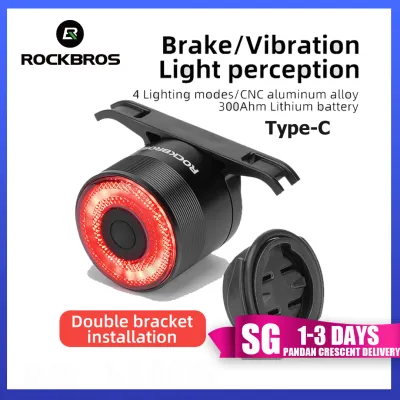
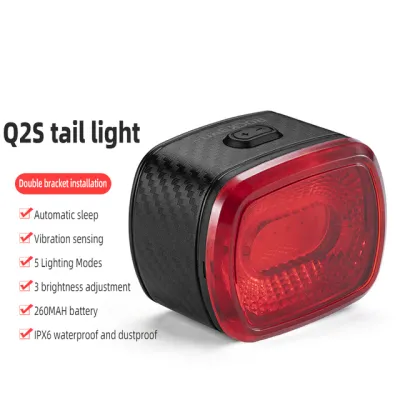
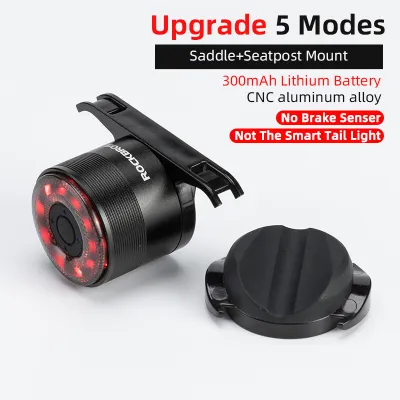
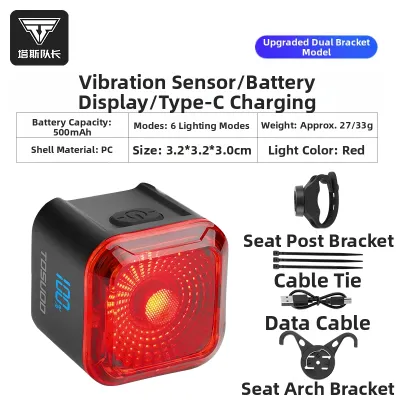
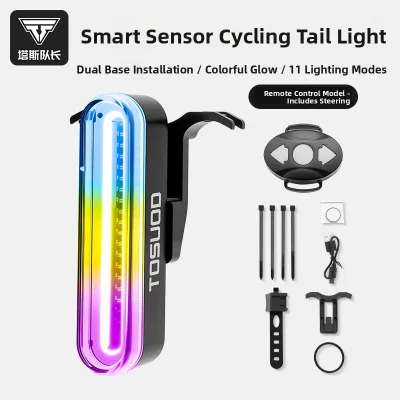
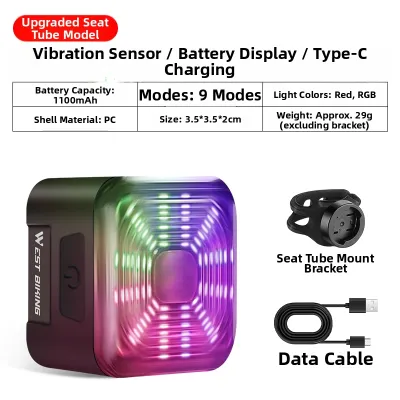
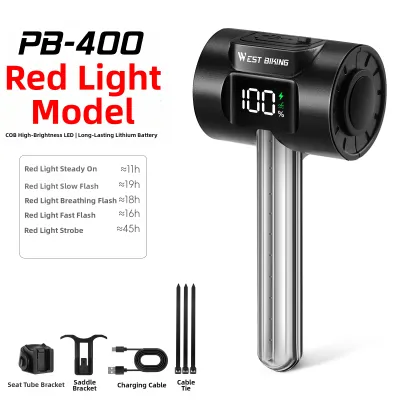
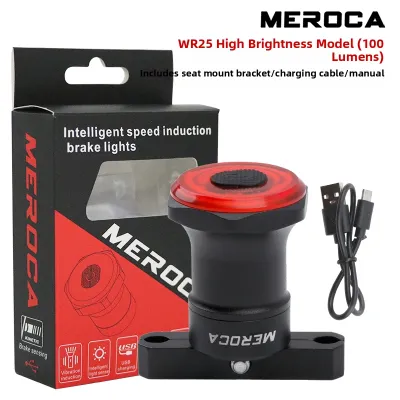
Prices are valid at publication and may change. Please refer to the product page for the latest price.
In this context, the primary goal of your rear light is conspicuity—signaling your presence and helping others judge your distance and speed. It is not meant to illuminate the path behind you, but rather to act as a clear, non-glaring beacon. Achieving this balance requires understanding how different light settings and designs perform under varying levels of darkness.
Key Features to Evaluate in a Bike Rear Light
When browsing options at local bike shops or online marketplaces, comparing technical specifications on product packaging is the most reliable way to find a light that suits your needs. Focus on features that directly impact visibility, battery efficiency, and durability in Singapore’s climate.

Brightness and Modes
Rear light brightness is measured in lumens, and more is not always better for PCN riding. While a 100-lumen flash might be necessary for daytime road safety, it can be overwhelmingly bright on a pitch-black park connector at night. Look for a light that offers multiple output modes, including a low steady mode (typically between 10 and 30 lumens) and a gentle pulsing or “organic” flash mode.
Pulsing modes are highly effective for PCN night rides. Unlike rapid, high-intensity strobes, which can cause visual disorientation for trailing cyclists, a pulsing mode gradually fades in and out. This allows others to track your position and estimate your speed more accurately in dark conditions. Ensure the light you choose allows you to toggle between these modes easily without having to cycle through a blinding high-power flash.
Beam Angle and Spread
Winding paths and frequent intersections mean that traffic can approach you from various angles, not just directly from behind. A light with a narrow beam angle might only be visible to someone directly in line with your rear wheel. To maximize safety, look for wide-angle optics or lights with side-facing LEDs.
Many modern rear lights specify a beam spread of 180 degrees or even 270 degrees. This wide lateral spread ensures that pedestrians stepping onto the PCN from side paths or cyclists turning corners can spot your light early. Check the product specifications for mentions of wide-angle lenses or wrap-around light designs.
Power and Charging
For convenience and environmental sustainability, USB-rechargeable lights are the preferred choice. USB-C has become the standard interface, offering faster charging and better durability than older micro-USB ports. When evaluating battery life, do not rely solely on the maximum runtime advertised on the box, as this usually refers to the lowest-power flash setting.
Instead, check the estimated runtime for the specific mode you plan to use most often, such as a steady low or medium pulse. A reliable light should easily cover your typical ride duration, with some buffer for unexpected detours. Look for models featuring built-in battery level indicators, such as a small color-changing LED on the power button, so you know exactly when it is time to plug in.
Weather Resistance
Singapore’s tropical climate is notorious for sudden, heavy downpours. A light that cannot withstand moisture will quickly fail, potentially leaving you stranded without rear visibility. To ensure your light can handle the elements, verify its IPX rating on the packaging or manufacturer’s website.
An IPX4 rating indicates resistance to splashing water from any direction, which is generally sufficient for light drizzle. However, for peace of mind during sudden tropical storms, look for an IPX6 rating (protection against high-pressure water streams) or an IPX7 rating (protection against temporary immersion). A robust rubber seal over the charging port is also essential to prevent water ingress.
Mounting Options and Frame Compatibility
A rear light is only useful if it remains securely attached to your bicycle throughout your ride. Different bike frames and setups require different mounting solutions, so it is important to check compatibility before making a purchase.
Standard round seatposts are highly compatible with most basic mounting systems, which typically use flexible rubber or silicone straps. These straps are easy to install and adjust, allowing you to transfer the light between different bikes if necessary. However, if you ride a road bike with an aerodynamic, wedge-shaped seatpost, standard round mounts may slip or sit crookedly. Look for lights that include dedicated aero-compatible rubber adapters or specialized brackets.
If your seatpost space is limited due to a saddle bag, a low saddle height, or a rear child seat, you will need to explore alternative mounting options. Some lights feature integrated clips that allow you to attach the unit directly to the loop of a saddle bag, a rear rack, a backpack, or even your helmet. Ensure these clips grip tightly so the light does not bounce off on uneven path segments.
Finally, consider the ease of removal. Because PCN rides often involve stops at hawker centres, cafes, or public restrooms, you will want a light that can be detached quickly without tools. A quick-release bracket allows you to slide the light off and carry it with you, protecting your investment from opportunistic theft while your bike is locked up.
Building Your Shortlist: Matching Light to Rider Profile
To narrow down your choices, match the technical features of the light to your primary riding habits and the specific routes you frequent. With options in Singapore ranging from basic models under S$20 to advanced systems over S$80, finding the right balance ensures you do not overspend on unnecessary features.
Urban Commuters on Well-Lit Segments
If your night rides consist mostly of commuting along well-lit, urban PCN routes (such as the Marina Bay area or central park connectors), your primary need is a compact, lightweight light. You do not need extreme lumen outputs. Prioritize a light with a small footprint, a reliable day-flash mode for transitional twilight hours, and a simple USB charging system that you can easily plug into a laptop or wall charger.
Long-Distance or Dimly Lit Route Riders
If you enjoy long-distance night cycling, such as tackling the Round Island Route or exploring unlit coastal paths after midnight, your priorities should shift toward battery capacity and environmental durability. Look for a slightly larger light that houses a higher-capacity battery. Ensure it has a robust IPX6 or IPX7 rating to withstand prolonged exposure to rain and humidity, and look for a dedicated “eco” flash mode that can extend runtime to cover rides lasting several hours.
Pre-Purchase Verification Checklist
Before finalizing your purchase, perform a quick physical check of the product if buying in person, or verify these details online:
- Switch Accessibility: Ensure the power button is easy to press, even if you are wearing cycling gloves or trying to operate it behind your back while riding.
- Physical Dimensions: Check that the light's length and width will not interfere with your legs while pedaling or rub against your saddle bag.
- Warranty Terms: Look for products backed by a local warranty, as high humidity and frequent charging can occasionally lead to electronic issues over time.
Frequently Asked Questions (FAQ)
Do I need a brake light function for my rear bike light?
Some premium rear lights feature built-in accelerometers that detect deceleration and automatically brighten the light, mimicking a car’s brake light. While this is a valuable safety feature on open roads with fast-moving motorized traffic, its utility on the PCN is more limited. Speed differentials on shared paths are generally lower, and sudden, hard braking is less common. Additionally, the constant sensor monitoring can drain the battery much faster. If you choose a light with this feature, check the manual to see if the brake-sensing function can be disabled to conserve battery life when it is not needed.
How should I angle my rear light on shared paths?
To maintain proper trail etiquette and avoid blinding other path users, you should aim your rear light slightly downward or parallel to the ground. Mounting the light so that it points directly into the eyes of a trailing cyclist or runner can cause temporary glare and compromise their vision. After installing the light, stand a few meters behind your bicycle at eye level to check the beam’s projection. Rely on the light’s built-in wide-angle optics for lateral visibility rather than tilting the unit sideways, which can distort the beam pattern and reduce its effectiveness from behind.

Community discussion
Share your experience or ask a question. Comments are reviewed before publication.