
Selecting the right Dunlop tennis ball as a beginner is one of the most practical steps you can take to accelerate your learning curve. While advanced players often search for high-speed responsiveness and maximum spin potential, a new player requires a ball that offers a predictable bounce, a forgiving feel on the racket, and sufficient durability to withstand repetitive off-center hits. Choosing a ball that does not match your current skill level can lead to frustration, inconsistent strokes, and even physical discomfort. By understanding how different ball designs behave, you can select an option that supports your development and makes your time on the court more enjoyable.
To make an informed decision, you must first assess your specific physical requirements and training objectives. A junior beginner, for instance, has different physical limitations than an adult learner. Children require a progressive bounce system that matches their height, strength, and swing speed, allowing them to develop proper stroke mechanics without being overwhelmed by a fast-moving ball. Conversely, adult beginners generally start with standard-size balls but still benefit from a construction that offers a slightly softer feel to protect their joints as they learn to find the sweet spot of the racket.
Your primary practice goals also dictate the type of ball you should purchase. If your sessions consist mostly of baseline rallying with a partner or a coach, you will want a ball that provides a consistent, reliable bounce to help you build rhythm and muscle memory. If you are focusing on serving repetition, you will need a larger quantity of durable balls that can withstand repeated impacts without losing their felt or pressure too quickly. For those utilizing ball machines, the priority shifts toward long-term structural integrity, as these machines subject balls to intense mechanical wear.
Products mentioned in this guide


Prices are valid at publication and may change. Please refer to the product page for the latest price.
Finally, consider your practice frequency and intensity. A casual player who hits the court once every few weeks has different needs than an aspiring club player training multiple times a week. If you play infrequently, a standard pressurized ball that offers a premium feel straight out of the can is highly satisfying. However, if you are a high-volume driller, prioritizing durability and cost-effectiveness over a premium match-play feel will keep your practice sessions sustainable without breaking your budget.
Decoding Dunlop Tennis Ball Specifications
Understanding the technical specifications printed on Dunlop packaging is essential for selecting a ball that matches your playing environment and skill level. The first major distinction you will encounter is between pressurized and pressureless constructions. Pressurized tennis balls are filled with compressed air or nitrogen, which gives them a lively, crisp bounce and a lightweight feel upon impact. This internal pressure makes them highly responsive and comfortable to play with, but it also means they have a limited lifespan. Over time, the gas slowly escapes through the porous rubber shell, causing the balls to lose their bounce even if they are left unused in an opened can.
Pressureless tennis balls, on the other hand, do not rely on internal gas pressure for their bounce. Instead, they feature a thicker, more elastic rubber core that provides inherent rebound characteristics. Because there is no gas to escape, pressureless balls do not lose their bounce over time; in fact, as the outer felt wears away, they can actually become slightly bouncier and faster. The trade-off is that pressureless balls feel noticeably heavier and stiffer when they strike the racket. For beginners, this extra stiffness can translate to increased vibration in the arm, making it important to weigh the benefit of long-term durability against physical comfort.
Another critical specification to check is the type of felt used on the ball. Dunlop categorizes its felt options primarily into regular duty and extra duty. Regular duty felt is designed for soft court surfaces, such as clay or indoor carpet. It features a thinner, tighter weave that resists picking up moisture and loose clay particles, keeping the ball from becoming heavy and sluggish. Extra duty felt is engineered specifically for hard courts, which are highly abrasive. This felt is woven with a higher concentration of synthetic fibers and a looser, thicker texture to absorb the friction of concrete and asphalt surfaces, preventing the ball from balding prematurely.
For junior players or those participating in structured developmental programs, Dunlop offers balls designed under the International Tennis Federation (ITF) Play and Stay campaign. These balls are color-coded to represent different progressive stages of learning. Red stage balls are the largest and lightest, designed for young children playing on smaller courts with shorter rackets. Orange stage balls are standard-sized but feature a lower compression core that reduces their speed by approximately 50 percent. Green stage balls, often marked with a green dot, are low-compression balls that bounce about 25 percent slower than standard balls, serving as the final transitional step before moving to full-compression yellow balls.
Matching Dunlop Ball Categories to Your Profile
Once you understand the technical specifications, you can match Dunlop’s specific product categories to your personal playing profile. If you are selecting balls for a junior player or a transitional learner, navigating the progressive stage balls is highly straightforward. Children under the age of eight should start with Dunlop’s Red stage balls, which allow them to develop hand-eye coordination on a modified court. Players aged eight to ten typically transition to Orange stage balls, which encourage longer rallies and better tactical awareness. Older children and adults who are completely new to the sport often find that Green stage balls provide the perfect balance of realistic playability and manageable speed.

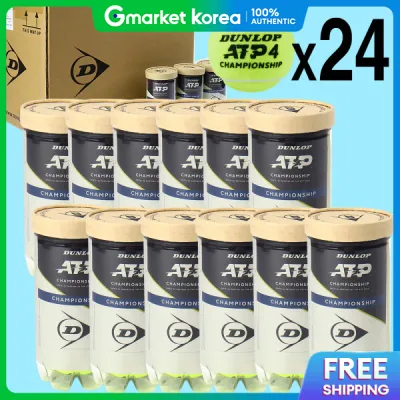
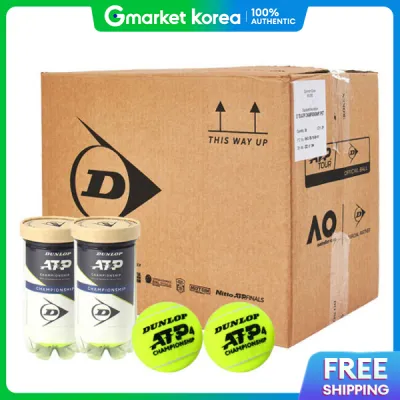
For adult beginners and casual rallyers who are ready for standard yellow tennis balls, Dunlop offers several distinct tiers. The championship tier, represented by the widely available Dunlop Championship ball, is an excellent starting point. These balls are designed to offer a reliable, consistent bounce and decent durability at an accessible price point. They are highly versatile and suitable for both practice sessions and casual recreational matches. If you prefer a slightly softer feel on impact, look for Dunlop’s club-level offerings, which often feature specialized rubber compounds designed to reduce racket shock, making them highly forgiving for players still perfecting their contact point.
If your training regimen involves high-volume drilling, such as practicing your serve or working with a coach who feeds balls from a basket, purchasing standard pressurized cans can quickly become impractical. In this scenario, you should look for Dunlop’s bulk practice or coach-pack options. These packages typically contain dozens of balls in a single bucket or box, prioritizing structural durability and consistent bounce over the premium felt finish found on tournament-grade match balls. Using these bulk packs allows you to hit hundreds of balls in a single session without the constant worry of replacing expensive pressurized cans.
Adapting Your Choice to Court Surfaces and Climate
Your physical playing environment plays a massive role in how a tennis ball behaves and how long it lasts. In Singapore, the vast majority of public tennis facilities, such as ActiveSG courts, school campuses, and private condominium courts, are hard courts. These surfaces are constructed from asphalt or concrete coated with an acrylic layer, which provides excellent grip but acts like sandpaper on tennis equipment. To prevent your balls from losing their felt after just one or two sessions, always verify that the Dunlop packaging is labeled “Extra Duty” or “All Court.” Using regular duty balls on these abrasive surfaces will quickly result in bald, unpredictable balls that slip across the court.
The tropical climate of Singapore, characterized by high humidity and consistent warmth, also introduces unique challenges for tennis ball maintenance. High humidity levels mean that the felt on a tennis ball can easily absorb moisture from the air or from a slightly damp court surface. When a ball absorbs water, it becomes heavier, bounces lower, and requires more physical effort to hit, which can strain a beginner’s shoulder and elbow. Additionally, warm ambient temperatures cause the air inside pressurized balls to expand, which can make them feel exceptionally lively and bouncy when first opened, but also accelerates the rate at which the pressurized gas leaks out.
Indoor and outdoor environments also demand different expectations. Outdoor courts expose the ball to direct sunlight, wind, and dust, all of which accelerate the degradation of both the rubber core and the outer felt. Indoor courts, while shielded from the elements, often feature different surface speeds and lack the wind resistance that can naturally slow down a fast-paced ball. If you transition between indoor and outdoor facilities, pay close attention to how the ball’s bounce and speed change, and adjust your swing preparation accordingly to maintain control.
Building a Cost-Effective Practice Inventory
Managing your tennis ball supply efficiently is an important part of being a self-sufficient player. While it might be tempting to buy a single can of Dunlop balls every time you head to the court, this approach is rarely cost-effective in the long run. If you commit to playing at least once or twice a week, purchasing balls in bulk cartons—such as 12-can or 24-can cases—from an online marketplace or a local sports specialty store offers significant savings per can. However, remember to only open pressurized cans when you are actively stepping onto the court, as the depressurization process begins the moment the metal seal is broken.
Before purchasing any tennis balls, always perform a quick quality check on the packaging. For pressurized Dunlop balls, inspect the metal pull-tab or the plastic lid to ensure the vacuum seal is completely intact. If you are buying plastic cans, give the sides of the can a firm squeeze; if the can yields easily or feels soft, it indicates that the internal pressure of the container has leaked, and the balls inside may already be flat before you even open them. Additionally, store your unopened cans in a cool, dark place inside your home, away from direct sunlight or hot storage areas, to preserve their shelf life.
As a beginner, you do not need to discard your Dunlop balls the moment they lose their premium bounce for match play. Instead, establish a system for repurposing your older, depressurized, or slightly worn balls. Keep a designated bag for these “dead” balls and use them specifically for serving practice, where the primary focus is on perfecting your ball toss, racket path, and contact point rather than the quality of the bounce. They are also excellent for footwork drills, target-hitting exercises, or physical conditioning routines, allowing you to get maximum value out of every single purchase.
Frequently Asked Questions (FAQ)
Can adult beginners use Dunlop's green or orange stage balls?
Yes, adult beginners can highly benefit from using Dunlop’s green stage or orange stage balls during their initial learning phase. Because these low-compression balls bounce lower and travel slower through the air, they give adult learners significantly more time to prepare their stance, execute a clean swing path, and establish consistent contact with the sweet spot of the racket. Many coaches utilize these transitional balls to help adults master complex stroke mechanics, such as the topspin groundstroke or the serve, before transitioning them to standard, full-speed pressurized yellow balls.
How do I know if my Dunlop tennis balls need replacing?
You can easily determine if your Dunlop tennis balls need replacing by performing a few simple visual and physical checks. Visually, inspect the ball for bald spots where the felt has worn away, split seams, or an excessively fluffed-up texture that makes the ball look unusually large and slow. Physically, perform a squeeze test by pressing your thumb firmly into the center of the ball; if the rubber shell collapses easily under moderate pressure, the ball has lost its internal gas and is considered flat. You can also drop the ball from shoulder height onto a hard surface; if it fails to bounce back up to approximately waist level, it should be retired from active rally play.
Are pressureless Dunlop balls good for beginners?
Pressureless Dunlop balls are highly practical for beginners who engage in high-volume solo practice, such as using a ball machine or practicing serves independently. Because these balls rely on a thick, elastic rubber core rather than internal gas pressure, they maintain a highly consistent bounce over months of use, making them incredibly cost-effective. However, beginners should be aware that pressureless balls feel noticeably heavier and stiffer upon impact than pressurized balls. This increased stiffness transmits more vibration up the racket handle, so it is important to monitor your wrist and elbow comfort and consult a qualified coach if you experience any joint strain.

Community discussion
Share your experience or ask a question. Comments are reviewed before publication.