
Fitting a running treadmill into a typical Singapore Housing & Development Board (HDB) flat requires balancing your fitness goals with the physical realities of shared, compact living spaces. To ensure your home remains safe, functional, and comfortable, the ideal treadmill footprint should generally not exceed 160 to 180 centimeters in length and 70 to 80 centimeters in width when fully deployed. This size allows the machine to sit comfortably in a spare bedroom or a dedicated corner of the living room without obstructing primary walkways. However, the physical footprint of the machine is only one part of the equation; you must also account for essential safety clearances, structural delivery paths, and noise mitigation to maintain a harmonious household and neighborly relations.
Measuring Your Room and Safety Clearances
Before purchasing any cardio equipment, precise spatial planning is your first line of defense against accidents and layout issues. Start by measuring the exact length, width, and ceiling height of your designated exercise zone. When measuring vertical space, do not just look at the floor-to-ceiling distance; take note of any low-hanging light fixtures, structural beams, or ceiling fans. A ceiling fan poses a severe safety hazard if your head rises too close to the blades while running, especially when the treadmill deck is elevated or when you are in mid-stride.
Safety clearances around the machine are non-negotiable and must be factored into your spatial calculations. Manufacturers typically recommend a minimum clearance of 120 to 150 centimeters of open space directly behind the treadmill deck. This rear clearance is critical; if you lose your footing or slip while running, the moving belt can throw you backward, and a lack of space can cause you to impact a wall or furniture, leading to severe friction burns or impact injuries. Additionally, maintain at least 50 centimeters of clear space on both sides of the treadmill to allow for safe mounting, dismounting, and emergency stepping off.
Products mentioned in this guide
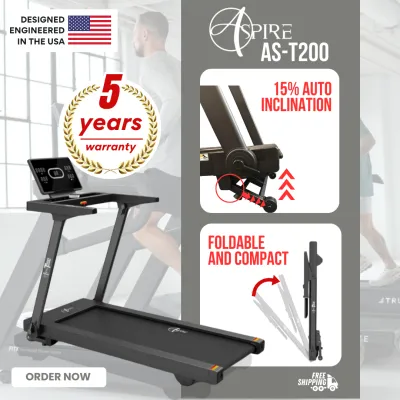
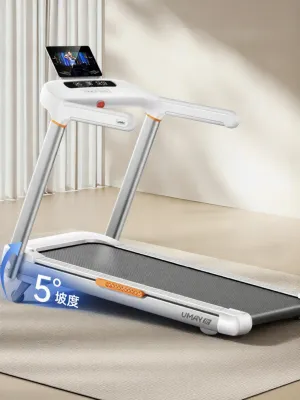
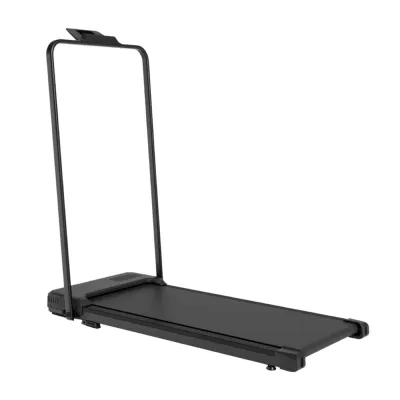
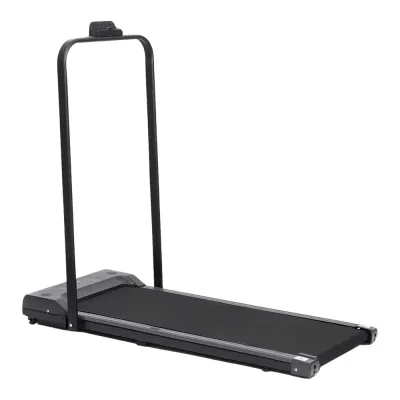
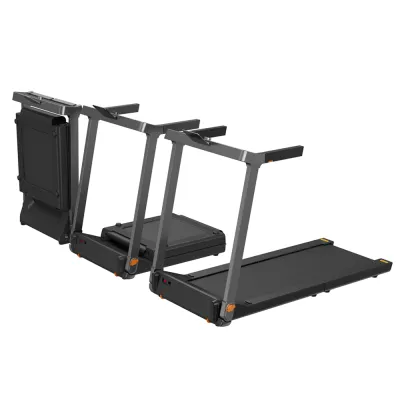
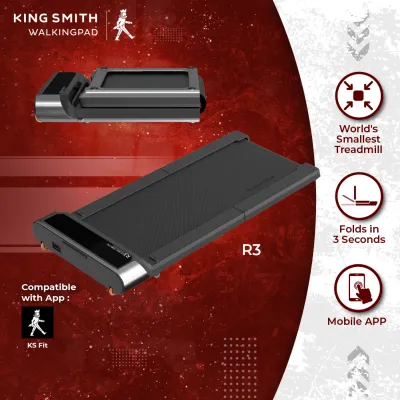
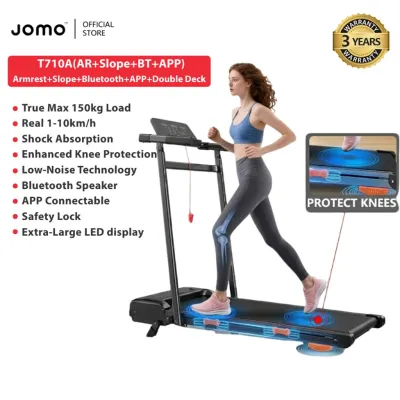
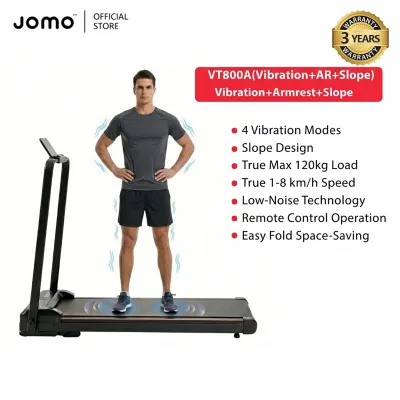
Prices are valid at publication and may change. Please refer to the product page for the latest price.
Finally, account for the maximum console height and the impact of any incline mechanisms. When a running treadmill inclines, the front or rear of the deck rises, which increases your effective running height. If you are tall or have low ceilings, this added height can bring you dangerously close to the ceiling. Always verify the step-up height of the treadmill deck and add your own height plus a buffer of at least 15 to 20 centimeters to ensure you will not hit your head during an intense, inclined workout.
Matching Treadmill Footprints to Your Space
Treadmills generally fall into three size categories, each offering distinct trade-offs between space efficiency and running performance. Ultra-compact walking pads are the smallest option, often measuring under 120 centimeters in length and 50 centimeters in width. While these are highly portable and easy to slide under a sofa, they are designed strictly for walking or light jogging and lack the motor power, frame stability, and deck length required for high-speed running.

Mid-size jogging models represent a middle ground, typically measuring around 150 to 170 centimeters in length. These machines offer a slightly larger running surface that can accommodate moderate jogging speeds, but they may still feel restrictive for taller runners or those with long strides. Standard running treadmills, which measure 180 centimeters or more in length and up to 90 centimeters in width, provide the most stable platform and the longest running decks, making them ideal for high-intensity training and sprint intervals.
The primary trade-off when choosing a smaller machine is running comfort and safety. A narrow or short deck forces you to constantly monitor your positioning, which can alter your natural running gait and increase the risk of stepping off the side of the belt. For a natural running stride, a deck width of at least 45 to 50 centimeters and a deck length of 130 to 140 centimeters is generally recommended. When browsing specifications, always distinguish between the “running area” (the size of the belt itself) and the “total footprint” (the overall dimensions of the machine’s frame and console), and check both the active “in-use” dimensions and the folded dimensions.
Overcoming HDB Delivery and Layout Constraints
The journey of your running treadmill begins long before it is set up in your room. HDB flats often feature narrow common corridors, tight elevator doors, and sharp turns near entryways that can block the delivery of bulky fitness equipment. Before placing an order, measure the width of your main entrance door, internal room doorways, and any hallway corners. Compare these measurements against the packaged box dimensions provided by the retailer, as treadmills are often shipped semi-assembled in large, heavy crates that cannot be easily tilted or maneuvered around tight corners.
Living in a high-density HDB block also means your workouts can directly impact your neighbors. The structural vibration from running on a treadmill can travel through concrete floors, creating a disruptive low-frequency thudding noise in the flat below. To manage this, plan to use a high-density anti-vibration mat beneath the machine. These specialized mats absorb the impact energy of your stride, protecting your vinyl, laminate, or tile flooring from permanent indentations while significantly dampening the sound transmission.
Additionally, carefully evaluate the daily traffic flow within your home. A treadmill should never block main walkways, access to built-in wardrobes, or the swing path of bedroom doors. Most importantly, ensure the machine does not obstruct emergency exit routes or access to utility risers and household shelters. If you must place the treadmill in a multi-use space like a living room, position it parallel to a wall or behind a sofa to keep the central walkway clear and maintain a welcoming, uncluttered living environment.
Evaluating Space-Saving and Folding Features
For HDB dwellers, space-saving design features are essential for reclaiming floor space when the treadmill is not in use. Modern running treadmills often feature folding decks that pivot upward toward the console, reducing the horizontal footprint by up to fifty percent. When evaluating these machines, look for hydraulic soft-drop systems. These gas-assist shocks support the weight of the deck during unfolding, allowing it to lower slowly and hands-free to the floor, which prevents sudden drops that could damage your flooring or cause injury.
If you absolutely cannot spare permanent floor space, flat-folding models are an alternative. These units allow the console and handrails to fold completely flat against the running deck, enabling the entire machine to be stored vertically against a wall or slid horizontally under a bed or sofa. However, keep in mind that flat-folding running treadmills often have lower weight capacities and less powerful motors compared to traditional folding models, so verify that the specifications align with your training intensity.
Mobility is another critical factor in tight spaces. Look for units equipped with integrated transport wheels, preferably multi-directional wheels that allow you to maneuver the machine sideways as well as forward and backward. Ensure the treadmill has a secure locking mechanism that keeps the deck firmly in place when folded, preventing curious children or pets from accidentally releasing the frame.
Common Sizing and Placement Mistakes to Avoid
One of the most common mistakes buyers make is relying solely on the manufacturer’s folded dimensions when planning their room layout. While a folded treadmill takes up less floor space, you must still have enough room to fully deploy the deck and maintain safety clearances during use. Never assume that a machine will fit simply because its folded footprint matches your available corner space; always map out the fully extended dimensions on your floor using masking tape to visualize the actual impact on your room.
Another frequent oversight is ignoring the swing radius required to fold and unfold the deck. The deck does not just move straight up and down; it swings through an arc that requires clear overhead and lateral space. If you place the treadmill too close to a wall, wardrobe, or glass sliding door, you risk scraping the walls or shattering glass when lifting the deck. Always allow a few centimeters of extra clearance beyond the physical dimensions of the machine to accommodate this movement.
Lastly, do not forget to measure the entire delivery path from the building’s ground-floor loading bay to your front door. This includes checking the height and depth of the HDB passenger lift. If the packaged box is too long to fit into the lift, delivery personnel may have to carry the heavy crate up the stairs, which can incur steep staircase delivery fees or, in some cases, result in a failed delivery and a costly return process.
Frequently Asked Questions (FAQ)
Can I place a running treadmill on an HDB balcony or service yard?
Placing a running treadmill on an HDB balcony or service yard is generally not recommended unless the area is fully enclosed and climate-controlled. Semi-outdoor spaces expose sensitive electronic consoles and motorized components to high humidity, ambient moisture, and direct sunlight, which can accelerate rust, degrade electrical wiring, and void the manufacturer’s warranty. Additionally, you must verify that the balcony floor can support the concentrated weight of the machine and a running user, and ensure the setup does not block emergency escape routes or violate HDB guidelines regarding common facades.
Do I need a specific equipment mat for my treadmill in an HDB flat?
Yes, using a high-density equipment mat is highly recommended for any treadmill setup in an HDB flat. A specialized mat serves two critical purposes: protecting your flooring from heavy pressure marks, scratches, and sweat damage, and dampening the structural vibrations caused by your running impacts. Standard yoga mats are too soft and will tear under the weight of a treadmill; instead, opt for a dense rubber or PVC mat designed specifically for heavy fitness equipment. Ensure the mat’s dimensions are slightly larger than the treadmill’s footprint to capture any sweat and provide a stable, non-slip base.

Community discussion
Share your experience or ask a question. Comments are reviewed before publication.