
For a beginner stepping onto the court or practicing at home, finding a reliable way to build muscle memory, timing, and footwork without a partner is a common challenge. A tennis rebounder ball offers a practical, self-contained solution for solo practice. When shopping for one, a beginner should focus on three primary elements: the format of the rebounder (tethered base versus standalone ball for nets), the physical specifications of the ball and cord (such as rubber density, felt durability, and elastic tension), and how well the setup adapts to your local practice environment. Selecting the right equipment ensures that your practice sessions are productive, safe, and closely mimic the feel of a real tennis court.
Identifying the Right Rebounder Ball Format for Your Needs
Before purchasing, you must decide which rebounder format aligns with your space, budget, and training goals. The two main options are tethered tennis trainers and standalone high-bounce balls designed for rebounder nets or brick walls.
Tethered tennis trainers consist of a tennis ball attached to a long elastic cord, which is anchored to a weighted base sitting on the ground. When you strike the ball, it travels outward, stretches the cord to its limit, and snaps back toward you for the next hit. This format is highly popular among beginners because it requires no wall or net, making it exceptionally portable. You can set it up on any flat surface, such as a driveway, a quiet car park, or a multi-purpose court. However, the return path of a tethered ball is determined by the physics of the elastic cord rather than a natural court bounce, meaning the ball may return lower or faster than a standard rally shot.
Products mentioned in this guide
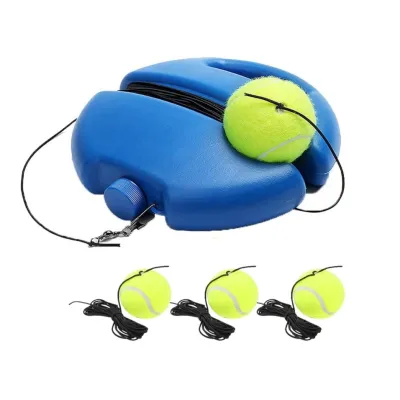
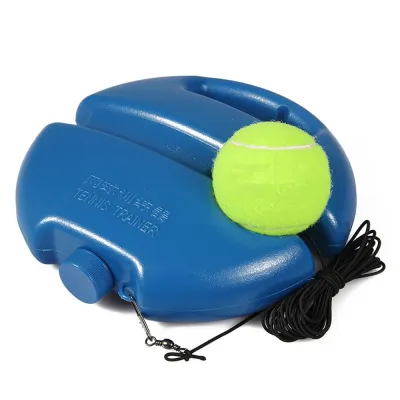
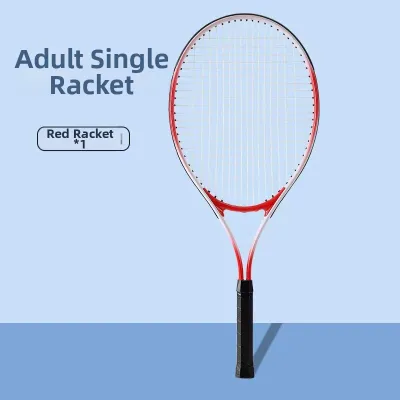
Prices are valid at publication and may change. Please refer to the product page for the latest price.
Standalone high-bounce balls, on the other hand, are specialized tennis balls designed to be hit against a vertical rebounder net or a solid practice wall. These balls do not use a cord; instead, they rely on a highly pressurized or high-density rubber core to deliver a clean, predictable bounce off hard surfaces. This setup provides a much more realistic simulation of a real tennis match, as the ball flies freely through the air and bounces off the ground naturally. The trade-off is that standalone balls require a dedicated vertical surface or a large, heavy rebounder net frame, which is significantly less portable and more expensive than a simple tethered base.
For most beginners, a tethered trainer serves as an accessible entry point to develop basic hand-eye coordination and racket contact. If you have access to a dedicated wall or have the space to set up a rebounder net, investing in high-bounce standalone balls will offer a more authentic training experience that transitions better to actual court play.
Core Specifications to Check for Beginner-Friendly Practice
To ensure your practice sessions are effective and do not lead to bad habits or equipment failure, you must evaluate several technical specifications before buying.

First, examine the ball felt and the rubber core. Standard tennis balls are designed to be hit once across a net, but a rebounder ball experiences continuous, high-frequency impacts against rackets and hard ground. Look for manufacturers that specify the use of extra-duty needle felt or high-durability woven felt. This type of felt resists fraying and pilling when dragged across rough concrete or asphalt. The rubber core should feel firm but not rock-hard; an overly stiff core can transmit harsh vibrations up your racket arm, potentially causing wrist or elbow strain, while a core that is too soft will fail to bounce back with sufficient energy.
Second, pay close attention to the tethered cord’s elasticity and length. The cord is the engine of a tethered trainer. Beginners should look for a cord made of high-elasticity latex or premium rubber wrapped in a protective nylon sleeve. The nylon sleeve is crucial because it protects the inner elastic core from UV damage and abrasions. A standard beginner-friendly cord length is typically around 3.8 to 4 meters, which can stretch up to 8 meters or more upon impact. Ensure the tension rating is moderate; a cord that is too tight will snap the ball back at a dangerous velocity, leaving you with no time to prepare your swing, while a cord with too little elasticity will cause the ball to drag lazily along the ground.
Third, evaluate the base stability and filling mechanism. A tethered trainer is only as good as its anchor. Look for a base made of high-density polyethylene (HDPE) that features a secure, threaded inlet cap. The base must be filled with water or sand to provide the necessary ballast. A lightweight, empty base will slide or tip over the moment you hit a firm forehand. Check the manufacturer’s specified filled weight; a reliable base should weigh at least 1.5 to 2 kilograms when fully filled with water, and even more when filled with dense sand. Anti-slip rubber pads on the bottom of the base are also essential to prevent it from skidding across the ground during intense rallies.
Finally, for standalone balls, check the bounce consistency and compression ratings. Look for balls labeled as “pressureless” or “low-compression practice balls.” Pressureless balls retain their bounce indefinitely because they rely on a thick, elastic rubber shell rather than internal gas pressure. This ensures that even after weeks of hitting against a hard wall, the ball will continue to return at a predictable height, allowing you to focus on refining your footwork and swing path.
Adapting Your Choice to Local Practice Environments
Your practice environment plays a significant role in determining which rebounder ball setup will perform most reliably and last the longest.
Space and clearance are the first physical constraints to measure. A tethered rebounder requires a clear, unobstructed radius of at least 6 to 8 meters in front of you, and about 3 meters of width. This ensures that as the ball stretches the cord and returns, it does not strike walls, parked cars, or passersby. If you plan to practice in common residential areas, such as HDB void decks, open plazas, or local parks, ensure you have sufficient clearance. A tight space can cause the cord to wrap around pillars or trees, interrupting your rhythm and potentially damaging the cord.
Surface compatibility is another critical factor. Smooth concrete, asphalt, and outdoor sports courts are suitable surfaces for both tethered bases and standalone wall practice. If you are practicing on slightly uneven or dusty outdoor surfaces, the base of a tethered trainer must have excellent grip. Look for bases with textured rubber feet that can bite into dusty concrete. If you intend to practice indoors on tiled or wooden floors, ensure the rubber pads are non-marking and that the ball itself will not scuff the walls or baseboards.
Furthermore, you must consider local weather conditions, particularly if you live in a tropical climate like Singapore’s. High humidity, intense UV exposure, and sudden rain showers can rapidly degrade sports equipment. Look for rebounder balls and cords that specify UV resistance. Untreated rubber cords can become brittle and snap after prolonged exposure to intense sunlight, while cheap felt can absorb moisture from high humidity, making the ball heavy, waterlogged, and sluggish. Choosing a base made of UV-stabilized plastic and storing your equipment indoors after every session will prevent premature cracking and fading.
Creating a Comparison Shortlist for Purchase
When you are ready to buy, creating a structured comparison shortlist will help you find excellent value without sacrificing quality.
A practical decision matrix should balance your budget, expected durability, and the quality of realistic feedback. In local retail shops and online marketplaces, beginner rebounder packages typically range from S$15 to S$40. While it may be tempting to opt for the cheapest option under S$10, these often feature thin plastic bases that crack easily and low-grade elastic strings that snap within a few sessions. Investing a bit more in a mid-range option ensures a sturdier base, a nylon-jacketed cord, and a ball that closely matches the weight of a standard tennis ball.
Always verify the product labels and packaging details. Look for standard tennis ball sizing (approximately 6.5 to 6.8 centimeters in diameter) and weight (around 56 to 59 grams). Using a ball that is too light or too heavy will distort your swing mechanics and make it difficult to transition to real tennis balls later. Ensure the packaging explicitly states that the materials used, including the rubber and felt dyes, are non-toxic and safe for regular handling.
Be on the lookout for common red flags. Avoid products that do not specify the cord’s break strength or material composition. Another major red flag is a poorly designed base seal; if the threaded cap does not have a rubber gasket or O-ring, water will slowly leak out during use, gradually reducing the base weight and causing it to slide mid-practice. Lastly, steer clear of kits that package the trainer with non-standard, lightweight foam balls, as these will not provide the realistic rebound or racket feedback necessary for genuine skill development.
Safe Setup, Usage Boundaries, and Equipment Care
Using a tennis rebounder safely requires proper setup, clear operational boundaries, and consistent maintenance. Because a tethered ball returns at high speeds, equipment failure can lead to the ball or a snapped cord striking you or others.
Before every practice session, perform a quick pre-use inspection. Run your fingers along the elastic cord to check for any fraying, nicks, or dry rot. Inspect the attachment points where the cord connects to the ball and the base; these high-stress areas are the most common points of failure. Check the base for any hairline cracks or water leaks, and ensure the filling cap is screwed on tightly. If you notice any damage, do not use the equipment until the cord or ball is replaced.
Establish safe usage boundaries during play. Always stand at least 5 to 6 meters away from the base when initiating your first hit. Start with gentle, controlled strokes to gauge the speed and trajectory of the return. Never hit the ball with full force immediately; build up your swing speed gradually as you get accustomed to the rhythm. If the cord begins to tangle or wrap around itself, stop immediately, let the ball come to a complete rest, and untangle it before resuming. Keep bystanders and pets well outside your practice radius to prevent accidental impacts.
Proper maintenance will significantly extend the lifespan of your rebounder. After practicing, always drain the water from the base if you plan to transport or store it for an extended period; this prevents mold growth and makes the unit lightweight and easy to carry. Clean the ball felt by brushing off dirt and debris with a soft brush, and let it air dry completely if it gets damp. Store the entire setup in a cool, dry place away from direct sunlight, as prolonged heat and UV exposure will degrade the elastic cord and weaken the plastic base.
Frequently Asked Questions (FAQ)
Can I replace the ball on a tethered rebounder trainer?
Yes, most high-quality tethered rebounder trainers allow you to replace the ball once the felt wears down or the rubber loses its bounce. When purchasing a replacement, check the manufacturer’s attachment mechanism, which typically involves a built-in plastic loop, a metal clip, or a knot tied directly through a grommet in the ball. It is crucial to match the replacement ball’s weight and size to the original. Using a ball that is too heavy can snap the elastic cord or pull the base out of position, while a ball that is too light will not stretch the cord sufficiently to return to you.
Is a rebounder ball suitable for practicing advanced spins?
While a rebounder ball is excellent for developing basic groundstrokes, timing, and footwork, it is not ideal for practicing advanced topspin or heavy slice. The tethered cord exerts a constant pulling force on the ball, which alters its natural flight path and dampens the spin rotation. Additionally, because the ball returns directly along the line of the cord, you cannot truly observe how your spin affects the ball’s bounce on the court surface. For advanced spin development, it is recommended to transition to hitting against a dedicated practice wall, using a ball machine, or engaging in live court rallies.

Community discussion
Share your experience or ask a question. Comments are reviewed before publication.