
The ideal walking pad for a typical HDB flat balances a compact storage footprint with a belt long enough for your natural walking stride. For most HDB layouts, a walking pad with a folded thickness of under 15 cm and a total length of under 150 cm allows you to slide the machine under a sofa or stand it upright in a utility closet. You must prioritize models with built-in transport wheels and a folding frame—either a 90-degree upright fold or a 180-degree double fold—to ensure the equipment does not permanently crowd your living room or bedroom.
Because HDB flats feature shared walls and floors, selecting a machine with robust shock absorption and planning for a dedicated floor mat are equally critical steps. By matching the physical dimensions of the machine to your specific home layout, you can maintain an active lifestyle without sacrificing valuable living space.
Measuring Your HDB Space for a Walking Pad
Before purchasing a walking pad, you must measure the actual floor area where you plan to use the machine. Do not just measure the machine’s physical footprint. You must leave at least 50 cm of clear space on both sides of the pad and at least 1 meter of clearance behind it. This open zone is essential for safe mounting, dismounting, and natural arm swinging without hitting walls, TV consoles, or dining tables.
Products mentioned in this guide
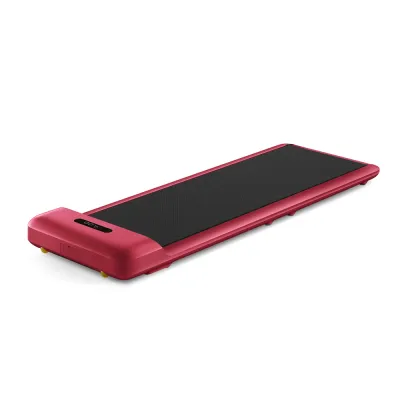
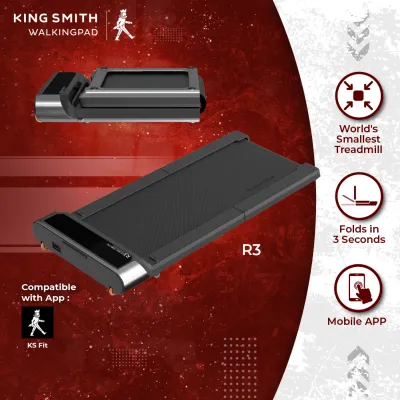
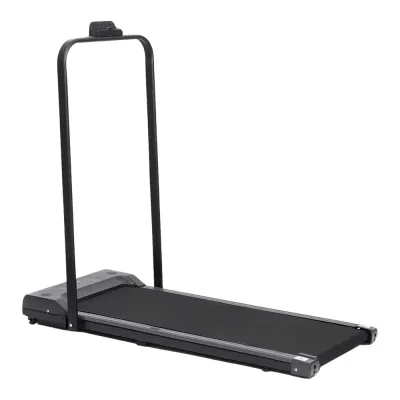
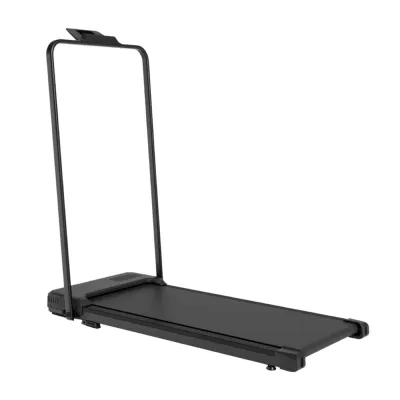
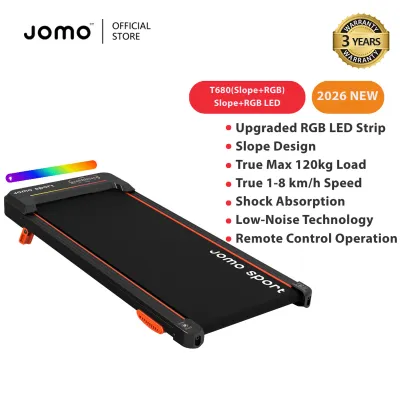
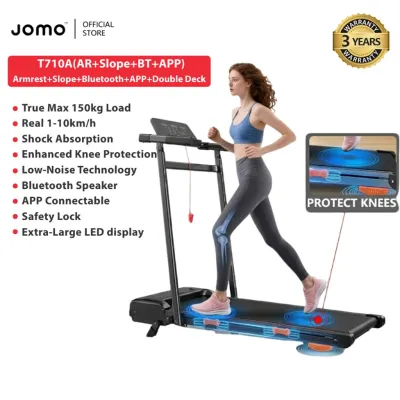
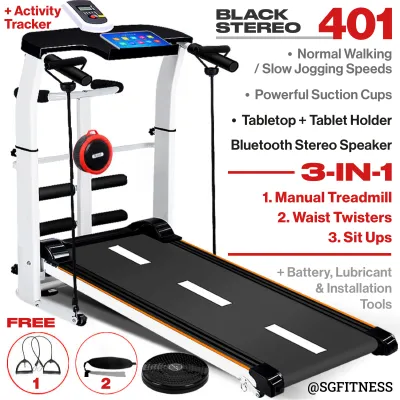
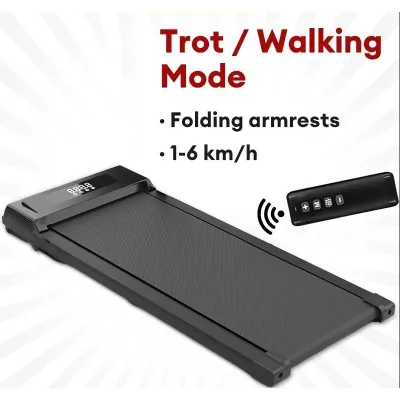
Prices are valid at publication and may change. Please refer to the product page for the latest price.
Next, map out the delivery path from your lift lobby to the designated room. Measure your HDB main door width, bedroom door frames, and any tight hallway turns. Walking pads often arrive in bulky, heavily padded boxes that are significantly larger than the machine itself. Ensuring the packaged box can clear your doorway prevents delivery day complications.
Finally, identify where the machine will live when you are not exercising. If you plan to slide it under a bed or sofa, measure the vertical clearance from the floor to the lowest point of the furniture frame. If you plan to store it upright in a household shelter or utility closet, measure the available depth and height, keeping in mind any wall-mounted shelves or DB boxes that might obstruct the space.
Essential Walking Pad Dimensions to Check
When browsing specifications on online marketplaces, distinguish between the total machine dimensions and the running belt dimensions. A belt that is too short or narrow can compromise your safety. For a comfortable walking stride, look for a belt width of at least 40 cm and a belt length of at least 100 cm. Taller users with longer strides should verify if they need a belt length closer to 120 cm to prevent stepping off the rear edge.

Compare the folded dimensions against your storage measurements. A truly low-profile walking pad typically has a folded height of 12 to 15 cm. If you plan to store it vertically, check the folded footprint—the width and depth when standing upright—to ensure it remains stable and does not tip over easily.
Check the net weight of the machine against your physical ability to move it. Most compact walking pads weigh between 20 kg and 40 kg. Additionally, verify the maximum user weight capacity specified by the manufacturer. Standard compact models often support up to 90 kg or 100 kg, while heavy-duty frames may support more. Matching this specification to your household’s needs prevents premature motor wear and structural damage.
Space-Saving Features for Compact Apartments
Walking pads generally fall into two design categories: flat-storing and double-folding. Double-folding models fold 180 degrees in the middle of the belt, cutting the storage length in half. This is highly beneficial for tight HDB bedrooms where floor space is limited. Flat-storing models do not fold in half but lay completely flat, making them ideal for sliding under low-clearance sofas.
Moving a 30 kg machine daily requires smart design. Look for integrated transport wheels at the front base of the frame. These wheels allow you to lift the rear of the pad and roll it across the room like a wheelbarrow. Check if the wheels are made of non-marring material to avoid leaving dark streaks on your floors.
Some walking pads feature a folding handrail for added stability at higher speeds. If you choose a model with a handrail, verify how it folds. Some handrails fold completely flat along the side of the frame, while others require you to unscrew locking knobs, which can add time to your daily setup and storage routine. Detachable handrails are another option, though you will need a separate spot to store the rail when it is not in use.
Setting Up Safely on HDB Flooring
HDB flats commonly feature vinyl, laminate, or polished tile flooring. The continuous friction and dynamic weight of a walking pad can cause scratches, scuffs, or permanent indentations over time. To protect your floor, place a high-density PVC or rubber equipment mat beneath the machine. This mat acts as a protective barrier and prevents the walking pad from sliding during use.
Living in close proximity to neighbors means noise control is a priority. The sound of footsteps on a walking pad can easily transmit through the concrete floor slab to the unit below. Look for walking pads with built-in shock absorption layers beneath the belt and rubber dampening pads on the base. Placing a thick, sound-dampening mat under the entire unit will further absorb low-frequency vibrations and keep your workouts neighbor-friendly.
Walking pads require a stable power supply. Always position the machine close enough to a wall outlet so the power cord lies flat along the floor without stretching. Avoid using extension cords or multi-way adapters, as cardio equipment draws significant current and can pose an electrical hazard. Ensure the cord does not cross your active walking path or create a tripping hazard for other household members.
Frequently Asked Questions (FAQ)
Can I use a walking pad directly on HDB vinyl or laminate flooring?
It is not recommended to use a walking pad directly on vinyl or laminate flooring without protection. The combination of the machine’s weight, the user’s movement, and the heat generated by the motor can cause the rubber feet to leave permanent marks or cause the floor planks to separate. Always place a dedicated equipment mat under the machine to distribute the weight and absorb friction.
Do I need a walking pad with a handrail for small spaces?
Whether you need a handrail depends on your fitness level, balance, and intended speed. If you plan to walk at a leisurely pace under 6 km/h while working at a standing desk, a handrail-free model is highly space-efficient and slides easily under furniture. However, if you require extra stability, have balance concerns, or want to walk at brisker speeds, a model with a foldable handrail is safer, even though it may require slightly more storage clearance.
Community discussion
Share your experience or ask a question. Comments are reviewed before publication.