
The best forearm exercise equipment for small HDB flats prioritizes a minimal physical footprint, versatile movement patterns, and quiet operation. Because space is at a premium in typical Singapore apartments, highly portable tools like adjustable hand grippers, modular wrist rollers, and resistance bands with door anchors offer an effective training stimulus without cluttering your living area. These compact tools allow you to target crush grip, wrist flexion, and extension right from your living room or study, easily tucking away into a drawer or under-bed storage when your workout is complete.
Assessing Your HDB Space and Training Needs
Before purchasing any fitness gear, evaluate the physical realities of your apartment. Measure your usable floor space and identify potential hidden storage zones like under-bed clearance, empty space behind doors, or deep wardrobe drawers. A small footprint during use is just as critical as storage size; you need enough clearance to move your arms freely without hitting furniture or walls.
Next, define your specific forearm training goals to narrow down your equipment choices. Whether you want to build crush grip strength for climbing, improve wrist flexibility for racket sports, or increase muscular endurance, different goals require different tools. For instance, finger strength is best targeted with specialized grippers, while overall forearm mass and wrist stability benefit more from rotational tools or weights.
Products mentioned in this guide
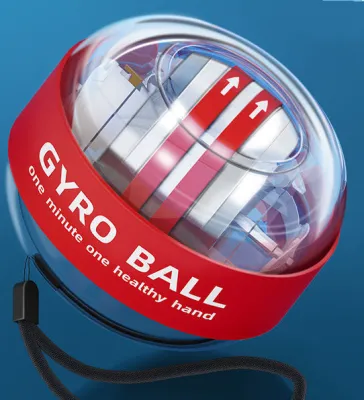
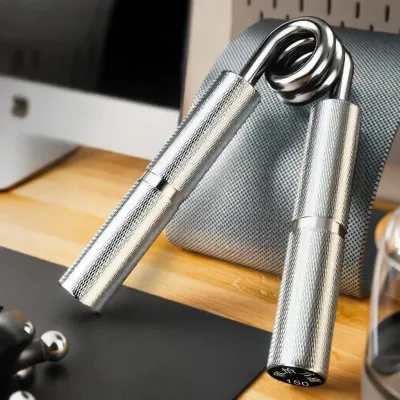
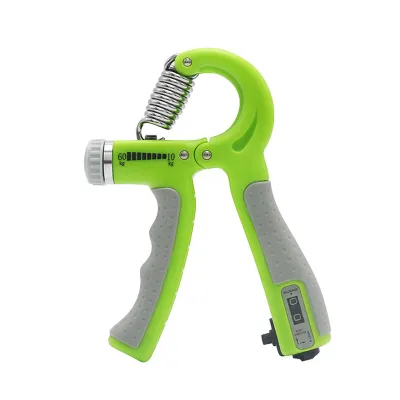
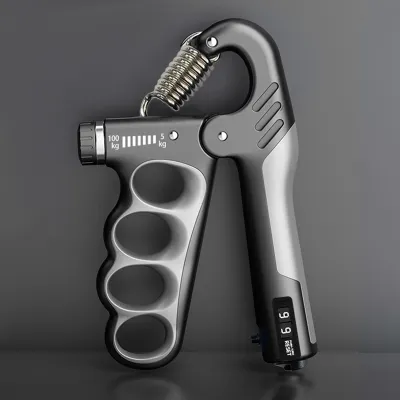
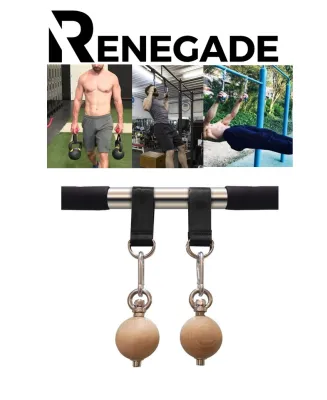
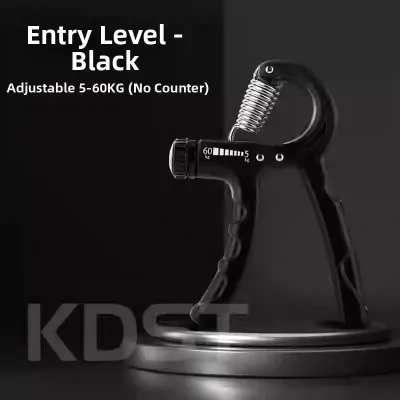
Prices are valid at publication and may change. Please refer to the product page for the latest price.
Finally, check your tenancy or ownership rules regarding fixed installations. If you are renting or want to avoid damaging your walls, avoid any gear that requires drilling. HDB walls vary in material, and installing permanent fixtures can lead to structural damage or lease violations. Opting for freestanding, portable, or temporary door-anchored equipment is generally the safest and most flexible route.
Main Categories of Compact Forearm Equipment
Selecting the right forearm trainer involves balancing space efficiency with training variety. Compact equipment ranges from highly portable, pocket-sized grip tools to slightly larger multi-joint systems that target the entire lower arm. By understanding the primary categories, you can choose tools that fit your storage constraints while offering a complete range of motion.

Hand Grips and Finger Strengtheners
Hand grippers and finger strengtheners are highly portable tools, easily fitting into a desk drawer or a small shelf. When choosing between them, compare adjustable tension mechanisms with fixed-resistance models. Adjustable models use a dial or spring system to change the resistance, allowing you to progress over time without buying multiple individual tools. Fixed-resistance models, often made of high-tensile steel, offer a highly consistent feel but require purchasing heavier units as your strength increases.
These tools are incredibly convenient for daily accessibility, allowing you to squeeze in a quick training session while working at your desk or watching television. They require zero setup time and take up virtually no physical space in a small flat.
However, hand grippers have distinct functional limitations. They primarily target your crush grip and finger flexors, leaving the muscles responsible for wrist extension, flexion, and rotation largely untrained. To build balanced forearm strength and prevent joint strain, supplement these tools with exercises that move your wrists through their full range of motion.
Wrist Rollers and Adjustable Weights
For a more comprehensive forearm workout that targets the wrist flexors and extensors, wrist rollers and compact weights are excellent choices. Look for collapsible or modular wrist rollers that feature detachable handles or a rolling pin design. These can be disassembled in seconds, making them small enough to store in a standard drawer rather than cluttering your floor.
Instead of buying a full rack of fixed dumbbells, consider adjustable dumbbells or kettlebells. These multi-purpose tools allow you to change the weight by adding plates or turning a dial, saving an immense amount of floor space. They can be used for wrist curls, reverse curls, and radial deviation exercises, making them highly versatile additions to a home gym.
When using weighted equipment in an HDB flat, always check your floor protection needs and clearance radius. Swinging a kettlebell or rolling a heavy weight requires a clear zone free of glass coffee tables, television stands, or low-hanging light fixtures. Placing a thick rubber mat on the floor is highly recommended to protect your tiles or vinyl flooring from accidental drops and scratches.
Resistance Bands and Door Anchors
Resistance bands paired with door anchors offer an incredibly versatile and lightweight system for full-range forearm and wrist movements. Unlike heavy weights, bands provide progressive resistance that increases as the band stretches, which is highly effective for targeting smaller stabilizing muscles in the wrist.
Before setting up, assess the physical space needed for band anchoring and full arm extension. Ensure you have enough clearance in narrow hallways or small bedrooms to pull the bands to their full length without colliding with furniture. The door you choose should open away from the direction of pull to ensure the door frame supports the tension safely.
Always evaluate door anchor safety and hinge stress before beginning your workout. Check that your interior doors are sturdy and that the hinges are secure. Additionally, establish a regular inspection routine for your elastic bands. Look for small tears, discoloration, or dry rot, and replace the bands immediately if any wear is visible, as snapping bands can cause painful rebounds.
Evaluating Storage and Usability in Small Apartments
Integrating fitness equipment into a small living space requires smart storage and realistic usability planning. To keep your home organized, compare different storage solutions such as hidden storage boxes, multi-functional furniture, or dedicated hanging organizers. A decorative storage ottoman or an under-sofa container can keep your forearm gear completely out of sight when not in use, preserving the clean aesthetic of your living room.
Another critical factor is the setup and teardown time of your chosen gear. If an exercise tool requires complex assembly, heavy anchoring, or moving multiple pieces of furniture before every session, you are far less likely to use it consistently. Choose equipment that can be set up in under a minute to lower the barrier to daily training.
Be mindful of common spatial errors when planning your home workouts. It is easy to buy a piece of equipment that technically fits on your floor but blocks essential walkways, prevents doors from opening fully, or restricts ventilation. Ensure your training zone allows for comfortable movement and proper airflow, especially during warm humid days.
Safety, Noise, and Shared Living Considerations
Living in high-density housing like an HDB flat means your workouts can easily impact your family members or neighbors. Noise-generating actions, such as the metallic click of adjustable hand grips or the thud of weights touching the floor, can travel through thin walls and floors. To mitigate this, perform your exercises on a thick yoga mat or a dense foam rug, and avoid letting adjustable weights clank together during high-repetition sets.
Structural integrity is another vital safety consideration. Before using suspension trainers or door-anchored rollers, verify that your door frames and walls can handle the lateral forces. Avoid mounting heavy equipment on lightweight partition walls or hollow-core doors, which are not designed to support dynamic human weight. Stick to solid concrete walls or heavy-duty external door frames if you must use anchored systems.
Finally, prioritize your physical safety by establishing clear stopping conditions during your workouts. Forearm training often involves high-repetition grip work that can lead to rapid fatigue. If you experience sharp joint pain in your wrists or elbows, excessive muscle cramping, or if your grip begins to slip unexpectedly, stop the exercise immediately. Equipment cannot replace proper training judgment, and pushing through joint pain can lead to long-term repetitive strain injuries.
Building Your Space-Efficient Forearm Routine
To get the most out of your compact equipment, structure a balanced routine that targets all functions of the lower arm. Ensure you balance flexion, extension, and rotation to prevent muscle imbalances and protect your elbow joints. A simple routine might combine hand gripper sets with resistance band wrist extensions and dumbbell rotations.
Determine your training volume and frequency based on your recovery capacity and the convenience of your home setup. Because forearm muscles are used constantly in daily life, they often respond well to frequent, moderate-intensity training, but they still require adequate rest to grow and adapt.
Track your progress systematically using the adjustable settings on your equipment or by counting your repetitions. Rather than continuously buying new gear as you get stronger, focus on increasing the time under tension, slowing down your repetitions, or shortening your rest periods to keep your workouts challenging and effective.
Frequently Asked Questions (FAQ)
Can I train my forearms effectively without any equipment?
Yes, you can perform effective forearm training using common household items. For example, a thick book can be used for wrist curls, or a water bottle can serve as a light weight for rotational movements. However, these improvised tools have clear limitations. They lack ergonomic grips, making them harder to hold safely, and they do not allow for easy progressive overload, which is essential for long-term strength gains.
Are wall-mounted forearm trainers safe for HDB walls?
Wall-mounted trainers are only safe if installed on load-bearing concrete walls using appropriate masonry anchors. Lightweight partition walls, such as drywall or hollow brick, cannot support the dynamic forces of pulling or rolling. Always check your tenancy agreement or building guidelines before drilling, and consider non-permanent, freestanding alternatives if you are renting.
How do I prevent grip equipment from squeaking or making noise?
Squeaking usually occurs at the metal spring coils or pivot joints of adjustable hand grippers. To keep your equipment quiet, apply a small drop of silicone-based lubricant or light machine oil directly to the friction points. Wipe away any excess oil with a clean cloth to prevent slippage, and regularly clean the handles to remove sweat and dust buildup.
Community discussion
Share your experience or ask a question. Comments are reviewed before publication.