
Selecting the ideal folding yoga mat requires balancing the physical cushioning needed for joint protection with the compact, lightweight footprint required for easy transport. While thicker mats offer excellent joint comfort, they naturally add bulk and weight to your gear. Conversely, ultra-thin travel mats fold down to the size of a book but provide minimal padding on hard surfaces. Finding the right balance depends on your primary practice environment, commuting habits, and physical needs. By comparing material density, fold configurations, and structural durability across different brands, you can find a mat that supports your practice without weighing down your daily commute.
The Core Trade-Off: Cushioning vs. Packability
The fundamental compromise of any folding yoga mat lies in the relationship between its thickness and its packed volume. Standard yoga mats are typically rolled, distributing the material evenly into a cylinder. Folding mats rely on pre-creased segments that stack flat. Every millimeter of added thickness multiplies across these stacked layers, directly increasing the height and bulk of the folded package. Consequently, a mat that feels plush under your knees may prove challenging to slip into a standard commuter backpack.
Travel-focused folding mats generally range from 1mm to 2mm in thickness. These ultra-thin options are designed specifically for maximum packability, often folding down to the dimensions of a laptop. While they easily fit into carry-on luggage or a crowded tote bag, they offer minimal impact absorption. They are best suited for use on carpeted hotel floors, grass, or as a hygienic layer placed over a studio-provided communal mat.
Products mentioned in this guide
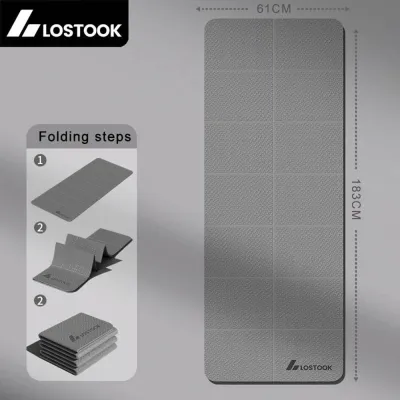
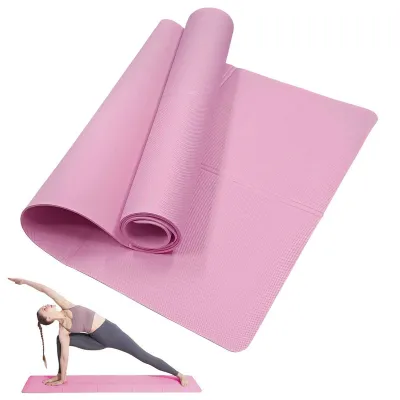
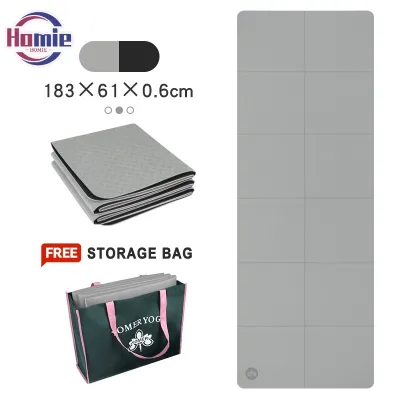
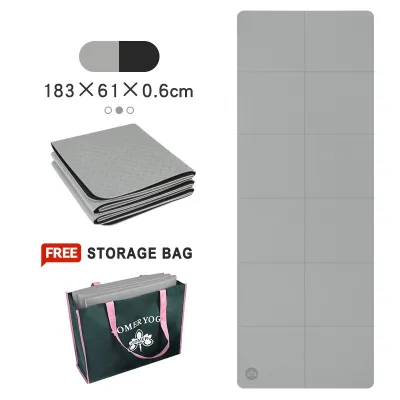
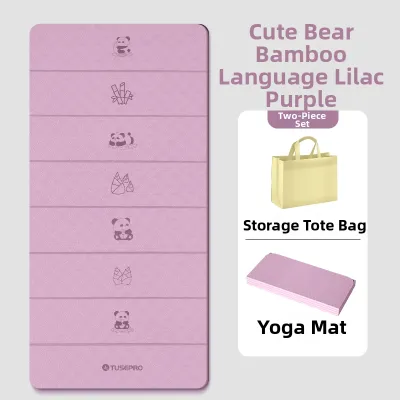
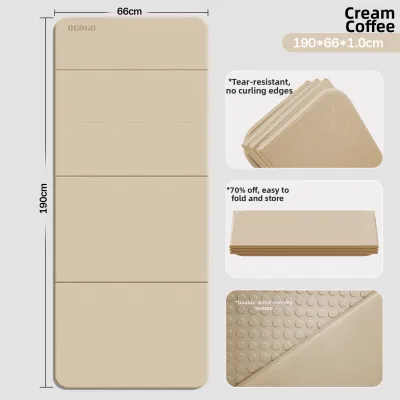
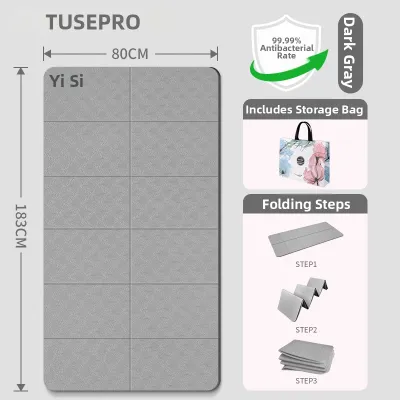
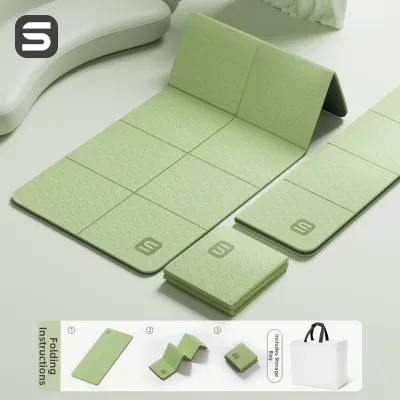
Prices are valid at publication and may change. Please refer to the product page for the latest price.
In contrast, studio-focused folding designs typically measure between 3mm and 6mm in thickness. These mats aim to replicate the supportive feel of a traditional home mat while offering a flat-packing alternative. However, the extra cushioning means the folded stack will be significantly thicker and heavier. Carrying a 6mm folding mat on a long public transit commute requires a dedicated bag and a willingness to carry extra weight.
Essential Specifications to Compare Across Brands
When evaluating different folding yoga mat brands, relying on product photos alone can be misleading. You must verify the exact physical specifications provided in the manufacturer’s product listings. Start by checking the unfolded dimensions to ensure the mat accommodates your height and shoulder width during transitions. Next, compare the folded footprint—specifically the length, width, and height of the collapsed stack—against the interior dimensions of your preferred travel bag or backpack.

Weight is another critical metric that directly impacts portability. A difference of just 500 grams might seem negligible on paper, but it becomes highly noticeable when walking long distances or navigating busy transit hubs. Lightweight travel mats often weigh under 1 kilogram, whereas denser, thicker folding mats can easily exceed 2 kilograms. If you plan to carry your mat alongside a laptop and personal items, prioritizing a lighter weight is essential for preventing shoulder strain.
Material density is the key factor that determines how well a mat cushions your body without adding excessive bulk. Common materials include Thermal Plastic Elastomer (TPE), natural rubber, and polyurethane (PU). TPE is exceptionally lightweight and budget-friendly, but it may lack the dense, grounded feel of natural rubber. Natural rubber offers excellent grip and durability but is significantly heavier. Polyurethane provides a smooth, highly absorbent surface but requires careful maintenance to prevent moisture damage.
Finally, inspect the physical design of the fold lines and hinges. High-quality brands often feature reinforced seams or molded hinges that allow the mat to fold cleanly without creating weak points. Look for close-up product images or manufacturer specifications that detail how the creases are formed. A well-designed hinge should allow the mat to lie completely flat when unfolded, preventing the edges from curling up or creating tripping hazards.
Matching Thickness to Your Practice Style
Your choice of mat thickness should align closely with your physical needs and the style of yoga you practice. If you frequently experience discomfort in your knees, wrists, or hips during floor poses like low lunges, a thicker mat is highly recommended. The extra padding helps distribute your body weight more evenly, reducing direct pressure on sensitive joints. However, if your practice consists primarily of standing balance poses, such as tree pose, a thinner, firmer surface is often advantageous.
Thick, soft mats can sometimes create an unstable foundation, causing your ankles to wobble as they sink into the material. For active, flow-based styles like Vinyasa, a moderate thickness of 3mm to 4mm offers a balanced compromise, providing sufficient joint protection while maintaining a solid connection to the floor. If you prefer restorative or Yin yoga, where poses are held for extended periods, a thicker 5mm to 6mm mat will offer the sustained comfort needed for deep relaxation.
It is important to note that material density can sometimes compensate for a lack of thickness. A premium 2mm natural rubber mat, for example, can feel surprisingly supportive because the dense material does not fully compress under your body weight. In contrast, a cheap, low-density 4mm foam mat might bottom out completely under pressure, leaving your joints resting directly against the hard floor. When comparing brands, look for high-density ratings or user feedback regarding compression recovery to gauge true support.
Grip and surface texture are also vital for maintaining stability during transitions. A mat that becomes slippery when wet can compromise your safety during a sweaty practice. Check whether the brand utilizes a textured pattern, a sticky polyurethane top layer, or an open-cell structure to enhance traction. If you practice in humid environments or tend to sweat heavily, pairing a thin travel mat with a lightweight yoga towel can help secure your grip while keeping your gear compact.
Evaluating Fold Designs for Travel and Commuting
Folding yoga mats come in several distinct configurations, each offering unique advantages for different travel scenarios. The most common designs are bi-fold, tri-fold, and multi-fold (often referred to as accordion-style). Bi-fold and tri-fold mats typically have fewer crease lines, which can make the practice surface feel more uniform and stable. However, they fold into larger, flatter panels that are best suited for packing flat against the back of a suitcase or carrying in a wide tote bag.
Multi-fold or accordion-style mats fold along numerous parallel lines, collapsing into a compact, block-like shape. This design is highly efficient for fitting into deep backpacks, bicycle panniers, or commuter bags. The trade-off is that accordion mats have more hinge points, which can sometimes create a slightly segmented feel underfoot. Additionally, because the top (clean) surface folds against the bottom (dirty) surface in some designs, you must verify if the brand’s folding pattern keeps the practice side protected from floor debris.
Consider the carrying accessories provided by the manufacturer or available for purchase. Some brands include dedicated travel pouches, compression straps, or integrated handles that keep the mat securely folded during transit. A good carrying strap not only prevents the mat from unfolding unexpectedly in your bag but also allows you to sling it over your shoulder when traveling light. If a mat does not come with accessories, check if its folded dimensions match standard third-party organizer bags.
Proper care is essential for preserving the structural integrity of any folding mat. Always follow the manufacturer’s guidelines regarding how to fold and store your mat. Avoid forcing the mat to fold in the opposite direction of its natural creases, as this can tear the internal fibers or split the seams. When cleaning, use mild, non-abrasive solutions and ensure the mat is completely dry before folding it away. Storing a damp mat in a tightly folded state can trap moisture, leading to mold growth and material degradation.
How to Choose the Right Folding Yoga Mat
To select the right folding yoga mat, you must evaluate your personal routine and identify which features are non-negotiable. If your primary goal is ultimate portability—such as frequent air travel, backpacking, or navigating crowded public transport in Singapore—prioritize a thin, highly compact multi-fold mat. Look for options under 2mm in thickness and weighing less than 1.2 kilograms. These mats can easily slip into your luggage or daily work bag, ensuring you always have a clean practice surface wherever you go.
If you primarily practice at home, drive to your local studio, or require substantial joint support, a thicker 4mm to 6mm folding mat is the better choice. While it will be bulkier to transport, the added comfort and stability during floor-based practices will far outweigh the inconvenience of a larger folded size. This option is also ideal if you want a mat that can quickly fold up and slide under a bed or sofa to keep your living space tidy.
Before making your final decision, take the time to verify the manufacturer’s specific guidelines. Check the recommended weight limits if the mat features an elevated or hollow structure, and review the warranty conditions regarding seam splits or crease wear. By carefully matching the mat’s thickness, weight, and fold design to your lifestyle, you can invest in a durable piece of equipment that enhances your wellness routine both at home and on the move.
Frequently Asked Questions (FAQ)
Can I leave my folding yoga mat unfolded for long periods?
Yes, leaving your folding yoga mat unfolded or flat-stored is generally safe and can actually help preserve its lifespan. Keeping a mat tightly folded for months at a time can place continuous stress on the hinge points, potentially leading to permanent creasing, material weakening, or cracking along the seams. If you have the space, storing your mat flat under a bed or hanging it over a smooth rail when not in use is an excellent way to relieve tension on the fold lines. If you must store it folded, try to avoid placing heavy items on top of the collapsed stack to prevent deep, irreversible creases.
Do folding yoga mats have a noticeable seam during practice?
Most folding yoga mats do feature visible seams or crease lines where the segments connect, and you will likely feel these transitions during your practice. However, high-quality brands design these hinges to lie as flat as possible, minimizing tactile distraction during transitions. To reduce any discomfort, you can adjust your positioning slightly so that highly sensitive joints, like your knees or elbows, rest on the solid panels rather than directly on a crease. Regularly cleaning the hinge areas with a soft cloth will also prevent dirt from accumulating in the seams, keeping the surface smooth and hygienic.

Community discussion
Share your experience or ask a question. Comments are reviewed before publication.