
Selecting the right resistance band for home fitness equipment requires looking past simple marketing labels. Because manufacturers design products for different target audiences—ranging from physical therapy patients to competitive powerlifters—a single label like “medium” can represent vastly different physical tensions. To build an effective home workout routine, especially in space-constrained apartments where bulky gym gear is impractical, you must understand how to decode these brand-specific differences, evaluate material properties, and verify actual tension specifications before making a purchase.
Why Generic Resistance Labels Mislead Buyers
The primary challenge when shopping for resistance bands is the complete absence of a universal standardization system. Unlike free weights, where a five-kilogram dumbbell weighs exactly five kilograms regardless of the brand, resistance bands are categorized using subjective internal baselines. Each manufacturer establishes its own scale based on its target demographic, production capabilities, and material choices.
This lack of standardization means that a “medium” band from a brand specializing in rehabilitation will feel incredibly light compared to a “medium” band from a brand focused on heavy strength training. If you transition from one brand to another expecting identical performance based on the label alone, you are highly likely to end up with equipment that does not match your physical capabilities.
Products mentioned in this guide
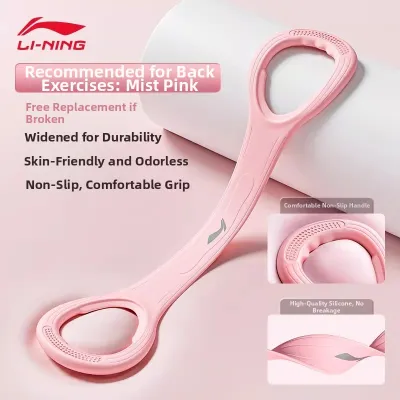

Prices are valid at publication and may change. Please refer to the product page for the latest price.
Relying solely on generic labels introduces risks. A band that is too weak fails to provide the stimulus needed for progressive overload, stalling your progress. Conversely, a band that is too stiff can compromise your workout form, leading to joint strain and muscle compensation.
Furthermore, the tension of a resistance band is dynamic rather than static. A weight provides constant resistance throughout an exercise, but a band’s tension increases as it stretches. Because different brands use varying material thicknesses and formulations, the rate at which tension increases during a movement can differ dramatically, even if two bands claim the same starting resistance.
Key Dimensions for Comparing Band Tension
To make an informed decision when purchasing home fitness equipment, you must look beyond marketing terms and analyze the physical and technical specifications of each product. Evaluating these dimensions allows you to compare different brands objectively and select the exact tension required for your workouts.

Measured Tension vs. Color Codes
Many buyers assume resistance band colors are standardized, but this is a misconception. While some brands use yellow for light resistance and black for heavy, others reverse this order or use different palettes. Relying on color alone when switching brands can lead to frustrating or unsafe workouts.
Instead of trusting the color of the band, you should look for documented tension ranges, which are typically expressed in kilograms or pounds. Reputable manufacturers provide these specifications on their product packaging, user manuals, or official websites. These ratings usually represent the tension felt at a specific stretch percentage, such as 100% or 200% elongation.
When evaluating a brand, check if they provide a clear, detailed color-to-tension chart that maps each color to its corresponding weight range. For example, a chart might specify that a green band provides 5 to 10 kilograms of resistance, while a blue band provides 10 to 15 kilograms. If a brand does not publish these specific ranges, it is difficult to verify what level of tension you are actually purchasing.
Keep in mind that these weight ranges are estimates based on controlled manufacturing tests. The actual tension you experience during an exercise will depend on how far you stretch the band relative to its resting length. Understanding this relationship helps you interpret manufacturer specifications more accurately and choose bands that align with your strength levels.
Material and Build Differences
The physical construction and material composition of a resistance band play a massive role in how the tension feels during an exercise. The three most common types of bands found in home fitness equipment are flat latex loops, fabric loop bands, and tube bands with handles. Each type offers a distinct stretch profile and tension curve.
Flat latex loop bands are highly versatile but tend to have a steep tension curve, meaning resistance increases rapidly at the end of the movement. Fabric loop bands, woven with elastic threads and cotton or polyester, feel stiffer from the start. This stiffness provides a consistent, heavy tension ideal for lower-body exercises like squats.
Tube bands are hollow cylinders made of synthetic or rubber materials, often featuring metal clips at the ends to attach handles or ankle straps. The tension of a tube band is determined by its wall thickness and core material. Because they are designed to mimic cable machines, tube bands generally offer a smoother, more linear resistance profile than flat latex bands, making them excellent for upper-body isolation movements.
Additionally, the quality of the attachments and handles on tube bands can alter your perception of tension. Sturdy, padded handles allow for a secure grip, enabling you to pull against higher resistances comfortably. In contrast, flimsy or poorly designed handles can make a band feel awkward and difficult to control, even if the actual tension rating is appropriate for your strength level.
How to Match Band Tension to Your Fitness Level
Matching resistance band tension to your fitness level requires considering the specific exercises you plan to perform. Because different muscle groups possess varying levels of strength, a single band tension is never sufficient for a full-body workout. Lower-body muscles are much stronger than upper-body muscles like the shoulders.
To estimate your starting tension, categorize your planned exercises by muscle group size. For upper-body movements like lateral raises, bicep curls, or overhead presses, you will generally require lighter bands with lower tension ratings. For compound lower-body movements like deadlifts, squats, or glute bridges, you will need significantly heavier bands to provide an adequate training stimulus.
A practical framework for testing whether a band’s tension is correct is to observe your range of motion and form during a set. The band should provide enough resistance to make the final two or three repetitions of a set highly challenging, yet it must still allow you to complete the full range of motion with perfect control. If you cannot complete the movement, or if your body begins to sway to compensate, the tension is too heavy.
If you are new to resistance training or transitioning to a new brand, purchasing a multi-pack containing a variety of tension levels is highly recommended. A multi-pack provides the flexibility needed to target different muscle groups effectively. It also allows you to implement progressive overload, which is the gradual increase of stress placed upon the body during training.
To progress safely, only move to the next level of thickness or color when you can complete all your sets and repetitions with perfect form and minimal fatigue. If you jump to a heavier band too quickly, you risk overloading your tendons and joints before they have adapted to the strain. Gradual, controlled progression is the key to building strength safely with home fitness equipment.
Decision Framework: Choosing the Right Brand and Tension
When selecting resistance bands for your home gym, your choice should be guided by your specific fitness goals, exercise preferences, and safety requirements. There is no single brand or style that suits everyone, so evaluating your personal training needs against the characteristics of different band types is essential.
If your primary goal is progressive strength training and you want to track your lifts precisely, prioritize brands that provide clear, documented tension ratings in kilograms or pounds. Having access to these specific numbers allows you to calculate your training volume accurately and make structured adjustments to your routine over time, similar to how you would progress with traditional free weights.
For those focusing heavily on lower-body workouts, glute activation, and lower-body hypertrophy, fabric loop bands are often the most suitable choice. The fabric blend prevents the band from rolling up, pinching your skin, or sliding down your legs during dynamic movements. Furthermore, the high initial tension of fabric bands provides the heavy resistance needed to challenge strong lower-body muscle groups.
If you prefer to mimic cable machine exercises, such as chest presses, lat pulldowns, or rotational core movements, tube bands with interchangeable handles are the ideal option. These systems allow you to anchor the bands to a door or sturdy post, providing a wide range of angles for upper-body isolation. Ensure the brand you choose features heavy-duty carabiners and reinforced stitching at the attachment points.
Before finalizing your purchase, always verify if the manufacturer provides explicit safety guidelines, maximum stretch limits, and material care instructions. Understanding the maximum elongation limit of a band is critical for preventing snap-back injuries, which can occur if a band is stretched beyond its structural capacity. If a product lacks clear tension indicators, safety warnings, or shows visible manufacturing defects like uneven thickness or micro-tears upon arrival, do not use it; return the item and select a brand that prioritizes quality control and transparency.
Frequently Asked Questions (FAQ)
Can I combine two lighter bands to equal one heavy band?
Yes, stacking or combining multiple resistance bands is a highly effective way to increase tension and customize your workouts. When you use two bands simultaneously, their individual tension ranges are generally added together, allowing you to create intermediate resistance levels without purchasing additional equipment.
However, combining bands requires careful attention to safety and material limits. You must ensure that the combined stretch does not exceed the safe elongation limit of the lighter band in the pair. If a lighter band is stretched to the limit of a heavier band’s capacity, it is at a much higher risk of snapping, which can cause painful skin snaps or facial injuries.
Before stacking bands, check the manufacturer’s guidelines to confirm if their products are designed for multi-band use. This is particularly important for tube bands, where the carabiners and anchor points must be strong enough to support the combined load of multiple tubes. Always inspect each band individually for signs of wear before combining them.
Do resistance bands lose their tension over time?
Yes, all resistance bands will eventually lose their tension and degrade over time due to the natural properties of elastic materials. Latex, rubber, and the synthetic elastomers used in fabric bands are subject to wear and tear from repeated stretching, environmental exposure, and contact with sweat and body oils.
You can identify when a band needs to be replaced by looking for specific, observable signs of material degradation. Inspect your bands regularly for micro-tears, cracks, discoloration, or areas that feel unusually thin. Other warning signs include a permanent loss of elasticity—where the band remains stretched out at rest—or the development of a sticky or brittle texture on the surface.
To maximize the usable lifespan of your home fitness equipment, store your resistance bands in a cool, dry place away from direct sunlight and heat sources, as UV rays and high temperatures accelerate material breakdown. Additionally, wiping your bands down with a damp cloth after sweaty workouts and avoiding stretching them past their recommended limits will help maintain their tension and ensure your safety during training.
Community discussion
Share your experience or ask a question. Comments are reviewed before publication.