
Choosing the right adjustable dumbbell mechanism is a pivotal decision when building a compact home gym. The mechanism you select directly influences your workout speed, the longevity of your equipment, and how natural the weights feel in your hands. Dial systems offer the fastest weight transitions but rely on complex internal gears. Pin systems provide a robust, block-style alternative with fewer delicate parts, while traditional spinlocks offer unmatched durability and a classic barbell feel at the cost of quick adjustments. For a home gym where space is often at a premium, selecting the right mechanism ensures your workouts remain efficient without cluttering your living area.
How Dial, Pin, and Spinlock Mechanisms Actually Work
Dial dumbbells, often referred to as selectorized dumbbells, use a rotating dial located either on the ends of the dumbbell or integrated directly into the handle itself. When you turn this dial to a specific weight setting, it rotates an internal gear system. This gear system engages or disengages specific selection hooks or tabs. When you lift the handle from its custom storage tray, only the selected plates remain attached to the handle, while the unselected plates stay resting in the tray. This design requires a highly precise alignment between the handle and the tray to function correctly.
Pin-style adjustable dumbbells, another selectorized variant, utilize a physical selector pin to choose the desired weight. The plates are typically arranged in a nested, U-shaped stack or a linear block. To adjust the weight, you insert a heavy-duty plastic or magnetic metal pin into the slot corresponding to your target weight. The pin physically slides underneath the selected plates, locking them to the central handle assembly. When you lift the dumbbell, the pin supports the weight of the active plates, leaving the remaining plates in the storage dock.
Products mentioned in this guide
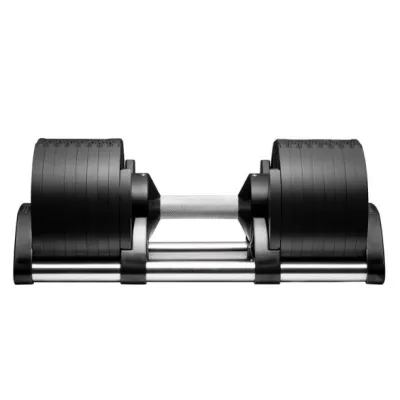
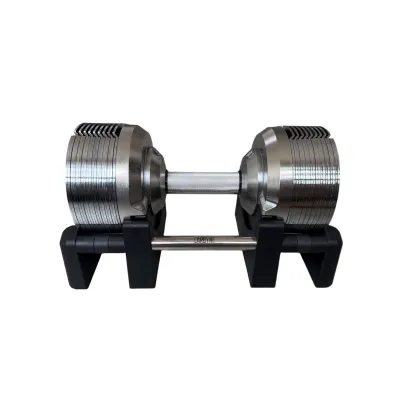
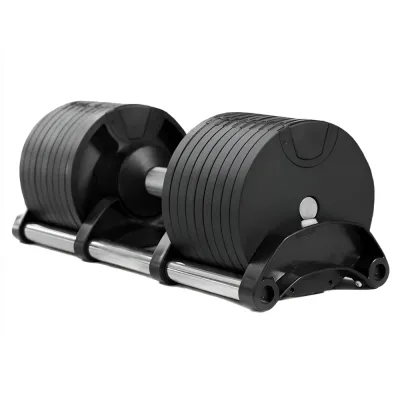
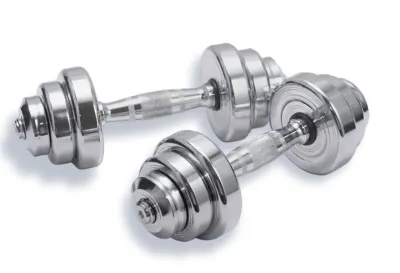
Prices are valid at publication and may change. Please refer to the product page for the latest price.
Spinlock dumbbells represent the traditional, plate-loaded approach. This system consists of a solid metal bar with threaded ends and a set of matching threaded collars. To adjust the weight, you must manually slide individual weight plates onto the sleeves of the bar and then spin the collars down the threads until they press firmly against the plates to secure them. This mechanical design is entirely manual, relying on physical thread friction to keep the plates from sliding off during movement.
These mechanical differences directly dictate the physical footprint and shape of each dumbbell type. Dial and pin systems require dedicated base trays or docking stations, which must sit on a flat, stable surface to allow the selection mechanisms to align. Because the handle must span the entire length of the weight stack to engage all potential plates, selectorized dumbbells often maintain a fixed, maximum length regardless of whether you are lifting a light or heavy load. In contrast, spinlock dumbbells grow shorter or longer depending on how many plates you load, but their threaded ends can protrude significantly, potentially interfering with certain movements.
Comparing Speed, Durability, and Physical Feel
When evaluating transition speed, dial and pin mechanisms hold a clear advantage over spinlock designs. Changing weights on a dial or pin system takes only a few seconds, requiring a simple twist of the wrist or a quick repositioning of the selector pin. This rapid transition is highly beneficial for fast-paced training styles. Conversely, spinlock dumbbells require you to manually unscrew the collars, slide plates off or on, and screw the collars back on for both dumbbells. This process can easily take a minute or more, which can disrupt your heart rate and momentum during timed intervals.

Durability profiles diverge sharply when comparing internal complexity to simple mechanical designs. Dial systems contain numerous moving parts, including plastic gears, spring-loaded detents, and selector hooks. These internal components are vulnerable to structural failure if the dumbbell is dropped, banged together, or exposed to excessive dust and moisture. Pin systems are slightly more robust because their selector pins are usually solid metal or high-impact composite, but they still rely on precise alignment of the weight stack. Spinlock dumbbells, being made almost entirely of solid steel or cast iron with no internal moving parts, are exceptionally durable and virtually immune to mechanical failure, though the threads can wear down over years of heavy use. You should always check the manufacturer’s warranty conditions, as many brands explicitly exclude coverage for selectorized models if they show signs of impact damage.
The physical feel and balance of these dumbbells during exercise can dramatically alter your training experience. Selectorized models, particularly dial systems, often feature bulky, wide frames to accommodate the plate-selection trays. This extra bulk can make the dumbbells feel unwieldy during tight, close-body movements like close-grip dumbbell presses or bicep curls, where the ends of the dumbbells might collide. Spinlock bars offer a more traditional barbell-like grip and a highly balanced center of gravity, as the plates sit flush against the collar. However, the protruding threaded ends of spinlock bars can scrape against your thighs during dumbbell cleans or restrict your range of motion during chest presses. Additionally, performing exercises like renegade rows requires a flat, stable dumbbell edge; some dial and pin models feature flat-bottomed plates that excel here, whereas round spinlock plates can roll, posing a safety risk to your wrists.
Which Mechanism Matches Your Training Style?
If your training routine heavily features drop sets, supersets, or fast-paced circuit training, a dial system is highly suitable. The ability to dial down from a heavy press to a lighter flye in under five seconds keeps your muscles under continuous tension. This mechanism is ideal for home gyms with dedicated, flat floor space or a sturdy dumbbell stand where the base trays can remain permanently positioned. It suits lifters who prioritize convenience and a clean, organized workout space over rugged durability.
A pin-style system is an excellent choice if you want the speed of a selectorized dumbbell but prefer a more robust, block-like feel that closely mimics commercial gym equipment. Pin dumbbells often have a more compact length at lower weights compared to dial systems, making them easier to maneuver. This style fits lifters who want a durable selectorized option and have the space to accommodate the linear footprint of the nesting weight stacks.
For those working with a stricter budget or training in a humid environment where delicate electronics or complex gears might degrade, the spinlock mechanism is highly practical. It is the best choice for heavy lifters who perform floor-based exercises, as the solid steel construction can withstand the occasional hard contact with the floor. If your workouts consist of traditional strength training with long rest periods between sets, the slower plate-swapping process will not hinder your progress.
It is important to recognize that neither selectorized nor spinlock adjustable dumbbells are universal solutions. If your training style involves Olympic lifting variations, overhead drops, or high-impact functional fitness routines where weights are routinely dropped from overhead, adjustable models are not suitable. The impact forces can shatter dial gears, bend selector pins, or crack spinlock collars, creating a severe safety hazard. In these scenarios, fixed-weight rubber hex dumbbells or specialized polyurethane weights are necessary. Furthermore, if you require highly specialized ergonomic handles or extremely thick grips, standard adjustable models may not offer the customization you need.
Essential Specifications to Verify Before Purchase
Before purchasing, carefully verify the weight increments and the maximum load capacity of the dumbbell set. Some models adjust in small, manageable increments of 1 kg to 2 kg, which is ideal for progressive overload on smaller muscle groups like the shoulders. Other models may only adjust in larger jumps of 4 kg or 5 kg, which can make progressing on exercises like overhead presses exceptionally difficult. Ensure the maximum weight capacity aligns with your long-term strength goals so you do not quickly outgrow your investment.
Measure the handle length and the clearance between the inner weight plates. If you have larger hands, a handle that is too short can pinch your fingers or force an awkward grip. Conversely, a handle that is too long can cause the dumbbell to tilt unevenly during lifts. Check that there is sufficient space to comfortably wrap your hand and wrist wraps, if you use them, without rubbing against the selection mechanism.
Consider the physical space required to store and operate the dumbbells. Dial and pin systems require their base trays to be laid out, which can take up a significant amount of floor space. Verify the dimensions of these trays to ensure they fit on your gym mat or storage rack. If you opt for spinlock dumbbells, you will need additional storage space for the loose weight plates when they are not loaded onto the bars.
Always review the manufacturer’s warranty terms and service limitations before finalizing your purchase. Pay close attention to what the warranty covers regarding the moving parts of selectorized models. Many warranties are voided if the dumbbells are dropped, used on hard concrete surfaces without mats, or stored in high-humidity outdoor areas. Understanding these limits helps you maintain the equipment properly and avoids unexpected costs if a mechanism fails.
Frequently Asked Questions (FAQ)
Is it safe to drop adjustable dumbbells during a set?
Selectorized mechanisms contain internal moving parts, such as plastic gears, alignment pins, and spring-loaded locks, that can easily misalign or break upon impact. Dropping these dumbbells can cause the locking mechanism to fail, which poses a significant safety risk during subsequent lifts if a plate slips out of the frame. While spinlock dumbbells are generally more impact-resistant due to their solid metal construction, dropping them can still damage the threads, loosen the collars, or crack your home flooring. To ensure safety and protect your investment, always lower the weights in a controlled manner and consult the specific manufacturer’s safety guidelines before use.
How do I maintain the moving parts of a dial dumbbell?
To keep selectorized mechanisms functional, always store the dumbbells in their designated base trays when they are not in use. This practice prevents dust, pet hair, and debris from entering the internal gear tracks and causing the dials to stick. Avoid using liquid lubricants, WD-40, or harsh chemical cleaners, as these can degrade internal plastic components and attract more dirt over time. If the dial begins to stick, clicks abnormally, or fails to lock securely into place, stop using the dumbbell immediately and contact the manufacturer for authorized service instructions.

Community discussion
Share your experience or ask a question. Comments are reviewed before publication.