
Choosing the right tennis overgrip is one of the simplest yet most impactful adjustments a beginner can make to improve their game. An overgrip is a thin, protective wrap applied over the racket’s original base grip. It serves as the primary point of contact between your hand and your equipment, directly influencing your control, comfort, and confidence on the court. For players starting out, the decision typically comes down to two distinct categories: dry overgrips and tacky overgrips. Selecting the wrong type can lead to a slipping racket, blisters, or unnecessary hand fatigue, while the right choice allows you to maintain a secure hold with minimal effort.
To make an informed decision, you must evaluate how your hands interact with the racket under different playing conditions. While personal preference plays a significant role, physical factors such as how much you sweat and the climate of your local playing environment are often the ultimate deciding factors. By understanding the material characteristics of each grip type, you can select an option that keeps your racket stable in your hand, allowing you to focus entirely on developing your strokes and footwork.
Core Differences Between Dry and Tacky Overgrips
The fundamental distinction between dry and tacky overgrips lies in their surface texture and how they manage moisture. Tacky overgrips are designed to feel sticky or adhesive to the touch. They typically feature a smooth polyurethane coating that clings to the skin of your palm, creating high surface friction. This stickiness is intended to help the racket feel secure in your hand without requiring you to squeeze the handle tightly. When you pick up a racket with a fresh tacky grip, it feels almost glued to your hand, providing an immediate sense of security that many beginners find reassuring.
Products mentioned in this guide
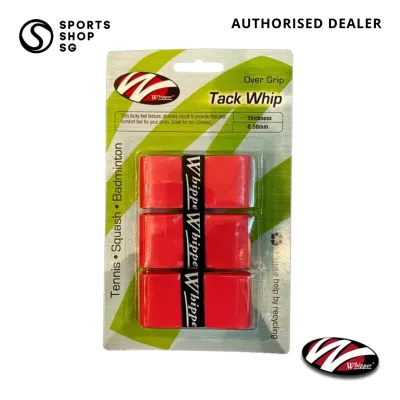
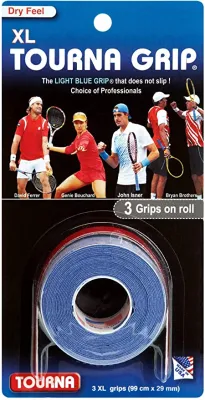
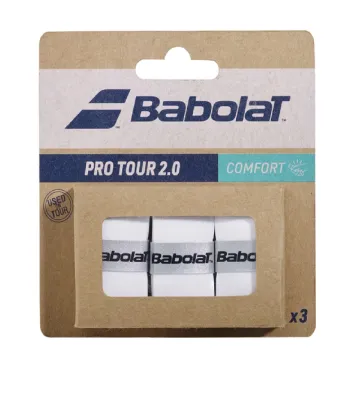
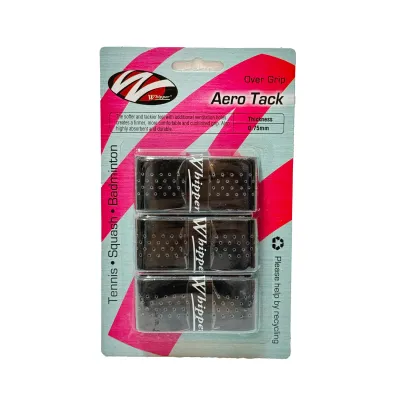
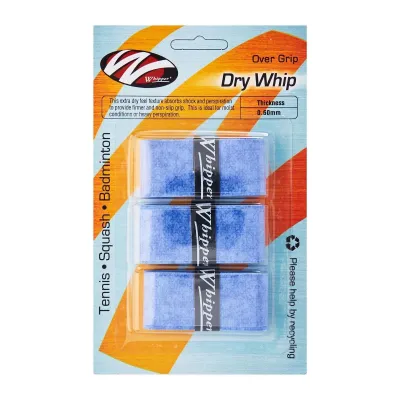
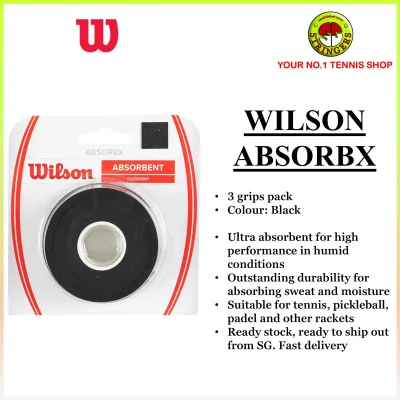
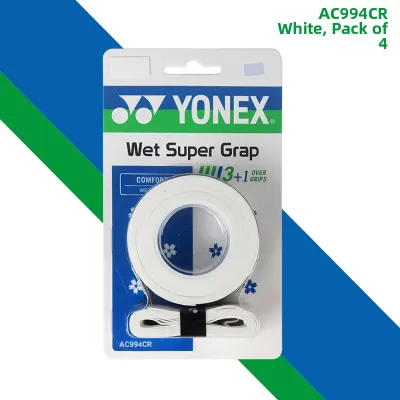
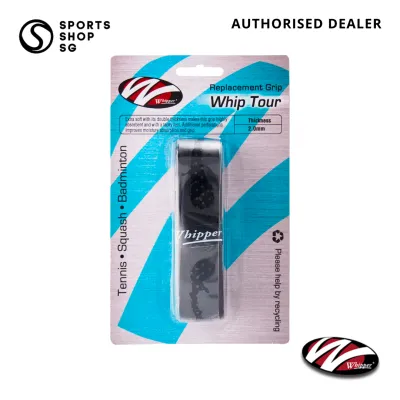
Prices are valid at publication and may change. Please refer to the product page for the latest price.
Dry overgrips, on the other hand, offer a matte, velvety, or slightly powdery texture that resembles suede or soft cloth. Instead of relying on surface stickiness, dry grips utilize a highly porous, non-woven fabric structure designed to absorb moisture. When you touch a dry overgrip, it feels smooth and soft rather than adhesive. Rather than sticking to your hand, it provides traction through texture and material density, allowing your hand to shift comfortably when needed while preventing the racket from twisting during off-center hits.
Moisture absorption mechanisms differ significantly between these two categories. Tacky grips are generally non-porous; they are designed to repel water rather than absorb it. While this works exceptionally well in dry conditions, any sweat that accumulates on a tacky grip can pool on the surface, creating a slippery barrier between your hand and the racket. In contrast, dry grips act like a sponge. They draw sweat away from your palm and disperse it throughout the fibrous inner layers of the wrap, keeping the outermost surface dry and slip-resistant even during intense rallies.
Thickness profiles also vary, which can subtly alter the overall feel of your racket handle. Most overgrips range from 0.4mm to 0.8mm in thickness. Tacky overgrips are frequently manufactured on the thinner end of this spectrum, allowing players to feel the bevels of the racket handle clearly. This clear feedback helps beginners learn correct grip placement for different shots. Dry overgrips are often slightly thicker or feel more cushioned due to their fibrous, multi-layered construction. While this added thickness can provide a small amount of extra shock absorption, it can also slightly increase the overall size of your racket handle.
How Playing Conditions and Style Affect Your Choice
Your local environment plays a massive role in how an overgrip performs. In regions with high humidity and warm temperatures, such as Singapore, the air is saturated with moisture, which severely limits how quickly sweat can evaporate from your skin. When playing on outdoor courts or in sheltered facilities under these tropical conditions, even players who do not normally sweat heavily will find their hands becoming wet quickly. In such environments, a tacky grip can lose its adhesive qualities almost instantly as sweat pools on its surface, turning the handle slick and difficult to control.

Individual physical tendencies must also be factored into your decision. Some players naturally have very dry hands and rarely sweat, even during intense physical exertion. For these individuals, a dry overgrip can feel overly slippery or abrasive, as there is no moisture for the grip to absorb. Conversely, players who experience heavy hand sweating will find that a tacky grip becomes unusable within a few games. Matching the grip’s moisture-management style to your body’s natural sweat production is essential for maintaining a consistent connection to your racket.
Your physical handling style and how tightly you hold the racket also influence which texture will feel most comfortable. Beginners often make the mistake of squeezing the racket handle too tightly, which can lead to wrist fatigue and tennis elbow. A tacky overgrip can help counter this habit by providing a secure hold with very light grip pressure, allowing you to relax your forearm muscles during play. However, if you prefer to slide your hand easily to adjust your grip between forehands, backhands, and volleys, the high friction of a tacky surface might feel restrictive. A dry overgrip allows for smoother hand transitions along the handle while still preventing rotational twisting when you strike the ball.
Decision Framework: Which Overgrip Should You Choose?
To finalize your selection, you can use a simple conditional framework based on your playing conditions, sweat levels, and comfort preferences.
Choose a dry overgrip (such as a Whipper dry grip) if you:
- Experience moderate to heavy hand sweating during play.
- Frequently play in high-humidity environments where moisture control is your primary concern.
- Prefer a soft, cloth-like, or velvety texture over a sticky sensation.
- Want to be able to transition your hand positions smoothly along the handle without feeling stuck.
Choose a tacky overgrip if you:
- Have naturally dry hands and sweat very little.
- Play primarily in cool, dry, or indoor climate-controlled environments.
- Prefer a sticky, adhesive surface that physically clings to your palm.
- Want to maintain a secure hold on the racket with minimal grip pressure.
If you find that neither option provides enough comfort, the issue may not be the overgrip itself. Overgrips are thin layers designed primarily for texture and moisture management, not for significant cushioning. If you require substantial shock absorption to protect your joints, or if you need to increase your handle size significantly, you should evaluate your base replacement grip. Replacing a worn-out, compressed base grip with a thicker, cushioned replacement grip will provide the structural support you need, after which you can apply your preferred overgrip on top.
Before applying any new overgrip, always verify the condition of your underlying base grip. The base grip is the thick leather or synthetic wrap that comes installed on the racket from the factory. If this underlying grip is crumbling, compressed, sticky with old adhesive, or showing signs of mold from trapped sweat, applying a new overgrip over it will not resolve your comfort or slip issues. Ensure the base grip is clean, dry, and structurally intact so that your new overgrip can lay flat and adhere securely to the handle.
Application and Care for Maximum Durability
Proper application is essential to ensure your overgrip performs as intended and lasts as long as possible. To wrap your racket, start at the butt cap at the bottom of the handle. If you are right-handed, wrap in a clockwise direction as you look down the handle; if you are left-handed, wrap counterclockwise. This direction ensures that your fingers naturally pull the seams tight rather than peeling them back during play. Maintain consistent, firm tension as you wrap upward, overlapping each turn by about 2 to 3 millimeters. This consistent overlap prevents gaps from forming when the grip stretches during use. Once you reach the top of the handle, cut any excess material at an angle to create a clean finish, and secure it tightly with the included finishing tape.
Knowing when to replace your overgrip is key to maintaining optimal performance and preventing injury from a slipping racket. Instead of relying on a strict calendar schedule, look for observable signs of wear. For tacky grips, a clear indicator for replacement is when the surface loses its stickiness and becomes smooth, shiny, or slippery. For dry grips, look for fraying, pilling, or areas where the velvety texture has worn down to a smooth, hard surface. Any visible tearing, severe discoloration from dirt and sweat, or a persistent sour odor indicates that the material has reached the end of its functional life and should be replaced.
To maximize the lifespan of your overgrip, practice good storage habits. Avoid leaving your tennis racket in areas exposed to extreme heat or direct sunlight, such as the trunk of a car. High temperatures can rapidly degrade the polyurethane coatings on tacky grips, causing them to become excessively gooey or brittle. Similarly, avoid storing a damp racket in a completely sealed plastic bag or compartment, as trapped moisture can lead to mold growth and break down the adhesive backing of your wraps. Store your racket in a well-ventilated sports bag in a cool, dry place inside your home to keep the grip materials fresh between sessions.
Frequently Asked Questions (FAQ)
Can I use a dry overgrip on top of an existing tacky grip?
Yes, you can physically wrap a dry overgrip over an existing tacky overgrip, but doing so is generally not recommended. Layering multiple overgrips increases the overall thickness of the handle and rounds out the bevels of the racket grip. This makes it much harder to feel the edges of the handle, which is essential for beginners learning to transition between different grip styles. Additionally, adding multiple layers increases the weight of the handle, which can alter the balance of your racket. For the best performance and feel, remove the old overgrip completely before applying a new one directly onto the base replacement grip.
How often should a beginner replace their tennis overgrip?
A beginner should replace their overgrip based on observable wear and play frequency rather than a set time frame. If you play once a week for an hour in mild conditions, a single overgrip may last several weeks. However, if you play multiple times a week in a hot, humid climate, you may need to change it every few sessions. As a general rule, replace the grip as soon as you notice a loss of traction, visible dirt buildup, or when you find yourself squeezing the handle harder than usual to keep the racket from twisting.
Does the color of the overgrip affect its performance or durability?
Yes, the color of an overgrip can subtly influence its tactile feel and how long it maintains its original properties. White overgrips are highly popular among players because they contain fewer chemical dyes, which often allows the raw polyurethane or non-woven fibers to perform exactly as designed. Colored overgrips require dyes that can slightly alter the surface texture, sometimes making them feel slightly less tacky or less absorbent than their white counterparts. Additionally, white grips show dirt and sweat stains much faster, which serves as an excellent visual reminder of when it is time to replace them for optimal hygiene and performance.
Community discussion
Share your experience or ask a question. Comments are reviewed before publication.