
Selecting the right football goal requires balancing the developmental needs of the players with the physical realities of your available space. While a larger goal might seem like a long-term investment, an oversized frame in a cramped yard can compromise safety and hinder skill development. By matching the goal’s dimensions to the player’s age group and carefully measuring your setup area—including essential safety buffers—you can create an engaging, hazard-free environment for practice and play.
Matching Football Goal Sizes to Player Age Groups
Choosing a goal that aligns with a player’s developmental stage is essential for fostering proper technique and maintaining engagement. For toddlers and very young children under six years old, small pop-up goals measuring approximately three to four feet in width are ideal. These compact targets introduce basic coordination and spatial awareness without overwhelming young players.
As players progress into junior categories, typically between the ages of seven and ten, goal sizes should scale accordingly. Common dimensions for this age bracket include six-by-four feet or eight-by-six feet. These intermediate sizes allow junior players to practice shooting accuracy and basic goalkeeping positioning on a scale that matches their physical reach and running speed.
Products mentioned in this guide
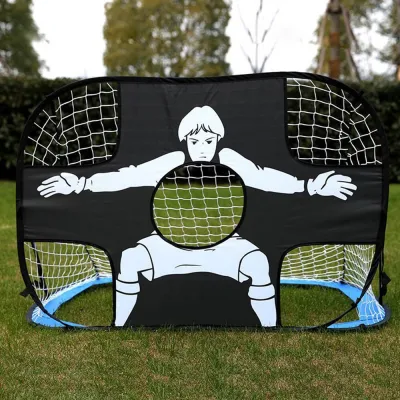
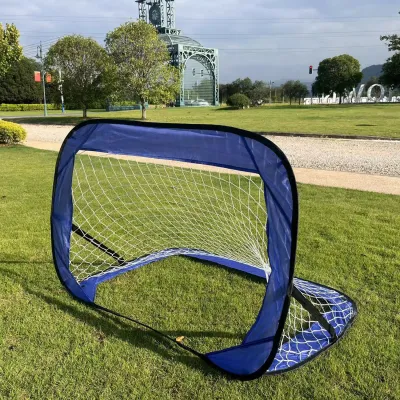
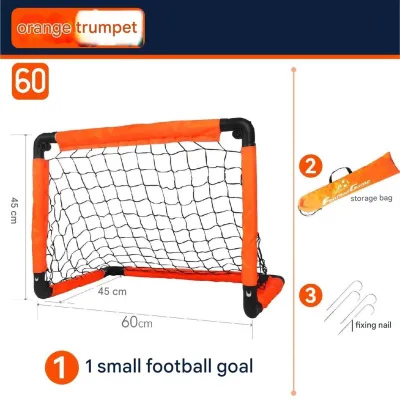
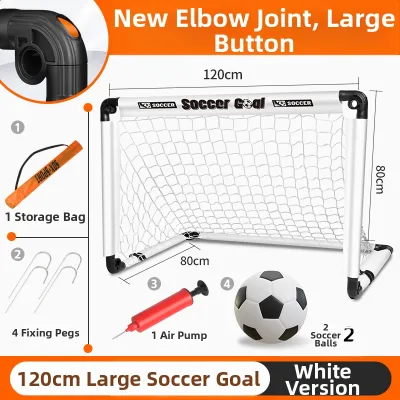
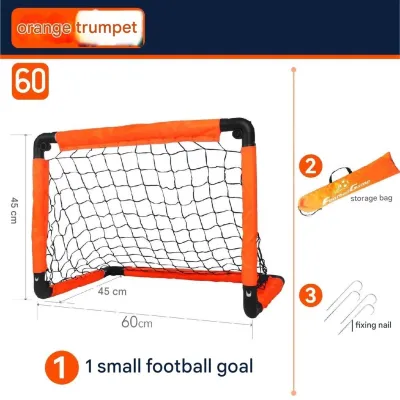
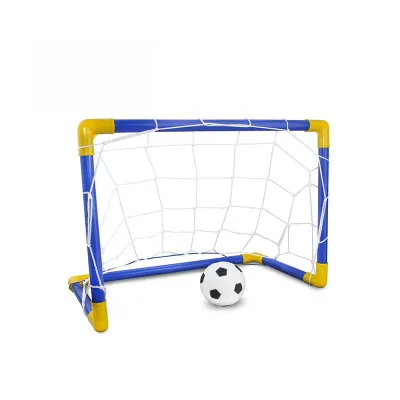
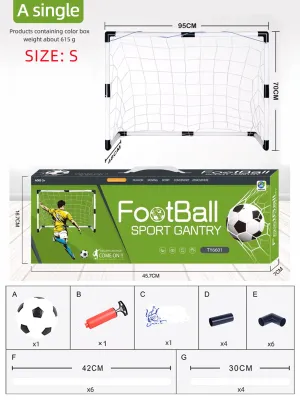

Prices are valid at publication and may change. Please refer to the product page for the latest price.
For youth players aged eleven to fourteen, goals transition to larger intermediate sizes, such as twelve-by-six feet or sixteen-by-seven feet. These dimensions prepare players for the tactical demands of full-sized pitches by requiring greater shot precision and more advanced goalkeeping coverage. For players aged fifteen and older, standard training goals can range from sixteen-by-seven feet up to the official adult match dimension of twenty-four-by-eight feet.
Before purchasing a goal for competitive practice, it is highly recommended to check with local football associations or community league regulations. Youth leagues often have specific size mandates that differ slightly by region, and practicing on the official dimensions used in matches can greatly benefit player preparation.
Scaling the goal size is also critical for reducing injury risks and encouraging skill development. If a young goalkeeper faces a goal that is too large, they may overexert themselves trying to cover the corners, leading to poor diving habits or physical strain. Conversely, outfield players need a target that challenges their accuracy rather than allowing effortless scoring, which can stall their technical growth.
Measuring and Preparing Your Backyard Space
Before selecting a goal, a thorough assessment of your available outdoor space is necessary to ensure a safe and functional setup. Many buyers make the mistake of only measuring the front width and height of the goal frame, overlooking the depth. Depending on the design, the frame’s base and the net’s rear extension can project backward anywhere from two to six feet, which can quickly crowd a small yard.

A dedicated safety buffer zone is essential behind and around the goal frame. There should be a clear runoff area of at least three to five feet between the back of the net and any hard obstacles, such as brick walls, wooden fences, metal railings, or glass windows. This buffer zone protects players from colliding with structures when running at high speeds or chasing a ball near the goal line.
Ground preparation is equally vital for stability and safety. The installation surface must be completely level to prevent the frame from wobbling, shifting, or tipping during play. If you are setting up the goal on a grass lawn, always check for underground utilities, sprinkler lines, or shallow pipes before driving any metal anchors or pegs into the ground.
In tropical climates with high rainfall, such as Singapore, wet weather can soften the soil significantly. This softening reduces the holding power of standard ground pegs, meaning you must inspect and reinforce the anchors regularly to ensure the goal remains stable during active use.
Adapting to Limited Spaces with Alternative Goal Types
For homes with compact yards, shared community spaces, or multi-use concrete patios, permanent metal frames may not be practical. Fortunately, several alternative goal types offer excellent portability and space management. Pop-up goals, constructed with flexible fiberglass loops, twist and fold flat into a carrying bag for rapid setup and easy storage.
Foldable goals feature hinged joints that allow the frame to collapse flat against a wall or slide into narrow storage spaces when not in use. Retractable or telescopic designs let you adjust the width and height of the frame, adapting the goal to different spaces or age groups as your family’s needs evolve.
While lightweight portable goals offer unmatched convenience, they do come with structural limitations. These frames lack the rigidity of heavy-duty steel or aluminum, meaning they can shift or collapse under high-velocity shots from older players. Their wind resistance is also lower, making them susceptible to being blown across the yard during sudden storms.
Mandatory safety checks are required even for temporary setups. Lightweight frames must still be secured to prevent tipping. Using weighted bags, water bases, or temporary pegs ensures the goal remains upright during active play and does not become a hazard in windy conditions.
Common Sizing and Installation Mistakes to Avoid
One of the most critical safety errors is neglecting proper anchoring. Unanchored goals, even medium-sized ones, pose severe tipping hazards that can cause serious injury if a player climbs on the crossbar or if strong winds catch the netting. Never assume a goal is heavy enough to stand safely on its own without additional securing mechanisms.
Another frequent mistake is choosing a goal that is too large for the available yard space, leaving inadequate runoff areas. When players must constantly worry about crashing into a wall, garden bed, or patio furniture immediately after shooting, they cannot play naturally, and the risk of accidental injury increases significantly.
Finally, avoid ignoring manufacturer weight limits, assembly instructions, and material care requirements. Outdoor exposure can rapidly degrade materials if they are not maintained correctly. In humid, high-rainfall environments, steel frames without rust-resistant coatings will corrode quickly, and nets without UV protection will become brittle and tear under pressure. Regularly inspect the frame joints, anchor points, and net tension to ensure the setup remains safe for play.
Frequently Asked Questions (FAQ)
Can one football goal accommodate multiple age groups?
Yes, a single goal can serve multiple age groups if you plan carefully. Some manufacturers offer adjustable frames that can be set to different heights and widths to grow with your children. Alternatively, you can purchase a larger goal suitable for the oldest player and use visual markers, training targets, or cones to simulate a smaller goal area for younger siblings, allowing them to practice accuracy within a manageable space.
How should I anchor a football goal on artificial turf or concrete?
When traditional ground pegs cannot penetrate the surface, such as on concrete patios, driveways, or artificial turf, you must use alternative anchoring methods. Weighted sandbags, water-filled bases, or specialized rubber counterweights are effective options for securing the frame. Always consult the goal manufacturer’s instructions to ensure your chosen anchoring method provides sufficient weight to prevent tipping without damaging the playing surface.
Community discussion
Share your experience or ask a question. Comments are reviewed before publication.