
Choosing the right bike child seat depends primarily on your child’s physical development, weight, and your bicycle’s design. To ensure a safe and comfortable ride along Singapore’s Park Connector Network (PCN) or urban paths, you must match your child’s current developmental stage to either a front-mounted or rear-mounted seat. Front-mounted seats generally cater to younger, lighter infants who enjoy being close to the rider, while rear-mounted seats accommodate older, heavier toddlers who require more support and space.
Assessing Your Child's Readiness and Physical Limits
Before purchasing any bicycle child seat, you must verify that your child has reached the necessary physical milestones to ride safely. A child must be able to sit upright completely unaided and possess sufficient neck strength to support the weight of a properly fitted helmet. Because every child develops at a different rate, age guidelines provided by manufacturers are only estimates; physical development and weight are the critical metrics.
Always read and apply the manufacturer labels for minimum and maximum weight, height, and age limits. These specifications are engineered for the structural integrity of the seat and the stability of your bicycle. Exceeding these limits can compromise the seat’s mounting brackets or alter your bike’s handling to a dangerous degree, increasing the risk of tipping.
Products mentioned in this guide


Prices are valid at publication and may change. Please refer to the product page for the latest price.
A proper helmet fit is non-negotiable before your first outing. The helmet must sit level on your child’s head, covering the forehead, with the straps adjusted to form a snug “Y” shape under the ears. During a test fit, observe your child’s movement to ensure their head remains stable and does not droop forward or to the side under the weight of the helmet, which indicates their neck muscles are not yet ready for the road.
Front-Mounted Seats: Ideal for Younger, Lighter Passengers
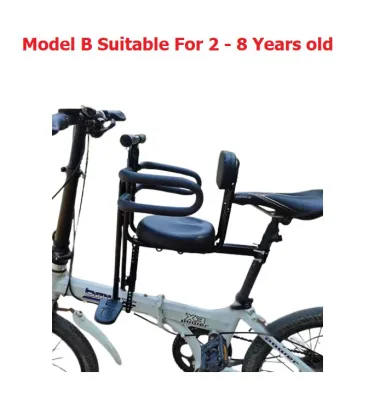
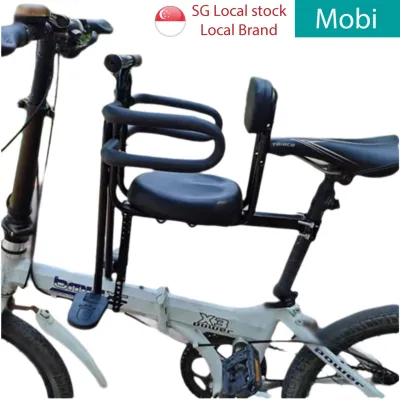
Front-mounted bike child seats are designed for younger, smaller passengers who still fit within the lower weight thresholds specified by manufacturers. These seats typically mount to the bike’s stem or top tube, placing the child directly between your arms. This positioning offers an excellent opportunity for constant communication, allowing you to monitor your child’s reactions, comfort levels, and fatigue throughout the journey.

From the child’s perspective, a front-mounted seat provides an unobstructed view of the path ahead, which can make the ride highly engaging and interactive. Parents often appreciate the close physical proximity, especially during short, leisurely rides through local parks or quiet residential streets. However, because the seat occupies the space directly in front of the rider, it requires careful physical adjustment and a trial run.
Before riding, you must check the clearance around your handlebars, stem, and pedals. A front-mounted seat can restrict your steering angle or force you to pedal with your knees flared outward to avoid hitting the seat structure. It is essential to test mount the seat and ride without your child first to ensure you can steer, pedal, and stop comfortably without compromising your balance.
Rear-Mounted Seats: Ideal for Older, Heavier Passengers
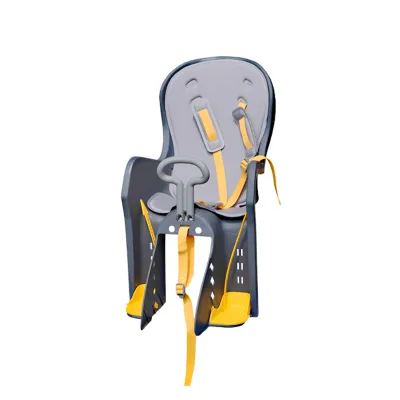
As your child grows and gains weight, a rear-mounted seat becomes the more suitable option to accommodate their larger size. These seats are designed with higher weight and height limits, allowing you to continue cycling with your child well into their toddler years. The rear position also provides better wind protection for the child, as your body acts as a natural shield against the elements.
Mounting a child behind you changes the bicycle’s center of gravity, shifting it toward the rear wheel. This shift affects how the bike handles, particularly when cornering, climbing, or standing still. You will need to adapt your mounting and dismounting techniques, ensuring you have a firm grip on the handlebars and a stable stance before lifting your child into or out of the seat, as the bike will feel significantly heavier at the back.
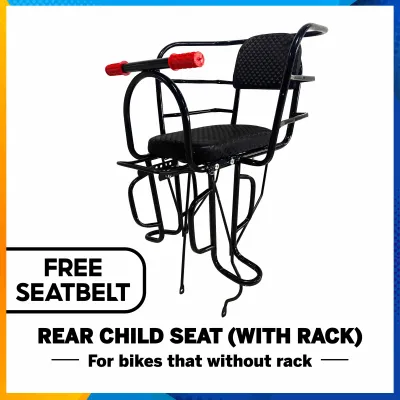
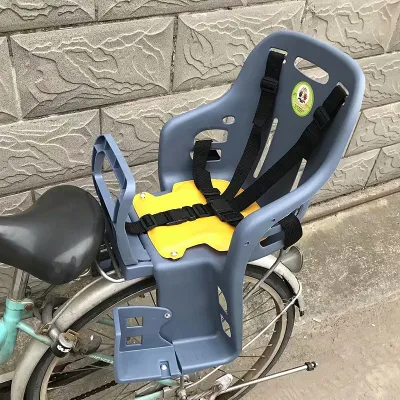
Rear-mounted seats generally come in two installation styles: frame-mounted or rack-mounted. Frame-mounted seats attach directly to the bike’s seat tube using a bracket, while rack-mounted seats secure to an existing rear luggage rack. You must verify your bike’s frame material and rear rack weight capacity to determine which mounting style is compatible and safe for your setup, as some lightweight racks are not rated for carrying passengers.
Verifying Bike Compatibility and Riding Context
Not every bicycle is compatible with every type of child seat, making a thorough compatibility check essential before purchase. Step-through frames, full-suspension mountain bikes, and bicycles with carbon fiber frames often have specific geometry or material restrictions that prevent the safe installation of standard mounting brackets. Clamping a child seat bracket onto a carbon fiber tube, for example, can crush the frame and lead to structural failure under load.
You must also inspect your bike’s cable routing, brake lines, and rear wheel setup. Ensure that mounting brackets do not pinch gear cables or hydraulic brake lines, which could impair your ability to shift or stop. If you choose a rack-mounted seat, verify that your rear dropouts and quick-release skewers are designed to support the additional load of the rack, seat, and child, as some lightweight road bikes are not built for utility carrying.
Your riding environment should also influence your choice of seat and riding style. When navigating shared cycling paths, park connectors, or urban trails in Singapore, the added weight of a child seat requires longer braking distances and wider turns. Plan your routes to avoid steep inclines, heavy traffic, and uneven surfaces to ensure a smooth, predictable, and enjoyable ride for your passenger.
Essential Safety Checks and Transition Signals
Establishing a strict pre-ride safety routine is vital for every journey. Before your child boards, verify that the harness straps are adjusted snugly over their shoulders and chest, and that the foot straps are securely fastened to keep their feet away from the wheels. Ensure that the seat’s spoke guards are intact and properly positioned to prevent any accidental contact between your child’s feet and the spinning wheel spokes, which can cause serious injury.
Take a moment to check your child’s clothing, shoelaces, and any loose accessories before setting off. Long laces, loose pant legs, or dangling toy straps can easily become caught in the bicycle’s drivetrain or wheels, leading to sudden stops or falls. Keeping everything tucked in and secure minimizes these mechanical risks and ensures a hassle-free trip.
Eventually, your child will outgrow their seat, and you must recognize the physical and behavioral signals that indicate it is time to transition. When your child’s weight approaches the manufacturer’s maximum limit, or if their knees begin to interfere with your steering or pedaling, it is time to explore other options. Transitioning to a bike trailer, a cargo bike, or helping them learn to ride their own bicycle ensures they continue to enjoy cycling safely as they grow.
Frequently Asked Questions (FAQ)
Can I use a bike child seat on an e-bike?
You must consult your e-bike manufacturer’s manual to verify if mounting a child seat is explicitly permitted. Many e-bikes have specific weight limits, frame designs, or battery placements that can interfere with standard child seat brackets. Additionally, the motor assistance and higher speeds of an e-bike require extra caution, as the added weight of a child seat will significantly increase your braking distance and alter the bike’s handling.
What are the signs my child has outgrown their current bike seat?
The most reliable sign is when your child’s weight or height exceeds the maximum limits specified on the seat’s manufacturer label. Physically, you may notice their knees hitting the handlebars in a front seat, or their head pushing uncomfortably against your back in a rear seat. Behavioral signs, such as constant restlessness, complaints of discomfort, or an expressed desire to pedal their own bicycle, also indicate it is time to transition to a new riding setup.
Community discussion
Share your experience or ask a question. Comments are reviewed before publication.