
Choosing the right badminton racket is a highly personal decision that directly impacts your performance, comfort, and progression on the court. Kawasaki offers a diverse lineup of rackets engineered with varying physical properties, meaning that the ideal choice depends entirely on how your physical mechanics align with the racket’s specifications. Instead of selecting a model based solely on aesthetic appeal, you must evaluate how a racket’s weight, balance point, and shaft flexibility match your current skill level and playing style. Making an informed choice ensures that the racket acts as an extension of your arm, helping you generate clean power, maintain precise control, and avoid unnecessary physical strain during intense rallies.
Identify Your Skill Level and Playing Style
Before looking at specific racket models, you must objectively assess your current abilities and your preferred role on the court. In badminton, players generally fall into beginner, intermediate, or advanced categories based on their technical consistency and physical execution.
Beginners are typically developing basic strokes, working on consistent contact, and learning proper footwork. At this stage, swing speed is usually slower, and clean, deep clears to the backcourt are often a challenge.
Products mentioned in this guide
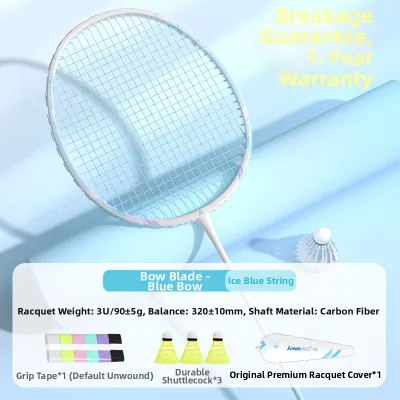
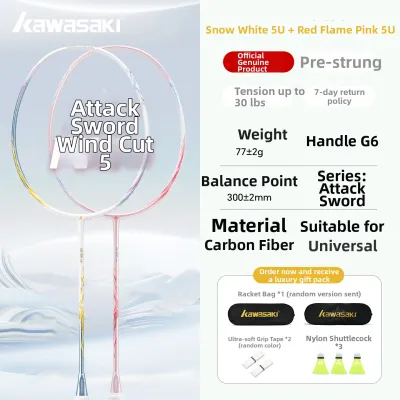
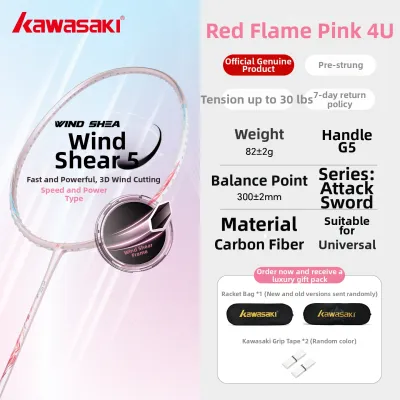
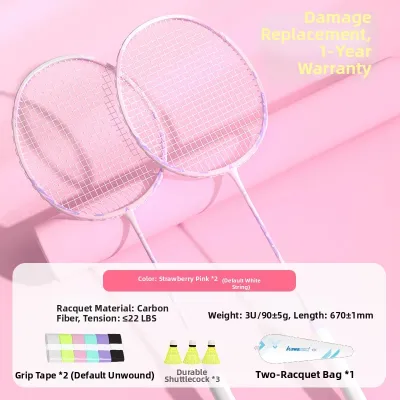
Prices are valid at publication and may change. Please refer to the product page for the latest price.
Intermediate players have mastered basic strokes and can consistently direct the shuttlecock with intent. They possess faster swing speeds, are beginning to incorporate tactical variation, and can execute basic smashes, drops, and net play with moderate control.
Advanced players exhibit exceptional technical execution, rapid footwork, and high swing speeds. They can generate explosive power from short wrist movements and demand precise control to place the shuttlecock in tight spaces under high pressure.
Your playing style further refines your equipment needs. Offensive players rely heavily on powerful smashes and aggressive downward angles, requiring equipment that maximizes momentum. Defensive players focus on quick reactions, rapid court coverage, and precise net play, prioritizing maneuverability to return fast smashes. All-round players seek a balanced approach, transitioning smoothly between defense and offense depending on the flow of the rally.
Mismatching your racket to your current skill level or playing style can severely hinder your development and lead to physical discomfort. For instance, using a racket designed for an advanced offensive player when you have not yet developed the necessary wrist strength and swing speed can result in weak clears and shoulder fatigue.
Decode Key Racket Specifications
Understanding the technical labels on a Kawasaki racket is essential for making an accurate selection. Racket manufacturers use standardized classification systems to describe weight, balance, and shaft flexibility, which you can typically find printed on the shaft or cone of the racket.

Weight is categorized using the “U” classification system, where a higher number denotes a lighter racket. A 3U racket typically weighs between 85 and 89 grams, offering substantial mass that translates into powerful shots but requiring more physical effort to swing quickly. A 4U racket, weighing between 80 and 84 grams, represents a highly versatile middle ground that balances speed and power. Lighter options, such as 5U (75 to 79 grams), prioritize extreme maneuverability and rapid defensive reactions.
The balance point of a racket determines where its center of gravity lies relative to the handle, measured in millimeters. Head-heavy rackets have a balance point shifted toward the top of the frame, which adds momentum to your swing and assists in generating powerful downward smashes. Head-light rackets concentrate weight closer to the handle, allowing for rapid frame manipulation, quick defensive blocks, and fast net exchanges. Even-balance rackets distribute weight uniformly, offering a versatile compromise.
Shaft flexibility refers to how much the racket bends during a swing and is classified as flexible, medium, or stiff. A flexible shaft bends easily, acting like a slingshot to help players with slower swing speeds generate depth on their clears with minimal wrist effort. A stiff shaft resists bending, requiring a fast, explosive swing to activate its potential. However, a stiff shaft offers superior control and instantaneous energy transfer, which advanced players rely on for precise placement.
Grip size, often designated by “G” numbers (such as G5 or G6), dictates the circumference of the handle. A smaller grip size offers greater maneuverability for quick finger adjustments during deceptive shots, while a larger grip provides a more secure hold for power-focused swings. You can easily customize a smaller grip by adding overgrips to achieve your preferred thickness and moisture-absorption levels.
Match Specifications to Your Player Profile
To find the right Kawasaki racket, you must systematically match these technical specifications to your personal player profile. This alignment ensures that the racket supports your current physical capabilities while allowing room for technical growth.
For beginners, the primary goals are developing proper stroke mechanics and avoiding injury. If you are new to the sport, you should look for a racket with a flexible shaft, a lighter weight (such as 4U or 5U), and an even balance. The flexible shaft compensates for a developing swing technique by providing extra repulsion power, while the lighter weight reduces the physical load on your wrist, elbow, and shoulder joints.
As an intermediate player, your technique is more defined, and you can begin selecting specifications that complement your emerging playing style. If you favor an offensive approach, transitioning to a medium-flex shaft with a slightly head-heavy balance will help enhance your smash power without demanding extreme physical strength. If you prefer a defensive or control-oriented game, an even-balance or head-light racket with a medium-flex shaft will provide the quick handling needed for fast drives and net drops.
Advanced players require highly specific tools to execute their strategies. If you are an advanced offensive player with rapid swing speeds and strong wrist mechanics, a stiff shaft combined with a head-heavy, 3U or 4U frame will allow you to channel your full physical power into devastating smashes. If you specialize in defense and rapid doubles play, a stiff, head-light racket will give you the instantaneous response time and precise control needed to redirect fast attacks.
To help guide your decision, use the following conceptual checklist to cross-reference your profile with the appropriate specification ranges:
| Player Profile | Recommended Weight | Balance Point | Shaft Flexibility | Primary Benefit |
|---|---|---|---|---|
| Beginner (All Styles) | 4U to 5U | Even Balance | Flexible | Joint protection and easy depth |
| Intermediate (Offensive) | 3U to 4U | Slightly Head-Heavy | Medium | Enhanced smash power |
| Intermediate (Defensive/All-Round) | 4U | Even to Head-Light | Medium | Balanced speed and control |
| Advanced (Offensive) | 3U to 4U | Head-Heavy | Stiff | Maximum power and precision |
| Advanced (Defensive/Speed) | 4U to 5U | Head-Light | Stiff | Rapid defense and net control |
Verify Purchase Conditions and Authenticity
Once you have identified the ideal specifications for your playing style, the final step is ensuring a safe and authentic purchase. Because counterfeit sporting goods are common on unverified online marketplaces, buying from authorized sports retailers or official brand stores is crucial to guarantee you receive a genuine product.
When purchasing, pay close attention to the listing details and purchase conditions. Verify whether the racket is sold pre-strung or unstrung. Pre-strung rackets are convenient for beginners but often feature basic strings at lower tensions. Intermediate and advanced players typically prefer purchasing unstrung frames so they can select their preferred string type and custom tension. Always check the manufacturer’s maximum recommended string tension limit, which is usually printed on the racket frame. Exceeding this limit can warp or crack the frame, which typically voids the manufacturer’s warranty.
Upon receiving your racket, conduct a thorough physical inspection to verify its authenticity. Genuine Kawasaki rackets feature high-quality paint finishes, clean decals, and precise laser-engraved serial numbers on the cone or shaft. Look for official holographic security stickers, which often contain scratch-off verification codes that you can check on the manufacturer’s official website. Additionally, inspect the alignment of the grommets and the overall build quality of the grip and cap, as counterfeit rackets often exhibit rough edges, misaligned prints, or loose components.
Frequently Asked Questions (FAQ)
How often should I restring my Kawasaki racket?
The frequency of restringing depends on how often you play and the physical condition of your strings. As a general guideline, casual players who play once or twice a week should consider restringing their racket every three to six months, as strings naturally lose tension over time even when not in use.
Competitive players who train multiple times a week may need to restring every few weeks to maintain consistent performance. You should visually inspect your strings regularly for signs of wear, such as fraying, deep notches where the strings intersect, or a noticeable loss of tension that causes the string bed to feel soft or mushy. Before sending your racket to a professional stringer, always check the frame’s maximum recommended tension limit to prevent structural damage during the restringing process.
Can I use an advanced Kawasaki racket as a beginner?
Using an advanced racket as a beginner is generally not recommended, as high-specification equipment can hinder your learning process and increase the risk of injury. Advanced rackets typically feature stiff shafts and head-heavy balances designed for players who already possess fast swing speeds and refined wrist mechanics.
If a beginner uses a stiff racket, they will struggle to flex the shaft during a swing, resulting in short, weak clears and a lack of control. To compensate, beginners often overexert their shoulders and elbows, which can lead to joint strain or repetitive motion injuries like tennis elbow. Prioritizing a forgiving, flexible, and lightweight racket allows you to focus on developing proper form, timing, and footwork before transitioning to more demanding equipment.

Community discussion
Share your experience or ask a question. Comments are reviewed before publication.