
Choosing the ideal mtb bicycle front rack for Singapore’s Park Connector Network (PCN) and weekend leisure rides comes down to matching your specific cargo needs with your mountain bike’s fork design. While the PCN offers flat, well-paved, and highly accessible paths, adding weight to the front of your bike changes how it steers, balances, and handles. A successful setup requires a rack that securely supports your gear—whether that is a picnic mat, a dry bag, or daily essentials—without compromising your suspension travel, brake lines, or steering control. By evaluating your cargo volume, verifying your fork’s mounting limits, and choosing the right materials, you can safely expand your bike’s utility for weekend adventures.
Identifying Your Cargo Needs for PCN and Weekend Rides
Before looking at specific rack models, clarify what you plan to carry during your rides. If your typical outing involves light daily essentials like a phone, keys, a wallet, and a lightweight windbreaker, a minimalist front rack or a small platform style will suffice. These compact setups keep your bike nimble and do not add unnecessary bulk when navigating busy shared paths.
For weekend picnics, family outings, or longer coastal cruises along the Eastern Coastal Loop, your cargo requirements will likely increase. Carrying bulkier items such as insulated lunch bags, picnic mats, or extra water bottles requires a wider platform with integrated tie-down points. Understanding your cargo volume beforehand prevents you from buying an undersized rack that forces you to over-stack your gear.
Products mentioned in this guide
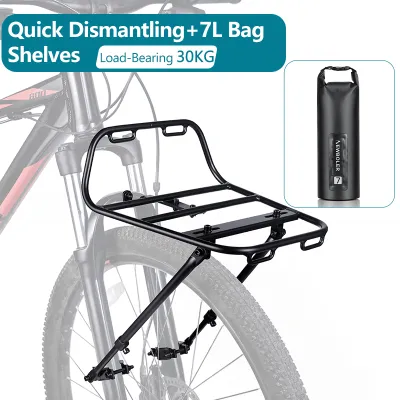
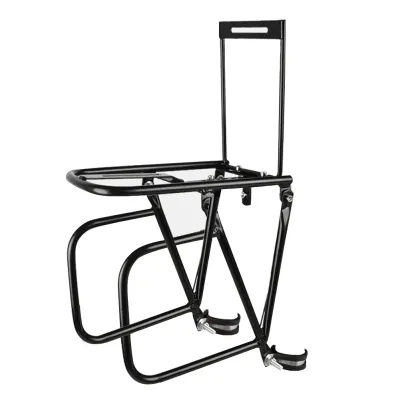
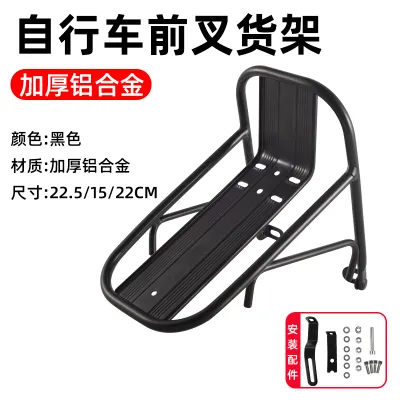
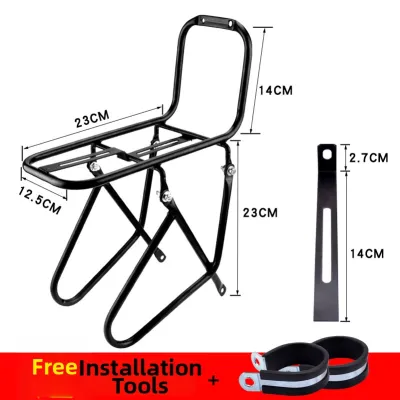
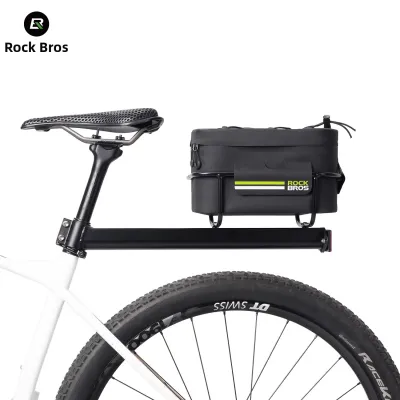
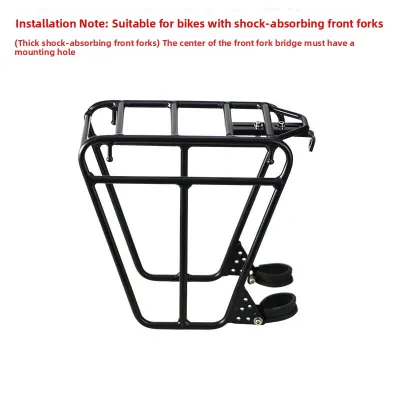
Prices are valid at publication and may change. Please refer to the product page for the latest price.
Front-loaded weight directly influences how your mountain bike handles, especially on flat, paved PCN routes. Placing weight over the front wheel slows down steering response, which can actually feel more stable at cruising speeds but requires more effort when making tight turns or avoiding pedestrians. If you plan to transition from paved paths to moderate off-road trails, keeping the front load as light and centered as possible is essential for maintaining control.
Finally, consider how you prefer to secure your gear to the rack. Some riders prefer strapping dry bags or loose items directly to a flat platform using elastic utility straps. Others prefer mounting dedicated handlebar rolls or small, soft side panniers. Ensure the rack design you choose features the correct rails, hooks, or platform dimensions to support your preferred bag style without letting straps dangle near your spokes.
Navigating MTB Fork Compatibility and Mounting Limits
Mountain bike forks vary widely, meaning compatibility is the most critical technical hurdle when choosing a front rack. Start by inspecting your fork blades and lower dropouts for factory-threaded eyelets. Rigid mountain bike forks often feature these built-in threaded holes, which provide the most secure and straightforward mounting points for standard rack struts.

If your mountain bike features a suspension fork, it will likely lack traditional threaded eyelets. In these cases, you must look for specialized mounting solutions such as axle-mount adapters or heavy-duty clamp-on systems. Axle-mount systems replace your quick-release or thru-axle with a longer version that supports the rack’s lower struts, transferring the weight directly to the wheel axle. Always verify that any aftermarket adapter matches your specific axle diameter and thread pitch.
Physical clearance is another vital factor to check before finalizing your purchase. The rack struts and mounting hardware must clear your disc brake calipers and rotor without rubbing or causing friction. Additionally, if you have a suspension fork, the rack must be positioned so that it does not compress into the fork arch or front tire when the suspension bottoms out.
Never attempt to force a rack onto a fork that does not support it. Clamping rigid brackets onto carbon fiber forks or the moving stanchions of a suspension fork can cause catastrophic structural failure. If your fork lacks clear mounting options, prioritize racks specifically certified by their manufacturers for clamp-on or axle-mount installation on your exact fork type.
Evaluating Rack Materials and Design for Park Cycling
When comparing rack builds, the choice of material affects both the weight of your bicycle and how well the rack handles vibrations. Aluminum racks are highly popular for PCN cycling because they are lightweight, rust-resistant in Singapore’s humid climate, and offer sufficient structural rigidity. They are excellent for riders who want to keep their overall bike weight low while carrying moderate loads.
Steel racks, while heavier, offer superior durability and a natural dampening effect against road vibrations. If you plan to carry heavier loads or want a rack that can withstand years of rugged use, steel is a highly reliable option. When choosing steel, look for models with high-quality protective coatings or paint to prevent rust from forming after exposure to tropical rain showers.
The design of the rack platform should match the shape of your cargo. A wide, flat platform provides a stable base for strapping down irregular items like a folded picnic mat or a small cooler bag. Look for platforms with raised outer edges or integrated grip textures, which help prevent your cargo from shifting sideways when you ride over speed bumps or transition between different paved surfaces.
For riders who only carry cargo occasionally, a quick-release or minimalist rack design is often the most practical choice. Some modern front racks feature quick-detach mechanisms that allow you to remove the main platform in seconds, leaving only small, unobtrusive mounting brackets on the bike. This flexibility lets you enjoy a clean, lightweight mountain bike for sporty weekday rides and a fully capable cargo carrier on the weekend.
Installation Verification and Safe Loading Practices
Proper installation is paramount to ensuring your safety and protecting your bicycle from damage. Always refer to the manufacturer’s documentation to identify the maximum weight capacity of both the rack and your bike’s fork. Never exceed these limits, as overloading the front of your bike can lead to metal fatigue, broken mounting bolts, or a sudden loss of steering control.
Once the rack is mounted, perform a thorough clearance check before riding. Turn your handlebars fully from left to right to ensure that no part of the rack or your cargo pinches your brake hoses, gear cables, or dropper post housing. If you are using a suspension fork, deflate the air chamber or compress the fork fully by hand to verify that the tire and fork arch do not contact the rack under full compression.
Distribute your cargo weight evenly across the rack platform, keeping the center of gravity as low and close to the steering axis as possible. Loose straps, dangling buckles, or shifting bags pose a severe safety hazard if they get caught in your front wheel spokes or disc brake rotor. Use high-quality, adjustable tension straps to secure your gear tightly, and double-check them after the first few minutes of riding.
If you encounter any difficulty during the installation process, or if the rack feels unstable, stop immediately. Hardware that feels loose, threads that do not align smoothly, or a rack that sways when you apply hand pressure are signs of improper fitment. Take your bike and the rack to a qualified local bicycle mechanic to ensure a secure installation before heading out onto the PCN.
Frequently Asked Questions (FAQ)
Can I use a rear rack instead of a front rack for PCN rides?
Yes, you can use a rear rack, but the choice depends on your bike’s design and how you prefer to handle cargo. Rear racks generally support heavier loads and have less impact on your steering precision, making them highly comfortable for long, straight rides on paved paths. However, many modern mountain bikes with full suspension, dropper seatposts, or short chainstays lack the necessary mounting points for standard rear racks. A front rack keeps your gear visible at all times, allows for easier access to your belongings while seated, and is often easier to mount on hardtail mountain bikes.
Do I need a specific front rack if my MTB has a suspension fork?
Yes, mounting a standard rack to a suspension fork requires specialized hardware to avoid damaging the suspension mechanism. Standard racks designed for rigid forks can bind the moving parts of a suspension fork, scratch the smooth upper stanchions, or damage the delicate dust seals. If your mountain bike has front suspension, you must choose a rack specifically engineered to mount to the lower, non-moving portion of the fork legs or directly to the front axle. This design ensures the rack moves in unison with the wheel, preserving your suspension’s performance and preventing mechanical damage.
Community discussion
Share your experience or ask a question. Comments are reviewed before publication.