
Finding the right prescription swimming goggles in Singapore is essential for maintaining clear vision and staying safe in the water. Whether you are training at a local public pool, swimming in the open ocean, or enjoying a casual dip, standard goggles leave myopic swimmers struggling to see lane markers, clocks, and surroundings. Fortunately, the local market offers a diverse range of corrective eyewear designed specifically for aquatic environments. By understanding how to translate your optical prescription for underwater use and knowing what features to compare, you can confidently select a pair that matches your vision needs and swimming habits. Clear vision is not just a matter of convenience; it is a fundamental safety requirement that helps you navigate water hazards, avoid collisions with other swimmers, and maintain spatial awareness.
Understanding Your Prescription Needs for the Pool
To choose the correct goggles, you must first understand how to read your optical prescription. A standard prescription contains three primary values: Sphere (SPH), which indicates the strength of correction needed for nearsightedness (myopia) or farsightedness; Cylinder (CYL), which measures the severity of astigmatism; and Axis, which defines the orientation of that astigmatism. For swimming goggles, these numbers cannot always be transferred directly without adjustment.
Water has a different refractive index than air, which naturally alters how light enters your eyes. When you submerge, the water itself acts as a magnifying medium, effectively reducing the amount of correction your eyes require. As a general rule of thumb, many swimmers find that they need to slightly lower their myopia correction to avoid eye strain and headaches underwater. A common calculation involves taking your spherical value and adding half of your cylinder value to find the “spherical equivalent,” then slightly reducing that number.
Products mentioned in this guide
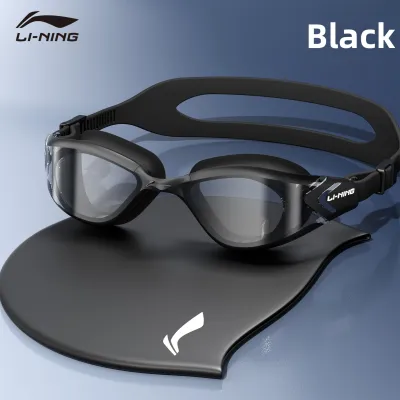
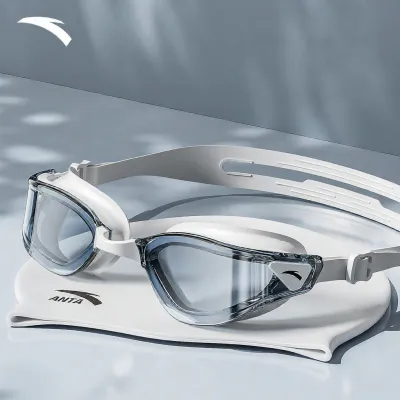
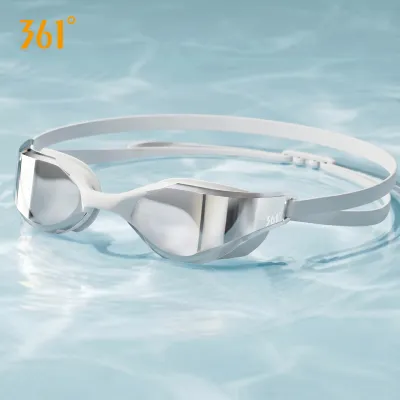
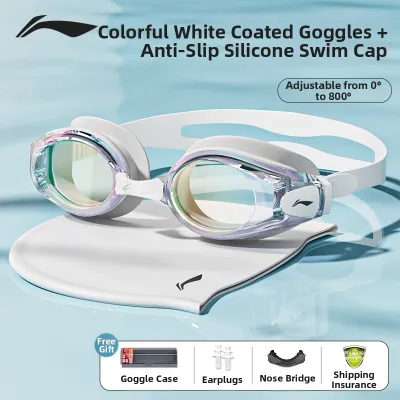
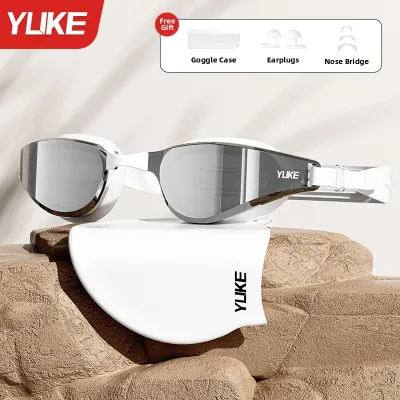
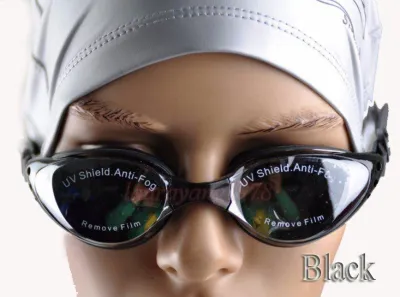
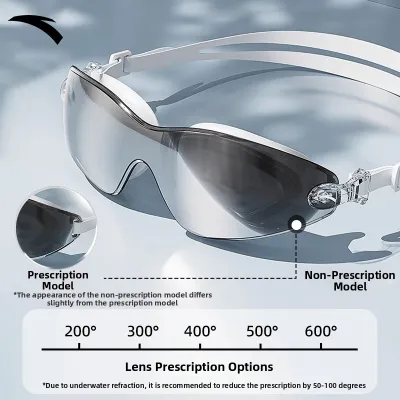
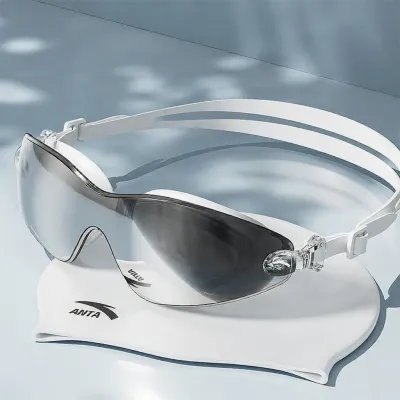
Prices are valid at publication and may change. Please refer to the product page for the latest price.
However, this general formula is not a perfect substitute for professional advice. If you have high myopia (typically over -6.00 diopters), significant astigmatism (a cylinder value greater than -1.00), or a large difference in prescription between your left and right eyes, you should consult a qualified optometrist. A professional eye care practitioner can perform precise calculations to ensure your underwater vision is both comfortable and safe, preventing issues like depth perception errors or spatial disorientation while swimming. They can also help you measure your pupillary distance, which is critical for aligning the optical centers of the lenses with your pupils to prevent double vision.
Ready-Made vs. Custom Prescription Goggles: Which Do You Need?
When shopping for prescription swimming goggles, you will generally choose between two main categories: ready-made (step-diopter) goggles and custom-made prescription goggles. Ready-made goggles are pre-assembled with lenses of equal or varying strengths, usually sold in half-diopter increments such as -2.00, -2.50, or -3.00. These are highly accessible and serve as an excellent, cost-effective solution for swimmers with mild to moderate myopia and minimal astigmatism.

Many modern ready-made systems utilize a modular design, often referred to as “parts kits.” This system allows you to purchase individual left and right lenses of different strengths separately, which you then snap into a shared nose bridge and strap assembly. This is an incredibly practical and affordable option for swimmers who have different prescriptions in each eye but do not require complex astigmatism correction.
The primary limitation of ready-made goggles is their inability to correct for significant astigmatism or precise, non-standard prescription values. If your eyes require highly specific corrections, or if you have a complex prescription that includes prism adjustments, custom-made prescription goggles are the necessary choice. These are individually fabricated by optical laboratories to match your exact prescription, ensuring optimal visual acuity and reducing the risk of eye fatigue during long training sessions.
The choice between these two options also involves a trade-off in cost and preparation time. Ready-made goggles are budget-friendly, typically priced in a modest S$ range, and can be purchased and used on the same day. Custom-made goggles require a higher financial investment in S$ due to the specialized lens grinding process. Additionally, they come with a lead time of several days to a few weeks, meaning you must plan your purchase well in advance of any upcoming swim meets or holidays.
Key Features to Evaluate When Comparing Goggle Brands
Beyond the lenses themselves, the overall build quality of the goggles determines how well they will perform in the water. The first material standard to verify is the lens construction. High-quality goggles utilize impact-resistant polycarbonate lenses, which offer durability against accidental drops on concrete pool decks. Furthermore, because Singapore experiences intense tropical sunlight, ensuring your goggles feature built-in UV protection is vital for safeguarding your eyes against harmful ultraviolet radiation during outdoor swims.
Anti-fog performance is another critical factor that separates reliable brands from subpar alternatives. Most quality goggles come with a factory-applied anti-fog coating on the inner surface of the lenses. When comparing brands, look for those that specify the type of anti-fog technology used, and read user instructions to verify how long the coating is expected to last under normal conditions. Be skeptical of brands making absolute claims of permanent fog-free performance, as all coatings eventually wear down and require maintenance.
Comfort and fit customization are just as important as optical clarity. A poor fit leads to water leakage, which can irritate your eyes and disrupt your swim. Look for goggles that offer interchangeable nose bridges of varying sizes, as these allow you to adjust the distance between the lenses to match your pupillary distance. Additionally, high-quality goggles feature adjustable silicone head straps and hypoallergenic silicone gaskets that conform comfortably to your facial structure, creating a reliable, watertight seal without exerting excessive pressure on your eye sockets. The adjustment mechanism should be easy to operate but secure enough to prevent slipping during active swimming or diving starts.
Where to Buy and How to Verify Your Goggles in Singapore
Acquiring your prescription goggles in Singapore can be done through several distinct retail channels, each offering a different buying experience. Specialized optical shops are the premier choice if you require custom lenses or professional fitting advice, as they allow you to speak directly with an optician. Dedicated sports retailers are excellent for trying on ready-made options to test the physical fit of different frame shapes. Online marketplaces offer convenience and a wider selection of brands, but they require you to be highly diligent in verifying product specifications before purchasing.
When shopping in person, pay close attention to how the goggles fit your facial structure. Many swimmers in Singapore find that goggles designed with adjustable nose pieces or specific Asian-fit profiles provide a much more reliable seal. A proper fit prevents water from entering the eye cups, which is crucial because sudden water entry can cause panic, especially in deep water or open-water environments.
Once your goggles arrive or before you leave the store, you must perform a thorough physical inspection. Begin by checking the optical clarity of the lenses to ensure there are no scratches, distortions, or bubbles in the material. Verify that the diopter labels on the packaging match the lenses and correspond to your prescription. To test the seal integrity without wetting the goggles, press the eye cups gently against your face; a well-fitting pair should create a brief suction effect and hold in place for a moment even without the head strap secured.
Finally, always review the retailer’s return and exchange policies before finalizing your purchase. Because prescription eyewear is highly personalized, many stores have strict limitations on returns, particularly for custom-ground lenses. Ensure you understand the warranty coverage regarding manufacturing defects, lens alignment issues, or premature degradation of the silicone seals. Choosing a retailer with clear, fair policies protects your investment and ensures you do not end up stuck with a pair of goggles that leak or cause visual discomfort.
Frequently Asked Questions (FAQ)
Can I wear my daily contact lenses under regular swimming goggles instead?
Wearing daily contact lenses under standard swimming goggles is highly discouraged by eye care professionals due to severe safety risks. Pool water, sea water, and tap water contain microscopic pathogens, such as Acanthamoeba, which can easily become trapped behind a contact lens, leading to painful corneal infections and potential vision loss. Additionally, if water enters your goggles, the contact lenses can swell, shift out of place, or wash away entirely. If you must wear contacts, use daily disposables, wear a pair of exceptionally tight-fitting goggles, and discard the lenses immediately after your swim.
How do I prevent my prescription goggles from fogging up during a swim?
To preserve the factory-applied anti-fog coating on your prescription goggles, you must avoid touching or rubbing the inside of the lenses with your fingers, towels, or cloths. Rubbing scratches the delicate chemical layer, rendering it ineffective. Before swimming, gently dip your goggles in the pool water to acclimate the lens temperature, then shake off the excess water. After your swim, rinse the goggles in clean, cold tap water to remove chlorine or salt deposits, and allow them to air dry completely in a shaded area before storing them in a protective case.
Do I need different prescriptions for indoor and outdoor swimming?
You do not need different optical prescriptions for indoor and outdoor swimming, as your corrective diopter requirement remains constant regardless of the lighting environment. However, you should consider different lens tints to optimize your visibility. For indoor pools or night swimming, clear or lightly tinted lenses provide the best light transmission and clarity. For outdoor swimming under bright sunlight, mirrored or darkly tinted lenses are highly beneficial, as they reduce glare, block harsh reflections off the water surface, and keep your eyes comfortable during long sessions.

Community discussion
Share your experience or ask a question. Comments are reviewed before publication.