
Selecting reliable knee and ankle guards for taekwondo training requires balancing impact protection with the high-speed, dynamic mobility demanded by martial arts. Because taekwondo relies heavily on rapid pivots, explosive jumps, and powerful kicks, standard bulky athletic braces can hinder your performance or even cause slips on the mat. To find gear that keeps you safe during intense sparring and repetitive drills, you must look for specialized designs that offer targeted shock absorption without restricting your joint range of motion.
While several global martial arts brands produce protective equipment, verifying their construction, material quality, and fit is essential before making a purchase. Reliable protection is not about finding a single universal brand, but rather matching the specific guard design to your training intensity, personal injury history, and the rules of your training hall. By focusing on certified safety standards, material breathability, and secure fastening systems, you can protect your joints from repetitive strain and acute impact injuries.
Understanding Safety Standards for Taekwondo Guards
When evaluating protective gear, understanding official safety standards helps you separate high-quality equipment from substandard replicas. The most reliable benchmark for taekwondo gear is the World Taekwondo (WT) approval marker. This certification indicates that the guard has undergone standardized testing for impact absorption, material safety, and ergonomic design. For practitioners planning to compete in sanctioned tournaments, wearing WT-approved gear is mandatory, but even for daily dojang training, these markers serve as an excellent indicator of structural integrity.
Products mentioned in this guide
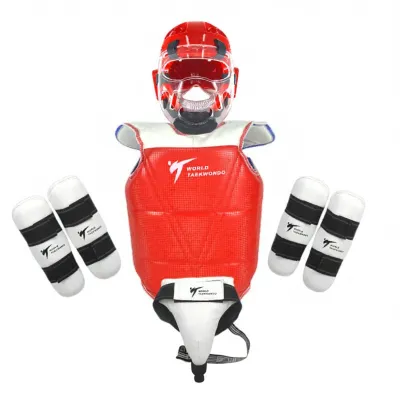
Prices are valid at publication and may change. Please refer to the product page for the latest price.
The protection requirements differ significantly between sparring (kyorugi) and forms (poomsae) training. Sparring demands maximum shock absorption to cushion the force of incoming kicks and accidental knee-to-knee collisions. Consequently, sparring guards feature thicker padding, often utilizing high-density foam or gel layers. In contrast, poomsae training emphasizes precision, balance, and clean aesthetic lines. While guards are rarely worn during formal poomsae competition, training sessions may require lightweight, low-profile compression sleeves to support joints during repetitive stance transitions and deep lunges without altering your movement mechanics.
To ensure you are purchasing genuine certified gear, always verify the certification claims on the product labels or the manufacturer’s official website. Genuine WT-approved guards typically feature a physical holographic decal, a molded rubber badge, or a distinct printed logo directly on the product. You can cross-reference the brand and model with the official list of recognized manufacturers updated periodically by the governing body. Be cautious of vague descriptions such as “designed to tournament specifications” or “competition style,” which often indicate the product has not undergone official testing.
What to Look for in Reliable Knee Guards
Knee protection in taekwondo must address two distinct challenges: absorbing direct impacts from stray kicks and supporting the patella during explosive jumping techniques. The core of any reliable knee guard is its padding material. High-density ethylene-vinyl acetate (EVA) foam is the industry standard, offering lightweight and reliable shock dispersion. For enhanced protection, some advanced designs incorporate gel inserts around the patella. Gel provides excellent localized shock absorption and conforms closely to the knee joint, though it can add slightly more weight than pure foam options.

The structural design of the knee guard directly impacts your kicking mobility. While hinged knee braces offer excellent lateral stability for severe ligament issues, they are generally unsuitable for taekwondo because the rigid plastic or metal hinges restrict the rapid flexion and extension needed for roundhouse and side kicks. Instead, look for pull-on sleeve designs made from flexible, high-stretch fabrics. These sleeves provide mild lateral support through compression while allowing a full, unrestricted range of motion for high kicks and deep stances.
Singapore’s hot and humid climate makes breathability a critical factor when choosing knee guards. Heavy, non-breathable materials trap sweat, leading to skin irritation, heat rashes, and a loss of compression over time. Opt for guards featuring moisture-wicking fabrics, ventilated mesh panels behind the knee, or perforated neoprene. These design elements allow heat to escape and sweat to evaporate quickly, keeping the guard lightweight and comfortable during long, intense training sessions in non-air-conditioned dojangs.
An often-overlooked feature is the anti-slip mechanism. A knee guard that slides down your leg during a combination kick is not only distracting but also dangerous, as the padding shifts away from the vulnerable joint. Look for guards equipped with internal silicone grip strips along the top and bottom cuffs. Adjustable hook-and-loop straps can also help secure the guard in place, allowing you to customize the tightness above and below the knee joint to prevent slipping without cutting off circulation.
Choosing the Right Ankle Guards for Barefoot Training
Ankle guards used in taekwondo must accommodate barefoot training on specialized puzzle mats. Unlike court sports where athletes wear shoes, taekwondo practitioners rely on direct contact between their feet and the floor for traction and stability. Therefore, ankle supports must provide joint stability without covering the sole of the foot in a way that causes slipping. Elasticized compression sleeves are highly favored because they wrap snugly around the ankle joint while leaving the toes and heel exposed to maintain grip.
Choosing between simple compression sleeves and structured supports depends on your training needs. Lightweight elastic compression sleeves are ideal for healthy joints, providing proprioceptive feedback and mild warmth that aids in injury prevention. If you are recovering from a minor sprain or require extra stability during rapid pivots, look for guards with integrated figure-eight strapping systems. These straps mimic athletic taping techniques, offering adjustable lateral support to prevent excessive inversion or eversion without the bulk of a rigid brace.
The thickness and profile of the ankle guard are crucial for maintaining proper footwork. A guard that is too thick can alter your foot placement, interfere with your balance, or catch on the edges of the training mats. Look for low-profile designs that fit like a second skin. The seams should be flat and strategically placed away from high-friction areas, such as the back of the heel and the instep, to prevent painful blisters and chafing during repetitive pivoting movements.
Repetitive stomping, jumping, and kicking can place significant stress on the arch of the foot, sometimes leading to conditions like plantar fasciitis or heel bruising. Reliable ankle guards often extend slightly down the midfoot to provide targeted compression to the plantar fascia. This arch support helps distribute impact forces more evenly across the foot during hard landings. Ensure the heel opening is reinforced with durable stitching, as this area experiences high wear and tear from constant contact with the mat.
How to Measure and Test for the Perfect Fit
To achieve the ideal balance of protection and comfort, you must measure your joints accurately before purchasing. Do not rely on generic sizing categories like “Medium” or “Large,” as sizing charts vary significantly between brands. To measure your knee, wrap a flexible tape measure around the center of your patella while standing with your leg slightly bent. For ankle guards, measure the circumference of your ankle joint just above the ankle bone. Compare these measurements directly to the manufacturer’s specific sizing guide.
The choice of material involves a trade-off between compression, durability, and heat retention. Neoprene guards offer excellent compression and retain joint warmth, which can keep muscles limber, but they tend to trap sweat and can feel uncomfortably hot in tropical climates. Elastic knit blends, such as nylon and spandex, offer superior breathability and a lighter feel, making them highly suitable for daily training in Singapore, though they may lose their elasticity faster than neoprene if not cared for properly.
When trying on a new guard, perform a few test movements to check for restrictive tightness. Bend your knee fully, perform a few light bounces, and execute a slow front kick. The guard should feel snug and supportive but should not pinch the skin, bunch up painfully behind the joint, or cause your toes to feel cold or numb. If you notice deep red indentations on your skin after a few minutes of wear, the guard is too small and could restrict blood circulation during active training.
Inspect the physical construction of the guards for signs of poor quality before committing to them. Examine the stitching along the edges and seams; loose threads, uneven stitching, or single-stitched seams are highly prone to unraveling under the stress of dynamic kicking. Press down on the protective foam or gel inserts to ensure they are resilient and spring back to their original shape immediately. Soft, easily compressed foam that remains indented will not provide adequate shock absorption against high-impact kicks.
Finding Authentic Taekwondo Gear in Singapore
Sourcing authentic taekwondo gear in Singapore requires choosing reputable retail channels over unverified online sellers. To ensure you are buying genuine, high-quality products, visit authorized martial arts specialty shops or official brand storefronts. Physical retail hubs, such as specialized sports outlets in Queensway Shopping Centre or dedicated martial arts distributors, allow you to inspect the material quality and try on different sizes before purchasing.
Be highly cautious when browsing general e-commerce platforms or online marketplaces, as counterfeit protective gear is common. Red flags include listings with suspiciously low prices, generic product descriptions that avoid naming the brand, and shipping origins from unverified third-party sellers. Counterfeit guards often look identical to certified models but use cheap, low-density foam that offers virtually no impact protection, putting you at a high risk of injury.
Prioritize retailers that offer clear return and exchange policies, especially when purchasing online. Because a precise fit is critical for both safety and mobility, you may need to exchange a guard if it slips or restricts your movement during your initial home fitting. Finally, do not hesitate to consult your dojang instructors or senior club members. Local coaches have extensive experience with various gear brands and can recommend trusted local suppliers who provide authentic, durable equipment suitable for your specific training level.
Frequently Asked Questions (FAQ)
Do I need to wear knee and ankle guards for every taekwondo session?
Whether you should wear guards depends on the specific focus of your training session. For light technical drills, shadow kicking, or basic forms practice, guards are generally optional unless you are recovering from an injury. However, during heavy sparring sessions, partner drills involving target pads, or high-intensity conditioning, wearing protective gear is highly recommended to cushion accidental impacts. Always consult your dojang instructor, as they can provide guidance based on the day’s lesson plan and your personal skill level.
Can I use general sports knee sleeves instead of taekwondo-specific guards?
While general sports knee sleeves provide compression and warmth, they are usually inadequate for the specific demands of taekwondo training. Standard compression sleeves lack the specialized high-density foam or gel padding required to absorb direct impacts from kicks or knee-to-knee collisions. Additionally, some general athletic braces feature rigid components or high-friction materials that can scratch your training partners or damage the dojang’s puzzle mats. For reliable safety, it is best to use guards designed specifically for martial arts.
Community discussion
Share your experience or ask a question. Comments are reviewed before publication.