
Selecting the right fishing hook as a beginner in Singapore involves balancing immediate sharpness, ease of rigging, and durability against the corrosive tropical saltwater environment. To make the best choice, novice anglers should focus on hooks with ringed eyes for easy knot tying, opt for high-carbon steel or corrosion-resistant coatings, and match the hook size to the specific local target species and venue. Understanding these fundamental design elements ensures that your bait is presented naturally and that you can securely hook and land your catch without unnecessary frustration.
By focusing on physical characteristics rather than marketing buzzwords, you can confidently select tackle that performs reliably at local fishing spots, from tranquil freshwater reservoirs to bustling coastal jetties. This guide breaks down the essential features of beginner-friendly hooks, explains how to verify quality before making a purchase, and outlines how to match your gear to Singapore’s unique angling environments.
What Makes a Fishing Hook Beginner-Friendly?
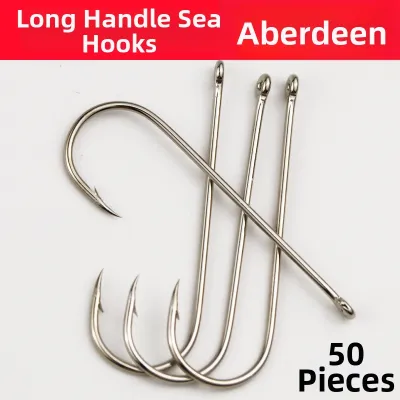
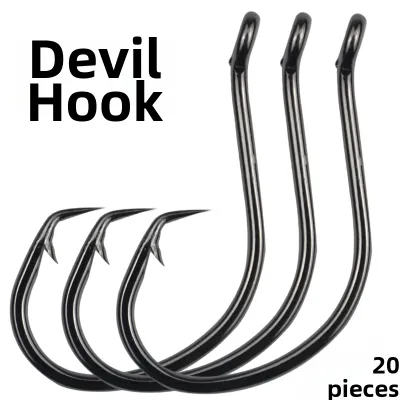
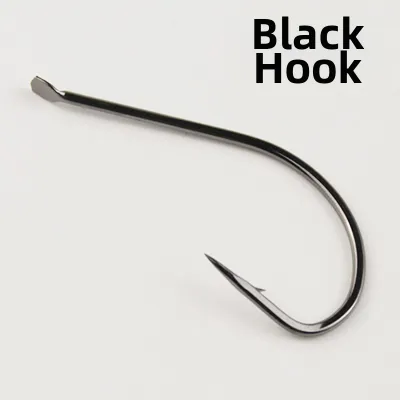
For someone new to angling, the physical design of a fishing hook directly impacts how easily you can rig your line, present your bait, and handle your catch. The most critical design feature for a beginner is the hook eye, which is the loop at the top where the line connects. Hooks generally come with either a ringed (looped) eye or a spade (flat) end. Beginners should almost always choose ringed eyes because they are compatible with simple, highly reliable knots such as the Clinch knot or the Palomar knot. Spade-end hooks require a specialized knotting technique called snelling, which can be exceptionally difficult to tie correctly under field conditions and often leads to lost fish if executed with minor errors.
Products mentioned in this guide
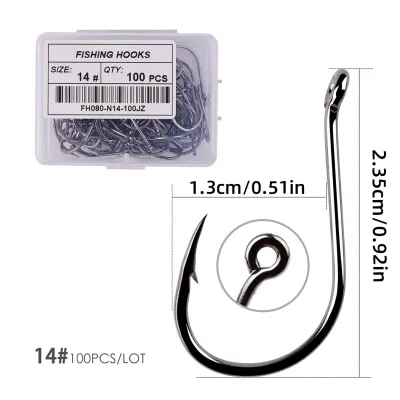
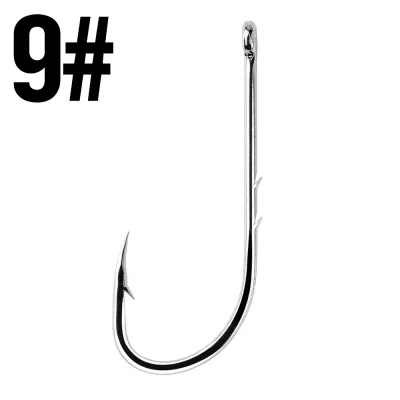
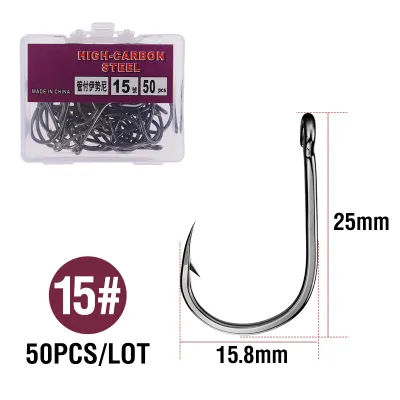
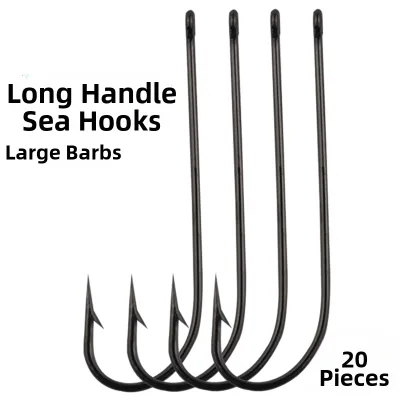
Prices are valid at publication and may change. Please refer to the product page for the latest price.
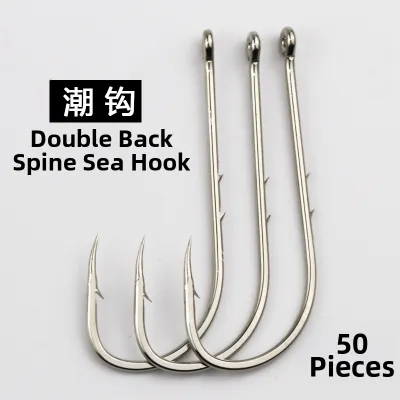
Another vital consideration is the size and placement of the barb, which is the backward-facing projection near the hook point. The barb’s primary function is to prevent the bait from sliding off and to keep the hook secure in the fish’s mouth during a fight. However, an excessively large barb requires a significant amount of force to penetrate the fish’s jaw, which can be difficult to achieve with the light-to-medium rods typically used by beginners. Opting for hooks with micro-barbs or moderately sized barbs ensures that the hook penetrates cleanly with minimal hook-setting force, while still providing enough holding power to keep your catch secure.
The thickness of the wire used to manufacture the hook also plays a major role in your fishing success. Fine-wire hooks are incredibly sharp and require very little pressure to penetrate, making them excellent for delicate freshwater baits. However, they can bend or straighten under the pressure of a larger fish. Heavy-wire hooks offer immense strength but require a much stronger hook-set that can damage delicate baits. For most beginners in Singapore, a medium-wire hook offers the perfect compromise, providing sufficient strength to handle unexpected larger catches while remaining sharp enough for easy penetration.
Finally, the length of the hook shank—the straight section between the eye and the bend—affects how you handle the hook. Long-shank hooks are highly recommended for beginners because they provide more metal surface to grasp with pliers or fingers when unhooking a fish. This extra length keeps your hands safely away from the fish’s teeth and the sharp point of the hook, making the dehooking process much safer and less intimidating for a novice. Short-shank hooks are stealthier and better for hiding inside small baits, but they can be challenging to retrieve if a fish swallows the bait deeply.
How to Check Hook Sharpness and Quality Before Buying
Before you head out to the water, physically verifying the sharpness and structural integrity of your hooks is essential to avoid missed strikes and lost fish. The most reliable and widely accepted method for testing sharpness is the fingernail test. To perform this test safely, hold the hook securely by the shank, keeping your fingers well away from the point. Place the hook point gently onto your thumbnail at roughly a 45-degree angle, and drag it lightly across the surface without applying heavy downward pressure. A high-quality, sharp hook will immediately bite into the nail and resist sliding. If the hook slides smoothly across your nail without catching, the point is dull and will likely fail to penetrate a fish’s mouth cleanly, meaning it should be discarded or avoided.

Visual inspection is another crucial step in assessing hook quality, especially when purchasing hooks in bulk or from unfamiliar brands. Hold the hook up to a bright light and examine the point closely. The tip should be perfectly straight, symmetrical, and taper to an incredibly fine, needle-like point. Many premium hooks undergo chemical sharpening, a process that uses acid baths to remove microscopic imperfections, resulting in an ultra-smooth surface and a flawless point. You should also inspect the hook eye to ensure it is completely closed; any gap in a ringed eye can pinch and cut your fishing line under tension. Avoid hooks that exhibit uneven coatings, rough metal burrs, or early signs of discoloration, as these are indicators of poor manufacturing quality control.
Checking the temper of the metal helps you understand how the hook will behave under load. Tempering is the heat-treatment process that gives steel its balance of hardness and flexibility. A hook that is tempered correctly will flex slightly under heavy pressure and then spring back to its original shape. If a hook is under-tempered, the metal will be too soft, causing the hook to bend out of shape permanently under minimal force, which allows fish to escape. Conversely, if a hook is over-tempered, it becomes extremely brittle and will snap suddenly without warning when subjected to a sudden tug.
To safely test the temper of a hook at home, use pliers to apply slight lateral pressure to the bend of a single hook from your pack. Observe whether the metal yields too easily or if it resists pressure and springs back. Testing one or two hooks from a new batch gives you a reliable indication of the manufacturer’s quality control. Consistent flexibility without permanent deformation or snapping is the hallmark of a well-manufactured hook.
Matching Hook Styles to Common Fishing Environments in Singapore
Singapore offers a diverse range of angling environments, each requiring a specific approach to hook selection to maximize your chances of success. In freshwater environments, such as designated zones in Bedok Reservoir, Jurong Lake, or commercial payponds, target species like peacock bass, tilapia, and snakeheads are often highly cautious due to constant fishing pressure. For these settings, beginners should opt for smaller, fine-wire hooks, typically ranging from size 6 to size 12. These smaller hooks allow for a highly natural bait presentation, ensuring that baits like bread, dough, or small live worms do not sink too quickly or look unnatural in the water, which would otherwise spook wary fish.
Saltwater fishing along coastal jetties, breakwaters, and beaches—such as Bedok Jetty, Labrador Park, or Changi Beach—presents a completely different set of challenges. Here, you will encounter stronger currents, abrasive structures like rocks and pylons, and hard-mouthed marine species such as snapper, grouper, and rabbitfish. In these environments, corrosion resistance and structural strength are paramount. Beginners should select medium to heavy-wire hooks, typically in sizes 2 to 2/0, made of high-carbon steel with protective coatings or stainless steel. Circle hooks are particularly effective for saltwater jetty fishing because their unique design, where the point curves back toward the shank, ensures the fish hooks itself in the corner of the mouth as it swims away, eliminating the need for precise hook-setting timing.
The choice of hook must also align with whether you are using a bottom fishing rig or a floating rig. Bottom fishing rigs, where your bait rests on or near the seabed, are designed to target bottom-dwelling species like catfish and groupers. For these rigs, slightly heavier hooks are advantageous because their weight helps keep the bait anchored in place against strong tidal currents. The extra weight also ensures the bait remains in the strike zone near the bottom structure where target fish are actively feeding.
In contrast, floating rigs utilize a bobber to suspend the bait in the water column, targeting mid-water feeders like halfbeaks or yellowstripe scads. A heavy hook will drag the float down or cause the bait to hang vertically in an unnatural, stiff manner. For floating rigs, beginners should choose light-wire, downsized hooks that allow the bait to drift naturally with the current, mimicking free-floating food particles and enticing quick strikes.
Evaluating and Purchasing Fishing Tackle in Singapore
When looking to buy fishing hooks in Singapore, beginners must navigate a variety of retail channels and product specifications to find the best value. Local brick-and-mortar tackle shops, which can be found in hubs like Beach Road, Geylang, and neighborhood estates, offer an invaluable resource for novices. The staff in these specialized shops possess extensive local knowledge and can recommend the exact hook sizes and styles currently producing results at nearby fishing spots. Furthermore, shopping in person allows you to physically inspect the hooks, perform the fingernail test, and check the packaging before spending your money.
In contrast, general online marketplaces and ecommerce platforms offer unmatched convenience and a vast selection of bulk products, often at lower upfront prices. However, purchasing hooks online carries inherent risks for beginners, as you cannot verify the sharpness, wire quality, or temper of the hooks before they arrive. Online listings are also prone to counterfeit products or low-grade bulk hooks that suffer from poor quality control, such as open eyes or brittle metal. If you choose to buy online, stick to reputable sellers and look for listings that offer clear return policies and detailed product specifications rather than relying solely on generic stock photos.
To assess the true quality of a hook, you must learn to read packaging labels carefully and look past marketing buzzwords like “super-sharp” or “professional grade.” Instead, focus on the material composition and manufacturing processes listed on the pack. High-carbon steel is the industry standard for high-quality hooks, offering an excellent balance of sharpness retention and structural strength. Look for labels indicating that the hooks are “chemically sharpened” or “forged,” as these processes guarantee a sharper point and a stronger shank. For saltwater fishing in Singapore’s humid climate, prioritize coatings such as black nickel, Teflon (PTFE), or tin plating, which provide a robust barrier against rust and corrosion.
Finally, evaluate the cost-per-hook rather than just the total price of the package. A bulk pack of 50 unbranded hooks might cost only S$5 (S$0.10 per hook), which seems like a bargain compared to a premium pack of 10 chemically sharpened hooks costing S$6 (S$0.60 per hook). However, if those cheap hooks bend easily, rust after one session, or fail to penetrate, you will lose bait and fish. Investing slightly more per hook for a reputable, well-manufactured product ensures consistent performance, saving you money and frustration in the long run.
Frequently Asked Questions (FAQ)
How often should beginners replace their sharp fishing hooks?
Fishing hooks are consumable items that degrade over time due to physical wear, environmental exposure, and the mechanical stress of catching fish. Beginners should make it a habit to inspect their hooks before every fishing trip, after catching a fish, and immediately after freeing a snag from rocks or structures. Physical signs that indicate a hook needs immediate replacement include a blunted point that fails the fingernail test, a shank or bend that has warped out of its original shape, or visible micro-rust around the eye and barb.
In Singapore’s highly humid and salty tropical climate, corrosion can develop rapidly even on hooks stored inside a tackle box. If you notice any structural compromise, bending, or rust, discard the hook immediately. Using a compromised hook significantly increases the risk of the metal snapping or bending open during a fight, leading to lost fish and wasted time on the water.
Can I resharpen a dull fishing hook, and is it recommended for beginners?
It is entirely possible to resharpen a dull fishing hook using specialized tools such as a fine diamond file or a sharpening stone. The process involves holding the hook firmly and filing the sides of the point in flat strokes pointing away from the barb toward the tip, carefully maintaining the original triangular or needle-like geometry of the point. While this is a useful skill for experienced anglers to extend the life of expensive, heavy-duty saltwater hooks, it is generally not recommended for beginners.
Most modern beginner-friendly hooks are chemically sharpened and finished with protective anti-corrosion coatings. Manual filing strips away these protective layers, exposing the raw steel underneath and causing the hook to rust almost immediately in Singapore’s humid environment. Additionally, incorrect filing techniques can easily misalign the point or weaken the metal, making the hook less effective than it was when dull. Given the affordable cost of high-quality replacement hooks, beginners are far better off replacing a dull hook with a fresh, factory-sharp one to ensure reliable penetration and consistent success.

Community discussion
Share your experience or ask a question. Comments are reviewed before publication.