
Setting up a home gym in Singapore is an excellent way to build a consistent fitness routine, but choosing the centerpiece of your setup—the barbell—requires careful planning. With space constraints in typical HDB flats or condominiums and a wide range of prices online, making an informed decision is crucial. A poor choice can lead to bent steel, rusted shafts, or safety hazards during heavy lifts. By focusing on verifiable technical specifications and understanding local constraints, you can find a reliable barbell that fits your budget and supports your training goals safely.
Defining Your Home Gym Barbell Needs and Budget
Before browsing online marketplaces, you must define your primary training style. Powerlifting, Olympic weightlifting, and general functional fitness place different demands on a barbell. Powerlifters require a stiff bar with aggressive knurling for a secure grip on heavy deadlifts and squats. Olympic weightlifters need a bar with more whip (flexibility) and smooth sleeve rotation to protect their wrists during explosive movements. If you plan to perform a mix of both, a multi-purpose barbell is the most practical choice.
Space is another critical factor in Singaporean homes. A standard Olympic barbell is 2.2 meters long, which requires a clear lifting area of at least 3 meters in width to allow for safe plate loading and movement. Measure your designated workout area carefully, keeping in mind the footprint of your squat rack or power rack. If your space is exceptionally tight, you might consider a shorter barbell, but you must verify that the shaft length between the sleeves is wide enough to fit on standard rack J-cups.
Products mentioned in this guide
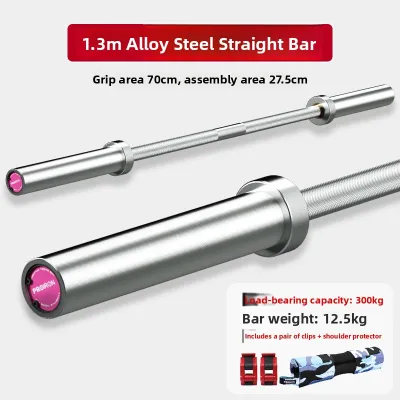
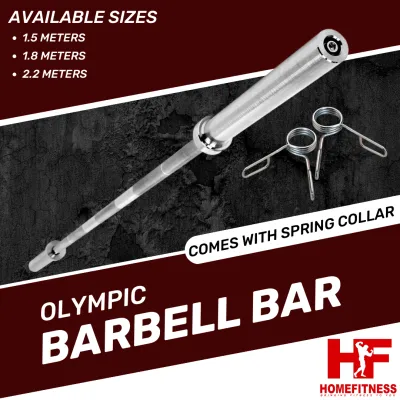
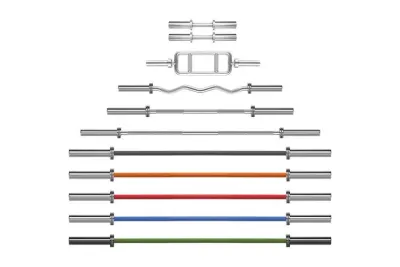
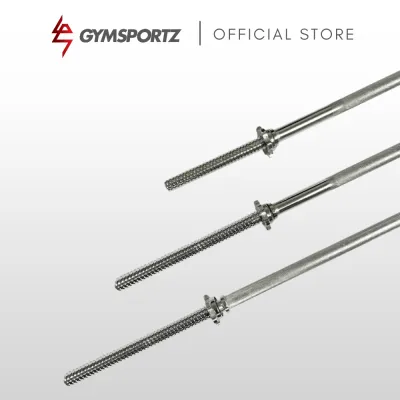
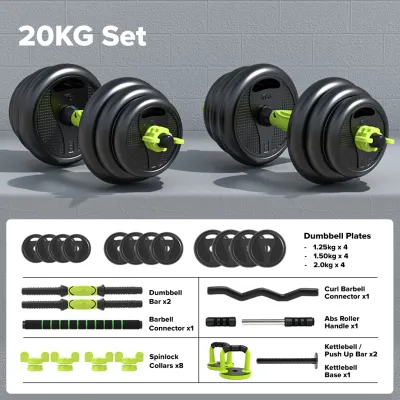
Prices are valid at publication and may change. Please refer to the product page for the latest price.
Finally, establish a realistic budget that covers the entire lifting system. A barbell is useless without weight plates, secure collars, and proper floor protection. Allocating your entire budget to a premium bar while using sub-standard plates or lifting on bare tiles is a recipe for frustration and property damage. Aim to balance your spending so that your barbell, weights, and safety gear complement each other.
Essential Barbell Specifications to Verify
To ensure your barbell is safe and durable, you must look past marketing buzzwords and verify key technical specifications. The first metric to check is tensile strength, which is measured in pounds per square inch (PSI). Tensile strength indicates the maximum load a barbell can support before fracturing. For a reliable home gym bar, look for a rating between 150,000 and 200,000 PSI. Anything below 150,000 PSI may bend permanently under moderate loads, while ratings above 190,000 PSI offer excellent durability for long-term progress.

Knurling is the textured pattern on the shaft that provides grip. The depth and pattern of the knurling dictate how secure the bar feels in your hands. Aggressive knurling is ideal for heavy pulling movements but can cause discomfort during high-volume training. For a home gym, a medium or moderate knurling pattern is generally preferred as it offers sufficient grip without tearing your skin. Additionally, consider whether you need a center knurling; while it helps keep the bar secure on your back during squats, it can scratch your collarbone during front squats or clean-and-jerk transitions.
Sleeve rotation is determined by either bushings or bearings housed inside the sleeves. Bushings are solid rings made of bronze or brass that slide smoothly against the shaft, providing a controlled spin that is perfect for powerlifting and slow, heavy lifts. Bearings consist of small rollers or needles that allow the sleeve to spin rapidly and freely, which is essential for Olympic weightlifting to prevent the rotational force of the plates from transferring to your wrists. For most home lifters, high-quality bronze bushings offer the best balance of durability, low maintenance, and cost-effectiveness.
Shaft diameter directly affects your grip and the bar’s stiffness. Standard powerlifting bars typically have a 29mm diameter, which minimizes whip and provides a stable feel during heavy bench presses and squats. Olympic weightlifting bars are usually 28mm in diameter, allowing for a more secure hook grip and greater flexibility. Multi-purpose bars often split the difference at 28.5mm, making them highly versatile for general strength training. Choose a diameter that matches your hand size and primary lifting style to ensure comfort and safety.
Understanding Budget Tiers and Acceptable Trade-Offs
Understanding what you get at different price points helps you make a realistic decision without overspending. Entry-level barbells, typically priced under S$200, are suitable for beginners and casual lifters. These bars usually feature basic bushing systems, standard chrome finishes, and lower tensile strength ratings. While they are perfectly adequate for learning proper form and lifting lighter weights, you must verify their maximum weight capacity and avoid dropping them from overhead.
Mid-range barbells, ranging from S$200 to S$500, represent the sweet spot for most home gym owners. In this tier, you can expect significantly higher tensile strength (often 190,000 PSI or more), consistent knurling, and more durable shaft coatings. These bars are designed to withstand daily use and progressive overload, making them a long-term investment that will grow with your strength levels.
When shopping on a budget, it is vital to distinguish between safe and unsafe compromises. Safe compromises include choosing a basic cosmetic finish like black oxide or chrome, which may scratch or wear over time but does not affect the structural integrity of the steel. You can also save money by opting for simpler packaging or buying from lesser-known local brands that offer solid specifications. Unsafe compromises include purchasing bars with unrated tensile strength, poorly secured sleeves that use cheap hex bolts instead of snap rings, or bars that do not specify a maximum weight limit.
Factoring in Hidden Costs and Local Setup Constraints
Setting up a home gym in Singapore involves several local constraints and hidden costs that can quickly blow your budget. Because barbells are long, heavy, and awkward to transport, shipping fees can be substantial. Many online sellers charge extra for bulky item delivery, and you may face additional surcharges if you live in a high-rise apartment or HDB flat where the delivery team must carry the package up stairs if it does not fit in the elevator. Always confirm the total delivery cost before finalizing your purchase.
Floor protection is another non-negotiable expense. Dropping a heavy barbell on bare concrete, laminate, or tile flooring can cause severe structural damage and generate excessive noise that will disturb your neighbors. To prevent this, you must budget for high-density rubber gym mats. Mats should be at least 15mm thick to absorb the impact of heavy lifts. For dynamic lifting, building or buying a dedicated lifting platform with a plywood center and rubber sides is highly recommended to distribute the load evenly.
Compatibility is the final hidden hurdle. Ensure that the sleeve diameter of your barbell matches the inner collar diameter of your weight plates. Standard Olympic barbells have 50mm (2-inch) sleeves, which require Olympic plates. Standard 1-inch plates will not fit on these bars. Additionally, verify that the barbell’s collar-to-collar distance is compatible with the width of your squat rack. If the bar’s shaft is too short, it will not rest securely on the rack’s J-cups, creating a major safety hazard.
Evaluating Online Listings and Avoiding Quality Traps
Since you will likely purchase your barbell online, you must learn how to navigate product listings and avoid common quality traps. Start by scrutinizing the product description for explicit, verified specifications rather than vague marketing claims. A listing that boasts “heavy-duty steel” or “professional grade” without listing the actual tensile strength, shaft diameter, or sleeve rotation mechanism should be approached with caution. Reliable manufacturers are proud of their specifications and will list them clearly.
Warranty terms offer valuable insight into a product’s quality and the seller’s confidence in their equipment. Look for warranties that specifically cover shaft bending or sleeve detachment under normal, rated use. A lifetime warranty on construction is ideal, but even a one-to-two-year local warranty provides peace of mind. Be cautious of international listings where returning a defective, heavy barbell would cost more than the bar itself; instead, prioritize local distributors who can handle warranty claims directly in Singapore.
User reviews are an excellent resource for identifying potential long-term issues. Look for reviews that mention how the barbell performs after several months of use. Pay close attention to comments regarding rust resistance, especially given Singapore’s high humidity. If multiple users report that the coating flakes off quickly or that the sleeves develop excessive play (wobbling) after a few weeks, it is best to look for another option.
Frequently Asked Questions (FAQ)
How do I maintain a budget barbell to prevent rust?
Singapore’s tropical climate and high humidity make rust prevention a top priority for home gym owners. Sweat, skin oils, and chalk left on the barbell will quickly corrode the steel, especially on budget bars with basic finishes. To prevent this, wipe down the shaft and sleeves with a dry microfiber cloth after every workout. Periodically, apply a light coat of mineral oil or 3-in-1 oil to the shaft, use a stiff nylon brush to work it into the knurling, let it sit for a few minutes, and then wipe off the excess completely. Store your barbell horizontally on a rack or vertically in a dry, well-ventilated room rather than a damp balcony or outdoor area.
Can I use a standard 1-inch barbell for heavy home workouts?
Standard 1-inch barbells are generally not suitable for heavy strength training or progressive overload. These bars are typically made from lower-grade steel and have much lower weight capacities, often bending permanently under loads exceeding 100 kg. Furthermore, standard bars lack rotating sleeves, meaning the rotational force of the spinning weight plates is transferred directly to your wrists and elbows, increasing the risk of joint strain. For safe, long-term strength training, investing in an Olympic-sized barbell with 2-inch rotating sleeves is highly recommended, as it offers superior durability, safety, and compatibility with standard gym equipment.
Community discussion
Share your experience or ask a question. Comments are reviewed before publication.