
Selecting the correct cast iron kettlebell weight is critical for safe, effective, and sustainable strength training. Unlike traditional dumbbells, a kettlebell features an off-center weight distribution that places unique demands on your stabilizing muscles, core, and grip. Choosing a weight that is too heavy compromises your lifting form and increases the risk of acute injury, while selecting a weight that is too light limits your body’s strength adaptations and makes it difficult to learn the proper momentum of ballistic movements. Identifying the optimal starting weight requires a structured self-assessment of your current physical baseline, an understanding of how different exercises impact your body, and practical physical testing.
For home gym enthusiasts, particularly those training in compact living spaces like Singapore apartments, a cast iron kettlebell offers an exceptionally space-efficient workout solution. However, because you cannot easily adjust the weight of a standard solid cast iron bell, making an accurate initial purchase is essential. By focusing on physical feedback, movement mechanics, and safety boundaries, you can confidently choose a kettlebell that matches your current fitness level and supports your long-term progression.
Assess Your Current Strength and Training Experience
Before purchasing a cast iron kettlebell, you must honestly evaluate your foundational bodyweight strength. Kettlebell training is highly dynamic, meaning your joints and connective tissues must be prepared to handle rapid transitions of force. Begin by assessing your ability to perform basic bodyweight movements with perfect control. If you can easily execute controlled bodyweight squats, stable push-ups, and a clean hip-hinge deadlift pattern without losing your balance or rounding your spine, your body is likely ready to introduce external resistance.
Products mentioned in this guide
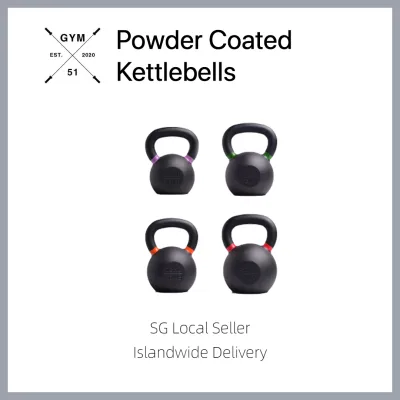
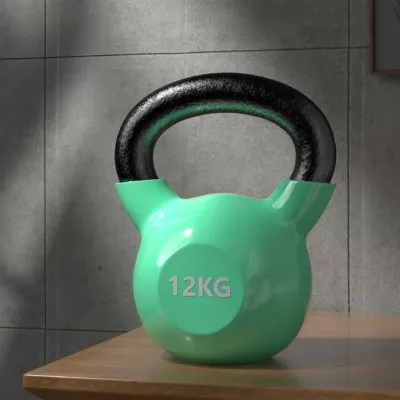
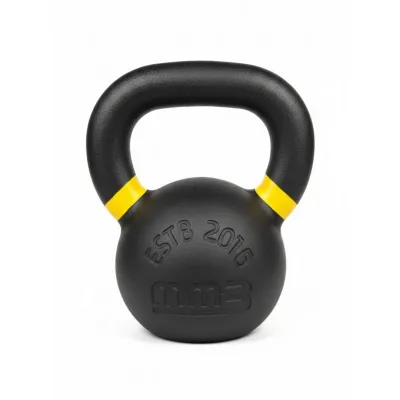
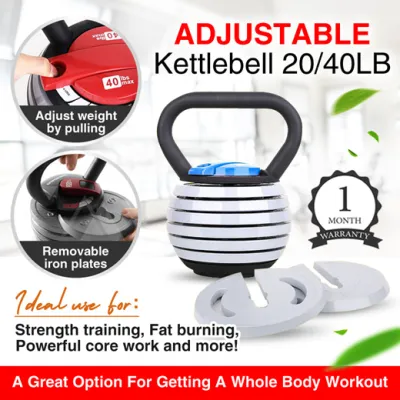
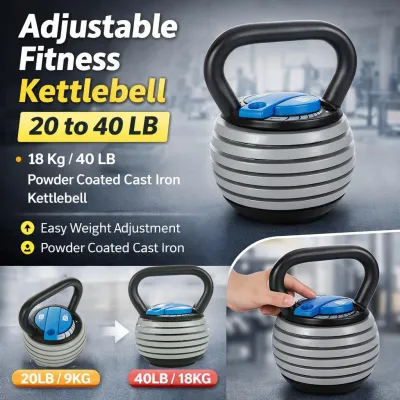
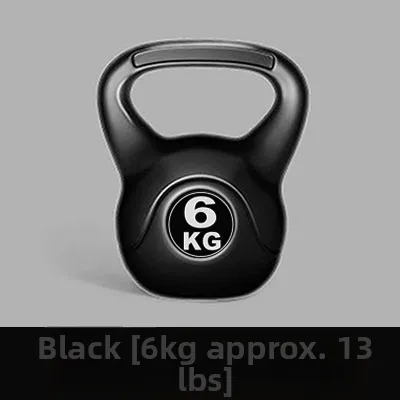
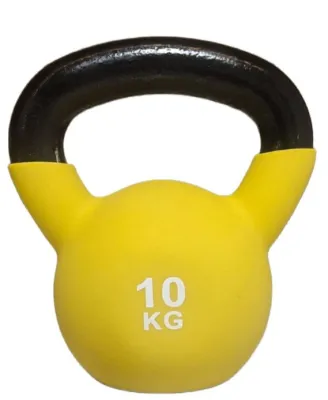
Prices are valid at publication and may change. Please refer to the product page for the latest price.
Your specific training background heavily influences where you should start. A complete beginner to fitness should prioritize movement patterns over weight, opting for a highly conservative kettlebell to master the basic mechanics of the swing and press. If you have general weightlifting experience with barbells or machines, you will possess a solid strength foundation, but you must still account for the dynamic, off-center gravity of the kettlebell. The transition to ballistic movements requires your stabilizing muscles to work much harder, meaning your lifting capacity will be lower than what you might expect based on your dumbbell strength.
If you are transitioning to kettlebells without direct supervision from a qualified fitness professional, starting conservatively is a safety necessity. Without a coach to correct your form in real time, a lighter weight allows you to make minor technical errors without placing excessive stress on your spine or shoulders. Treat your first kettlebell as a tool for learning movement patterns rather than a tool for testing your maximum strength limits.
Match Kettlebell Weight to Your Target Exercises
To choose the right weight, you must categorize the exercises you plan to perform, as different movements place vastly different demands on your body. Kettlebell exercises generally fall into two categories: ballistic movements and grind movements. Ballistic exercises, such as swings, cleans, and snatches, are lower-body dominant and rely on the explosive power of your posterior chain, including your glutes, hamstrings, and core. Because these large muscle groups are highly powerful, they can safely handle a significantly heavier weight.

In contrast, grind exercises are slow, controlled movements that are typically upper-body dominant, such as the overhead press, Turkish get-up, and windmill. These movements rely on smaller muscle groups and require exceptional shoulder stability and joint alignment. Because the lever arm is longer and the stabilizing muscles of the shoulder are highly vulnerable to strain, you must use a much lighter weight for grinds than you would for ballistic swings.
This biomechanical difference means that a single kettlebell weight is rarely sufficient for a complete, well-rounded workout routine. If you use a weight that is safe for your overhead press, it will likely be too light to challenge your lower body during swings, preventing you from developing explosive power. Conversely, a kettlebell that is heavy enough to challenge your hamstrings during swings could easily cause a shoulder injury if you attempt to press it overhead. When planning your purchase, evaluate your primary training goals and select a weight that aligns with the specific movement category you intend to prioritize.
Practical Testing: How to Verify the Weight Before Buying
If you are purchasing your cast iron kettlebell from a local retail store, you can perform several simple, low-risk physical checks to verify if a weight is appropriate for your current strength level. Do not attempt to perform high-velocity swings in a crowded retail aisle. Instead, begin by standing directly over the kettlebell with your feet hip-width apart. Assume a deadlift start position, grip the handle firmly with both hands, and perform a slow, controlled lift to a standing position. If your spine rounds or your knees collapse inward during this basic lift, the weight is too heavy.
Another excellent in-store check is the goblet hold. Lift the kettlebell by the side horns and hold it securely against your chest. While maintaining a tall, upright posture, perform a slow squat. Pay close attention to your core stability and upper back. If the weight pulls your torso forward, causing you to hunch your shoulders or lose your balance, it exceeds your current stabilizing capacity. Your wrists should remain straight and locked throughout this hold; if they bend backward under the weight, the load is too high for your current forearm strength.
If you are purchasing online and cannot test the physical product beforehand, you can simulate the weight at home using existing fitness equipment or common household items. Securely hold a dumbbell or a weighted container to replicate the feel of the target weight. While the balance point of a dumbbell is centered rather than offset like a kettlebell, this simulation provides a realistic sense of how a specific load impacts your wrists, shoulders, and core, helping you avoid ordering an unusable weight.
Signs You Need to Adjust Your Kettlebell Weight
As you begin training, you must remain highly sensitive to physical feedback signals that indicate your kettlebell weight needs adjustment. The most critical warning sign that a weight is too heavy is a breakdown in your lifting form. If you experience lower back discomfort during swings, wrist pain during cleans, or an inability to control the downward, eccentric phase of a press, stop training immediately. These symptoms indicate that your primary muscle groups have fatigued, causing your body to compensate by placing dangerous stress on your joints and ligaments.
On the other hand, you must also recognize when a kettlebell has become too light to provide a meaningful training stimulus. If you can complete your target repetitions effortlessly, without experiencing any elevation in your heart rate, muscle fatigue, or challenge to your balance, you have likely adapted to the weight. Training with a weight that is too light can lead to stagnation, as it fails to trigger the progressive overload necessary for muscle and bone density improvements.
When implementing progressive overload, safety boundaries must always dictate your progression. Only transition to a heavier cast iron kettlebell when you can perform every repetition of your target exercise with absolute control, perfect form, and zero joint discomfort. When you do upgrade, do so in small, manageable increments. A sudden, drastic jump in weight can overwhelm your stabilizing muscles, even if your prime movers feel strong enough to handle the load.
Cast Iron vs. Competition Kettlebells: Does Material Affect Weight Choice?
The physical design of a standard cast iron kettlebell directly impacts how the weight feels in your hand and how it should influence your purchasing decision. Standard cast iron kettlebells are cast from a single piece of metal, meaning their physical size scales up as they get heavier. Consequently, heavier cast iron bells feature thicker handles. This design differs from steel competition kettlebells, which maintain a uniform bell size and handle diameter regardless of their weight.
For beginners, the scaling handle thickness of cast iron kettlebells is a crucial factor to consider. A thicker handle places significantly higher demands on your grip strength and forearm endurance. If you have smaller hands, a heavier cast iron kettlebell may cause your grip to fail long before your target leg or back muscles are fully worked. When selecting a heavier weight, always verify that you can comfortably wrap your fingers around the handle with a secure, locked grip.
Additionally, pay close attention to the surface coating of the cast iron handle. In warm, humid training environments, sweat can quickly make a smooth, glossy enamel handle slippery and difficult to control. Look for cast iron kettlebells with a high-quality powder-coated or matte finish. These textured surfaces provide superior slip resistance, hold athletic chalk more effectively, and ensure a secure grip during dynamic, high-velocity movements, protecting both your body and your flooring from accidental drops.
Frequently Asked Questions (FAQ)
Should I buy one kettlebell or a set to start?
Starting with a single, moderately weighted cast iron kettlebell is a highly practical and cost-effective way to master foundational movements like the two-handed swing and the goblet squat. However, because your lower body is naturally much stronger than your upper body, a single weight will eventually limit your progress. If your budget and training space permit, purchasing a small set of two or three distinct weights offers the versatility needed to target different muscle groups safely. Alternatively, a high-quality adjustable cast iron kettlebell can provide multiple weight options within a single, space-saving footprint.
How do I know if my grip strength is limiting my kettlebell weight?
Your grip strength is the limiting factor if your forearms burn intensely, your fingers begin to slip, or you feel you might drop the kettlebell while your legs, glutes, and core still feel fully capable of continuing the exercise. To address this imbalance, you can incorporate dedicated grip-strengthening exercises into your routine or temporarily reduce your kettlebell weight to allow your forearm endurance to catch up. Avoid using lifting straps for ballistic kettlebell movements like swings and cleans, as they prevent you from safely releasing the weight in an emergency and can interfere with proper hand transitions.

Community discussion
Share your experience or ask a question. Comments are reviewed before publication.