
Selecting the right football goal post requires balancing setup speed, structural stability, and available storage space. For quick, spontaneous games in a local park or a shared open space, a lightweight pop-up goal offers unmatched convenience. Conversely, regular, structured training sessions where players practice high-velocity shooting require a rigid, freestanding or permanent goal that can withstand heavy impacts and provide realistic rebounds.
To make the right choice, you must evaluate where you will play, how often the goal will be used, and who will be shooting at it. A goal that is too light will constantly shift or collapse under strong shots, while a goal that is too heavy or complex can become a chore to assemble, eventually sitting unused in a storeroom.
Define Your Needs: Casual Kicks vs. Structured Training
Before browsing options, assess your primary usage frequency. Occasional weekend family kicks in the park demand a highly portable design that can be assembled and packed away in minutes. If you plan to host weekly structured drills or competitive matches with friends, you will need a more robust frame that remains stationary when struck by a standard size 5 football.
Products mentioned in this guide
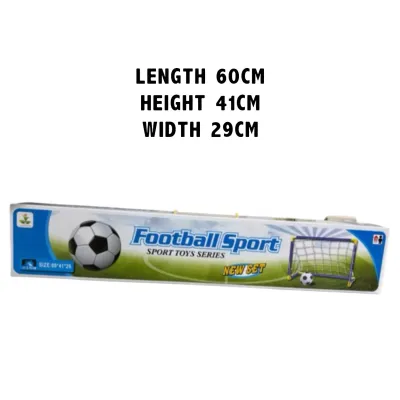
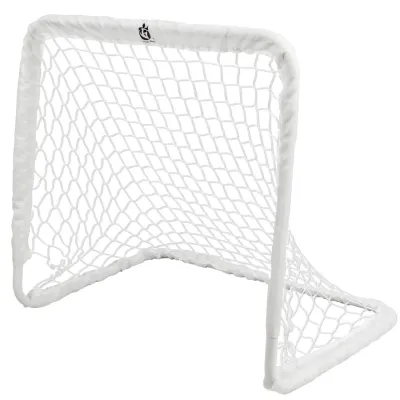
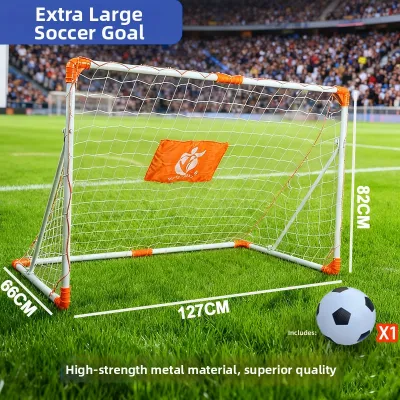
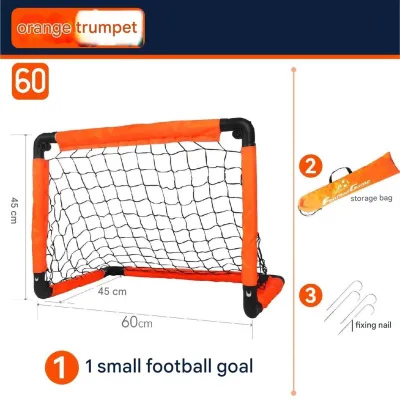
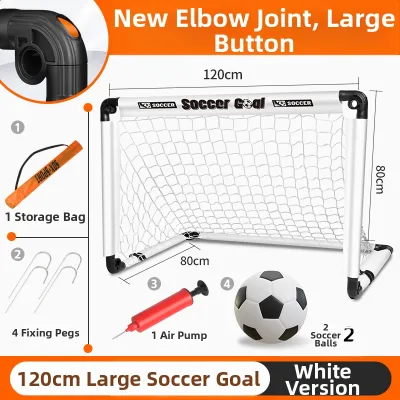
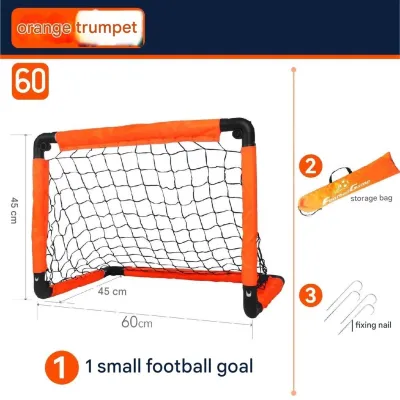
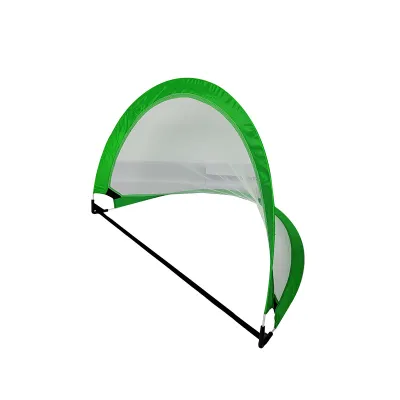
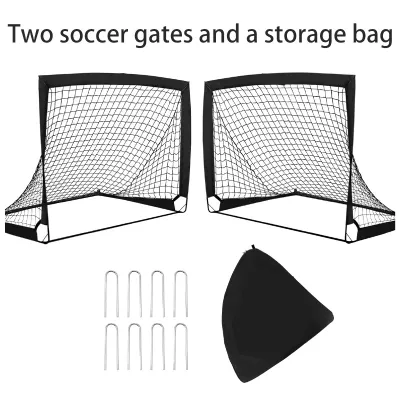
Prices are valid at publication and may change. Please refer to the product page for the latest price.
Player demographics and shooting power are critical factors in determining the required frame strength. Young children playing with lightweight size 3 balls do not put much stress on a goal structure, making plastic or flexible fiberglass frames perfectly adequate. However, teenagers and adults shooting with full force will quickly damage or knock over lightweight recreational goals, requiring sturdier materials like thick-walled PVC, aluminum, or steel.
Storage and transport constraints are equally important, especially in urban environments where residential space is highly optimized. Consider your home’s storage capacity, such as a compact apartment utility closet, and measure your car boot space if you plan to transport the equipment. A goal that does not fold down flat or disassemble into a compact carrying bag may end up blocking corridors or proving too cumbersome to transport to the pitch.
Pop-Up Goals: Suited for Quick Setup and Casual Play
Pop-up goals are the ultimate choice for spontaneous play due to their spring-loaded frame mechanisms. Typically constructed from flexible fiberglass rods or flat steel bands sewn into a durable fabric sleeve, these goals pop open instantly when released from their carrying bag. Takedown requires a specific twisting motion—often a figure-eight fold—which must be performed carefully to prevent the spring-loaded frame from snapping back unexpectedly and causing minor injuries.

While highly convenient, pop-up goals have clear durability limits. Because they rely on flexible, lightweight frames, they cannot withstand high-velocity shots from older players or heavy impacts from standard footballs. A powerful shot will often knock the entire goal backward or cause the frame to collapse temporarily, and the lightweight mesh netting is prone to tearing under repeated high-impact stress.
Anchoring is essential to keep pop-up goals in place, but your options depend heavily on the playing surface. On natural grass, the included metal U-pegs easily secure the frame to the ground. When transitioning to artificial turf or concrete void decks, these pegs cannot be used, meaning you must rely on external weights, such as sandbags or rubber-coated weights, to keep the goal from blowing away in strong winds or shifting during play.
Portable Freestanding Goals: The Weekend Warrior's Choice
Portable freestanding goals offer a middle ground, providing a realistic rectangular shape and greater stability for regular weekend games. These frames are typically constructed from PVC, fiberglass, or lightweight aluminum. PVC is highly popular because it is rust-proof and affordable, though prolonged exposure to intense tropical sunlight can eventually make low-grade plastic brittle. Fiberglass offers excellent flexibility and impact absorption, while aluminum provides the highest rigidity and durability at a lighter weight than steel.
Assembly time for freestanding goals is longer than for pop-up models, usually taking between 5 to 15 minutes. Most designs use a slot-together or push-button locking system that requires no tools, allowing you to assemble the frame on-site. While they are heavier to carry than pop-up nets, they pack down into dedicated carry bags, making them manageable for one or two people to transport to a rented pitch.
When choosing a portable freestanding goal, pay close attention to the net attachment method. Some models use simple velcro straps or elastic cords, while others feature integrated net clips that slide into the frame channels. It is also wise to check the long-term availability of replacement nets from the manufacturer, as nets naturally degrade faster than the frame due to friction, high-impact shots, and weather exposure.
Permanent and Heavy-Duty Goals: For Serious, Fixed-Location Training
For dedicated training grounds, school fields, or large private gardens, permanent and heavy-duty goals provide the ultimate stability and realistic play experience. These structures are built from heavy-gauge galvanized steel or thick-walled aluminum, designed to remain outdoors year-round. When purchasing, always check product labels for weather-resistance specifications, such as hot-dip galvanization or UV-stabilized powder coatings, which protect the metal from rust and corrosion in humid, rainy climates.
Installation methods vary based on the location and surface type. Socketed goals require ground sleeves to be concreted directly into the grass, offering the most secure and permanent setup. Surface-mounted options can be bolted directly to concrete or asphalt courts, while heavy weighted-base models use internal counterweights or water-filled chambers to remain stable on artificial turf without the need for ground penetration.
Safety is the single most critical consideration for heavy-duty goals, as unanchored metal frames pose a severe tip-over hazard. You must establish mandatory safety checks before every session to ensure the goal is securely anchored. Never allow players to hang from the crossbar, and regularly inspect the structural integrity of the joints, welds, and anchoring bolts to prevent catastrophic failures.
Pre-Purchase Checklist: Safety, Anchoring, and Material Checks
Before finalizing your purchase, use this practical checklist to verify that the goal post meets your specific safety and operational requirements:
- Verify Specifications on the Label: Check the manufacturer's recommended age group, maximum ball size, and impact ratings. Ensure the frame is rated for the age and skill level of the players who will use it.
- Assess the Anchoring System: Confirm what type of anchors are included in the box. If you plan to play on hard ground or artificial turf, verify if you need to purchase separate weighted bags, rubber pads, or specialized turf anchors.
- Inspect Net Quality Indicators: Look for the net's ply rating (thickness of the strands) and material composition. High-density polyethylene (HDPE) or polyester nets with UV-resistant coatings generally last longer under intense sun and rain.
- Check Joint and Connection Designs: Examine how the frame segments connect. Push-button locking buttons should be made of rust-resistant materials, and corner brackets should be reinforced to prevent sagging over time.
- Review Storage Dimensions: Compare the packed-down dimensions of the goal and its carrying bag against your available storage spaces and car boot capacity.
Frequently Asked Questions (FAQ)
What size football goal post do I need for different age groups?
Football goal sizes should scale with the age of the players to ensure realistic play and proper skill development. For toddlers and very young children (under 6 years), small target goals measuring roughly 1.2m x 0.8m are ideal for developing basic coordination. For junior recreational play (ages 7 to 11), goals measuring 1.8m x 1.2m or 2.4m x 1.8m are standard, while youth and adult formats generally transition to larger training goals or full-size match goals.
When setting up any goal, always measure your available field space to ensure a safe clearance zone. There should be at least 1.5 to 2 meters of clear, unobstructed space behind and around the sides of the goal structure. This safety buffer prevents players from colliding with walls, fences, trees, or other hazards during high-speed play.
How do I maintain and store my football goal post to prevent damage?
To extend the lifespan of your football goal, perform routine cleaning after outdoor sessions. Wipe down the frame, joints, and net with a damp cloth to remove mud, salt, and debris, which can accelerate material degradation. If the goal was used in the rain, allow all components to dry completely in a shaded, well-ventilated area before packing them into a storage bag to prevent mold and mildew growth.
Proper storage is critical for protecting materials from intense UV exposure and moisture. Store portable and pop-up goals indoors, in a dry utility closet or garage, rather than leaving them exposed to the elements in a garden or balcony. Regularly inspect the equipment for visible signs of wear, such as frayed net fibers, cracked plastic joints, or rusted metal tubes; if you detect any structural compromise, stop using the goal immediately until the damaged parts are replaced.
Community discussion
Share your experience or ask a question. Comments are reviewed before publication.