
Selecting the right knee support requires balancing your physical recovery needs, your daily activity levels, and the specific design features of the brace. A support that is too rigid can unnecessarily restrict your movement, while one that is too light will fail to provide the stabilization required to protect a healing ligament. By understanding how different designs target specific joint issues, you can make an informed decision that promotes healing and keeps you active.
In Singapore’s warm and humid climate, choosing a knee support also requires careful consideration of materials, breathability, and comfort. Whether you are managing chronic joint discomfort during your daily commute, recovering from a sports injury, or looking for extra stability on the court, matching the support to your specific situation is essential. This guide breaks down the brand’s protection levels, design styles, and activity alignments to help you find the ideal fit.
Decoding McDavid Protection Levels: Level 1, 2, and 3
To simplify the selection process, the brand categorizes its supports into three distinct protection levels. These levels correspond directly to the severity of your joint issues and the amount of structural restriction required to keep the knee safe. Understanding these tiers allows you to quickly narrow down your options based on your current physical condition.
Products mentioned in this guide
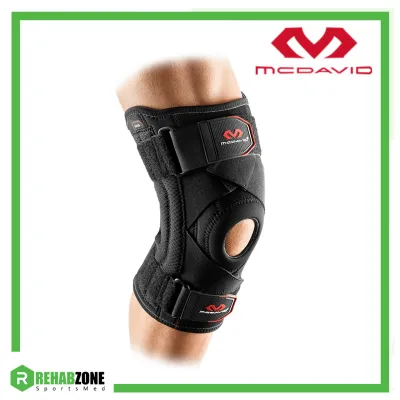
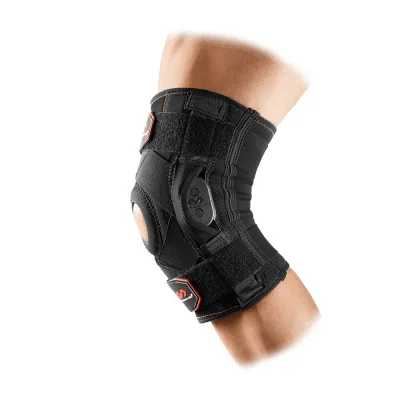
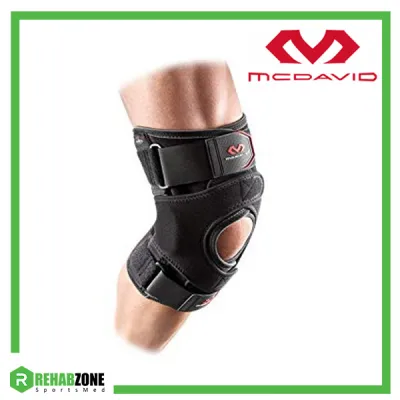
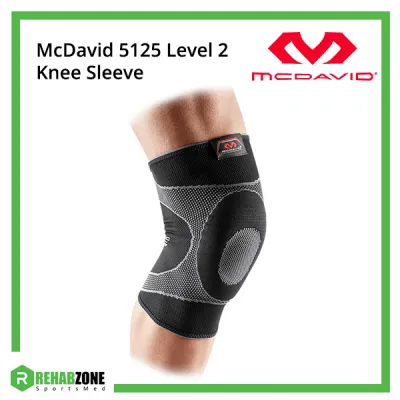
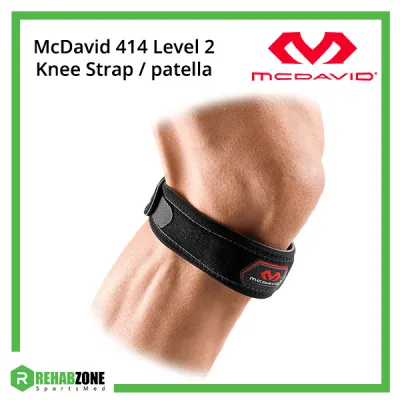
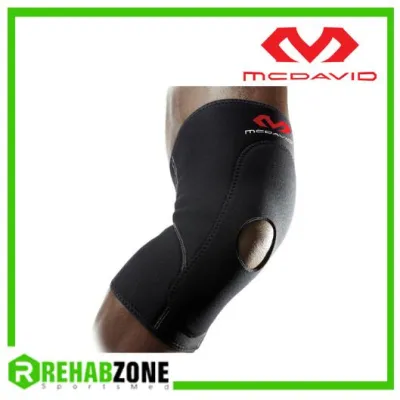
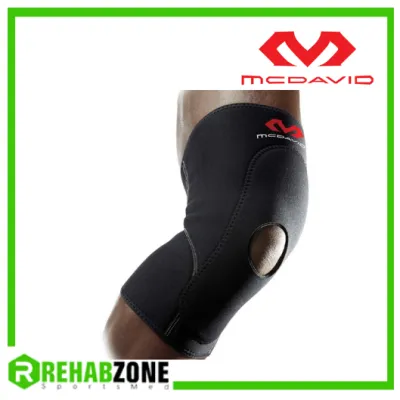
Prices are valid at publication and may change. Please refer to the product page for the latest price.
Level 1 supports are designed for primary protection, minor pain relief, basic compression, and muscle warmth. These are typically lightweight, pull-on sleeves made from neoprene or breathable elastic knits. They work by providing uniform compression, which helps improve proprioception—your brain’s awareness of the joint’s position. This mild support is ideal for managing minor strains, chronic aches, general joint fatigue, or mild arthritis. The compression also helps retain therapeutic heat, which promotes blood circulation and keeps the joint lubricated during movement.
Level 2 supports offer moderate protection, targeted ligament relief, patella tracking assistance, and swelling management. These models often feature adjustable straps, minor medial-lateral stays (flexible steel springs), or open-patella designs with padded buttresses. They are engineered to absorb a portion of the lateral forces acting on the joint while guiding the kneecap along its proper path. If you are recovering from a mild ligament sprain, dealing with patellar tendonitis, or experiencing moderate swelling that fluctuates throughout the day, a Level 2 support provides the necessary reinforcement without completely immobilizing the joint.
Level 3 supports deliver maximum protection, post-injury recovery assistance, hinged stability, and severe instability management. These heavy-duty braces incorporate rigid lateral hinges, either made of lightweight aluminum or durable composite materials, alongside complex strapping systems. They are designed to restrict unnatural lateral joint movements, such as twisting or hyperextension, while allowing the knee to bend naturally. Level 3 braces are typically recommended for individuals recovering from major ligament tears (such as the ACL, MCL, or LCL), post-surgery rehabilitation, or chronic joint instability that severely compromises mobility.
Before selecting a protection level, it is critical to cross-reference these tiers with your diagnosed condition, physical therapist’s advice, or physician’s recommendations. While a higher protection level offers more stability, using a rigid brace when a flexible sleeve is sufficient can lead to muscle weakness over time, as the brace does the stabilizing work your muscles should be performing. Conversely, using a Level 1 sleeve for a severe ligament tear can expose the joint to further damage.
Matching Brace Styles to Your Knee Condition
The physical design of a knee support determines how it interacts with your anatomy and how comfortable it will be during extended wear. Different styles target specific areas of the knee joint, making certain designs highly effective for some conditions and entirely unsuitable for others.

Knee sleeves are pull-on supports that provide uniform compression, retain warmth, and offer mild support for general aches and minor stiffness. Because they lack rigid structural elements, they are highly flexible and low-profile, fitting easily under standard trousers or athletic wear. Sleeves are excellent for general joint maintenance, minor swelling, and keeping the joint warm in air-conditioned environments. They are the most comfortable option for long-term wear, provided they are made from breathable materials.
Wraparound designs offer an adjustable fit that is particularly useful for managing fluctuating swelling and allowing easy application without removing footwear. Unlike sleeves, which must be pulled up over the foot and calf, wraparound braces open completely and secure around the leg using hook-and-loop straps. This design is highly practical for individuals with limited mobility, those recovering from acute injuries where bending the knee is painful, or users whose knee circumference changes significantly due to swelling throughout the day.
Patella straps and bands deliver targeted pressure directly below the kneecap, specifically on the patellar tendon. This localized pressure helps distribute forces away from the tendon insertion point, relieving discomfort associated with jumper’s knee (patellar tendonitis), runner’s knee, or Osgood-Schlatter disease. Because they only cover a small band of skin below the knee, they are incredibly low-profile and highly breathable, making them a popular choice for athletes operating in hot, humid conditions who do not require overall joint stabilization.
Hinged and dual-hinged braces provide rigid lateral stability and restrict unnatural joint movement for severe instability or post-surgery needs. These braces feature mechanical hinges on both sides of the knee joint to mimic the knee’s natural gliding motion while blocking harmful sideways bending. They are essential for protecting compromised ligaments during high-risk activities or early-stage rehabilitation. Due to their bulk and rigid components, they require precise fitting to ensure the hinges align perfectly with the joint’s natural axis of rotation.
Aligning Your Support Choice with Your Activity Level
A knee support must not only match your injury but also withstand the physical demands of your lifestyle or sport. The environment in which you wear the brace, the repetitive nature of your movements, and the potential for physical contact all influence which model will perform best.
For daily wear and low-impact activities, such as walking, light commuting, or sitting at an office desk, comfort and breathability should be your primary focus. Heavy, thick neoprene braces can quickly become uncomfortable and cause skin irritation in warm climates. Instead, prioritize breathable, low-profile sleeves or lightweight straps that fit discreetly under clothing. Look for engineered knit fabrics that offer multi-directional stretch and moisture-wicking properties, ensuring you stay comfortable throughout a full day of light activity.
Running, cycling, and gym training require a balance between joint flexibility and patella stabilization. Repetitive, high-frequency movements can cause a poorly fitting brace to slide down, leading to constant adjustments and skin chafing. For these activities, focus on lightweight sleeves or Level 2 supports that feature moisture-wicking materials and anti-slip silicone grips along the inner cuffs. Open-patella designs are particularly beneficial here, as they relieve pressure on the kneecap during deep knee bends and help keep the support centered during dynamic movements.
High-impact and contact sports, such as basketball, football, badminton, or court games, involve rapid directional changes, sudden jumps, and potential physical contact. These movements subject the knee joint to intense lateral forces. For these activities, focus on secure strapping systems, durable construction, and maximum joint protection. Level 2 or Level 3 supports with cross-strapping systems or dual-action hinges provide the structural reinforcement needed to prevent the joint from buckling during sudden pivots. Ensure the brace is constructed from durable materials that can withstand friction and impact without tearing.
Crucial Sizing and Feature Checks Before You Buy
Even the most advanced knee support will fail to perform if it does not fit correctly or if it causes skin irritation. Before making a purchase, taking precise measurements and verifying key product features will ensure a safe, comfortable, and effective fit.
Always follow the manufacturer’s specific measuring guide rather than guessing your size based on standard apparel sizes. Knee support sizing typically requires measuring the circumference of your leg at specific distances above and below the center of the kneecap, as well as directly over the patella. Use a flexible measuring tape and measure directly against your skin while standing with your leg slightly bent. If your measurements fall between two sizes, it is generally advisable to choose the larger size to avoid restricting blood circulation, unless you require highly aggressive compression for short-duration use.
Check product labels carefully for material composition to avoid known skin allergies, such as neoprene sensitivities. While neoprene is excellent for heat retention and durable compression, it can trap sweat and cause contact dermatitis in sensitive individuals. If you have a history of skin reactions, look for neoprene-free alternatives, such as breathable engineered knits, perforated neoprene, or hypoallergenic synthetic fabrics. These alternative materials allow air to circulate freely, reducing sweat buildup and minimizing the risk of skin irritation during extended wear.
When purchasing from online marketplaces or local retailers, verify the return and exchange policies before finalizing your order. Because knee shapes, muscle profiles, and joint structures vary widely from person to person, trying the brace on is often the only way to guarantee a proper fit. A flexible exchange policy ensures you can swap the brace for a different size if the initial fit is too tight, too loose, or if the hinges do not align correctly with your joint.
Finally, establish clear stop conditions for using your knee support. A brace is designed to assist your joint, not to mask severe pain or replace professional medical care. Discontinue use immediately and consult a healthcare professional if the brace causes numbness, tingling, restricted blood flow, skin discoloration, or increased pain. If you find yourself relying on a high-level brace constantly just to perform basic daily tasks, seek a professional medical evaluation to address the underlying cause of your joint instability.
Frequently Asked Questions (FAQ)
Can I wear a McDavid knee support all day?
While lightweight compression sleeves can generally be worn for extended periods during daily activities, you should not wear them continuously without breaks. Prolonged use of tight compression can restrict blood circulation and cause skin irritation, especially in warm climates. For rigid, hinged, or Level 3 braces, you must follow the specific daily wear limits prescribed by your physician or physical therapist. Avoid wearing any knee support while sleeping unless specifically instructed to do so by a medical professional, as your body needs time to rest and recover without external restriction.
How do I properly wash and maintain my knee brace?
To prolong the lifespan and maintain the elasticity of your knee support, hand-wash it in cold water using a mild detergent. Avoid using harsh chemicals, bleach, or fabric softeners, as these substances degrade the elastic fibers and reduce the effectiveness of hook-and-loop straps. If your brace has removable metal hinges, always slide them out before washing. After washing, gently squeeze out excess water without wringing the fabric, and lay the brace flat to air-dry in a shaded, well-ventilated area. Never use a clothes dryer, iron, or direct sunlight, as high heat will warp the materials and ruin the structural integrity of the support.
Do I need a doctor's prescription for a Level 3 hinged brace?
No, you do not need a doctor’s prescription to purchase a Level 3 hinged brace, as they are widely available over-the-counter at sports retailers and online marketplaces. However, because these braces are designed for severe joint instability and post-operative recovery, you should only use them under the guidance of a healthcare professional. Self-diagnosing a severe knee injury and relying on a heavy-duty brace without professional medical supervision can lead to improper healing, muscle atrophy, or further joint damage. A physical therapist or doctor can ensure the brace is fitted correctly and integrated into a proper rehabilitation plan.
Community discussion
Share your experience or ask a question. Comments are reviewed before publication.