
Selecting the right ping pong ball is a foundational step in optimizing your table tennis experience, whether you are setting up a casual game in a community space or preparing for a tournament. The ball you choose directly influences the speed of the game, the amount of spin you can generate, and how long your equipment lasts. While all table tennis balls might look similar at a glance, subtle differences in material, construction, and quality ratings can dramatically alter how they behave on the table.
By understanding the specific standards used by manufacturers, you can easily identify which balls are designed for casual recreation and which are engineered for high-performance training or official matches. This guide will walk you through the rating systems, material standards, and practical selection criteria to help you find the perfect match for your skill level and playing environment.
Understanding Ball Ratings and Material Standards
Table tennis balls are categorized using a star-rating system that indicates quality, roundness, and durability. A 1-star ball is designed for casual play, offering decent durability but wider tolerances in roundness. Moving up, 2-star balls provide better consistency, making them suitable for multi-ball training sessions where players need a predictable bounce without paying premium prices. The 3-star rating is reserved for competition-grade balls, which undergo strict quality control to ensure near-perfect sphericity, uniform weight distribution, and consistent bounce heights.
Products mentioned in this guide
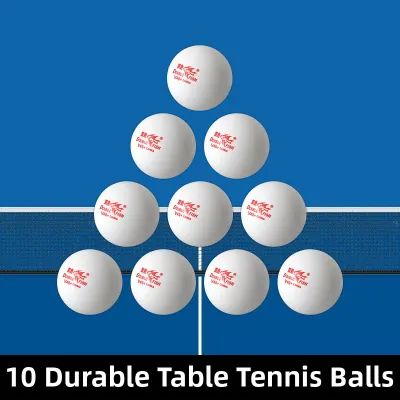
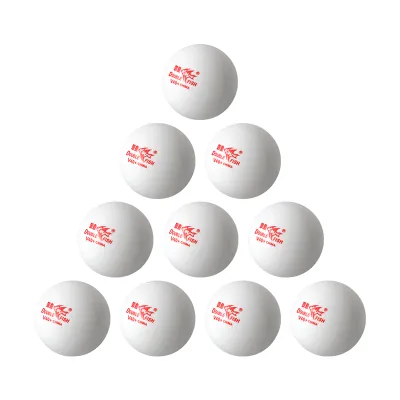
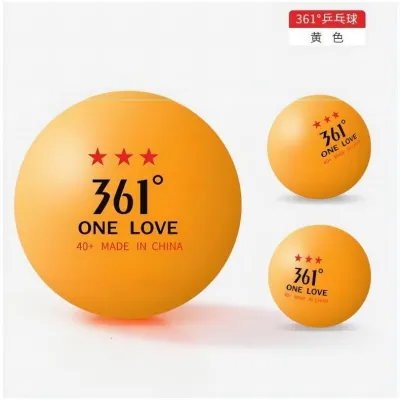
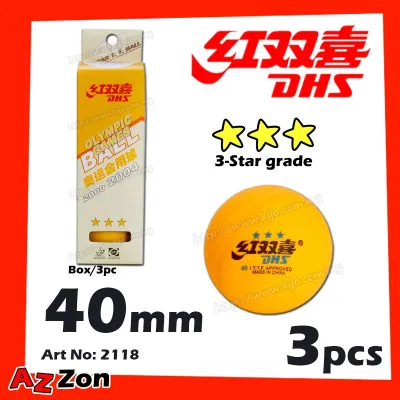
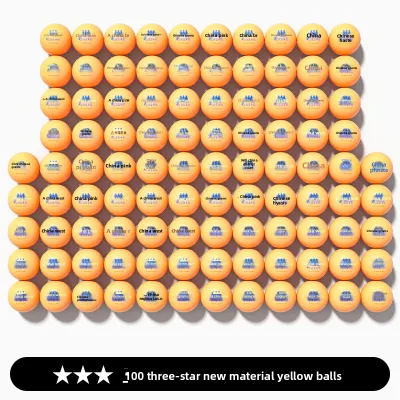
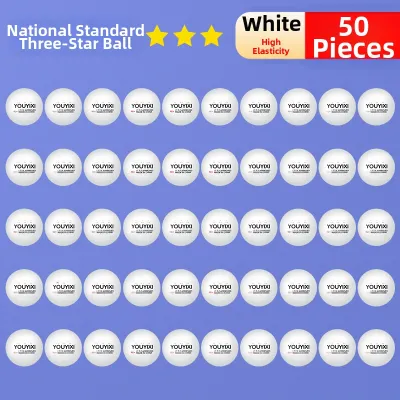
Prices are valid at publication and may change. Please refer to the product page for the latest price.
Beyond star ratings, the material of the ball is a critical factor to verify on the packaging. Historically, table tennis balls were made of celluloid, a highly flammable material prone to warping. In recent years, the International Table Tennis Federation transitioned the sport to non-flammable plastic polymers, commonly referred to as “poly balls” or “plastic balls.” These modern balls are identified by a “40+” label printed on the surface, indicating they are slightly larger than the old 40mm celluloid standard. Always look for this “40+” mark to ensure you are playing with the modern standard.
If you plan to participate in official tournaments or want to practice under competitive conditions, look for the official international federation approval mark on the packaging. This mark, usually accompanied by the federation’s acronym, guarantees that the balls have passed rigorous laboratory testing for weight, sphericity, bounce, and hardness. For casual home play, non-approved balls are perfectly acceptable and offer a budget-friendly way to enjoy the game.
Matching the Ball to Your Skill Level and Playing Purpose
For beginners and casual players, durability and high tolerance are the most important characteristics to look for in a ping pong ball. When first learning basic strokes, you are more likely to hit the ball with the edge of your racket or accidentally step on stray balls. Unrated or 1-star recreational balls are ideal for this stage because they are built to withstand rough handling and are highly cost-effective. These balls are perfect for family entertainment, recreation rooms, or outdoor casual setups where absolute precision is secondary to having fun.

As you transition into regular training and club play, your focus should shift toward developing consistent muscle memory. This is where 2-star balls or specifically labeled “training” balls in bulk packaging become invaluable. During multi-ball drills, where a coach or training partner feeds dozens of balls in rapid succession, you need each ball to behave similarly. Training balls offer a reliable bounce and realistic spin response that closely mimics competition-grade balls, allowing you to practice advanced footwork and stroke techniques without the high cost of premium match balls.
For competitive matches and advanced players, there is no substitute for 3-star competition balls. Advanced table tennis relies heavily on extreme spin variations and high-speed rallies, where even a microscopic deviation in the ball’s roundness can cause a missed shot. Competition-grade balls deliver a highly consistent flight trajectory and optimal spin response, ensuring that your loops, chops, and drives land exactly where you intend. While these balls are more delicate and expensive, using them during serious match play ensures a fair and competitive environment.
What to Check on the Packaging Before You Buy
When browsing options at a local sports retailer or on an online marketplace, the first visual choice you will face is ball color. Standard table tennis balls are available in white and orange. This choice is entirely about maximizing visual contrast against your playing environment. White balls are the traditional choice and work exceptionally well against dark blue or green tables. However, if your playing area has light-colored walls, bright overhead lighting, or if you are playing on a grey table, orange balls can be much easier to track visually as they fly across the net.
The quantity of balls in the packaging is another practical consideration that should align with your playing habits. If you primarily play one-on-one matches with a friend, a premium small box containing three to six high-quality 3-star balls is usually sufficient. Conversely, if you are practicing solo serves or engaging in high-volume multi-ball drills, purchasing bulk packs of 50 to 100 training balls is far more practical. Having a large supply of balls prevents you from constantly having to stop your practice session to retrieve stray balls from across the room.
Additionally, pay close attention to packaging claims regarding seam construction and surface finish. Table tennis balls are manufactured as either seamed or seamless. Seamed balls are constructed by joining two halves together, resulting in a visible seam that some players feel provides a traditional, predictable spin axis. Seamless balls are molded as a single piece, which often results in greater overall durability and a slightly higher, more uniform bounce. You should also look for balls with a matte finish rather than a glossy one; a matte surface provides better grip against your racket’s rubber and minimizes distracting glare under bright lights.
How to Store and Maintain Your Balls for Consistent Play
Modern plastic table tennis balls are sensitive to environmental conditions, particularly temperature and humidity. In warm, tropical climates like Singapore, leaving your gear bag in a hot car trunk or storing your balls in a damp balcony cabinet can cause the plastic to soften, warp, or lose its structural integrity. To prevent this, always store your balls in a cool, dry environment away from direct sunlight. Using a dedicated hard-shell ball case inside your sports bag is an excellent way to protect them from being crushed or exposed to extreme temperature shifts.
Over time, balls can develop minor dents from hard impacts against the table edge or racket frame. If the ball is not cracked, you can sometimes restore its shape using a simple, reversible warm water technique. Gently submerge the dented ball in a cup of warm water for a few seconds; the heat will cause the air inside the ball to expand, popping the dent back out. However, this method only works for minor indentations. If a ball has a visible crack, a split seam, or produces a dull, hollow sound and an uneven wobble when bounced, it has reached its end of life and should be discarded immediately to avoid damaging your racket’s delicate rubber surface.
Maintaining a clean ball surface is also essential for preserving the quality of your play. As balls roll across the floor, they collect dust, dirt, and sweat, which acts as a barrier between the ball and your racket. This debris reduces the friction needed to generate spin and can quickly transfer grime to your expensive rubber sheets. Periodically wipe your balls down with a damp microfiber cloth and allow them to air dry completely before your next session to keep your equipment performing at its best.
Frequently Asked Questions (FAQ)
What is the difference between white and orange ping pong balls?
The difference between white and orange table tennis balls is purely visual. Both colors are manufactured to meet the exact same specifications for weight, size, and bounce consistency. The choice between them depends entirely on the color of your table, the walls of your playing room, and the ambient lighting, with the goal of providing the highest possible contrast so you can track the ball easily during fast rallies.
Can I use outdoor ping pong balls for indoor tables?
While you can physically use them, outdoor table tennis balls are specifically engineered to resist wind resistance, meaning they are often heavier, harder, or constructed from different materials than standard indoor balls. Using these heavier outdoor balls on an indoor table can result in an unnaturally high bounce, altered play dynamics, and can accelerate the wear and tear on your indoor racket’s delicate rubber sheets.
How often should I replace my ping pong balls?
There is no fixed calendar schedule for replacing table tennis balls; instead, you should rely on observable physical indicators. You should replace a ball when you notice a visible crack, a split along the seam, or a significant loss of the matte surface texture, which reduces spin generation. Additionally, if a ball begins to wobble unpredictably in the air or produces a flat, dead sound when bouncing, it is time to swap it out for a fresh one.
Community discussion
Share your experience or ask a question. Comments are reviewed before publication.