
Finding the right rocking stepper for a Singapore Housing & Development Board (HDB) flat requires balancing your fitness goals with the realities of compact urban living. To keep your walkways clear and ensure a safe workout, a rocking stepper should ideally have a static footprint that fits comfortably within your designated exercise zone, while leaving at least 50 to 60 centimeters of dynamic clearance on all sides. Measuring both the physical dimensions of the machine and the active space required for its swaying motion prevents the equipment from becoming a tripping hazard or blocking vital pathways in your home.
Assessing Your Available Floor Space and Stepper Footprint
Before purchasing a rocking stepper, you must determine its static footprint, which is the physical space the machine occupies when it is completely stationary. Start by checking the manufacturer’s specifications for the exact length, width, and height of the base. These measurements represent the absolute minimum floor area you need to clear before you can even place the machine in your room.
However, the physical base dimensions do not tell the whole story. If you plan to use a protective floor mat to safeguard your tiles or vinyl flooring, you must measure the mat’s dimensions rather than just the stepper itself. The mat will inevitably extend beyond the edges of the machine, creating a slightly larger static footprint that you must account for when planning your room layout.
Products mentioned in this guide
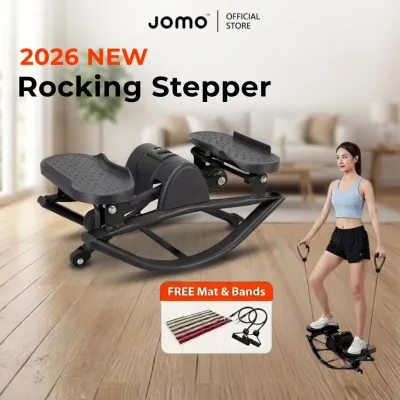
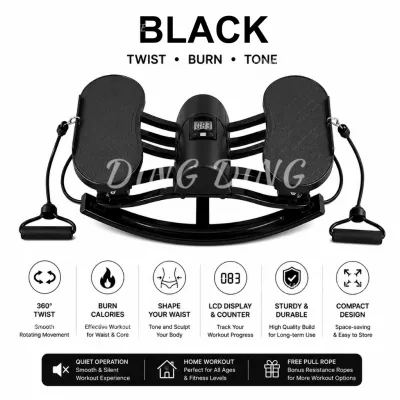
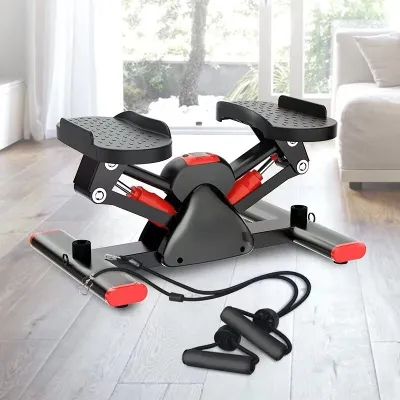
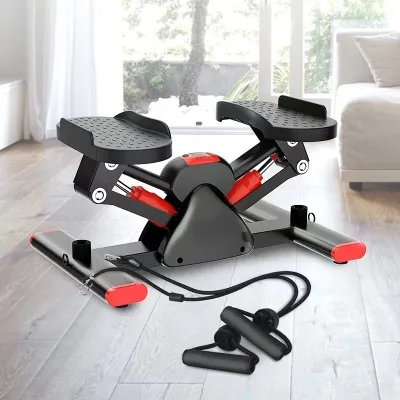
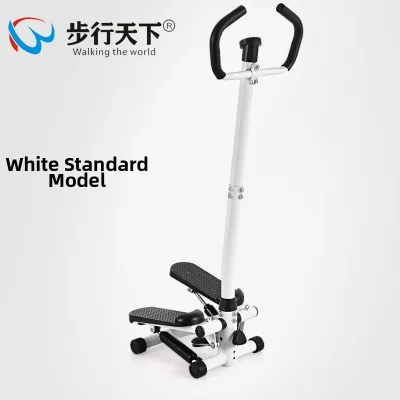
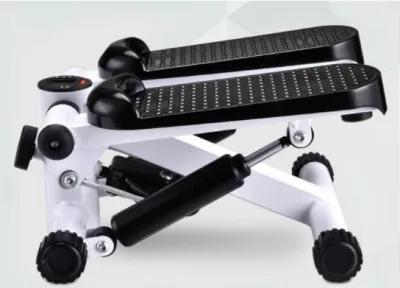
Prices are valid at publication and may change. Please refer to the product page for the latest price.
It is also wise to physically map out these dimensions on your floor using masking tape. This simple visual aid allows you to see exactly how much floor space the stepper will occupy in your living room, bedroom, or study. By walking around the taped area, you can immediately identify if the machine will block access to built-in wardrobes, power outlets, or balcony doors.
Calculating Dynamic Clearance for Safe Workouts
A rocking stepper operates on a multi-directional plane, meaning the footplates and handlebars move side-to-side and up-and-down during use. To exercise safely, you must calculate the dynamic clearance, which is the total active space required when you are in motion. This buffer zone prevents your limbs or the machine’s moving parts from colliding with nearby walls, shelves, or furniture.

When planning this space, factor in your own body movements, including lateral swaying, arm swings, and the outward flare of your elbows. You should also verify your ceiling height clearance, particularly if you are a taller user or if your flat has false ceilings. At the peak of your stepping motion, your head will rise several inches higher than your standing height, so ensure there is ample vertical space to avoid injury.
Keep the stepper well away from high-traffic walkways, glass sliding doors, and sharp furniture corners. A minimum clearance of half a meter around the entire perimeter of the machine is a practical standard to maintain. This ensures that family members can still walk past safely while you are exercising, without any risk of accidental contact.
Furthermore, consider the placement of nearby electrical appliances or wall-mounted televisions. The lateral rocking motion can sometimes cause minor shifts in your balance, and having a safe distance from fragile electronics reduces the risk of accidental damage. Always prioritize a clear, unobstructed zone that allows you to step off the machine quickly if you lose your footing.
Navigating HDB Entryways and Corridor Constraints
Getting your new fitness equipment into your flat requires careful route planning before delivery day. You must measure the width of your main entrance door, bedroom doors, and any narrow internal corridors to ensure the package can pass through. Compare these entry points against the manufacturer’s boxed packaging dimensions, which are often significantly larger than the assembled stepper.
Pay close attention to tight corners, L-shaped hallways, or narrow pinch points leading from the lift lobby to your front door. If your corridor has shoe racks, potted plants, or other decorative items, these can severely restrict the turning radius for large boxes. Knowing these measurements beforehand helps you decide whether the delivery team can bring the item in smoothly.
If the packaged box is too wide for your internal doors, check if the stepper requires assembly. Many models are shipped flat-packed, meaning you can carry the individual components into your preferred room and assemble the machine directly in its final workout spot. If the machine comes fully assembled, verify that its completed dimensions can clear your bedroom door frame.
Do not forget to check the lift dimensions in your HDB block as well. While most modern HDB lifts are spacious, older estates might have smaller lift cars or narrow lift doors. Ensuring the boxed equipment can fit into the lift cabin prevents the delivery team from having to carry a heavy package up multiple flights of stairs, which could incur extra fees or risk damage.
Evaluating Space-Saving and Storage Features
For smaller HDB flats, choosing a rocking stepper with space-saving features can make a significant difference in your daily living comfort. Look for models that feature foldable frames or detachable handlebars, which allow you to reduce the machine’s height and width when it is not in use. These collapsible designs make it much easier to tuck the equipment away out of sight.
Measure the clearance height under your bed frame or inside your wardrobe to see if a folded stepper can fit flat underneath or stand upright in a closet. A machine that can be stored horizontally under a sofa or vertically in a utility closet helps keep your living room free of clutter during non-workout hours.
Additionally, consider the overall weight of the machine and whether it includes built-in transport wheels. A heavy stepper without wheels is difficult to move frequently, which often results in it being left permanently in the middle of the room. Lightweight frames paired with smooth-rolling wheels allow you to roll the stepper from its storage spot to your workout area with minimal physical strain.
Some modern designs also allow for vertical self-standing storage without needing to lean against a wall. This feature is particularly useful if you want to avoid scuffing your wall paint or if you do not have a deep closet. Always check the stability of the machine in its folded state to ensure it will not tip over easily if brushed against.
Common Space-Matching Mistakes to Avoid
One of the most frequent errors is measuring only the static base of the stepper while completely ignoring the dynamic rocking arc. Because a rocking stepper sways laterally, the footplates will extend beyond the physical frame during a workout. Failing to account for this active movement can result in your feet scraping against walls or hitting nearby furniture.
Another common oversight is forgetting to factor in the thickness and footprint of a noise-reducing floor mat. In high-density HDB blocks, impact noise can easily travel through the concrete floor slabs to your neighbors below. A thick rubber mat is essential for dampening vibrations, but it will add to the overall floor space required and may slightly raise your standing height.
Finally, do not assume that all “compact” or “mini” steppers share the exact same spatial and clearance requirements. Product designs vary widely between brands, with some featuring wider footplates, longer stabilizer bars, or taller handlebar configurations. Always rely on the specific product manual and physical measurements rather than generic product category labels.
Additionally, avoid placing the stepper on uneven surfaces or directly on thick, plush carpets without a solid base. An unstable surface can compromise the rocking mechanism, leading to excessive wear on the machine and potential safety hazards for the user. Ensuring a flat, level, and dedicated space is key to both equipment longevity and personal safety.
Frequently Asked Questions (FAQ)
Can I leave a rocking stepper in an HDB common corridor?
No, you should not store or leave a rocking stepper in your HDB common corridor. Shared corridors, stairwells, and lift lobbies are designated fire escape routes that must remain completely unobstructed at all times to ensure safe evacuation during emergencies. Leaving personal fitness equipment in these areas violates local town council and housing board regulations, and you may be asked to remove it or face penalties.
Do I need a floor mat for a rocking stepper on typical HDB flooring?
Yes, using a protective floor mat is highly recommended when operating a rocking stepper on typical HDB flooring like vinyl, ceramic tiles, or laminate. The repetitive rocking motion and shifting weight can cause the stepper’s metal or plastic base to rub against the floor, leading to scratches, scuffs, or cracks. A dense rubber or foam mat not only protects your flooring from friction and sweat but also helps absorb vibrations and reduce noise transmission to the flat below.

Community discussion
Share your experience or ask a question. Comments are reviewed before publication.