
Starting a home fitness journey is an exciting step toward better health, but choosing your first set of hand weights can quickly feel overwhelming. The ideal starting weight is not a single, universal number; instead, it depends on your current strength, your specific fitness goals, and the exercises you plan to perform. For most beginners, starting with a light pair of hand weights—typically between 1.5 kg and 3 kg for women, and 3 kg to 5 kg for men—or investing in a versatile adjustable set provides a safe, adaptable entry point for home workouts.
Assess Your Current Fitness Level and Goals
To find your ideal starting point, you must first evaluate your current physical baseline. If you are a complete beginner who has not engaged in structured strength training before, your primary focus should be on learning movement patterns rather than lifting heavy loads. Returning exercisers who have taken a long break may have some muscle memory but should still start conservatively to allow joints, tendons, and ligaments to readapt to resistance. If you already have experience with bodyweight exercises like push-ups and pull-ups, you can likely start with slightly heavier weights.
Your specific fitness goals also dictate the weight you should buy. If your objective is muscular endurance or high-intensity cardio-sculpting, lighter hand weights that allow you to perform 15 to 20 repetitions per set are ideal. If you are aiming for muscle growth or functional strength, you will need moderate to heavier weights that challenge you within a lower range of 8 to 12 repetitions.
Products mentioned in this guide
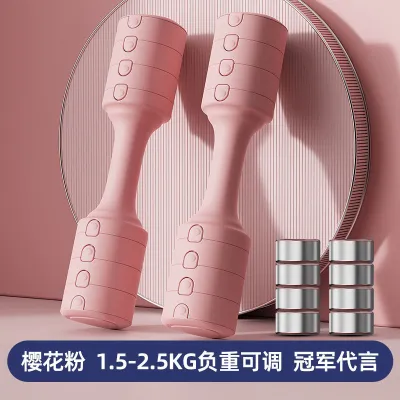

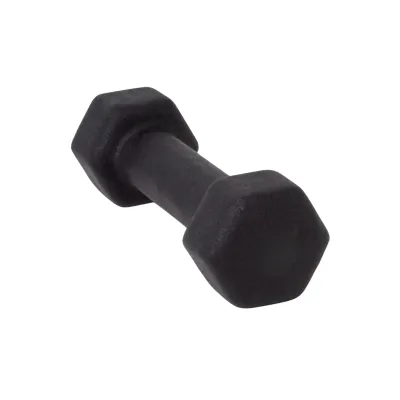
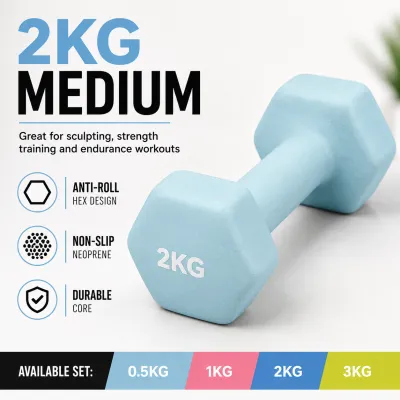
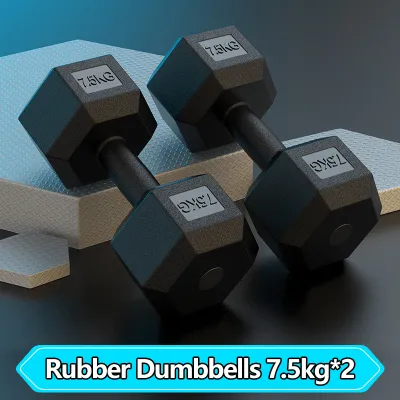
Prices are valid at publication and may change. Please refer to the product page for the latest price.
In an unsupervised home environment, safety must be your absolute priority. Without a trainer or a spotter to correct your posture, lifting weights that are too heavy increases the risk of joint strain, lower back injuries, and muscle tears. Starting conservatively allows you to master your form first, ensuring that your home workouts remain a safe and sustainable habit.
Match Weight to Your Workout Movements
A common mistake when setting up a home gym is purchasing a single pair of hand weights and expecting them to work for every exercise. In reality, your body is made up of vastly different muscle groups, each with its own strength capacity. A weight that feels incredibly heavy during a shoulder exercise might feel weightless when you are squatting. To get a balanced, effective workout, you must understand how to match different weights to different types of movements.

Isolation Exercises for Smaller Muscle Groups
Isolation exercises target a single joint and a specific, smaller muscle group. Classic examples include bicep curls, lateral raises, tricep extensions, and front raises. Because these movements rely on smaller muscles without assistance from neighboring muscle groups, they require significantly lighter hand weights.
Smaller muscles fatigue much faster under tension. If you attempt to use a weight that is too heavy for an isolation movement, your body will instinctively compensate by recruiting larger muscles or using momentum. You can easily spot this in a home workout: if you find yourself swinging your hips to get a dumbbell up during a bicep curl, or shrugging your shoulders excessively during a lateral raise, the weight is too heavy. To maintain strict form and protect your joints, choose a light weight that allows you to control both the lifting and lowering phases of the movement.
Compound Exercises for Larger Muscle Groups
Compound exercises involve multiple joints and recruit several large muscle groups simultaneously. Movements like goblet squats, lunges, floor presses, and bent-over rows are the cornerstones of an effective home workout. Because these exercises engage massive muscle groups like your glutes, quadriceps, chest, and back, they require much heavier hand weights to stimulate muscle adaptation.
Using a weight that is too light for compound movements will limit your progress, as these large muscles require a meaningful stimulus to grow stronger. However, lifting heavier loads at home demands strict attention to safety. You must focus on maintaining a neutral spine, keeping your core braced, and ensuring proper joint alignment—such as keeping your knees tracked over your toes during squats. If you feel your lower back arching or your joints aching during a compound lift, it is a clear sign to lower the weight and re-evaluate your posture.
The "Rep Test" to Find Your Starting Weight
Rather than relying on generic online charts that guess your strength based on age or gender, you can use a practical, objective method known as the “Rep Test” to find your perfect starting weight. This test allows you to gauge how a specific weight interacts with your muscles in real-time, ensuring you buy exactly what you need.
To perform the rep test, select a basic exercise like the bicep curl or overhead press. Choose a weight and attempt to perform a set of 10 to 12 repetitions using slow, controlled movements. Pay close attention to how your muscles feel during the final three repetitions of the set.
Interpreting the results is straightforward. If you complete all 12 repetitions and feel like you could easily perform another five or ten reps without losing your form, the weight is too easy and will not provide enough stimulus. If you struggle to reach 8 repetitions, or if your form begins to break down, swing, or shake before you reach your target, the weight is too hard and poses an injury risk. The weight is just right when the last two to three repetitions are highly challenging, requiring significant effort to complete, yet you are still able to maintain perfect form throughout.
If you are testing weights in a physical sporting goods store, take the time to perform this test with a few different options. If you are purchasing online, look for retailers with flexible return or exchange policies, or consider buying a small starter set that includes a few light increments so you can test them safely in your own space.
Space-Saving and Adjustable Options for Compact Homes
For those living in compact homes, such as HDB flats in Singapore, space and storage are major considerations when purchasing fitness equipment. A traditional rack of fixed dumbbells takes up a significant amount of floor space and can quickly clutter a living room or bedroom. Furthermore, buying multiple pairs of fixed weights as you get stronger can become incredibly expensive.
Adjustable hand weights offer an elegant, space-saving solution. While a single pair of adjustable dumbbells has a higher upfront cost—typically ranging from S$100 to over S$400 depending on the mechanism and weight range—they replace anywhere from 5 to 15 individual pairs of fixed weights. In the long run, this is often much more cost-effective than buying a full set of fixed dumbbells, which can easily total several hundred dollars and require a dedicated storage rack.
The primary benefit of adjustable weights is their compact footprint. They can be easily tucked away under a bed, placed in a closet, or stored neatly in a corner when not in use. When shopping for adjustable sets, pay close attention to the locking mechanisms to ensure they are secure and easy to transition between exercises. Look for durable construction, such as steel plates rather than plastic-coated ones, and check the weight increment steps. Sets that adjust in smaller increments, such as 1 kg or 2 kg steps, are much better for gradual progression than those with large jumps.
Frequently Asked Questions (FAQ)
Should I buy different weights for my upper and lower body?
Yes, lower body muscles are much larger and stronger than upper body muscles. If you use the same weight for both, you will either overwork your upper body or underwork your lower body. If budget or space is limited, start with one lighter pair for upper body isolation and one heavier pair (or an adjustable set) for lower body compound movements.
Are adjustable hand weights worth the investment for beginners?
Yes, adjustable hand weights are highly recommended if you plan to progress. Progressive overload requires gradually increasing resistance over time. If you only want light weights for cardio-focused workouts, fixed pairs are sufficient and more cost-effective. However, for long-term strength training, adjustable sets save both money and space.
Community discussion
Share your experience or ask a question. Comments are reviewed before publication.