
Finding the correct tennis racket grip size is one of the most important decisions you will make when purchasing your first racket. A proper fit supports comfort, helps reduce the risk of hand fatigue, and allows you to develop correct stroke mechanics from your very first practice session. While brands like Wilson and Babolat offer popular entry-level options, selecting a handle size that does not fit your hand can hinder your progress on the court. By taking a few simple measurements and understanding how manufacturers label their rackets, you can confidently select a grip that feels comfortable and secure.
Why Grip Size Matters for Beginners
Using a tennis racket with an incorrect grip size can quickly lead to physical discomfort and technical habits that are difficult to break. If the handle is too small, you will find yourself squeezing it excessively to keep the racket from twisting during impact. This constant, tight grip often leads to muscle fatigue, blisters, and increased strain on your wrist and forearm. Over time, this unnecessary tension can contribute to persistent joint soreness.
Conversely, a grip that is too large prevents your hand from wrapping securely around the handle. This restriction limits your natural wrist movement, making it difficult to generate spin or execute clean, fluid strokes. Instead of focusing on your footwork and swing path, you end up fighting the weight and bulk of the racket itself. A properly fitted grip allows for a relaxed hold, giving you better control over the racket face and a much more comfortable introduction to the sport.
Products mentioned in this guide
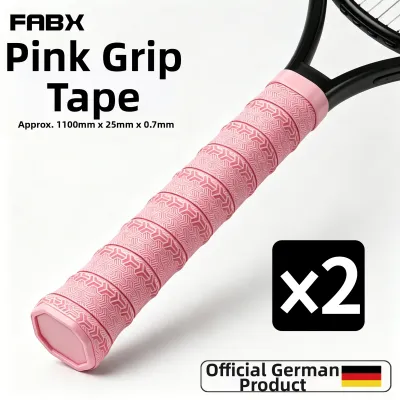
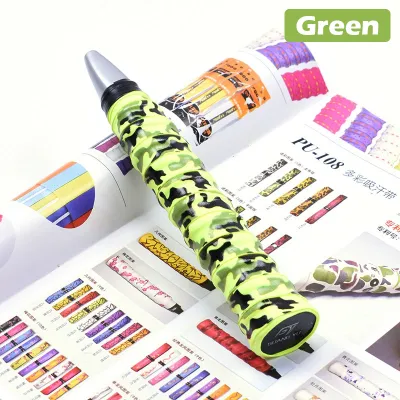
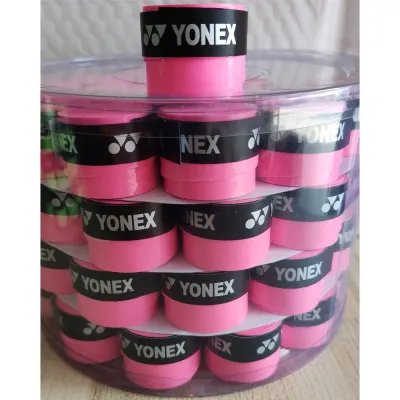

Prices are valid at publication and may change. Please refer to the product page for the latest price.
How to Measure Your Hand for a Baseline Size
Before browsing online marketplaces or visiting a local sports shop, you can determine your baseline grip size using a standard ruler. Extend your playing hand flat, keeping your fingers fully extended and pressed close together. Align the start of the ruler with the bottom lateral crease of your palm, which is the crease that runs across the middle of your hand. Measure straight up to the very tip of your ring finger. This measurement in inches or millimeters corresponds directly to your baseline grip circumference.

Another practical method is the index finger test, which is useful if you have access to a physical racket. Hold the racket handle using a standard Eastern forehand grip, where your palm is flat against the same bevel as the string face. Once your hand is in position, attempt to slide the index finger of your other hand into the gap between your ring finger and your palm. In a well-fitted grip, your index finger should fit snugly in this space with minimal extra room. If there is not enough space for your finger, the grip is likely too small; if there is a large gap, the grip is too large.
Decoding Grip Size Labels for Wilson and Babolat
When shopping for Wilson or Babolat rackets, you will notice that grip sizes are labeled using two different systems. The United States system uses fractional inches to measure the circumference of the handle, typically ranging from 4 inches to 4 5/8 inches. The European system uses a simpler rating scale from L0 to L5. Understanding how these two systems align is essential for reading product labels accurately.
For most adult beginners, the standard sizes fall between L1 and L3. An L1 grip corresponds to 4 1/8 inches and is often suitable for players with smaller hands. An L2 grip measures 4 1/4 inches and is a common starting point for many players. An L3 grip corresponds to 4 3/8 inches, which generally suits players with larger hands. You can verify these specifications by checking the butt cap at the very bottom of the racket handle or looking at the printed details along the throat of the frame.
Sizing Up or Down When You Are Between Sizes
It is common to find that your hand measurement falls directly between two standard grip sizes, such as between an L2 and an L3. In this scenario, the general guideline is to select the smaller size. Sizing down gives you the flexibility to customize the handle later, whereas a racket that is fundamentally too large is much more difficult to modify.
Choosing the smaller size allows you to build up the handle thickness gradually using inexpensive accessories. It also ensures that you do not have to overcompensate by squeezing the handle too tightly, which preserves your natural wrist mobility. If you are unsure, prioritizing a slightly smaller grip is often the practical path for long-term comfort and stroke development.
Fine-Tuning the Fit with Overgrips and Sleeves
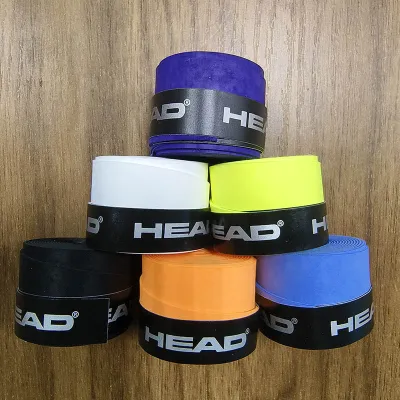
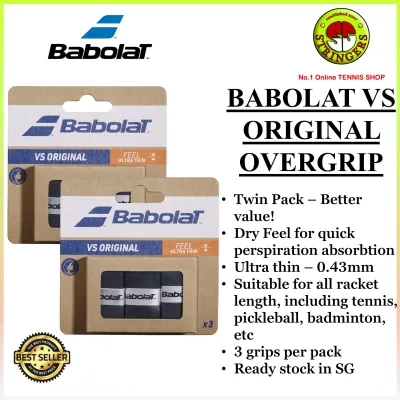
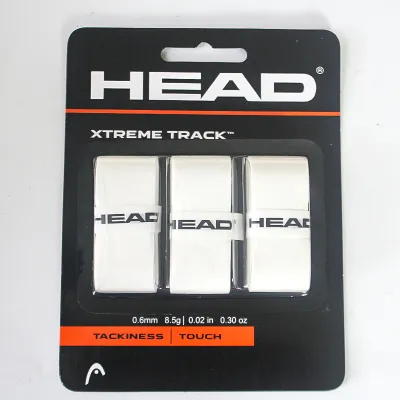
If your chosen racket feels just a fraction too small, you can easily customize the fit using a tennis overgrip. An overgrip is a thin, absorbent tape wrapped directly over the racket’s original base grip. Adding a single overgrip typically increases the handle size by about half a size, or roughly 1/16 of an inch. This is an excellent, cost-effective way to add both thickness and sweat absorption to your handle, which is especially helpful in warm, humid climates.
For a more permanent and substantial increase, you can install a heat shrink sleeve. This process involves removing the original grip, sliding a plastic sleeve over the bare handle, and applying heat to shrink it tightly to the frame. A standard sleeve can increase the handle by one full grip size. However, keep in mind that these modifications add weight to the handle, which can slightly alter the balance of your racket. If a racket is more than one full size off, it is usually best to exchange it for the correct base size rather than attempting heavy modifications.
Pre-Purchase Verification Checklist
When purchasing your racket from an online marketplace or specialty retailer, always double-check the product description to ensure the grip size is explicitly listed. Some listings may use the US fractional system, while others use the European L-system, so keep a conversion chart handy. If you are buying online, verify the seller’s return and exchange policies before checking out, as some retailers do not accept returns once the plastic wrap is removed from the handle.
If you have the opportunity to visit a physical store, take the time to hold the exact model you plan to buy. Perform a few gentle shadow swings in a safe space to feel how the handle sits in your palm during motion. Ensure that your fingers do not wrap so far around that they dig into your palm, and confirm that the racket does not twist easily when you mimic hitting a ball.
Frequently Asked Questions (FAQ)
Can I change the base grip size of a tennis racket?
Yes, but the methods vary depending on whether you want to make the grip larger or smaller. You can make a grip larger by adding overgrips or installing a heat shrink sleeve over the handle. Making a base grip smaller is much more difficult, as it usually requires removing the original replacement grip and replacing it with an ultra-thin grip, or professionally shaving down the handle pallet, which is not recommended for beginners.
Do Wilson and Babolat use the exact same grip size measurements?
While Wilson and Babolat adhere to the same standard industry measurements for grip circumferences (such as 4 1/4 inches for L2), the actual feel can differ. This is because the two brands use slightly different handle shapes and bevel profiles. Babolat handles often feel slightly more rounded, while Wilson handles can feel slightly more rectangular, which may affect how comfortable a specific size feels in your hand.
How often should I replace my overgrip to maintain the correct size?
You should replace your overgrip as soon as it begins to lose its tackiness, shows visible wear, or starts to slip in your hand. For regular players, this typically means replacing the overgrip every 6 to 10 hours of play. A worn-out, compressed overgrip can lose its thickness and cushioning, which directly impacts your grip security and comfort.

Community discussion
Share your experience or ask a question. Comments are reviewed before publication.