
Selecting the right badminton grip is a critical decision that directly impacts your control, power, and comfort on the court. To choose the ideal Victor badminton grip, you must align the grip’s material, thickness, and texture with your specific playing style, hand size, and sweat levels. Whether you prefer the tacky feel of a polyurethane overgrip or the high absorption of a cotton towel grip, understanding how these factors interact with your racket handle will elevate your performance and prevent slippage during intense rallies.
Identify Your Playing Style and Grip Requirements
Your playing style dictates the baseline grip profile you need. Power-focused players who rely on heavy smashes from the backcourt benefit from a grip setup that offers excellent shock absorption. When executing a smash, the sudden impact transmits significant vibration up the shaft. A slightly thicker or cushioned grip helps dampen these vibrations, reducing fatigue in the wrist and forearm over long sessions.
In contrast, defensive players and front-court specialists who excel at quick drives, net drops, and rapid flat exchanges require maximum racket feedback. These players rely on feeling the bevels—the flat edges—of the wooden handle to instantly adjust their grip angle between forehand and backhand. A thin overgrip preserves these bevel definitions, allowing for precise, micro-adjustments in finger placement.
Products mentioned in this guide
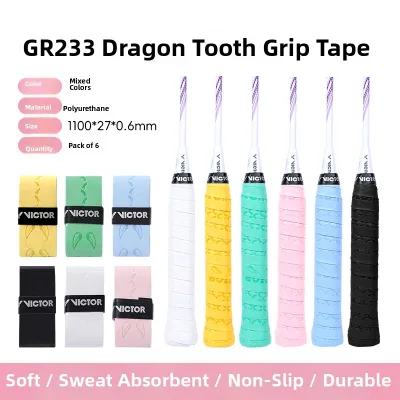
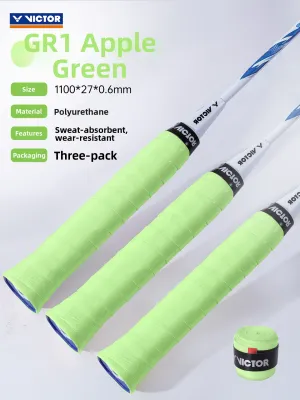
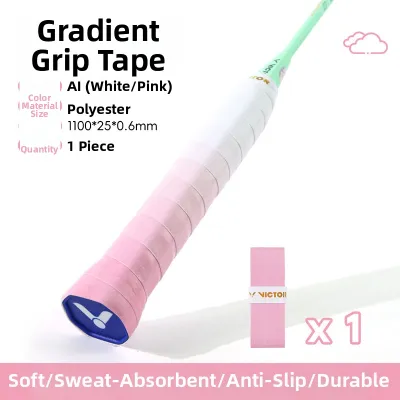

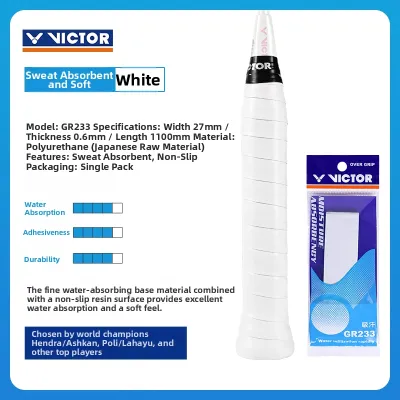
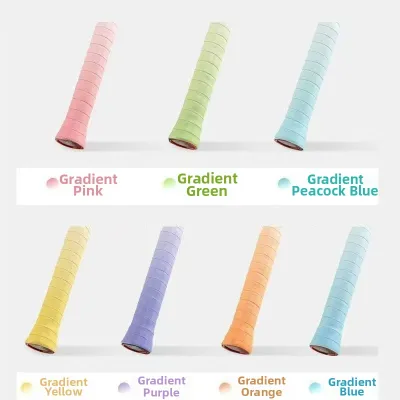
Prices are valid at publication and may change. Please refer to the product page for the latest price.
Hand size and grip strength also dictate your baseline requirements. Players with larger hands or longer fingers often find that a standard racket handle feels too small, leading to over-tightening of the fingers and subsequent muscle strain. Adding a thicker replacement grip or layering multiple overgrips can build the handle up to a comfortable circumference. Conversely, players with smaller hands should stick to thin overgrips to maintain a secure wrap without making the handle too bulky to rotate quickly.
Furthermore, your grip strength influences how much tackiness you require. If you have a lighter grip pressure, a highly tacky surface can help keep the racket secure in your hand without requiring you to squeeze too tightly. If you naturally grip the racket with high tension, a less tacky, more textured grip might feel more comfortable and prevent your hand from feeling restricted during rapid transitions.
Evaluate Core Grip Materials and Textures
Polyurethane (PU) is the most common synthetic material used in modern badminton grips. It offers a smooth, elastic feel that can be manufactured with varying degrees of tackiness. PU grips are excellent for players who want a secure, sticky hold on the racket without adding significant weight or bulk. They are highly versatile and come in various thicknesses to suit different preferences.

Cotton towel grips, on the other hand, provide a completely different tactile experience. Made of woven cotton fibers, they mimic the feel of a soft towel. They do not have a tacky surface; instead, they rely on the natural friction of the fabric and their immense moisture-absorption capacity to prevent the racket from slipping. However, towel grips add noticeable weight to the handle, which can slightly shift the racket’s balance point toward the head.
Within PU grips, you must choose between tacky and dry finishes. Tacky grips are designed to cling to dry or slightly damp hands, providing an immediate sense of security. Dry-feel PU grips have a more velvety, matte texture that feels smooth to the touch and performs better when hands start to perspire slightly, as they do not become slick as quickly as high-tack options.
Durability and material density are key specifications to verify. High-density PU materials resist tearing and compression, maintaining their cushioned feel over more hours of play. When evaluating options, check the manufacturer’s product specifications for density ratings or material composition to ensure the grip can withstand the friction of frequent grip transitions.
Match Grip Features to Hand Sweat and Climate Conditions
In highly humid environments like Singapore, managing moisture is a constant battle for badminton players. High humidity prevents sweat from evaporating quickly, leading to wet hands and slippery racket handles. Under these conditions, selecting a grip with advanced moisture-management properties is essential for maintaining control and preventing the racket from flying out of your hand during a swing.
For players who sweat heavily, cotton towel grips are often the preferred choice. The thick cotton fibers absorb large volumes of moisture, keeping the surface dry enough to maintain a firm hold. However, because towel grips absorb so much sweat, they require frequent replacement and proper drying to prevent bacterial growth and unpleasant odors.
If you prefer the feel of PU grips but still experience moderate sweating, look for specialized designs featuring perforated holes or deep tread patterns. Perforations allow air to circulate and help channel moisture away from the surface, keeping the grip dry for longer periods. Additionally, some PU grips are treated with dry-texture coatings that maintain slip resistance even when exposed to light moisture.
Always verify the specific moisture-wicking and anti-slip claims by examining the product packaging or official specifications. Look for terms like “moisture-absorbing,” “perforated,” or “dry-feel” on the label to ensure the grip is engineered for high-humidity performance rather than just basic cushioning.
Verify Product Specifications and Sizing Before Purchase
Thickness is a critical specification. Standard overgrips typically measure around 0.6mm in thickness, offering a balance of feel and minimal bulk. Cushioned replacement grips or thicker overgrips can range from 0.75mm to over 1.5mm. If you want to preserve the exact feel of your racket’s original handle, a thin 0.6mm overgrip applied directly over the factory grip is usually the best starting point.
Confirm the length and width dimensions before purchasing. Badminton racket handles vary in length, with some modern rackets featuring extended shafts or longer handles for double-handed play or specific grip styles. Ensure the grip tape is long enough—typically at least 1,000mm to 1,100mm—to wrap from the butt cap all the way up to the plastic cone without running out of material or requiring excessive stretching.
To ensure you are getting genuine Victor products, inspect the packaging for authentic brand markers, holographic stickers, and clear manufacturing labels. Counterfeit grips often use inferior materials that tear easily, lack proper adhesive backing, or fail to absorb sweat. Purchase your grips from authorized sports retailers, official brand stores, or reputable online marketplaces that guarantee product authenticity.
When budgeting for your gear, keep in mind that a single high-quality Victor overgrip typically costs between S$3 and S$6 in Singapore. Buying in multi-packs can offer better value, but always verify that the packaging has not been compromised and that the adhesive backing remains fresh and sticky before application.
Proper Installation and Maintenance for Optimal Performance
Proper installation is just as important as choosing the right grip. When wrapping your racket, start from the butt cap and wind the grip upward toward the cone. Apply consistent, moderate tension to the tape as you wrap. If you pull too tightly, you risk thinning out the material and reducing its cushioning properties; if you wrap too loosely, the grip may slide or bunch up during play, creating uncomfortable ridges.
Ensure the overlap is uniform. A standard overlap of about 2mm to 3mm along the edges provides a smooth, continuous surface. Once you reach the top of the handle, cut the grip at an angle to create a clean, flush finish, and secure it tightly with the provided adhesive finishing tape.
Maintenance extends the life of your grip and protects your racket. After every playing session, avoid immediately sealing your racket inside a damp bag. Allow the handle to air out in a well-ventilated room to let any absorbed moisture evaporate. If you use a towel grip, you can lightly brush it to keep the fibers from matting.
Recognize when it is time to replace your grip. Over time, PU grips lose their tackiness, become slick, or begin to peel and flake. Towel grips will harden, flatten, and lose their absorbent qualities, turning stiff and rough. Playing with a worn-out grip forces you to squeeze the handle harder, which can lead to tension in your forearm and increase the risk of tennis elbow. Replace your grip as soon as you notice these visual or tactile signs of degradation.
Frequently Asked Questions (FAQ)
How often should I replace my badminton grip?
The replacement frequency depends on how often you play, how much you sweat, and the type of grip you use. Active players who hit the court two to three times a week may need to replace a PU overgrip every two to four weeks to maintain optimal tackiness. Towel grips, due to their high sweat absorption, often need replacement even more frequently—sometimes after every few sessions—to maintain hygiene and grip performance. Watch for physical signs like flattening, hardening, peeling, or a persistent odor as clear indicators that a replacement is overdue.
Can I apply a towel grip over an existing replacement grip?
While you can physically wrap a towel grip over an existing replacement grip, it is generally not recommended. Towel grips are significantly thicker than standard PU overgrips. Applying a towel grip over a thick replacement grip will make the handle excessively bulky, rounding out the bevels and making it difficult to feel the racket’s orientation. For the best results, remove the existing replacement grip down to the wooden handle (or leave just a thin layer of cushion wrap) before applying a towel grip. This ensures the handle circumference remains manageable and preserves the racket’s intended balance and control.

Community discussion
Share your experience or ask a question. Comments are reviewed before publication.