
Choosing the right wall ball weight depends on your current strength, training goals, and movement mechanics. Selecting a ball that is too heavy can compromise your squat depth and shoulder alignment, increasing the risk of joint strain. Conversely, a ball that is too light will not provide enough resistance to build explosive power or elevate your heart rate during high-intensity conditioning. To find your suitable starting point, you must evaluate your physical baseline, define your training objectives, and perform a simple movement test.
Assess Your Current Fitness and Strength Baseline
Before purchasing a wall ball, you need to evaluate your foundational upper body and core strength. A standard wall ball exercise is a demanding compound movement combining a full front squat with an overhead press. If you cannot comfortably perform twenty consecutive bodyweight air squats with proper depth, or if your heels lift off the floor, a heavy ball will only exacerbate these form issues. Similarly, your ability to maintain a stable overhead position during a strict press or push-up indicates whether your shoulders and core can handle the impact of catching a weighted ball.
Trainees generally fall into distinct strength categories that dictate their starting options. Beginners often lack the shoulder endurance and thoracic mobility required to keep the chest upright during the deep squat phase. Intermediate lifters usually possess a solid foundation of squat depth and pressing power, allowing them to focus on rhythm and power transfer. Advanced athletes can maintain a rigid core and explosive hip extension even under fatigue, enabling them to handle heavier loads without compromising their spinal alignment.
Products mentioned in this guide
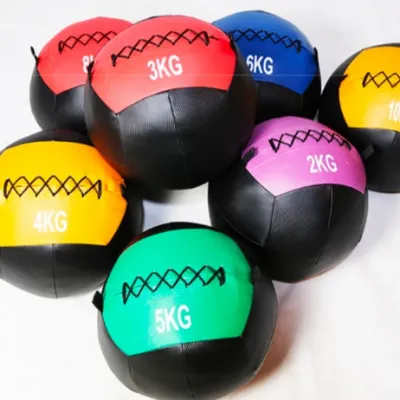
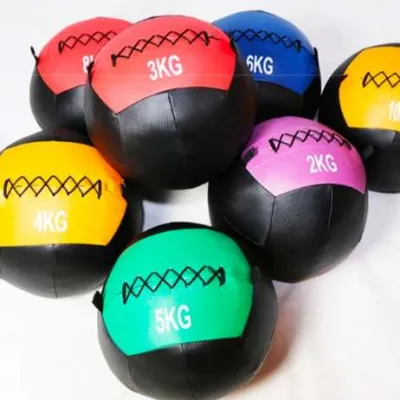
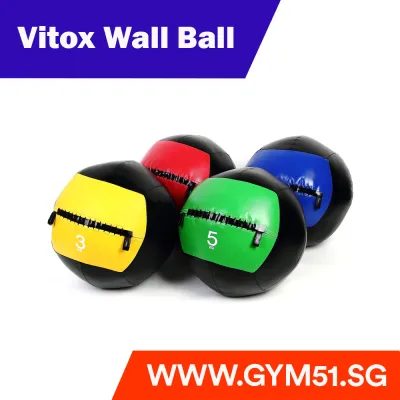
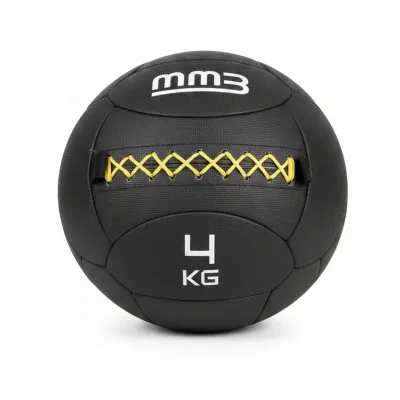
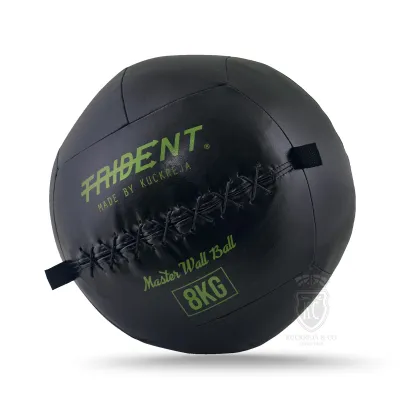
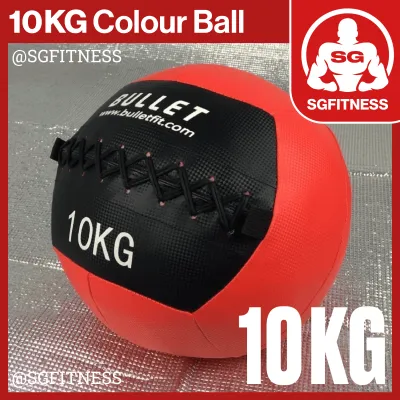
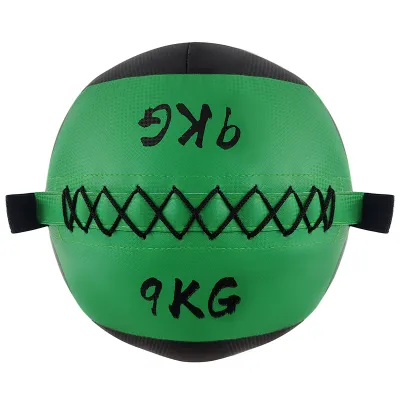
Prices are valid at publication and may change. Please refer to the product page for the latest price.
It is also crucial to account for any previous physical limitations or injuries before selecting a weight. The repetitive catching and throwing motion places significant stress on the wrists, shoulders, and lower back. If you have a history of rotator cuff issues, wrist sprains, or lumbar discomfort, you should seek professional clearance from a physiotherapist or sports specialist. In these cases, starting with an exceptionally light weight allows you to monitor your joint response without overloading vulnerable tissues.
Match the Weight to Your Training Goals
Your choice of wall ball weight should align directly with what you want to achieve during your workouts. If your primary focus is high-repetition metabolic conditioning, a lighter weight is generally preferred. This allows you to maintain a rapid, continuous cadence and keep your heart rate within the target cardiovascular zone. Using a ball that is too heavy during high-rep sets leads to early muscle fatigue, forcing you to take long breaks and reducing the overall metabolic stimulus of the session.

For those aiming to develop explosive power and raw strength, a heavier wall ball is more appropriate. These workouts typically feature shorter sets with a focus on maximum acceleration during the upward throw. The goal is to transfer force from your legs through your hips and arms as efficiently as possible. When training for power, you must ensure you can safely absorb the momentum of the heavier ball during the catch phase, transitioning smoothly into the next squat without collapsing forward.
If you are using the wall ball for technique drills or rehabilitation, the weight should be minimal. Very light balls allow you to isolate specific phases of the movement, such as the timing of the hip drive or the trajectory of the throw. This is particularly useful when recovering from an injury or when learning how to keep the ball close to your face during the descent. Focusing on core engagement and movement precision with a light load builds the muscle memory needed for heavier progressions later on.
Standard Weight Guidelines by Experience Level
While individual capabilities vary, general weight ranges can serve as a helpful starting point for your selection. For beginners, a safe starting weight typically ranges from 3 kg to 4 kg (approximately 6 to 9 pounds). When starting out, your primary focus should be on form checkpoints: keeping your elbows tucked, maintaining an upright chest, and catching the ball at chest height. If you find that your chest collapses forward or your knees cave inward during the squat, the weight is too heavy for your current mechanics.
Intermediate trainees who have developed consistent squat depth and overhead pressing stamina often progress to weights between 6 kg and 9 kg (approximately 14 to 20 pounds). You will know you are ready to move up when your current ball no longer challenges your cardiovascular system or muscles during standard sets. The transition should be gradual, ensuring that you can still hit the target height on the wall—typically 9 or 10 feet—without straining your neck or shoulders.
Advanced trainees who regularly perform high-volume functional workouts may opt for weights of 9 kg to 12 kg (approximately 20 to 26 pounds) or more. At this level, the challenge is maintaining safe control and structural integrity under extreme fatigue. Even experienced athletes must monitor their movement patterns, as tired shoulders can lead to lazy catches that place excessive shear force on the lower back.
These weight categories are merely baseline references and should never replace physical testing. Every individual has unique limb lengths, muscle fiber compositions, and joint mobilities that influence how a specific weight feels. Before committing to a purchase, you should physically test different weights at a local gym or fitness center to observe how your body responds to the load.
How to Test and Adjust Your Wall Ball Weight
To determine if a specific wall ball weight is right for you, perform a short, continuous test set of ten to fifteen repetitions. Observe how your movement mechanics hold up as you progress through the set. If you can complete the repetitions with a fluid, unbroken rhythm while maintaining an upright torso and hitting the target line consistently, the weight is likely appropriate for general conditioning.
There are several clear indicators that a wall ball is too light for your training needs. If you feel virtually no resistance during the throw and can catch the ball effortlessly with one hand, the load is insufficient to stimulate strength or power adaptations. Additionally, if your heart rate remains low and you do not feel a muscular challenge in your legs or shoulders after a high-repetition set, it is time to try a heavier option.
Conversely, several warning signs indicate that the ball is too heavy. If you experience discomfort or sharp pressure in your wrists or shoulders when catching the ball, the weight is overloading your upper body joints. Other signs include an inability to reach full squat depth, a chest that bows forward toward the floor, or a throw that consistently falls short of the target height. If you must use your entire body to heave the ball upward without any control over its descent, you need to scale down immediately.
When you decide to adjust your weight, always use the smallest increments available from the manufacturer. Moving up by just 1 kg or 2 kg can feel significantly heavier due to the dynamic nature of the exercise. Gradually increasing the load allows your connective tissues and stabilizing muscles to adapt to the increased impact forces, reducing the risk of overuse injuries.
Key Features to Check When Buying a Wall Ball
When purchasing a wall ball for your home gym or commercial space, you must verify several physical characteristics to ensure safety and durability. First, examine the shell material and grip texture. In high-humidity environments, such as a home gym setup in Singapore, the outer surface must be made of high-quality synthetic leather or vinyl that offers a secure hold even when your hands are sweaty. A slippery surface can lead to dropped balls, which poses a risk to your face, feet, and flooring.
Next, check the internal filling and shock absorption properties of the ball. A well-constructed wall ball should have a balanced, padded interior that absorbs the impact of the catch without losing its shape over time. Avoid balls that feel lumpy or have shifting centers of gravity, as an uneven weight distribution makes the ball unpredictable during flight and difficult to catch safely. The ball should have minimal bounce to prevent it from rebounding off the wall too quickly and striking you.
Finally, consider the overall size and seam construction. Standard wall balls typically have a uniform diameter of about 35 centimeters, regardless of their weight, which helps maintain consistent catching mechanics. Ensure the seams are double-stitched and reinforced with heavy-duty thread. Flat, recessed seams are essential to prevent skin abrasion on your hands and face during high-volume training sessions.
Frequently Asked Questions (FAQ)
Can I use a medicine ball instead of a wall ball?
No, you should not use a standard hard-shell medicine ball as a substitute for a wall ball. Traditional medicine balls are typically smaller, denser, and made of hard rubber or plastic designed for slamming or bouncing. If you attempt to throw a hard medicine ball against a wall and catch it, the lack of impact absorption can cause wrist strain, facial injuries, or damage to your wall. Wall balls are specifically engineered with a thick, padded outer shell and a soft interior to safely absorb impact during high-velocity catches.
Should men and women use different wall ball weights?
Weight selection should be based entirely on your individual strength, mobility, and fitness goals rather than gender. While functional fitness competitions often prescribe standard weights of 6 kg (14 pounds) for women and 9 kg (20 pounds) for men, these are competitive benchmarks rather than training rules. A beginner male may need to start with a 4 kg ball to master proper squat depth, while an experienced female athlete may easily train with a 9 kg or 12 kg ball. Always prioritize your personal movement quality and physical capacity over standardized categories.
Community discussion
Share your experience or ask a question. Comments are reviewed before publication.