
Starting your golf journey in Singapore is an exciting milestone, but stepping onto the tee box for the first time can feel intimidating. Among the array of clubs, balls, and accessories in your bag, the humble golf tee plays a critical role in establishing a consistent setup. For beginners, wooden golf tees are the traditional and highly recommended standard. They offer a reliable, cost-effective, and environmentally friendly foundation that allows you to focus entirely on developing your swing mechanics without unnecessary distractions.
Selecting the right wooden tee involves understanding how physical specifications match your current skill level and playing environment. By focusing on key factors like length, wood density, and visual markings, you can build confidence and ensure that every shot starts with a stable, repeatable setup.
Why Wooden Golf Tees Suit New Golfers
One of the greatest advantages of wooden golf tees for beginners is the immediate, honest feedback they provide during impact. When you strike a ball off a wooden tee, the material behaves predictably under force. If your swing path is too steep or your angle of attack is incorrect, a wooden tee will typically snap or fly forward, giving you an instant physical cue about your clubhead’s path. Plastic tees, by contrast, often bend or flex, which can mask a “fat” or overly downward strike. For a player working to establish a consistent, sweeping driver swing, this tactile feedback is incredibly valuable for self-correction.
Products mentioned in this guide
Prices are valid at publication and may change. Please refer to the product page for the latest price.
In addition to swing feedback, environmental responsibility is a major factor when playing on Singapore’s beautifully manicured golf courses. Wooden tees are entirely biodegradable. If a tee breaks and a small fragment is left behind in the turf, it will naturally decompose over time without harming the soil or local wildlife. Plastic tees can persist in the ground for decades, posing a significant hazard to course mowing equipment and creating unsightly litter on the fairways. Choosing wood aligns your game with responsible course stewardship and respects the efforts of local greenkeeping crews.
From a financial perspective, wooden tees offer a low-risk entry point during the high-loss phase of learning the game. Beginners naturally break or lose a significant number of tees as they refine their contact. Wooden tees are exceptionally affordable and are widely sold in large bulk quantities. This cost-effectiveness removes the stress of losing accessories, allowing you to focus your mental energy on your pre-shot routine and swing execution rather than searching through the grass for a lost peg after every shot.
Core Dimensions to Check Before Buying
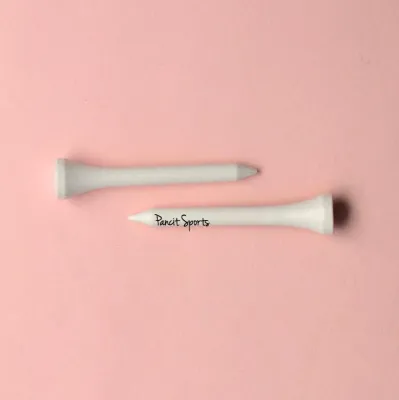
When shopping for wooden golf tees, length is the most critical dimension to consider. Standard wooden tees typically range from 1.5 inches (38 mm) to 3.25 inches (83 mm). As a beginner, you must match the tee length to the specific club you are hitting. Modern, large-volume drivers (typically 460cc) require longer tees, with 3.25 inches being the standard choice. This length ensures you can insert the tee deep enough into the ground for stability while still leaving enough height to position the ball so that its equator aligns with the top edge of your driver’s clubface. For fairway woods, hybrids, and irons, shorter tees ranging from 1.5 to 2.125 inches are more appropriate to prevent the ball from launching too high.

The design of the tee’s cup—the shallow depression at the top that cradles the ball—also affects your setup. A well-designed cup should be deep and wide enough to keep the ball stable, even in breezy conditions. This stability is particularly important on coastal or elevated courses in Singapore, where wind can easily knock a ball off a poorly designed tee. While some specialty tees feature minimal-contact cups designed to reduce friction, standard shallow-cup wooden tees are perfectly adequate for beginners. At this stage, prioritizing a stable, secure ball placement is far more beneficial than chasing marginal aerodynamic gains.
Wood density and grain structure directly determine how many shots a tee can survive before snapping. Softwood tees are highly affordable but tend to have loose grains that splinter easily, sometimes breaking on the very first swing. Hardwood tees, typically crafted from birch or maple, feature tight, dense grain patterns that offer superior resistance to shear forces. Investing in hardwood options ensures that each tee can withstand multiple impacts, reducing the frequency of replacements during your round and providing better value over time.
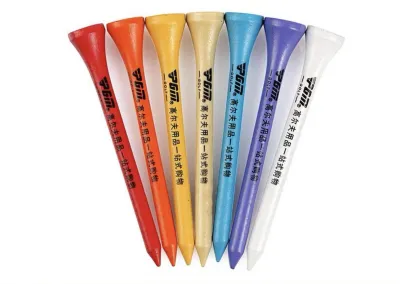
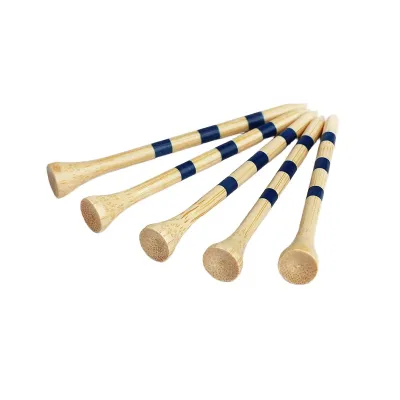
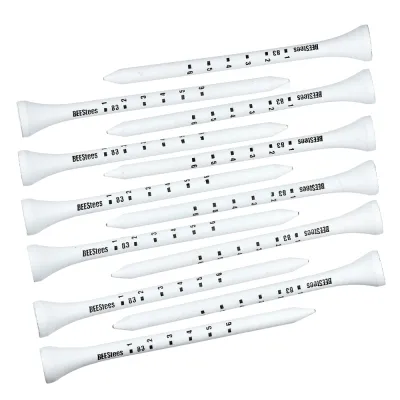
Finally, pay attention to the paint and finish of the tees. Wooden tees are available in natural wood finishes or painted varieties. For beginners, painted tees featuring printed height-marking stripes are incredibly useful. These stripes act as visual depth guides, helping you insert the tee to the exact same depth on every hole. When selecting painted tees, look for non-toxic, lead-free finishes. High-quality coatings resist chipping and prevent stubborn colored scuffs from transferring onto the sole or face of your clubs during impact.
Building a Condition-Based Shortlist
To get the most out of your purchase, it is helpful to match your tee selection to your specific practice habits and playing environments. While most driving ranges in Singapore utilize synthetic mats with integrated rubber tees, grass practice areas and actual courses require you to supply your own. For high-volume practice sessions on grass, a bulk pack of basic, natural hardwood tees is the most practical choice. For official rounds on the course, carrying a dedicated pouch with a mix of striped driver tees and shorter iron tees ensures you are prepared for every tee box scenario.
Your club selection on the course also dictates your inventory needs. A balanced golf bag should contain a mix of tee sizes. Keep a generous supply of 3.25-inch tees for your driver shots, and a smaller handful of 1.5-inch or 2.125-inch tees for par-3 holes where you tee off with an iron or hybrid. Attempting to use a long driver tee for an iron shot by pushing it deep into the ground is inefficient and often results in bent or broken tees before you even swing.
Singapore’s tropical climate and seasonal weather patterns play a significant role in soil conditions, which directly affects tee durability. During dry spells, the clay-heavy soil on local courses can bake under the sun, becoming extremely firm and difficult to penetrate. Inserting a delicate, low-density wooden tee into hard ground can cause it to snap immediately. In these conditions, sturdier hardwood or bamboo options are highly preferred. Conversely, during the wet monsoon seasons, the ground becomes soft and yielding. While insertion is easy, you may need a slightly longer tee to maintain stable ball height in soft turf.
When assessing the value of different options, calculate the cost-per-tee rather than looking only at the total package price. A pack of 100 basic birchwood tees costing S$5 to S$8 offers excellent value (around S$0.05 to S$0.08 per tee) for high-volume practice. While premium painted or reinforced wood options might cost S$12 for a pack of 50 (S$0.24 per tee), they may offer better durability. As your swing path becomes more consistent and your breakage rate decreases, transitioning to these premium options can become highly cost-effective.
Maximizing Lifespan and Knowing When to Replace
To prevent your wooden tees from snapping prematurely, always practice proper insertion techniques. Insert the tee straight down into the turf using steady, vertical pressure. Avoid pushing the tee in at an angle or wiggling it back and forth to widen the hole, as this introduces lateral stress that weakens the wood fibers before impact. If the ground is exceptionally hard due to dry weather, use a tee claw, a metal divot tool, or a dedicated starter peg to create a small pilot hole first, protecting your wooden tee from structural damage.
Before placing your ball on the tee, perform a quick visual inspection. Look for hairline cracks along the shaft, splintering near the tip, or a chipped cup edge. A compromised cup can cause the ball to wobble or fall off repeatedly, disrupting your pre-shot routine and mental focus. If you notice any structural damage or deep splintering, discard the tee and replace it with a fresh one to ensure a stable setup.
Practicing good course etiquette is a core part of golf culture. Never leave broken wooden tee fragments scattered across the tee box. These fragments can damage the blades of course lawnmowers and create unsightly litter on the pristine turf. Always pick up your broken tee pieces; many tee boxes feature small disposal bins specifically for this purpose. If your tee flies forward intact after a shot, take a moment to retrieve it and reuse it on the next hole to minimize waste.
Frequently Asked Questions (FAQ)
Do wooden golf tees affect driving distance?
No, wooden golf tees do not have a measurable impact on your driving distance. While some manufacturers claim that alternative materials or specialized cup shapes reduce friction to boost yardage, these differences are negligible, especially for beginners. Your driving distance is determined by your swing speed, clubhead path, and the quality of your strike on the sweet spot. Focus on achieving a consistent tee height and a clean swing rather than relying on tee material for distance.
How long should a wooden golf tee last?
The lifespan of a wooden golf tee varies widely based on your swing mechanics and ground conditions. For a beginner with a steep swing path that strikes the ground before the ball, a wooden tee may only last for a single shot. As your swing flattens out into a proper sweeping motion, a single high-quality hardwood tee can easily last through three to five drives. Regularly check the shaft for hairline fractures to determine when it is time to grab a fresh one.
Are bamboo tees considered wooden, and are they better for beginners?
Bamboo tees are technically made from grass, but they are widely categorized alongside wooden tees due to their natural composition and appearance. Bamboo possesses incredibly strong tensile fibers, making it significantly more flexible and durable than standard birchwood. For beginners, bamboo tees are an excellent alternative because they resist snapping on off-center hits and firm ground, offering better longevity while remaining fully biodegradable and environmentally friendly.
Community discussion
Share your experience or ask a question. Comments are reviewed before publication.