
Selecting your first light fishing rod requires balancing sensitivity, control, and durability to match your target fishing environment. For a beginner, a light rod offers an engaging way to learn the fundamentals of casting, lure presentation, and fish handling. Unlike heavy offshore gear, lightweight tackle is designed to bend significantly under the weight of smaller species, making even modest catches highly exciting while teaching you how to manage line tension. To make an informed purchase, you must understand how a rod’s physical specifications translate to real-world performance on the water, whether you are casting along reservoir banks or targeting small species from a coastal jetty.
Understanding Rod Power and Action for Light Tackle
Rod power and rod action are the two most critical specifications printed on any fishing blank, yet they are frequently confused by beginners. Rod power refers to the overall stiffness of the rod and its resistance to bending under load. In the context of light tackle, you will primarily choose between Ultra-Light (UL) and Light (L) power ratings. An ultra-light rod is highly flexible and designed for very small fish species and incredibly light lines, whereas a light rod offers slightly more backbone, making it a versatile entry point for beginners who might encounter slightly larger fish, such as peacock bass in local reservoirs or small snappers around coastal structures.
Rod action, on the other hand, describes where the rod blank actually bends when pressure is applied to the tip. Action ranges from extra-fast to slow. A fast-action rod bends primarily in the top third of the blank, offering high sensitivity and quick hooksets because the stiff lower section transfers energy rapidly. This makes fast-action rods excellent for single-hook lures like soft plastics. A moderate-action rod bends deeper down the blank, creating a more gradual curve. This slower bend acts as a shock absorber, which is highly beneficial for beginners because it prevents light hooks from tearing out of a fish’s mouth and helps cushion light lines against sudden runs.
Products mentioned in this guide
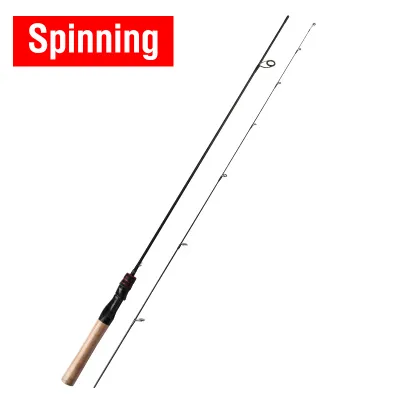
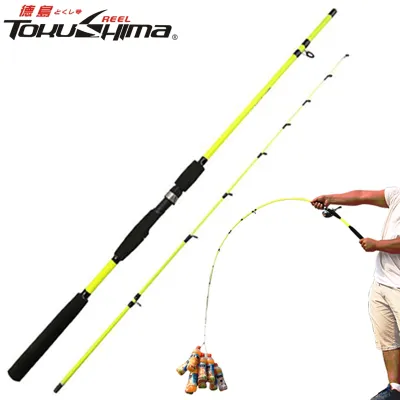
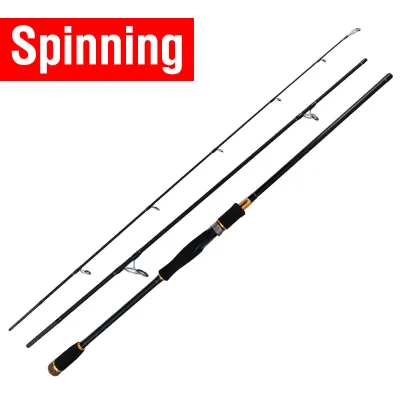
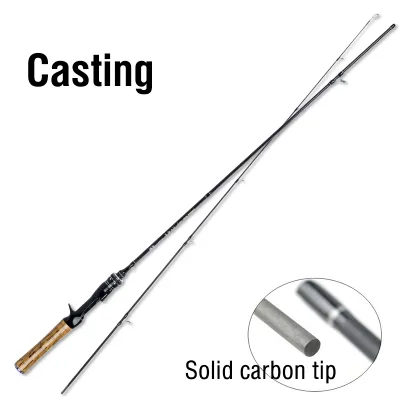
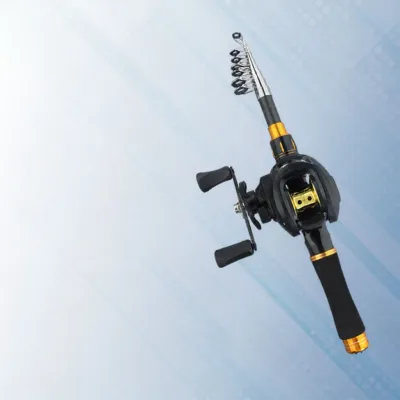
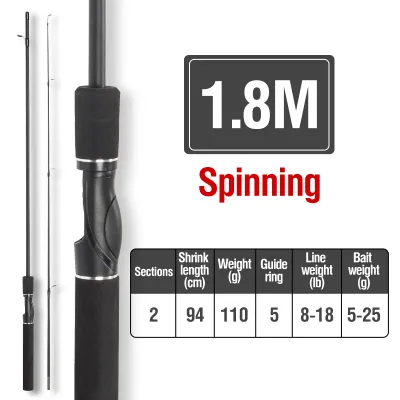
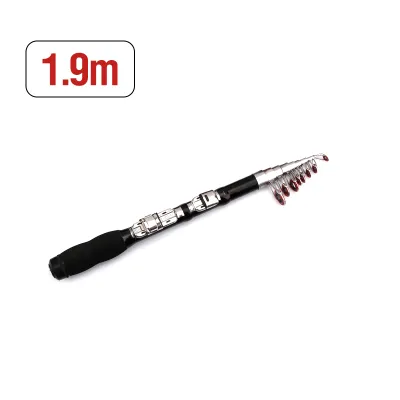
Prices are valid at publication and may change. Please refer to the product page for the latest price.
When starting out, a light-power rod with a fast or moderate-fast action provides the most forgiving and versatile combination. This setup gives you enough sensitivity to feel subtle bites while retaining enough lifting power to control a fish if it tries to swim into underwater structure or vegetation. Matching these mechanical indicators to your target environment ensures you do not end up with a rod that is either too stiff to cast light lures or too weak to land your catch.
Selecting the Right Rod Length and Material
The length of your fishing rod directly influences your casting distance, accuracy, and how easily you can maneuver in tight spaces. For light fishing, rods typically range from 5 feet 6 inches to 7 feet 6 inches. Shorter rods, generally under 6 feet, excel in precision casting and are ideal when fishing in confined spaces, such as overgrown banks along local waterways where overhanging branches limit your casting clearance. However, shorter rods limit your casting distance.

Longer rods, measuring 6 feet 6 inches to 7 feet or more, are preferred when you need to cast lightweight lures over longer distances. The extra length allows the rod to load more energy during the cast, slinging light lures further into open water. Longer rods also provide better line control, allowing you to keep more line off the water’s surface to avoid drag. For most beginners, a rod between 6 feet and 6 feet 6 inches offers the ideal middle ground, providing adequate casting distance while remaining easy to handle and transport.
The material of the rod blank determines its weight, sensitivity, and durability. Graphite (carbon fiber) is the most popular material for modern light rods due to its exceptional sensitivity and lightweight feel, allowing you to detect the faintest vibrations through the line. However, graphite is relatively brittle and can fracture if subjected to sudden impacts or high-sticking—an angling error where the rod is held vertically under heavy load. Fiberglass is much tougher and highly flexible, making it incredibly durable and forgiving for beginners, though it is heavier and lacks the sensitivity of graphite. Composite rods combine graphite and fiberglass, offering a balanced blend of durability and sensitivity that represents an excellent starting point for novice anglers.
Evaluating Guides, Reel Seats, and Handle Comfort
While the rod blank is the core of your setup, the hardware attached to it directly impacts your daily fishing experience and the lifespan of your equipment. Guides, or the eyelets running along the top of the rod, must be inspected closely. Look for guides with smooth ceramic inserts, such as aluminum oxide or silicon carbide, housed in sturdy stainless steel frames. These inserts minimize friction as the line passes through, which maximizes casting distance and prevents abrasive wear on delicate, low-diameter fishing lines.
The reel seat is the mechanism that secures your reel to the rod. It must feature a reliable locking nut that keeps the reel firmly in place without slipping during use. For a light rod, ensure the reel seat is designed to accommodate smaller spinning reels, typically in the 1000 to 2500 size range. A loose or poorly constructed reel seat will ruin the balance of your setup and dampen the vibrations traveling from the line to your hands, making it harder to detect bites.
Handle comfort is another key consideration, as you will likely hold the rod for hours at a time. Rod grips are generally made from either natural cork or EVA foam. Cork grips offer a classic aesthetic and excellent sensitivity, transferring vibrations efficiently, but they can degrade, crack, or stain over time in hot, humid tropical climates. EVA foam grips are highly durable, easy to clean, slip-resistant when wet, and stand up exceptionally well to sweat and saltwater exposure. For beginners, EVA foam often provides a more practical, low-maintenance option.
Matching the Rod to Your Line and Lure Weight
Every fishing rod is engineered to perform within a specific range of line strengths and lure weights. These recommended ranges are almost always printed directly on the rod blank just above the handle. For a typical light rod, you might see ratings such as “Line: 4–10 lb” and “Lure: 1/16–1/4 oz.” Adhering to these manufacturer specifications is crucial for both performance and safety.
Exceeding the recommended lure weight can overload the rod blank during a cast, which severely degrades casting accuracy and, in worst-case scenarios, can cause the rod tip to snap under the sudden stress. Conversely, attempting to cast a lure that is lighter than the recommended range means the rod will not compress or “load” properly during your backcast, resulting in incredibly short, frustrating casts. Similarly, using a line that exceeds the recommended pound-test rating increases the risk of breaking the rod; if your line is stronger than the rod’s structural limit, the rod will snap before the line breaks when subjected to heavy tension.
To build a balanced light tackle setup, use this simple verification checklist before heading to the water:
- Confirm your lure falls within the printed weight range on the rod blank.
- Ensure your main line (whether monofilament, fluorocarbon, or braided line) matches the recommended line class.
- Adjust your reel's drag setting to slip well below the maximum line rating to protect both the line and the rod from sudden, heavy surges.
Practical Checks Before Making Your Purchase
Before finalizing your purchase, performing a few physical and analytical checks will help you avoid defective products or mismatched gear. If you are buying from a physical tackle shop, start by inspecting the rod blank from the butt to the tip, looking for any visible scratches, hairline cracks, or uneven finishes. Peer down the line of guides from the reel seat to ensure they are perfectly aligned; misaligned guides will cause line twist and reduce casting distance.
You can also perform a gentle flex test in-store to feel the rod’s action. Hold the grip firmly and gently press the rod tip against a flat surface, such as the floor or a low ceiling, to observe how the blank bends. Never bend the tip by hand or pull it down sharply, as this concentrates stress on a single point and can damage the rod. Pay attention to how the rod feels in your hand; it should feel balanced and lightweight, not tip-heavy.
If you are purchasing from an online marketplace or ecommerce platform, cross-reference the manufacturer’s official specification sheets with independent user reviews. Look for common feedback regarding packaging quality, as rods are highly vulnerable to damage during transit. Finally, verify the seller’s warranty terms and return policies. Many reputable brands offer warranties covering manufacturing defects, which provides valuable peace of mind for a beginner learning to handle delicate light tackle.
Frequently Asked Questions (FAQ)
Can I use a light rod for saltwater fishing?
Yes, you can use a light rod in saltwater environments, but you must verify that the hardware is designed to resist corrosion. Saltwater-specific rods feature guides and reel seats made from marine-grade stainless steel, titanium, or specialized composite materials that resist rust. If you use a standard freshwater light rod in saltwater, the metal components can corrode rapidly. Regardless of the rod’s rating, always rinse the entire rod thoroughly with fresh, running water after every saltwater session to remove salt deposits and protect the guides.
Is a one-piece or two-piece rod better for beginners?
For most beginners, a two-piece rod is the more practical choice. While one-piece rods offer slightly better sensitivity and a perfectly uninterrupted bend profile because they lack a joint, they are incredibly difficult to transport in small vehicles or on public transit. Modern two-piece rods utilize advanced ferrule designs that connect the sections securely with minimal loss of sensitivity or strength. The convenience of being able to break the rod down for easy storage in a closet or car trunk far outweighs the marginal performance benefits of a one-piece rod for someone just starting out.
How much should I budget for my first light fishing rod?
When buying your first setup, it is best to allocate your budget proportionally across your entire gear system rather than spending all your funds on the rod alone. For a beginner in Singapore, a reasonable budget for the rod itself ranges from S$40 to S$100. This price range offers excellent entry-level options from reputable manufacturers that feature durable composite or mid-grade graphite blanks, reliable guides, and solid warranties. Avoid ultra-cheap, unbranded rods that lack proper ceramic guides, as they will likely frustrate you with line tangles and premature breakage.

Community discussion
Share your experience or ask a question. Comments are reviewed before publication.