
Finding the right foldable bike cover starts with measuring your bicycle in its fully folded configuration. Many cyclists make the mistake of choosing a cover based solely on their bike’s wheel size, such as 16 inches or 20 inches. However, because folding mechanisms vary widely—ranging from mid-frame folds to complex tri-folds—two bikes with the same wheel size can have completely different folded dimensions. Measuring your bike accurately ensures you select a cover that fits snugly, protecting your investment from dust, indoor humidity, and accidental scratches without being too tight to manage or so loose that it sags.
In tropical environments where high humidity and sudden rainstorms are common, a proper cover is essential. Whether you store your bike on a high-rise balcony, inside a compact apartment corridor, or in a utility closet, a well-fitting cover keeps moisture and airborne dust away from sensitive components like the chain, cassette, and hinge joints. Taking a few minutes to measure your bike prevents the hassle of returning an ill-fitting cover and ensures your ride remains clean and ready for your next commute.
Prepare Your Bike and Tools for Accurate Measuring
Before you begin taking measurements, gather the necessary tools to ensure accuracy. You will need a standard tape measure—either a flexible tailor’s tape or a retractable steel tape measure works well. A flexible tape is particularly useful for wrapping around awkward angles, while a stiff steel tape is excellent for measuring straight vertical heights. Keep a notepad or a smartphone nearby to write down the dimensions immediately so you do not have to rely on memory.
Products mentioned in this guide
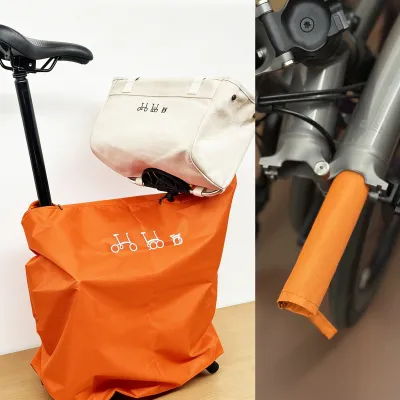
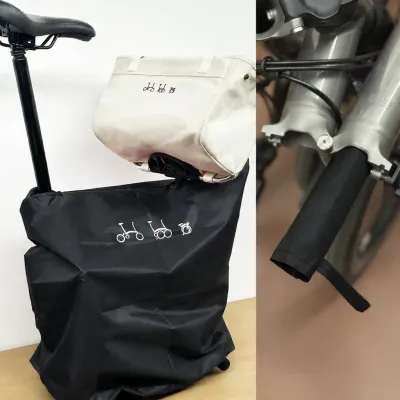
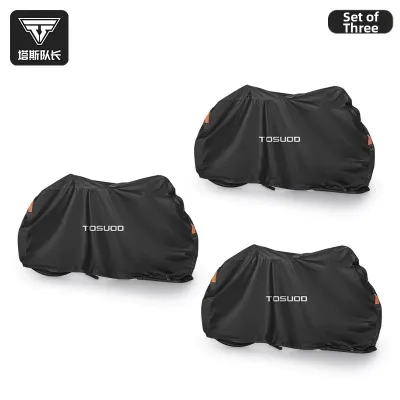
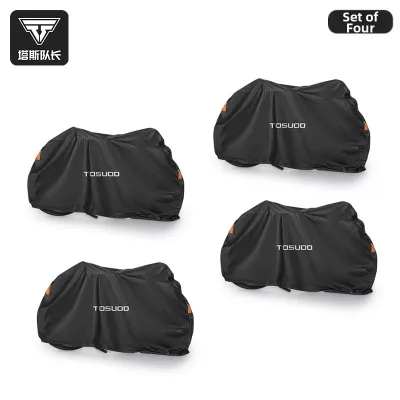
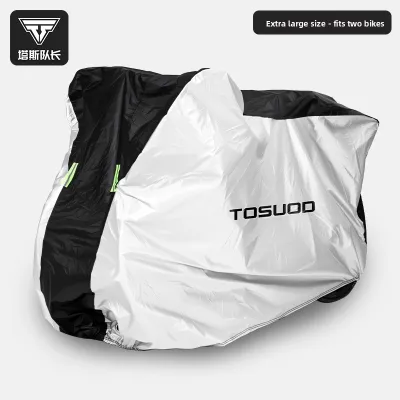
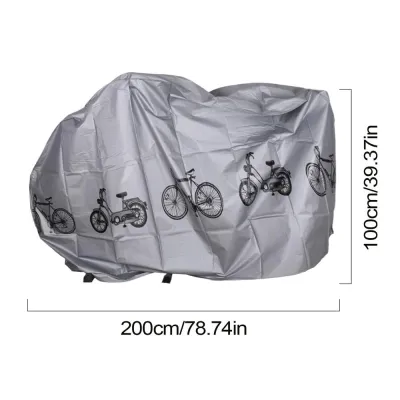
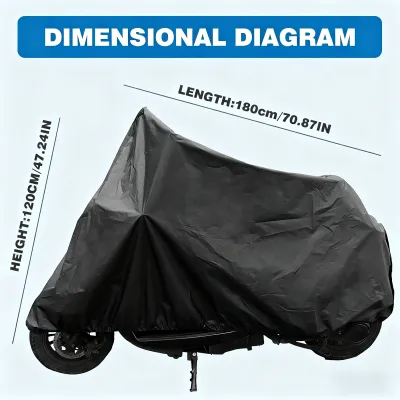
Prices are valid at publication and may change. Please refer to the product page for the latest price.
Next, prepare your bicycle by folding it completely according to the manufacturer’s standard folding instructions. Ensure that all frame latches, handlebar stems, and folding pedals are fully engaged in their locked, folded positions. If your bike has quick-release components, such as a removable pedal or an adjustable seat post, set them exactly as you plan to store them. Loose cables should be tucked in or secured with a velcro strap so they do not flare out and artificially inflate your measurements.
Finally, place the folded bike on a flat, level surface. Measuring your bike on an uneven floor, a thick carpet, or a tilted balcony drainage slope can cause the bike to lean, leading to skewed height and width readings. A stable, flat surface like a tiled living room floor ensures the bike remains upright and steady, allowing you to take precise, safe measurements without the bike toppling over mid-process.
Step-by-Step Guide to Measuring Your Folded Bike
To find a cover that fits perfectly, you must capture the absolute maximum length, width, and height of your bike in its folded state. This means measuring from the outermost point on one side to the outermost point on the opposite side, rather than just measuring the main frame.

To measure the maximum length, identify the two furthest horizontal points of your folded bike. This is typically the outer edge of one folded wheel to the outer edge of the other, or from the main frame hinge to the rear tire. A practical way to measure this accurately is the “two-box” method. Place two flat, heavy objects, such as thick books or storage boxes, flush against the front and back ends of the folded bike. Once the boxes are aligned with the outermost edges, carefully roll or lift the bike out of the way and measure the straight-line distance between the two boxes on the floor. This eliminates the difficulty of holding a tape measure perfectly straight in mid-air.
To measure the maximum width, look for the widest cross-section of the folded bundle. Foldable bikes can be surprisingly wide when folded, often due to protruding handlebars, the crankset, or the pedals. If your bike features folding pedals, make sure they are folded flat before measuring. If they are standard rigid pedals, you must measure to the very outer edge of the pedal body. Check if the derailleur, brake levers, or suspension components stick out beyond the main frame. Use the same two-box method on either side of the bike’s width to project these outer points down to the floor for an accurate reading.
To measure the maximum height, find the vertical distance from the floor to the absolute highest point of the folded bike. Depending on your bike’s design, this highest point might be the top of the saddle, the folded handlebar stem, or the top of the seat post if it slides down to act as a stand. Hold your tape measure perfectly vertical next to the bike, ensuring it does not tilt diagonally, which would result in an artificially tall measurement. If the highest point is uneven, you can lay a flat ruler across the top of the bike to create a level line, then measure from the floor up to the ruler.
Do not forget to account for permanently attached accessories that you do not plan to remove during storage. Mudguards, front carrier blocks, bottle cages, and rear luggage racks must all be included in your measurements. A rear rack, for example, can add several centimeters to both the length and height of your folded bike. Measuring the bike with these accessories installed prevents you from purchasing a cover that is too small to close over the extra hardware.
How to Choose the Right Cover Size Using Your Measurements
Once you have recorded your bike’s exact folded dimensions, you need to translate those numbers into the correct cover size. The most important rule of thumb is to never buy a cover that matches your bike’s measurements exactly. If your folded bike measures exactly 80 cm in length, an 80 cm cover will be incredibly difficult to pull over the corners and will put immense strain on the seams, leading to premature tearing.
Instead, apply a buffer allowance to your raw measurements. Add approximately 3 to 5 centimeters (about 1 to 2 inches) to the length, width, and height. This extra clearance allows the fabric to glide smoothly over the bike’s edges without snagging. It also accommodates the natural stiffness of heavy-duty, weather-resistant fabrics, which do not stretch easily over sharp corners.
When shopping, ignore generic labels like “fits all 20-inch folding bikes.” Because a 20-inch tri-fold bike folds into a highly compact, square package while a 20-inch mid-fold bike folds into a wider, flatter shape, these generic labels are often misleading. Always look for the manufacturer’s detailed size chart, which lists the physical dimensions of the cover itself. Compare your buffered measurements directly against this chart to find the closest match.
Additionally, consider the shape and cut of the cover. Some covers are designed as simple, boxy rectangles, which offer great versatility but can leave excess fabric sagging at the corners. Others are tailored specifically for tri-fold profiles or vertical-folding designs. A tailored cover looks neater and is less likely to catch the wind, but it requires your bike’s folded shape to match the cover’s profile closely. If your bike folds into a tall, narrow shape, a wide and short cover will leave the bottom of your wheels exposed while flapping loosely at the sides.
Verify the Fit and Secure the Cover Properly
After your cover arrives, it is time to test the fit and secure it to protect your bike from the elements. A properly fitting cover should slide over the folded bike with minimal resistance. It should drape fully over the frame, wheels, and drivetrain, ending just a centimeter or two above the ground.
Avoid letting the cover drag or pool on the floor. If you store your bike on an outdoor balcony or in a damp corridor, a cover that pools on the ground can trap rising moisture and condensation underneath the fabric. This creates a humid microclimate that can accelerate rust on your chain, cassette, and steel bolts. A slight gap at the bottom allows for essential air circulation while still keeping dust and direct rain off the bike.
To protect your bike from strong winds, especially if stored on high-rise balconies or open-air corridors, make use of the cover’s built-in adjustment features. Look for covers equipped with elasticized bottom hems, drawstrings, or under-bike buckle straps. Tightening these straps secures the cover firmly around the wheels, preventing wind from getting underneath and blowing the cover away. Securing the straps also reduces the surface area of the fabric, preventing it from acting like a sail during stormy weather.
Keep an eye out for signs of a poor fit during your initial test. If you have to pull the fabric forcefully to cover the last corner, the cover is too tight. This constant tension will eventually split the seams or cause sharp parts, like brake levers or gear teeth, to puncture the material. Conversely, if the cover is excessively baggy, it will collect pools of rainwater in its folds if stored outdoors, and the constant flapping in the wind can rub against your bike’s paintwork, causing cosmetic scuffs over time.
Frequently Asked Questions (FAQ)
Should I measure the bike when it is unfolded?
No, you should not measure your bike in its unfolded state if you are purchasing a standard storage or transit cover. Foldable bike covers are specifically patterned to fit the compact, nested shape of a folded bicycle. If you buy a cover based on the unfolded length and height, the cover will be far too large. When you fold the bike, this oversized cover will drape loosely, pooling on the ground, catching the wind, and failing to provide any meaningful protection against dust or moisture. The only exception is if you plan to store your bike unfolded in a garage or room, in which case you would need a standard full-sized bicycle cover rather than a dedicated foldable bike cover.
What if my bike has accessories like a rear rack or basket?
If your bike has permanent accessories like a rear rack, a front carrier block, or mudguards, you must keep them installed when taking your measurements. These add-ons alter the folded silhouette significantly. For instance, a rear rack often extends the folded length and height, while a front basket or bracket can add substantial width. If your measurements include these accessories and you find yourself between cover sizes, always size up to the next larger cover. Alternatively, look for covers designed with expandable panels or a looser, boxier cut that can accommodate the extra volume of racks and baskets without putting stress on the fabric.
Community discussion
Share your experience or ask a question. Comments are reviewed before publication.