
Finding the correct tennis racket grip size is essential for both performance and comfort on the court. You can easily determine your ideal grip size at home using two reliable methods: the ruler test, which measures the physical distance from your palm crease to your ring finger, and the index finger test, which evaluates how your hand wraps around an existing racket handle. By taking these measurements, you can select a racket that feels natural in your hand, prevents unnecessary physical strain, and allows you to execute shots with optimal control.
Why Getting the Right Tennis Grip Size Matters
Using an incorrectly sized grip can significantly impact your play and physical well-being. When a grip is too small, your fingers wrap too far around the handle, often overlapping. This forces the muscles in your hand, wrist, and forearm to squeeze excessively hard just to keep the racket from twisting upon ball impact. This chronic over-gripping can lead to localized muscle fatigue and increase the risk of repetitive strain issues, such as tennis elbow.
Conversely, if the grip is too large, your hand cannot fully close around the handle. This gap limits your ability to snap your wrist during serves or quickly adjust your hand position when transitioning between forehand and backhand grips. The racket may feel clumsy, heavy, or unresponsive, reducing your overall swing speed and control.
Products mentioned in this guide



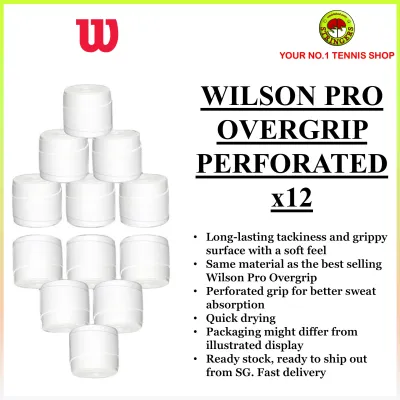
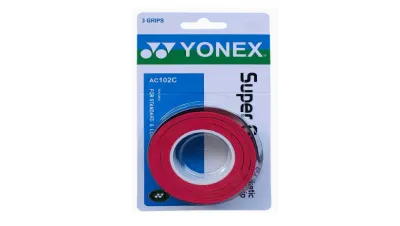
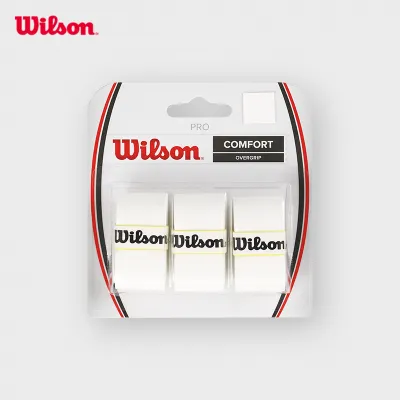
Prices are valid at publication and may change. Please refer to the product page for the latest price.
A properly sized grip acts as a seamless interface between your arm and the racket. It allows for a relaxed grip pressure, which promotes fluid wrist movement, efficient power transfer, and better shock absorption when hitting off-center shots.
What You Need to Measure Your Hand at Home
To perform these measurements accurately, you do not need specialized tennis equipment. Gather a standard flat ruler that features clear markings in both inches and millimeters. A rigid wooden, plastic, or metal ruler is preferable to a flexible tape measure, as a flexible tape can bend and introduce errors into your hand measurement.

You will also need a flat, hard surface, such as a table or desk, to rest your hand and the ruler during the measurement process. This ensures your hand remains stable and flat.
If you already own a tennis racket or have access to one, keep it nearby. While not strictly necessary for the ruler measurement, an existing racket is required to perform the secondary index finger verification test, which helps confirm your physical comfort with a specific handle size.
Method 1: How to Measure Your Hand With a Ruler
The ruler test is the most common objective method to find your baseline grip size. Start by extending your dominant hand—the hand you use to hold the racket. Keep your fingers fully extended, straight, and pressed close together. Your palm should be completely flat, not cupped or curved.
Look closely at the palm of your hand. You will see several distinct creases. Locate the lateral crease, which is the lower of the two major horizontal creases running across your palm. This crease typically starts between your thumb and index finger and extends across the palm. You want to align the zero mark of your ruler precisely with the bottom of this main palm crease.
Position the ruler so it runs parallel to your ring finger, extending straight up from the palm crease to the very tip of your ring finger. Ensure the ruler remains perfectly straight and does not tilt diagonally across your hand. Read the measurement at the exact point where the tip of your ring finger ends. Do not include your fingernail in the measurement if it extends significantly past the fingertip.
Once you have this measurement, you can map it to standard tennis grip sizes. Tennis rackets are manufactured in standard grip sizes, usually ranging from Size 0 to Size 5. These sizes correspond to specific physical measurements in inches and millimeters.
Standard grip sizes generally align with the following measurements:
- Grip Size 0 (4 inches or 100–102 mm): Typically suitable for juniors or players with very small hands.
- Grip Size 1 (4 1/8 inches or 103–105 mm): Often fits youth players or adults with smaller hands.
- Grip Size 2 (4 1/4 inches or 106–108 mm): A common size for many female players and male players with smaller hands.
- Grip Size 3 (4 3/8 inches or 109–111 mm): The most common size for average-sized male players and female players with larger hands.
- Grip Size 4 (4 1/2 inches or 112–114 mm): Suitable for players with larger hands.
- Grip Size 5 (4 5/8 inches or 115–117 mm): Designed for players with exceptionally large hands.
Write down your measurement in both inches and millimeters to make it easy to compare when shopping for a new racket.
Method 2: How to Check the Fit With the Index Finger Test
If you have a tennis racket on hand, the index finger test is an excellent way to verify if a grip size is physically compatible with your hand. This test simulates the actual feel of playing and helps you assess the spatial relationship between your fingers and palm when holding the handle.
To begin, pick up the racket with your dominant hand. Hold the handle using a standard Eastern forehand grip. To find this grip, place your palm flat against the strings of the racket, then slide your hand straight down to the handle and wrap your fingers around it. Your hand should feel comfortable, and your fingers should naturally wrap around the octagonal bevels of the handle.
With your dominant hand holding the racket, take the index finger of your non-dominant hand. Attempt to slide this index finger into the gap between the tips of your wrapped fingers and the base of your palm.
Observe how snugly your index finger fits into this space. If there is not enough room to insert your index finger, or if you have to force it in, the grip is too small. This means your fingers are wrapping too close to your palm, which will lead to over-gripping during play.
If your index finger fits into the gap but there is still a significant amount of empty space around it, the grip is too large. Your hand is stretched too far open, which will limit your wrist mobility and control.
In a perfect fit, your non-dominant index finger should slide comfortably and snugly into the gap, touching both the tips of your fingers and the base of your palm without forcing its way in or leaving excess space. This indicates that the racket handle is the correct size for your hand.
What to Do If You Are Between Grip Sizes
It is very common for a player’s hand measurement to fall directly between two standard grip sizes. For example, your ruler measurement might sit right between a Size 2 and a Size 3. When this happens, the general rule of thumb is to choose the smaller of the two sizes.
The reason for choosing the smaller size is simple: it is much easier to increase the size of a racket handle than it is to decrease it. You can easily build up a smaller grip to your exact preference using accessories, whereas shaving down or reducing a handle that is too large is highly impractical and can ruin the structural integrity of the racket’s handle bevels.
To increase a smaller grip slightly, you can apply a standard overgrip. A single overgrip typically adds about half a grip size (roughly 1/16 of an inch). Overgrips are thin, wrapped layers that also provide sweat absorption and extra tackiness. If you need a more permanent and substantial increase, you can install a heat shrink sleeve over the bare handle before applying your main grip. A heat shrink sleeve can increase the handle by one full grip size and preserves the sharp feel of the handle’s octagonal bevels.
Attempting to reduce a grip that is too large is rarely successful. It usually involves removing the original synthetic replacement grip and replacing it with a very thin overgrip directly on the bare handle. However, this removes the cushioning provided by the original grip, leading to a harsh, uncomfortable feel and increased vibration transfer to your arm.
How to Tell if Your Current Grip is the Wrong Size
If you are already playing with a racket, your body and your performance on the court will often signal if the grip size is incorrect. Paying attention to these physical and mechanical cues can help you identify when it is time to adjust your equipment setup.
Physical discomfort is one of the most immediate signs. If you frequently develop blisters or calluses on your palm, fingers, or the joints of your hand, it often indicates that the racket is twisting excessively in your hand, causing friction. Additionally, if you experience rapid fatigue, tightness, or aching in your forearm and wrist after only a short period of play, you are likely over-gripping to compensate for a handle that is too small or struggling to hold onto one that is too large.
Performance issues also point to sizing problems. If the racket constantly twists in your hand when you hit off-center shots, or if you find it difficult to control the angle of the racket face during fast rallies, your grip may not be providing adequate stability.
If you experience persistent pain in your elbow, wrist, or shoulder during or after play, you should stop playing immediately. Continuing to play with an improperly sized grip while experiencing pain can lead to chronic injuries. Reassess your grip size using the ruler and index finger tests, and consider adjusting your handle size before returning to the court.
Frequently Asked Questions (FAQ)
How often should I replace my tennis overgrip?
The lifespan of an overgrip depends on several factors, including how often you play, how much your hands sweat, and your local weather conditions. In warm, humid climates, sweat and moisture can cause overgrips to degrade much faster.
You should replace your overgrip as soon as you notice visual or tactile signs of wear. These signs include a loss of tackiness (the grip feels slippery or smooth), visible dirt buildup, discoloration, or physical tearing and fraying along the edges. For regular players, replacing the overgrip every six to ten hours of play is a common practice to maintain optimal control and prevent the racket from slipping.
Does grip size affect the overall weight of the racket?
Yes, modifying your grip size can affect both the static weight and the balance of your racket, though the degree of change depends on the method you use. A single standard overgrip adds a very small amount of weight—typically around 4 to 8 grams. This minor addition has a negligible impact on how the racket swings.
However, if you add multiple overgrips or install a thick plastic heat shrink sleeve to increase the handle by a full size, you will add more significant weight (often 15 grams or more) directly to the handle. Because this weight is added to the very bottom of the racket, it shifts the balance point toward the handle, making the racket feel slightly more head-light. While this can make the racket feel easier to maneuver, it also alters the overall swing weight and feel, which is why using a single overgrip or choosing the correct base size from the start is preferred.

Community discussion
Share your experience or ask a question. Comments are reviewed before publication.