
Using a stretch stick correctly requires a focus on controlled, progressive leverage rather than forced flexibility. By acting as an extension of your arms or an alignment guide for your spine, a stretch stick helps you maintain proper posture while targeting tight muscle groups. To safely improve your shoulder mobility and hamstring flexibility, you must prioritize slow, deliberate movements, maintain a neutral spine, and use your breath to signal your nervous system to relax.
Preparation and Safety Checks Before Stretching
Before you begin any flexibility routine, inspect your equipment. Check your stretch stick for structural integrity, ensuring there are no cracks, splinters, or loose components. If your stick features rubber end caps or foam grips, verify that they are securely attached and do not slip when tension is applied. A sudden slip or structural failure during a deep stretch can lead to muscle strains or joint hyperextension.
Preparing your muscles with a dynamic warm-up is essential before attempting assisted stretching. Cold muscle fibers are less elastic and more prone to micro-tears when subjected to leverage-based stretching. Spend five to ten minutes performing low-intensity movements such as gentle arm circles, torso twists, and bodyweight squats. In warm, humid climates like Singapore’s, you might feel warm quickly, but a dedicated dynamic warm-up is still necessary to lubricate your joints and increase local blood flow.
Products mentioned in this guide
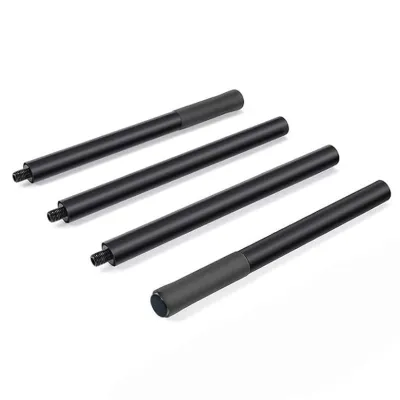
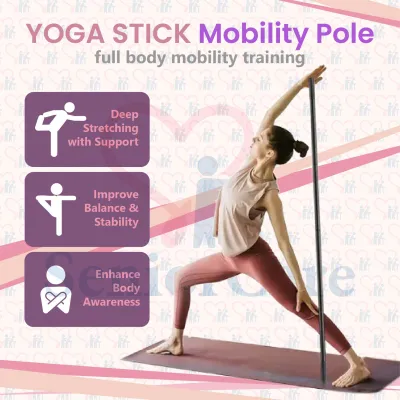

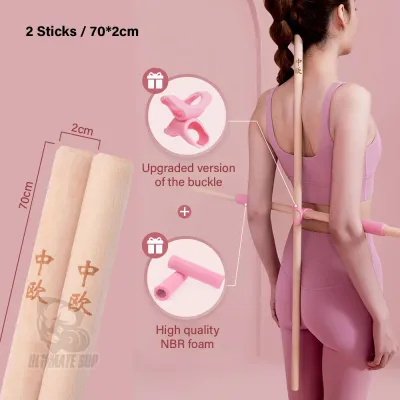
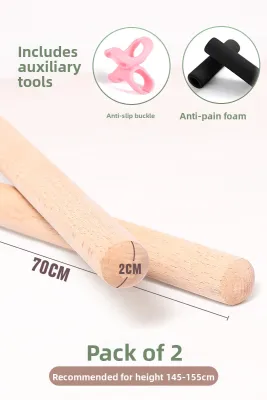
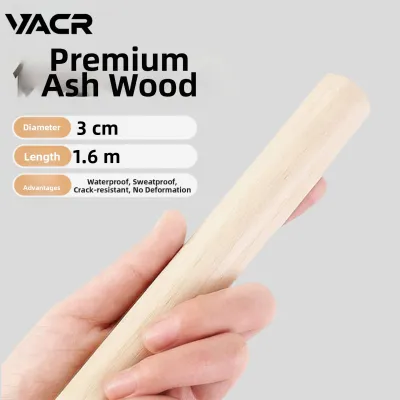
Prices are valid at publication and may change. Please refer to the product page for the latest price.
Understanding your personal physical limits is the foundation of safe flexibility training. If you have a history of shoulder dislocations, rotator cuff tears, or herniated discs, self-directed stretching with a stick can exacerbate these conditions. Always consult a qualified medical professional or physical therapist before starting a new mobility regimen if you are recovering from an injury or experiencing chronic joint pain.
Shoulder Mobility: Step-by-Step Stretch Stick Techniques
To target shoulder mobility, begin with the classic overhead pass-through, also known as a shoulder dislocate. Stand tall with your feet hip-width apart, engaging your core to maintain a neutral pelvis and prevent your lower back from arching. Hold the stretch stick in front of your thighs with an overhand grip, keeping your hands positioned significantly wider than shoulder-width. Slowly raise the stick overhead and continue the arc behind your back until it touches your lower back or glutes, then return to the starting position.

Throughout this movement, keep your arms fully extended without locking your elbows. If you feel your elbows bending or your chest thrusting forward to force the stick over your head, your grip is too narrow. Slide your hands further outward along the stick to decrease the leverage and reduce the intensity. As your shoulder joint mobility improves over several weeks, you can gradually narrow your grip centimeter by centimeter to maintain a gentle, productive stretch.
For targeting the internal and external rotators of the shoulder, transition to a behind-the-back vertical stretch. Hold the stick vertically behind your spine, grasping the upper end with one hand behind your neck and the lower end with your other hand near your lower back. Gently pull upward with your top hand to stretch the lower shoulder, then slowly pull downward with your bottom hand to stretch the upper shoulder. Keep your head aligned over your spine and avoid poking your chin forward during this movement.
Coordinate your breathing with each phase of the stretch to maximize relaxation. Inhale deeply through your nose as you prepare, and exhale slowly through your mouth as you gently increase the tension. Avoid holding your breath, as this triggers a sympathetic nervous system response that causes muscles to contract rather than release. Hold each static position for 15 to 30 seconds, focusing on a mild, comfortable sensation of tension rather than pain.
Hamstring Flexibility: Step-by-Step Stretch Stick Techniques
Using a stretch stick for hamstring flexibility is highly effective because it helps you maintain spinal alignment, protecting your lower back from rounding. To perform a standing hinge stretch, place the stick vertically along your spine, holding it with one hand behind your neck and the other behind your lower back. Ensure the stick makes contact with three points: the back of your head, your upper back (thoracic spine), and your tailbone (sacrum). Step one foot slightly forward, flex your toes upward, and hinge forward from your hips while keeping all three points of contact against the stick.
This alignment check prevents you from rounding your thoracic or lumbar spine, which is a common compensation pattern that bypasses the hamstrings and strains the back. Keep a micro-bend in your front knee to protect the joint capsule and ensure the stretch remains centered in the muscle belly of the hamstring. Hinge forward only until you feel a moderate stretch along the back of your thigh, hold for several deep breaths, and then return to an upright position before switching legs.
For a supine hamstring stretch, lie flat on your back on a comfortable exercise mat. If your stretch stick is equipped with integrated straps or loops, loop the strap around the arch of one foot while holding the stick with both hands. Slowly raise your leg toward the ceiling, keeping your opposite leg flat on the floor or bent with your foot flat on the ground to support your lower back. Use the stick to gently guide your leg closer to your torso, maintaining a slight bend in the active knee to avoid hyperextension.
If your stick is a simple rigid rod without straps, you can place the center of the stick behind your calf or thigh to assist in pulling the leg forward, or use it to support your hands as you reach toward your ankle. Avoid pulling your leg so far that your pelvis lifts off the floor or your lower back flattens aggressively against the mat. The goal is to isolate the hamstring while keeping your pelvis in a stable, neutral position.
Common Form Mistakes and Clear Stop Conditions
One of the most frequent errors when using a stretch stick is bouncing at the end of the range of motion. This ballistic movement triggers the stretch reflex, a protective mechanism that causes the muscle to contract to prevent tearing. Bouncing not only reduces the effectiveness of the stretch but also increases the risk of micro-tears in the muscle fibers and tendons. Always use slow, static holds or controlled, dynamic transitions.
Another common mistake is using the rigid leverage of the stick to force your joints into unnatural positions. Because a stretch stick provides mechanical advantage, it is easy to overpower your muscles and push past safe anatomical limits. Never use the stick to aggressively pry your shoulders back or pull your legs beyond a comfortable range. The stick should act as a supportive guide, not an instrument to force flexibility.
You must establish clear stop conditions to protect your joints and connective tissues from acute injury. If you experience sharp, shooting pain, joint clicking, pinching, numbness, or a tingling sensation, stop the stretch immediately. These symptoms often indicate nerve compression, joint impingement, or ligament strain rather than a safe muscular stretch. If these sensations persist after you stop stretching, consult a physical therapist or sports medicine professional for a comprehensive evaluation.
Verifying Progress and Adjusting Your Routine
To track your flexibility improvements over time, rely on simple, observable benchmarks rather than subjective feelings. For shoulder mobility, note your hand placement on the stretch stick during overhead pass-throughs; as your mobility increases, you will naturally be able to perform the movement with a narrower grip. For hamstring flexibility, observe how far you can hinge forward while maintaining the three points of contact on the stick, or measure the angle of your leg relative to the floor during supine stretches.
As your flexibility improves, adjust your routine by gradually increasing the duration of your holds or the frequency of your sessions. Start with two to three sessions per week, holding each stretch for 20 to 30 seconds. Over several weeks, you can progress to holding stretches for up to 60 seconds or performing the routine four to five times per week. Avoid making sudden jumps in intensity or volume, as connective tissues adapt much slower than muscle fibers.
Integrate your stretch stick routine into your broader fitness habits to maintain long-term mobility. Performing these stretches after a strength training session or a run is highly effective, as your muscles are already warm and receptive to lengthening. Alternatively, a dedicated 10-minute mobility session in the evening can help alleviate the muscular tension accumulated from prolonged sitting at a desk, promoting better posture and recovery.
Frequently Asked Questions (FAQ)
How often should I use a stretch stick for optimal flexibility gains?
For consistent flexibility improvements, aim to use your stretch stick three to five times per week. Consistency is far more important than intensity; short, frequent sessions of 10 to 15 minutes yield better results than one long, exhausting session. Always allow your muscles time to recover between intense stretching sessions, especially if you are combining mobility work with heavy resistance training. If your muscles feel sore or fatigued from a previous workout, focus on gentle, passive mobility rather than deep, progressive stretching.
Can a stretch stick replace professional physical therapy for shoulder injuries?
No, a stretch stick is a general wellness and mobility tool designed for healthy joints, and it cannot replace professional physical therapy. If you are dealing with an acute shoulder injury, chronic impingement, or a rotator cuff tear, using a stretch stick without professional guidance can worsen your condition. A physical therapist must diagnose the specific pathology and prescribe targeted, clinical exercises. Only use a stretch stick for rehabilitation under the direct supervision and approval of your healthcare provider.
Community discussion
Share your experience or ask a question. Comments are reviewed before publication.