
Baoding balls, traditional hand-exercise spheres, offer an excellent way to enhance your gym routine by targeting hand dexterity, joint mobility, and active recovery. While they do not replace heavy compound lifts like deadlifts or farmer’s walks for building raw crushing power, they serve as a valuable accessory tool. By engaging the small intrinsic muscles of the hand and the long tendons extending up the forearm, these rotating spheres help restore balance to overworked hands, improve fine motor control, and promote blood flow. Integrating them into your fitness regimen helps bridge the gap between heavy grip strain and the delicate coordination required for optimal hand health.
Understanding What Baoding Balls Can and Cannot Do for Grip Strength
To get the most out of baoding balls, you must understand their physiological role in hand training. Heavy gym training primarily builds absolute crushing strength and static grip endurance. When you hold a heavy barbell or perform hanging exercises, your forearm flexors contract isometrically under high tension. This builds thick muscle fibers and dense connective tissue, but it can also lead to chronic tightness, restricted joint mobility, and reduced fine motor control over time.
Baoding balls target a completely different aspect of hand function: active dexterity, coordination, and joint mobilization. Instead of static, high-tension contractions, rotating these spheres requires continuous, low-tension, dynamic contractions of the intrinsic hand muscles and the deep flexors and extensors of the forearm. This movement pattern does not stimulate significant muscle hypertrophy, nor will it directly increase your maximum deadlift grip.
Products mentioned in this guide
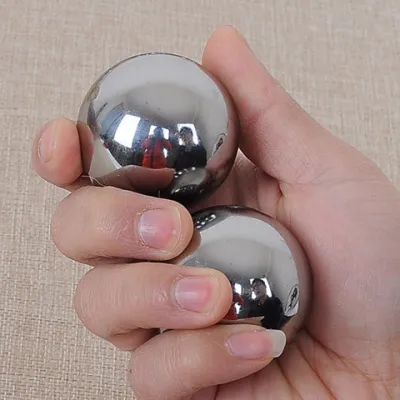
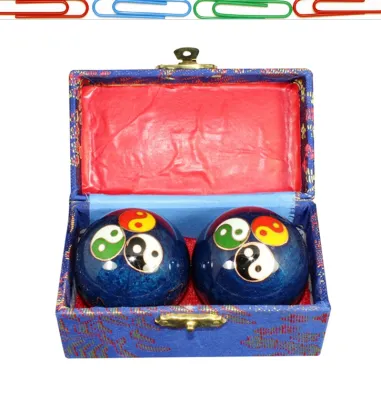
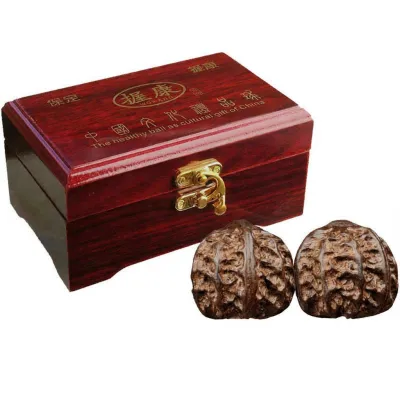
Prices are valid at publication and may change. Please refer to the product page for the latest price.
Instead, the primary benefit for lifters lies in active recovery and tendon health. The constant, rhythmic movement increases local blood circulation to the fingers, palms, and wrists without placing excessive mechanical stress on the joints. This increased blood flow delivers essential nutrients to tendons and ligaments, which naturally have a limited blood supply and heal slowly. Furthermore, the practice helps maintain a full range of motion in the carpal and metacarpophalangeal joints, counteracting the stiffening effects of heavy gripping.
How to Choose the Right Size and Weight for Your Hands
Selecting the correct set of baoding balls is crucial for preventing hand strain and ensuring a smooth, productive practice. If the balls are too large or too heavy for your current skill level, you risk overworking the delicate tendons in your fingers; if they are too small, you will not achieve the necessary muscle engagement.

When evaluating sizing, match the diameter of the balls to your palm size and finger length. For most adults with average-sized hands, a starting diameter between 38mm and 45mm is ideal. If you have smaller hands or shorter fingers, look for spheres in the 35mm to 40mm range. Larger hands can comfortably accommodate diameters of 48mm to 55mm. A simple way to check the fit is to place both balls in one palm; you should be able to close your fingers around them comfortably without your hand feeling excessively stretched or cramped.
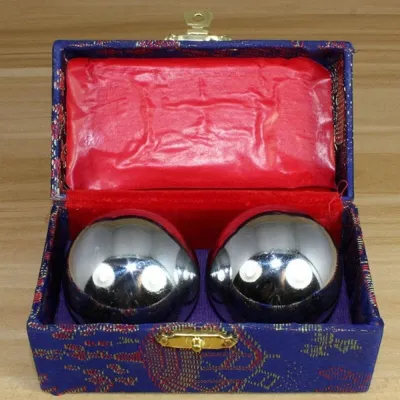
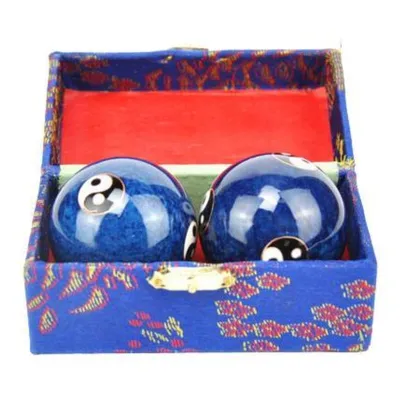
Weight is the next critical variable. Beginners should start with lighter, hollow metal balls, which often contain internal chimes that provide auditory feedback on your rhythm. These hollow spheres typically weigh between 100 and 200 grams per pair, making them easy to manipulate without fatiguing your muscles too quickly. As your coordination and endurance improve, you can transition to solid stone, solid steel, or heavy jade balls, which can weigh 500 grams or more per pair. These heavier options provide greater resistance, helping to build local muscular endurance in the forearms.
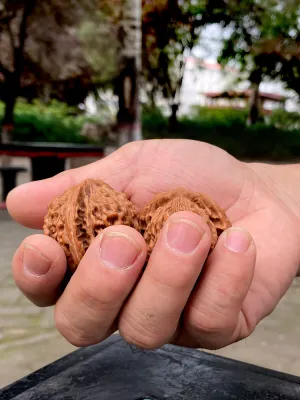
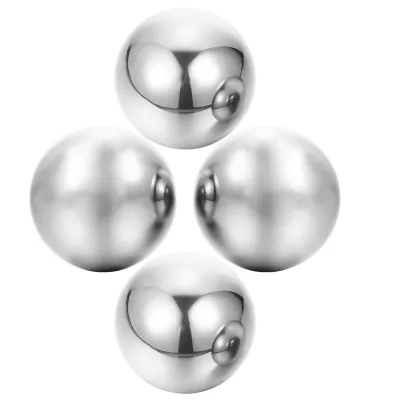
Finally, consider the surface texture. Smooth, polished finishes are standard and allow the balls to glide past each other with minimal friction, which is ideal for mastering basic rotation patterns. Textured or carved surfaces, such as those found on certain wooden or stone spheres, provide additional sensory feedback and act as a mild self-myofascial release tool as they roll across the acupressure points in your palm.
Step-by-Step Warm-Up Routine for Hand Dexterity
Using baoding balls as a pre-workout warm-up prepares your hands, wrists, and forearms for the heavy loads they will encounter during your workout. This routine stimulates the nervous system, lubricates the joints, and increases the temperature of the local tissues, reducing the risk of sudden strains.
Begin with the basic rotation technique. Place two balls in the palm of your dominant hand. Using your fingers, gently push the balls so they rotate around each other in a clockwise direction. Focus on keeping the movement smooth and controlled. Your goal should be to rotate the balls without letting them clatter or touch each other; this “silent rotation” forces your fingers to extend and flex fully, maximizing the engagement of the intrinsic muscles. After two minutes, reverse the direction to counter-clockwise for another two minutes, then switch to your non-dominant hand and repeat the process.
Once you can perform basic rotations comfortably, progress to advanced finger isolation. Instead of using your entire hand to slide the balls, focus on moving them using only two or three fingers at a time while keeping the other fingers relatively still. For example, use your thumb, index, and middle fingers to guide the rotation, then transition to using your middle, ring, and pinky fingers. This targeted manipulation isolates the specific tendons running through the carpal tunnel, improving individual finger independence and coordination.
Structure your warm-up to stimulate blood flow without inducing fatigue. A total of five to ten minutes of light rotation before your main lifting session is sufficient. Keep the pace moderate and avoid using heavy solid steel balls for this phase; the goal is neurological activation and joint lubrication, not a strength workout. If your forearms begin to feel pumped or tired before you even touch a barbell, reduce the duration or switch to lighter spheres.
Post-Workout Recovery Techniques for Forearms and Hands
After a grueling workout involving heavy pulling, carrying, or hanging, your forearm flexors and the fascia of your palms are often tight and hypertonic. Baoding balls can be used as highly effective self-massage and active recovery tools to alleviate this tension and accelerate tissue repair.
To perform a targeted self-massage, take a single heavy baoding ball—preferably a solid stone or steel one—and press it into the fleshy part of your palm, known as the thenar eminence at the base of the thumb. Apply moderate, controlled pressure and roll the ball in small circles to release tight muscle fibers. You can also place the ball on a flat surface, such as a gym bench or table, and press your forearm flexors down onto it. Slowly roll your forearm forward and backward over the ball, pausing on any particularly tender spots for ten to fifteen seconds to allow the tissue to release.
Combine these massage techniques with active stretching. Hold one ball in your hand and slowly extend your arm fully in front of you with your palm facing up. Gently pull your fingers back toward your body with your other hand, using the weight of the ball to deepen the stretch along the underside of your forearm. Hold this position for twenty seconds, breathing deeply, then reverse the stretch by pointing your fingers downward with your palm facing your body.
Monitor your hands for observable signs of effective recovery. After a recovery session, your hands should feel warm, loose, and light, with an improved range of motion when opening and closing your fist. If you experience throbbing pain, deep aching, or increased stiffness the following morning, you may have applied too much pressure or worked the tissues for too long. Always allow highly fatigued muscles to rest rather than forcing deep tissue massage on inflamed tendons.
How to Schedule Baoding Balls in Your Weekly Gym Routine
Integrating baoding balls into your weekly training split requires careful planning to avoid overworking your hands. Because your grip is involved in almost every upper-body exercise, managing the cumulative volume on your hands and wrists is essential for long-term progress.
On heavy training days, such as pull days or deadlift sessions, use baoding balls exclusively as a light warm-up tool before you lift, or as a gentle recovery tool several hours after your workout is complete. Avoid performing intense, prolonged rotation sessions immediately before lifting, as this can temporarily reduce your maximum grip stability. Instead, save your dedicated dexterity and endurance practice for active recovery days or rest days. A fifteen-minute session on a non-lifting day is an excellent way to maintain joint mobility and promote blood flow without adding to your systemic training load.
To balance this practice with direct grip training, treat baoding balls as a complementary accessory rather than a primary lift. If you already perform heavy farmer’s walks, plate pinches, or barbell holds twice a week, limit your active baoding ball practice to two or three short sessions per week. This ensures your central nervous system and local forearm tissues have adequate time to adapt and recover.
Track your progress using observable, functional markers rather than trying to measure grip strength directly with a dynamometer. Over several weeks of consistent use, you should notice reduced morning stiffness in your fingers, smoother and quieter rotation of the spheres, and a more secure, comfortable feel when gripping heavy barbells or dumbbells. If you find that your hands feel less fatigued during high-volume pulling workouts, your active recovery routine is working effectively.
Safety Limits, Cleaning, and When to Stop
While baoding balls are generally safe, improper use or ignoring physical warning signs can lead to repetitive strain injuries. It is vital to recognize when to stop and how to maintain your equipment to ensure a safe training environment.
Stop using the balls immediately if you experience sharp pain, numbness, tingling, or a burning sensation in your fingers, palms, or wrists. These symptoms can indicate nerve compression, such as carpal tunnel syndrome, or acute tendon inflammation. If you have a history of tendonitis or joint hypermobility, consult a healthcare professional before incorporating these tools into your routine. Never attempt to push through pain; rest and recovery are paramount when dealing with the intricate structures of the hand.
Proper hygiene and maintenance are also essential, especially if you carry your baoding balls in a sweaty gym bag. After each session, wipe the spheres down with a clean, dry microfiber cloth to remove sweat, skin oils, and chalk residue. For metal balls, occasionally apply a very light coat of mineral oil to prevent rust and corrosion, particularly if you live in a humid climate. Wooden and stone balls should be kept dry and stored away from extreme temperature fluctuations to prevent cracking or splitting.
Always store your baoding balls in their dedicated padded box or a secure pouch within your gym bag. Loose spheres can roll around, clatter against other gear, and potentially chip, scratch, or cause damage to delicate items like electronics or lifting straps. Keeping them secure ensures they remain in optimal condition for your next session.
Frequently Asked Questions (FAQ)
Can baoding balls replace traditional spring-loaded grip strengtheners?
No, baoding balls cannot replace traditional spring-loaded grip strengtheners, as they serve entirely different training purposes. Spring-loaded grip tools are designed to build maximal crushing strength through high-resistance, isometric, and concentric contractions. In contrast, baoding balls focus on active recovery, joint mobility, coordination, and fine motor control. To build a complete, resilient grip, use spring-loaded trainers or heavy barbell holds for raw strength, and use baoding balls to restore flexibility, relieve tension, and promote blood flow in your hands and forearms.
How long should I practice with baoding balls each day?
For most gym-goers, a daily practice of five to ten minutes per hand is highly effective and easily sustainable. If you are using them as a pre-workout warm-up, a brief five-minute session is sufficient to stimulate blood flow and joint lubrication. On rest days or during dedicated recovery sessions, you can extend this to fifteen minutes per hand, provided you do not experience fatigue or discomfort. Always start with shorter sessions of three to five minutes and gradually increase the duration as your hand endurance and coordination adapt.
Community discussion
Share your experience or ask a question. Comments are reviewed before publication.