
A 360 rotating carabiner—often referred to as a swivel carabiner—is safe for climbing only when used within its certified, manufacturer-specified applications, and it is generally not safe or appropriate for primary lead climbing protection or dynamic fall arrest. While the integrated swivel joint successfully prevents ropes and lanyards from twisting, the multi-part construction introduces mechanical complexities, potential failure points, and alignment risks that do not exist in standard, solid-spine carabiners. Safe use depends entirely on matching the specific model’s certified load ratings to the activity, performing rigorous pre-use inspections, and understanding the mechanical limitations of a rotating joint under load.
Climbing is an inherently high-risk activity where gear failure or misuse can result in severe injury or death. No piece of equipment, including specialized rotating carabiners, can substitute for proper professional training, sound judgment, and adherence to established safety protocols. Before incorporating any swivel device into your safety chain, you must verify its certification standards, inspect its mechanical parts, and understand when to stop using it.
Understanding the 360 Rotating Mechanism
A standard climbing carabiner features a single-piece, forged metal spine designed to distribute forces predictably along its major axis. This solid construction has no moving parts other than the gate and sleeve, minimizing the areas where structural fatigue or mechanical failure can occur. When loaded correctly along its spine, a standard carabiner provides a highly reliable connection point that handles dynamic impacts during a fall.
Products mentioned in this guide
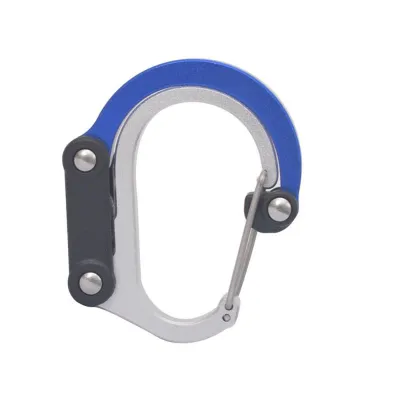
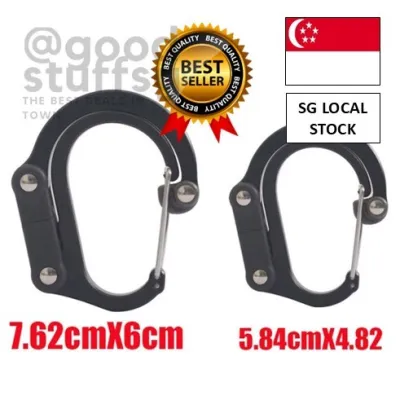
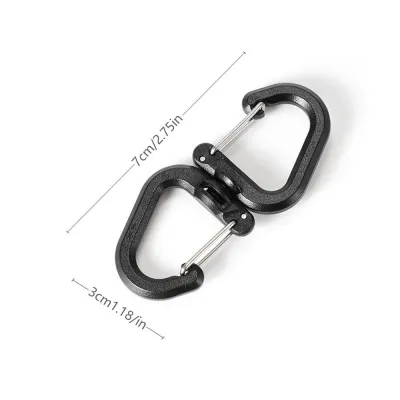
Prices are valid at publication and may change. Please refer to the product page for the latest price.
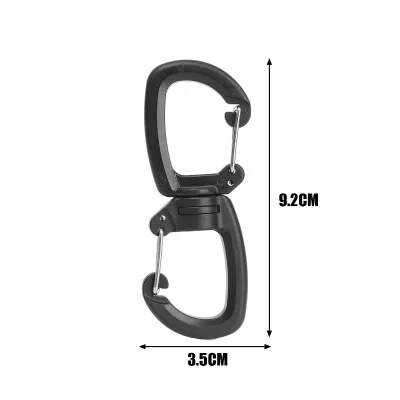
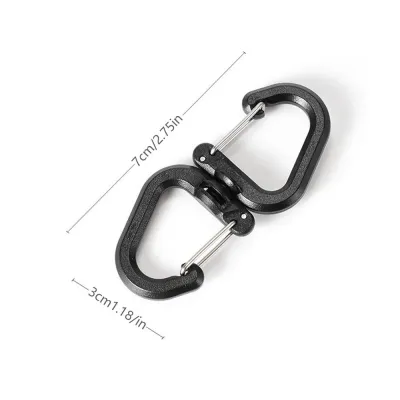
In contrast, a 360 rotating carabiner incorporates an integrated swivel joint, allowing the basket of the carabiner to rotate independently of the attachment eye or webbing loop. This multi-part assembly requires a pin, bearings, and a housing to facilitate smooth, continuous rotation. While this design solves the problem of twisting ropes and tangled lanyards, it splits the load-bearing structure into separate components that must interact under tension.
The introduction of a rotating joint creates additional mechanical interfaces that must manage complex, multi-directional forces. Under load, any misalignment or friction within the swivel can concentrate stress on the joint housing rather than distributing it evenly. Understanding this structural difference is critical, as the rotating mechanism behaves fundamentally differently under tension than a solid, single-piece frame.
Appropriate Use Cases for Rotating Carabiners
Rotating carabiners serve highly specific roles in vertical systems where managing twist is essential for safety and efficiency. Common applications include via ferrata lanyards, where the constant clipping and unclipping can easily twist webbing straps and compromise their deployment. They are also widely utilized in professional work positioning, aerial acrobatics, and complex rescue rigging setups where maintaining alignment under low, constant tension prevents dangerous tangles.

Before clipping a rotating carabiner into any life-safety system, you must verify the manufacturer’s explicit intended-use guidelines. Every model is engineered with specific operational limits, and assuming a swivel carabiner is interchangeable with a standard utility model can lead to catastrophic failure. The user manual will outline the exact configurations where the swivel is permitted to rotate under load and where it must remain static.
As a general rule, rotating carabiners are not designed for primary lead climbing protection, anchor points, or dynamic fall arrest systems unless they carry explicit certifications for those specific forces. The dynamic impact of a lead fall can subject the swivel joint to unpredictable, violent forces that the multi-part assembly is not rated to withstand. For standard climbing protection, traditional solid-spine carabiners remain the industry standard.
Potential Safety Risks and Mechanical Limitations
The primary risk associated with a 360 rotating carabiner is the potential for cross-loading or side-loading if the swivel joint binds or jams. If the bearing fails to rotate freely under tension, the carabiner may become trapped in an unfavorable orientation, forcing the load onto the weaker minor axis or the gate itself. Standard carabiners are designed to naturally slide into alignment along their major axis, but a stuck swivel can prevent this self-correcting behavior.
Unexpected rotation during a climb can also lead to gate alignment issues and accidental unclipping. If the rotating base shifts position while rubbing against rock, webbing, or another piece of hardware, the gate could be pressed open or positioned where it can easily catch on external objects. This unpredictable movement requires constant vigilance and makes the gear unsuitable for situations where the carabiner cannot be easily monitored.
Additionally, the internal swivel bearing is highly vulnerable to environmental contamination from dirt, grit, sand, or ice. In outdoor climbing environments, fine particles can easily migrate into the joint housing, grinding down the bearings or locking the mechanism entirely. Once the swivel is compromised by debris, it loses its ability to rotate smoothly, significantly increasing the risk of mechanical failure under load.
Inspection, Maintenance, and Retirement Criteria
Maintaining a rotating carabiner requires a rigorous inspection routine before and after every use. Begin with a thorough visual check of the entire body, paying close attention to the joint housing where the swivel meets the carabiner frame. Look for any signs of hairline fractures, stress corrosion cracking, or physical deformation in the metal, and immediately retire the gear if any structural anomalies are detected.
Next, perform a tactile test by rotating the swivel manually through its full 360-degree range. The rotation must feel completely smooth, consistent, and silent, with no catching, grinding, or lateral play in the joint. Any resistance, clicking noises, or wobbling indicates internal wear or debris buildup, meaning the carabiner must be taken out of service until it can be cleaned or permanently retired.
Cleaning must be performed strictly in accordance with the manufacturer’s instructions to avoid stripping away essential internal lubricants or damaging protective seals. Typically, this involves rinsing the joint with clean, lukewarm water to flush out grit, followed by thorough air drying. Never use harsh solvents, degreasers, or unauthorized lubricants, as these can degrade the internal components and compromise the safety of the mechanism.
You must immediately retire the rotating carabiner if you observe any stiffness in the swivel that cannot be resolved by standard cleaning, visible deformation of the frame, gate flutter, or unusual noises during rotation. If the carabiner is subjected to a severe drop or a dynamic fall, it must be retired immediately, even if there is no visible damage. When in doubt about the integrity of a swivel joint, always err on the side of caution and replace the unit.
When to Choose Standard Non-Rotating Carabiners
For the vast majority of recreational climbing activities, standard non-rotating carabiners are the safest and most reliable choice. Traditional solid-spine models should always be used for quickdraws, belay systems, rappelling, and general anchor building. These applications require predictable load distribution and minimal moving parts to ensure the safety chain remains intact during a fall or under constant tension.
A solid, single-piece spine offers significantly fewer failure points than a multi-part swivel assembly. Because there are no internal bearings, pins, or rotating housings, a standard carabiner behaves predictably under dynamic loads and is far easier to inspect and maintain. It is also highly resistant to environmental factors like mud, sand, and freezing temperatures, making it the dependable choice for diverse climbing conditions.
If you are ever unsure about whether a specialized rotating carabiner is appropriate for your specific rigging or climbing setup, consult a certified climbing instructor or a qualified gear specialist. Substituting specialized equipment for standard safety gear without professional guidance can introduce unforeseen risks into your system. Relying on proven, standard hardware for critical life-safety connections is always the safest approach.
Frequently Asked Questions (FAQ)
Can I use a 360 rotating carabiner for my belay device?
Using a 360 rotating carabiner for a belay device is highly discouraged and generally unsafe. The rotating mechanism can easily cause the belay device to spin out of its optimal braking plane during a catch, potentially compromising your ability to control the rope or lock off a fall. Additionally, the swivel increases the risk of cross-loading the carabiner against the belay loop. Always follow the specific compatibility instructions provided by both your belay device and carabiner manufacturers, and stick to dedicated, non-rotating belay carabiners with anti-cross-loading features.
Does the swivel joint reduce the overall strength rating?
The overall strength rating of a rotating carabiner depends entirely on its specific engineering, materials, and certification testing. While some high-quality swivel carabiners are rated to standard climbing strengths along their major axis, the multi-part joint is inherently more complex than a solid spine. You must always read the stamped kilonewton (kN) ratings on the carabiner body and verify them against the safety standards required for your specific activity. Never assume a rotating carabiner has the same strength profile as a standard model without verifying these official markings.
How do I prevent the swivel mechanism from freezing in cold weather?
In freezing or alpine environments, moisture can easily enter the swivel housing and freeze, locking the rotating mechanism and rendering it unsafe. To prevent this, keep the gear as dry as possible and store it in a protected pocket or pack when not in use. If you must use a swivel device in cold conditions, consult the manufacturer’s technical manual for approved cold-weather maintenance protocols and authorized low-temperature lubricants. If the swivel freezes or becomes stiff during a climb, treat it as a locked, non-rotating unit and adjust your safety setup accordingly.
Community discussion
Share your experience or ask a question. Comments are reviewed before publication.