
A standard utility carabiner with a hook design is absolutely unsafe for climbing and must never be used as part of a life-safety system. While these devices are highly convenient for organizing keys, hanging camping lanterns, or securing gear to a backpack, they are not engineered to withstand the extreme dynamic forces generated during a fall. True climbing carabiners undergo rigorous manufacturing standards and certification processes to ensure they can support human weight under stress. Substituting a utility hook for certified climbing hardware can lead to immediate, catastrophic failure.
Understanding the difference between everyday utility accessories and life-saving climbing equipment is the first step in keeping yourself safe on the wall. Whether you are climbing indoors at a local gym in Singapore or tackling outdoor routes, verifying the rating and design of every piece of gear in your kit is non-negotiable. This guide breaks down how to identify non-load-bearing hooks, the mechanical risks they pose, and how to verify that your gear is certified for climbing.
Identifying Your Gear: Accessory Hooks vs. Climbing Carabiners
When browsing online marketplaces or outdoor stores, searching for a “carabiner with hook” typically brings up everyday carry (EDC) accessories, keychain clips, or heavy-duty hardware store snap hooks. These items are designed for static utility tasks, such as hanging a water bottle or securing a dog leash. They are structurally distinct from climbing carabiners, which are purpose-built to manage dynamic loads and secure human life.
Products mentioned in this guide
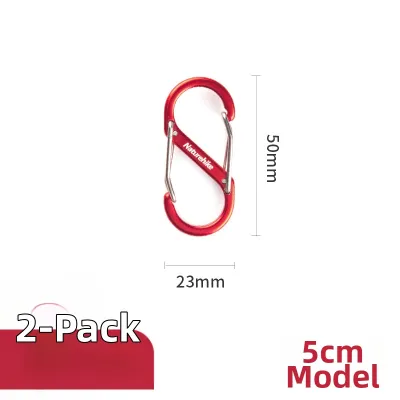
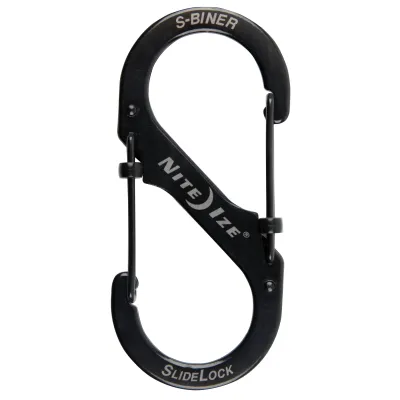
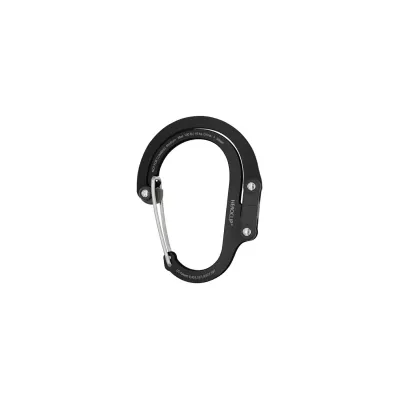
Prices are valid at publication and may change. Please refer to the product page for the latest price.
Visual differences are often the first clue, though they can sometimes be deceptive. Utility hooks often feature thin wire gates, plastic components, or simple spring-loaded snap mechanisms that lack any locking sleeve. Many have integrated swivel eyes or open hook attachments designed to loop over rods or ropes. In contrast, a certified climbing carabiner features a robust, solid aluminum or steel body with a highly engineered gate mechanism, often incorporating a screw-gate, twist-lock, or magnetic locking system.
Assuming that a heavy-duty appearance translates to climbing safety is a dangerous mistake. Industrial rigging hooks or thick steel snap hooks from a hardware store may look indestructible, but they are designed for static lifting or towing, not the sudden, violent shock loads of a climbing fall. Climbing gear must stretch and deform slightly to absorb energy, whereas rigid industrial hooks can snap or unclip unexpectedly when subjected to dynamic forces.
Critical Safety Risks of Using Non-Climbing Hooks
The primary hazard of using non-climbing hooks in a safety chain is their lack of dynamic strength ratings. When a climber falls, the force exerted on the anchor and carabiners is many times the climber’s body weight due to gravity and acceleration. Utility hooks are rated for static working load limits, if they are rated at all, and can fail instantly under the sudden impact of a dynamic fall.

Another critical vulnerability is a phenomenon known as gate flutter. During a fall, the rapid movement and vibration of the rope can cause a non-locking gate to vibrate open. When a carabiner’s gate is open, its strength is reduced by more than half, making it highly susceptible to breaking. Climbing carabiners are designed with precise spring tensions and locking gates to prevent this, whereas utility hooks have weak springs that easily yield under rope movement.
Material composition also plays a decisive role in how gear behaves under stress. Many cheap utility hooks are made from cast zinc, low-grade steel, or brittle aluminum alloys. Under high tension, these materials can shatter without warning. Certified climbing carabiners are forged from high-strength, heat-treated aluminum or structural steel, allowing them to bend and deform under extreme loads rather than snapping abruptly, giving the climber a vital margin of safety.
How to Verify if Your Carabiner is Safe for Climbing
Before trusting any carabiner with your life, you must perform a physical inspection to verify its certifications. Look closely at the spine of the carabiner, where mandatory safety markings should be clearly engraved or stamped. A legitimate climbing carabiner will feature the CE mark (followed by a four-digit identification number) or the UIAA (International Climbing and Mountaineering Federation) logo, proving it has passed standardized safety testing.
In addition to certification logos, you must locate the strength ratings, which are measured in kilonewtons (kN). A certified climbing carabiner will display three distinct ratings: the major axis strength (when the gate is closed and loaded end-to-end), the minor axis strength (cross-loaded side-to-side), and the open-gate strength. For general climbing, the major axis rating should typically be at least 20 kN, which represents approximately 2,000 kilograms of static force. If these numbers are missing, or if the rating is printed in kilograms or pounds, the device is not certified for climbing.
Finally, inspect the physical gate mechanism to ensure it functions flawlessly. Press the gate open and let it snap shut; it should close completely and instantly without sticking or rubbing against the nose. If it is a locking carabiner, verify that the sleeve threads smoothly and locks securely. Any hesitation in the gate’s spring action, or any visible misalignment where the gate meets the nose, is an immediate reason to reject the gear.
Specialized Hook Gear in Professional Climbing Contexts
It is worth noting that specialized “hooks” do exist within professional climbing, but they serve highly specific, non-protective roles. In aid climbing, climbers use tools like fifi hooks, skyhooks, or copperheads to assist in upward progression or to temporarily rest on gear. These hooks allow a climber to pull themselves up difficult rock faces where natural handholds are absent, but they are never intended to catch a fall.
Because these specialized hooks are not designed to hold dynamic falls, they must always be used in conjunction with certified, load-bearing climbing carabiners. A fifi hook, for example, is typically attached to a climber’s harness loop via a certified carabiner or high-strength sling. If the hook slips off the rock placement, the climber’s primary safety system—consisting of certified ropes, active protection, and locking carabiners—remains intact to arrest the fall.
Maintaining a strict boundary between progression tools and life-safety systems is fundamental to safe climbing. Progression hooks are convenience tools designed to hold static body weight at most, and often much less. They must never be substituted for, or integrated directly into, your belay system, main anchors, or tie-in points, where only certified locking carabiners are acceptable.
Choosing Safe Alternatives and Knowing When to Retire Gear
To ensure your safety on the wall, always choose the correct type of certified carabiner for the task at hand. For critical connections, such as your belay device attachment, master points on anchors, or tie-in points, always use a locking carabiner. Non-locking carabiners, including wiregates and solid gates, are suitable for quickdraws and gear organization, provided they are configured correctly to prevent accidental unclipping.
Even certified climbing gear does not last forever, and you must know when to retire your equipment. Inspect your carabiners regularly for physical wear, paying close attention to the areas where the rope runs. If you detect deep grooves worn into the metal, sharp edges, hairline cracks, or any visible deformation of the frame, retire the carabiner immediately. A stiff gate that fails to snap shut after cleaning and lubrication is also a clear sign that the gear must be discarded.
Proper storage and maintenance are essential to prevent premature wear and hidden damage. Store your climbing gear in a cool, dry place away from direct sunlight, moisture, and corrosive chemicals, which is especially important in humid climates like Singapore’s. Avoid storing your gear near household cleaners, battery acid, or damp environments that can promote oxidation. Periodically clean your carabiners with warm water and a mild soap, dry them thoroughly, and apply a dry, wax-based lubricant to the gate pivot to keep the mechanism operating smoothly.
Frequently Asked Questions (FAQ)
Can I use a heavy-duty steel snap hook for top-rope anchoring?
No, you should never use a heavy-duty steel snap hook from a hardware store for top-rope anchoring. While these hooks may have high static weight limits printed on them, they are not designed to handle the dynamic, multi-directional forces of a climbing fall. They also lack the certified locking mechanisms required to prevent the rope from accidentally unclipping. Always use certified, locking climbing carabiners (UIAA or CE marked) to construct your anchors.
What should I do if my climbing carabiner drops on the ground from a height?
If your climbing carabiner drops from a significant height onto a hard surface, you must inspect it thoroughly before using it again. Check for visible cracks, deep gouges, gate misalignment, or stiffness in the locking mechanism. While modern aluminum carabiners are highly resilient, a severe impact can cause micro-fractures or warp the frame, compromising its strength. If you have any doubt about the structural integrity of the dropped carabiner, or if it fell from a great height onto concrete or rock, err on the side of safety and retire it immediately.

Community discussion
Share your experience or ask a question. Comments are reviewed before publication.