
Selecting the right fishing reel can be a daunting task when you are standing in a tackle shop or browsing online marketplaces, especially when trying to match your gear to Singapore’s diverse angling environments. To make the right choice between KastKing spinning reels and baitcasting reels, you must evaluate your experience level, your target species, and the specific techniques you plan to use. Spinning reels are the ideal choice for beginners, finesse fishing, and casting light lures into open coastal waters, as their design minimizes line tangles and simplifies operation. Conversely, baitcasting reels are better suited for experienced anglers who require pinpoint accuracy, heavy line management, and maximum cranking power when pulling predatory fish out of dense reservoir structures.
What Are the Fundamental Mechanical Differences Between KastKing Spinning and Baitcasting Reels?
The primary mechanical difference between these two reel types lies in the orientation of the spool and how the line is released during a cast. On a spinning reel, the spool remains completely stationary and parallel to the rod, allowing the line to uncoil freely over the lip of the spool during a cast. A rotating metal arm, known as the bail, is flipped open to allow this free release and flipped closed to engage the line, wrapping it back onto the spool via an oscillating mechanism. Because the spool does not rotate during the cast, there is minimal friction, making it exceptionally easy to throw lightweight lures without mechanical resistance.
In contrast, a baitcasting reel features a revolving spool that sits perpendicular to the rod. When you press the thumb bar to cast, the entire spool rotates to release the line, meaning the momentum of the flying lure must physically pull and spin the spool. To prevent the spool from spinning faster than the lure is traveling—which causes a severe tangle known as backlash—baitcasting reels rely on sophisticated braking systems. KastKing baitcasters typically employ magnetic, centrifugal, or dual braking systems, alongside a mechanical spool tension knob, to control the spool’s rotation speed.
Products mentioned in this guide
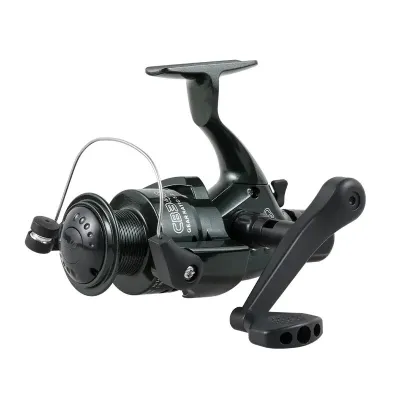
23 Lazada user ratings
Very good! I thought it would be smaller, but it’s not as small as I expected. The product is beautiful, but we’ll have to try it out for a …Read full reviewShow less
Very good! I thought it would be smaller, but it’s not as small as I expected. The product is beautiful, but we’ll have to try it out for a while to really assess the quality.
I’ve received the item—it matches the description. It took a bit longer to arrive, but I haven’t tried it out yet. I’ll answer all your ques…Read full reviewShow less
I’ve received the item—it matches the description. It took a bit longer to arrive, but I haven’t tried it out yet. I’ll answer all your questions clearly once I’ve tested it.
The keel can be used in both saltwater and freshwater, it’s lightweight and compact, offers smooth and rapid retraction—thank you!
The key lies in smooth and rapid attraction, a sleek design, a durable structure—thank you!
I haven't received the item yet; the delivery was sent to the wrong address.
Prices are valid at publication and may change. Please refer to the product page for the latest price.
These mechanical differences also dictate how the reels mount to your fishing rod and how they feel in your hand. Spinning reels mount underneath the rod, hanging downward, which naturally balances the setup and reduces wrist fatigue during long casting sessions. They must be paired with a dedicated spinning rod featuring large guide rings to handle the wide loops of line coming off the stationary spool. Baitcasting reels mount on top of the rod, aligning directly with the angler’s thumb for manual spool control. They require a casting rod equipped with a trigger grip and smaller, closely spaced guides to keep the line running straight along the top of the blank.
Which KastKing Reel Type Offers a Smoother Learning Curve for Beginners?
Spinning reels offer a significantly smoother learning curve for beginners because their fixed-spool design inherently prevents the spool from overrunning and tangling. When casting a spinning reel, the line simply stops leaving the spool when the lure hits the water, requiring no active physical intervention from the angler to prevent a mess. This user-friendly operation allows novice anglers to focus entirely on their casting motion, lure presentation, and learning how to read the water, rather than constantly troubleshooting line issues.

Baitcasting reels present a much steeper learning curve due to the constant need for manual thumb control and precise mechanical adjustments. If you do not lightly press your thumb against the spinning spool the exact moment the lure touches the water, the spool will continue to spin, wrapping loose line around itself in a frustrating tangle often called a “bird’s nest.” Additionally, every time you change to a lure of a different weight, you must recalibrate both the mechanical tension knob and the magnetic or centrifugal brakes to match the new payload. For a beginner, these constant adjustments can lead to more time spent untangling line than actually fishing.
For those transitioning from basic setups to more advanced gear, starting with a spinning reel allows you to build confidence and master basic knot-tying, rigging, and fish-fighting techniques. Once you can consistently cast a spinning reel with accuracy and understand how to manage line tension, you can gradually introduce a baitcasting reel to your arsenal. When making this transition, it is highly recommended to start with heavier monofilament or braided lines on your baitcaster, as these are much easier to untangle during the inevitable learning phase than thin, stiff fluorocarbon lines.
In What Scenarios Does a KastKing Baitcasting Reel Outperform a Spinning Reel?
A baitcasting reel outperforms a spinning reel in scenarios that demand extreme casting accuracy, heavy line management, and high-torque retrieval power. Because your thumb rests directly on the spool during a baitcasting cast, you can feather the spool to slow down the lure mid-flight, allowing you to drop a lure quietly into a tiny pocket of water right next to a submerged log or dock piling. This level of precision is incredibly difficult to replicate with a spinning reel, where the line flows freely and cannot be easily controlled mid-cast.
Furthermore, baitcasting reels are designed to handle heavy fluorocarbon, monofilament, and thick braided lines without the line twisting or jumping off the spool. This makes them a highly effective tool for heavy-cover techniques such as flipping, pitching, and frogging, where you must throw heavy lures into thick vegetation and immediately pull aggressive fish out of the weeds. The direct line path of a baitcasting reel—where the line winds straight onto the spool rather than turning at a 90-degree angle over a line roller—provides excellent cranking efficiency and structural strength.
When fighting large, hard-pulling predatory fish, this direct mechanical advantage translates into raw pulling power. The gears in a baitcasting reel are aligned in a way that allows for high-torque retrieval, making it much easier to work high-resistance lures like deep-diving crankbaits or heavy spinnerbaits. If your target species requires you to muscle them away from sharp structures immediately after the strike, a baitcasting setup provides the structural rigidity and leverage needed to win those high-stakes battles.
How Do Line Capacity and Drag Systems Compare Between the Two KastKing Reel Types?
Spinning reels typically feature a front-mounted drag system that is highly responsive for light lines, while baitcasting reels utilize a star drag located next to the handle, offering direct torque control for heavy-duty battles. The front drag on a spinning reel utilizes a stack of washers inside the spool itself, providing a smooth, consistent release of line that is critical when using light fluorocarbon or monofilament lines. This placement makes it easy to make quick, micro-adjustments by turning the dial on the front of the spool, even while fighting a fast-running fish.
Baitcasting reels position their drag system inside the main gear sideplate, controlled by a star-shaped wheel located right next to the handle. This design is engineered to handle much higher pressure limits, allowing anglers to lock down the drag completely when fishing in dense cover to prevent fish from taking any line. While star drags are highly powerful, making precise, incremental adjustments in the middle of a fight can be slightly more awkward than adjusting a front-spinning drag, as your hand must leave the handle grip to turn the star wheel.
Line capacity and spool design also differ significantly between the two types. Spinning reels feature wide, open spools that facilitate long casts with light lines, but they can suffer from line twist if the line is spooled incorrectly or if the drag slips repeatedly. Baitcasting reels spool line in a straight, parallel fashion, which virtually eliminates line twist and allows for massive line capacity with thick, heavy-diameter lines. To ensure your chosen reel matches your target application, always verify the maximum drag rating and line capacity by checking the official specifications printed on the KastKing product packaging or the manufacturer’s label, rather than relying on general estimations.
How Should You Match Your KastKing Reel Choice to Your Target Species and Local Waters?
To make the final decision, you must match your reel choice to the specific environments you frequent and the species you intend to target. In Singapore’s coastal waters, such as the sandy shores of East Coast Park or the rocky breakwaters of Changi, a spinning reel is often a highly practical choice. These open-water environments require long, wind-resistant casts with lightweight jigs, lures, or live bait rigs to target species like tamban, selar, or flathead. The spinning reel’s ability to cast light setups into head-winds without backlashing makes it indispensable for saltwater shore casting.
Conversely, if you are targeting aggressive predatory species like peacock bass or giant snakehead (toman) in local reservoirs or overgrown estuaries, a baitcasting reel becomes highly advantageous. These species often hide deep within submerged structures, overhanging trees, or thick weed beds, requiring highly accurate casts to trigger a strike. A baitcasting setup spooled with heavy braided line allows you to cast heavy frogs or topwater lures directly into the structure and provides the necessary pulling power to drag a powerful toman out of the roots before it can snap your line. Always ensure you are familiar with local reservoir regulations and safety guidelines before fishing near deep water.
Before finalizing your purchase, use this practical checklist to verify that your selected KastKing reel matches your existing gear and fishing style:
- Rod Compatibility: Ensure your reel matches your rod type; a spinning reel must only be mounted on a spinning rod, and a baitcasting reel must only be mounted on a casting rod.
- Line Weight and Type: Verify that the reel's spool capacity matches the line class you plan to use, checking the manufacturer's label for recommended monofilament or braid diameters.
- Lure Weight Range: Confirm that your rod and reel setup can efficiently cast the weight of the lures you intend to use, keeping in mind that spinning reels handle lightweight lures under 7 grams much better than baitcasters.
- Target Environment: Choose spinning for open water, windy conditions, and light finesse tactics; choose baitcasting for heavy cover, precision casting, and high-torque retrievals.

Community discussion
Share your experience or ask a question. Comments are reviewed before publication.